Situate in Time

Concept sheet | History

What Does it Mean to “Situate in Time”?

To “situate in time” means identifying the correct time markers. A time marker can take the form of:

  • a date (such as a year or century)

  • a historical period (such as Antiquity, the Middle Ages, the Renaissance)

  • a historical event (such as the discovery of America by Europeans)

Tip

Several clues can be found in an image or text. Pay attention to anything that might tell you about the time.

For example, pay attention not just to the document, but also to its title or any other information given. For instance, the publication date of a news article is a useful clue.

Be careful!

Primary and Secondary Sources

There can be a difference between the time when the document was produced and the time the event actually took place. It is important to distinguish between them.

The author of the document may be dealing with an event that is happening or has just ended. This would be the case, for example, with a newspaper article from 1929 that reports the collapse of the New York Stock Exchange or a photograph that shows an event. These documents are primary sources, that is, first-hand sources.

The author of a document might also write about a fact or an event many years after it happened. This would be the case for a historian who analyzes records of the past (primary sources) and then writes a book on the subject. These documents are secondary sources, that is, second-hand sources.

Situating events in time also means classifying them in chronological order or connecting them to a historical period. To do this, keep an eye out for clues that might help you identify these markers and use what you know.

Find out more!

What Does “Chronological” Mean?

The word starts with chrono. It is a Greek word that means “time.” It is related to Chronos, the personification of time in Greek mythology.

It could be said that, in a way, chronological means in a sense of time. So, placing things in chronological order means putting events in order from the oldest to the most recent.

A chronometer measures time.

A chronometer measures time.

What are the Typical Tasks of This Intellectual Operation?

1. Placing facts in chronological order

Start by analyzing the documents and look for any time clues that help you situate the documents in time. Then place them in chronological order on the timeline, from the earliest to the most recent item.

Example

Place documents 1 to 3 in chronological order.

Document 1

A Strawberry Cake.

A Strawberry Cake

Source: nelea33, Shutterstock.com

Document 2

Strawberry plants in bloom in a field.

Strawberry Plants in Bloom

Source: Rejdan, Shutterstock.com

Document 3

A strawberry plant with fruit on it.

A Strawberry Plant With Fruit on it

Source: Dmitry_Koshelev, Shutterstock.com

Answer

Empty timeline.

See solution

Tip

If you are not sure about a document, you can leave that one out and focus on the other documents to put them in order. Eliminating possibilities in this way will help you situate a document that is more difficult to analyze.

Example with Historical Documents

2. Situating Facts on a Timeline

Example

Statement: Indicate the letter that corresponds to the time period for document 1.

Document 1

A cell phone.
Source: Farknot Architect, Shutterstock.com

Answer

Timeline of historical periods.

See solution

Example with a historical document

3. Sorting Facts by Whether They Come Before or After a Time Marker

Tip
Example

Statement: Place the following documents in the correct place based on whether they come before or after the start of a hockey game.

Document 1

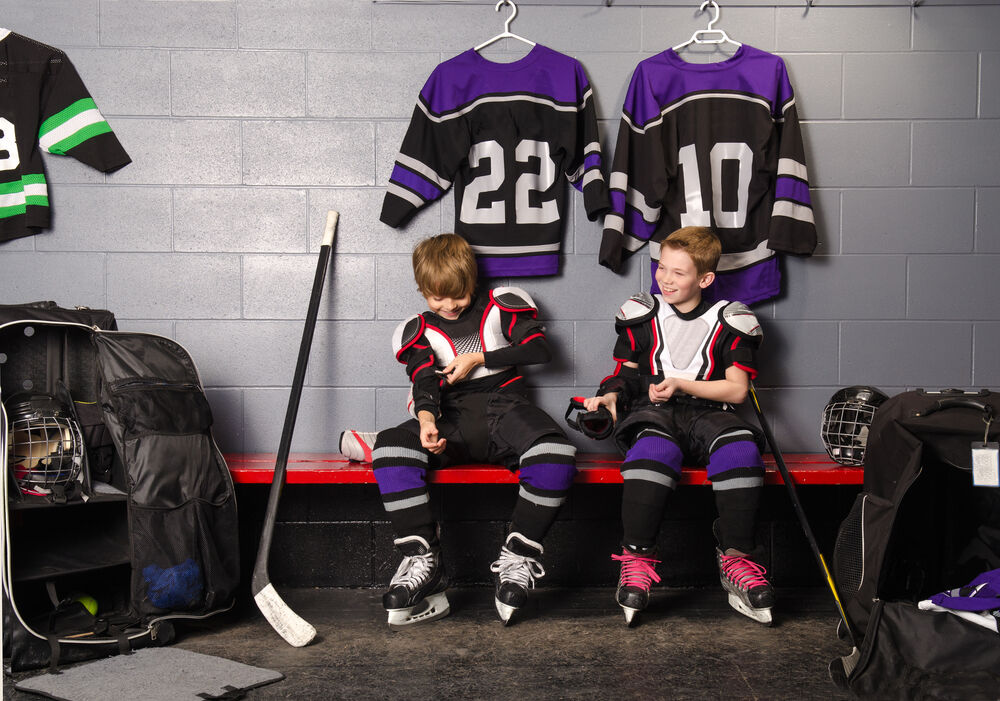
Young hockey players putting on their equipment.
Source: Lorraine Swanson, Shutterstock.com

Document 2

A shower head with water.
Source: Hayati Kayhan, Shutterstock.com

Answer

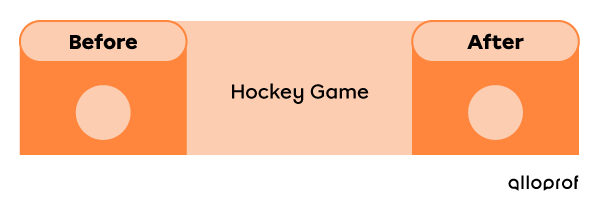
Order of Events: Before and after a hockey game.

See solution

Example with historical documents

Important!

The order in which you indicate the documents before or after the central event is not important, as long as they are in the right place in relation to the event.

For example, in the case above with historical documents, it doesn’t matter if you write 1 and 3 or 3 and 1 in the answer.

Examples of a Complete Process

Important!

It is highly recommended that you read the concept sheet on intellectual operations to fully understand how to complete tasks for different intellectual operations.

The two examples below are similar to what you might see on an exam. Try to complete the task before looking at the detailed solution. This will help you to see how well you can do the intellectual operations.

Be careful!

The two examples below are related to concepts that you might not have seen before. If so, don’t worry, you’ll learn them when they are introduced in class.

The example for the first cycle is from the module Sedentarization.

The example for the second cycle is from the module The Development of Colonial Society Under the Authority of the French Mother Country (1608-1760).

Example for Cycle One

Example

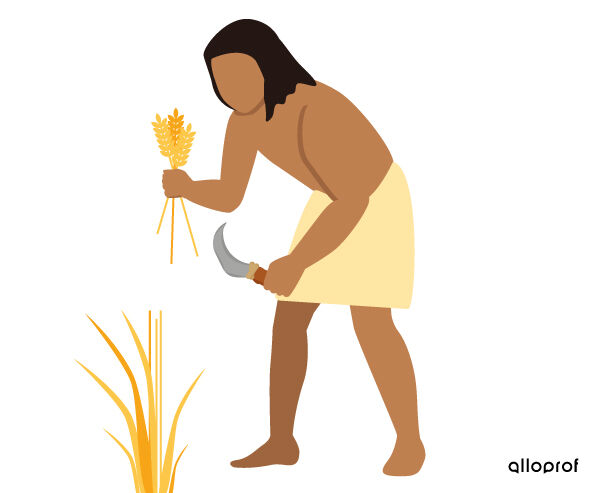
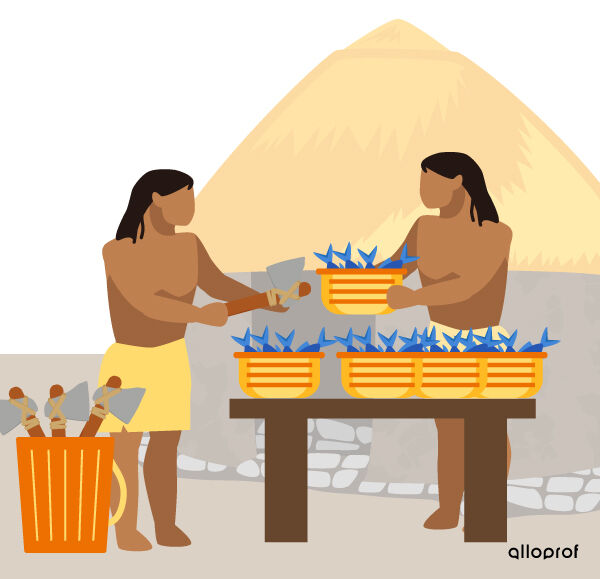
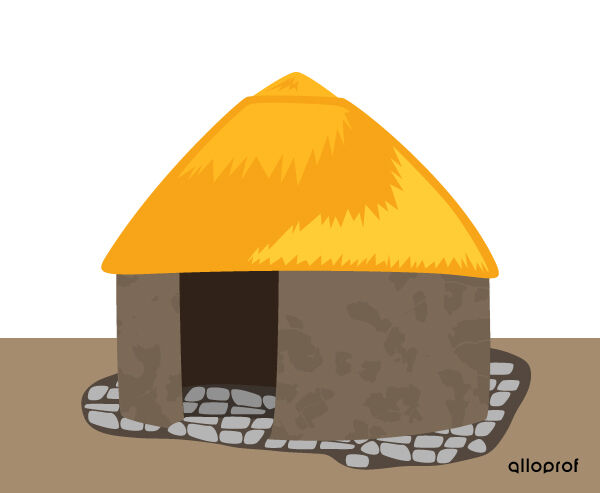
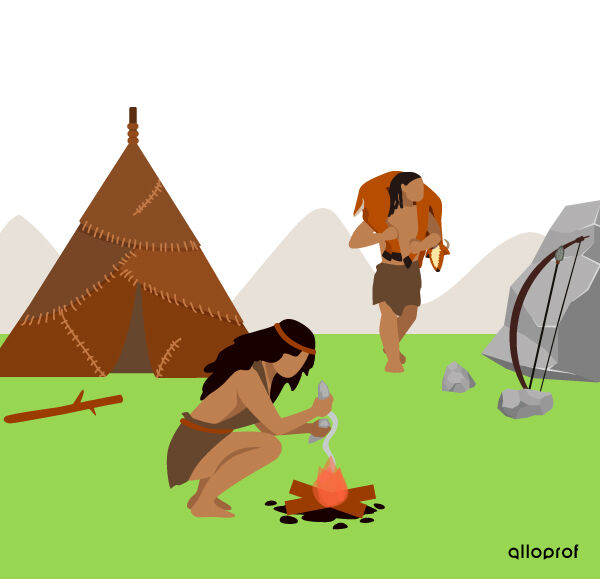
Statement: Documents 1-4 present facts about early civilizations. Place them in chronological order.

Document 1

A person harvesting grain, probably wheat.

Document 3

A craftsman trades an axe with a fisherman for fish.

Document 2

Dwelling of sedentary people.

Document 4

The camp of a nomadic population with a tent, one person near the fire and another one returning with game.

Answer

Empty timeline.

To find out more about this topic, see the concept sheet on early sedentary households and the concept sheet on economic activities of the first sedentary people.

See solution

Example for the Cycle Two

Example

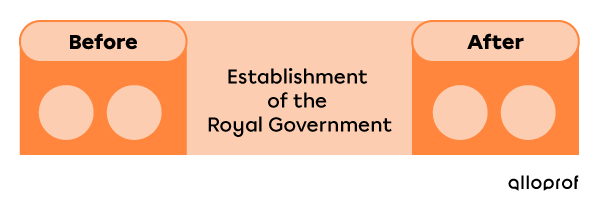
Statement: Place the following items according to whether they occur before or after the Royal Government was established.

Document 1

Document 2

“Under pain of indictment by the prosecutor general. It is [forbidden] to all persons of whatever status and condition whatsoever to prevent girls who have come from France at His Majesty’s expense from marrying when they please, except by objecting to their banns with good reasons under penalty of a fine.”

Source: “Ruling forbidding [...],” 1663.

“[…] this is why, after having examined various proposals on this subject, and having recognized that there was [no] way to populate the said country […] they promised my Lord the Cardinal to found a company of one hundred associates, and to make every effort to populate New France, known as Canada […].” [translation]

Source: “Company of Canada […],” 1627.

Document 3

Document 4

“In the spring, under the command of British General James Wolfe, British troops bombarded Quebec City for more than two months. Wolfe also attempted an attack near the French defence line, not far from Montmorency Falls, but it was unsuccessful.”

Source: Alloprof, (n.d.).

“It is one league from Île d’Orléans to Quebec City, and I arrived there on July 3. I searched for a place suitable for our settlement, but I could find none more convenient or better situated than the point of Quebec […].” [translation]

Source: Samuel de Champlain, 1613.

Réponse

Order of Events: Before or after the establishment of the Royal Government Empty.

For more information on various events surrounding the New France period, check out the concept sheet New France Under the Royal Government.

See solution

Exercices

Exercise

Situate in Time — Secondary 4 — The Formation of the Canadian Federation

History Secondary4
Exercise

Situate in Time — Secondary 4 — Canada Between 1896 and 1945

History Secondary4
Exercise

Situate in Time — Secondary 4 — Nationalization of Hydroelectricity

History Secondary4
Exercise

Situating in Time — Secondary 4 — Societal Choices in Contemporary Quebec (1980 to present day)

History Secondary4

References