Matières
Niveaux
Pronouns are words that replace nouns. They are used to avoid repeating the nouns to which they refer. They make writing and speaking easier and more varied.
Pronouns have many different forms and roles in sentences.
Subject pronouns perform the action in the sentence. They are used to replace nouns that act as subject of the sentence.
Object pronouns receive the action in the sentence.
Subject and object pronouns can be used in the same sentence.
*In the following examples, the letter M and the letter F on the characters represent the pronouns identifying as male and female.
|
Subject pronouns |
Object pronouns |
Examples |
| I | me |  |
| you | you |  |
| he | him |  |
| she | her |  |
| it | it |  |
| we | us |  |
| you | you |  |
| they | them |  |
Possessive pronouns replace possessive adjectives and nouns showing ownership.
*In the following examples, the letter M and the letter F on the characters represent the pronouns identifying as male and female.
|
Possessive adjective |
Noun & possessive adjective |
Possessive pronoun |
Replaced by possessive pronoun |
|
| my | These scissors are my scissors. | mine |  |
These scissors are mine. |
| your | Is this jacket your jacket? |
yours | 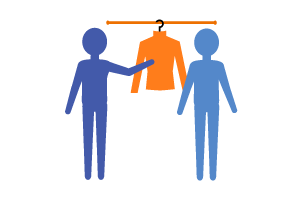 |
Is this jacket yours? |
| his | The design is his design. | his |  |
The design is his. |
| her | Is this dog her dog? | hers | 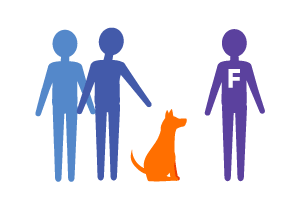 |
Is this dog hers? |
| its | Look at its eyes! | its* | 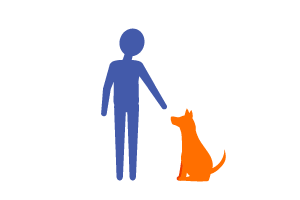 |
|
| our | The project is our project. | ours |  |
The project is ours. |
| your | The workshop is your workshop. | yours | 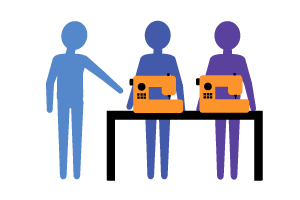 |
The workshop is yours. |
| their | The dress collection is their dress collection. | theirs | 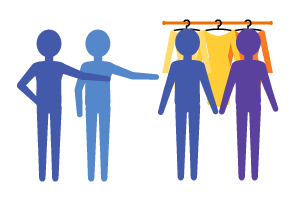 |
The dress collection is theirs. |
*“Its” is not a common possessive pronoun.
Reflexive pronouns are used when the subject and the object are the same in a sentence. They can also put emphasis on the subject of the sentence.
*In the following examples, the letter M and the letter F on the characters represent the pronouns identifying as male and female.
|
Reflexive pronouns |
Examples |
|
| myself | I made it myself. | 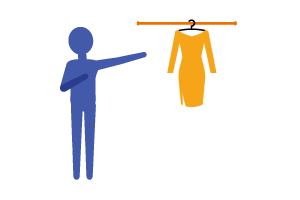 |
| yourself | You finished it yourself. | 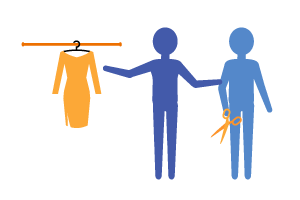 |
| himself | He got in trouble all by himself! | 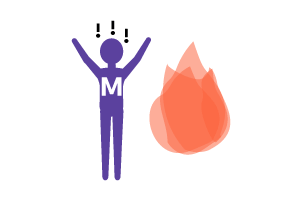 |
| herself | She created an entire collection by herself. | 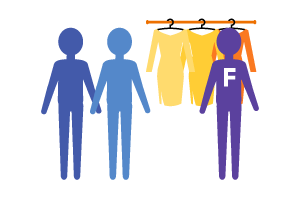 |
| itself | It looks amazing just by itself! | 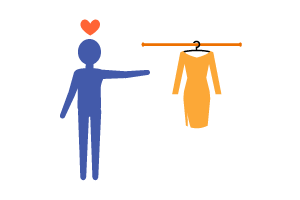 |
| ourselves | We will make changes ourselves! | 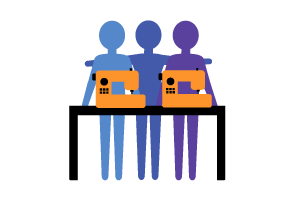 |
| yourselves | Figure it out yourselves. | 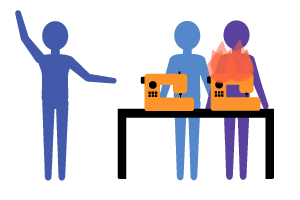 |
| themselves | They travel by themselves. |  |
Demonstrative pronouns are used to talk about things or people.
|
Demonstrative pronouns |
Refers to |
Examples |
| this | something near the speaker in time or place, within reach. | 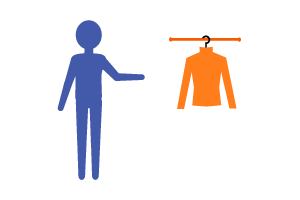 Look at this jacket. |
| that | something far from the speaker in time or place, beyond reach. | 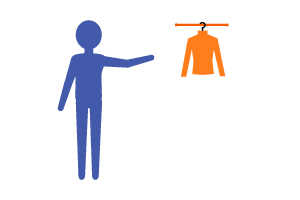 That is a great jacket! |
| these | multiple things near the speaker in time or place, within reach. | 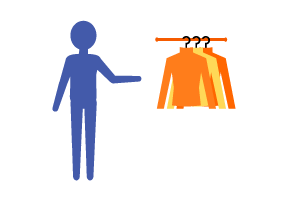 I like these jackets. |
| those | multiple things far from the speaker in time or place, beyond reach. | 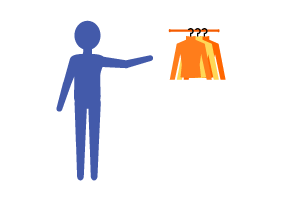 Those are great jackets! |
|
Personal pronouns |
Possessive |
Reflexive pronouns |
||
|
Pronouns |
Adjectives |
|||
|
Subject |
Object |
|||
| I | me | mine | my | myself |
| you | you | yours | your | yourself |
| he she it |
him her it |
his hers its* |
his her its |
himself herself itself |
| we | us | ours | our | ourselves |
| you | you | yours | your | yourselves |
| they | them | theirs | their | themselves |
*“Its” is not a common possessive pronoun.