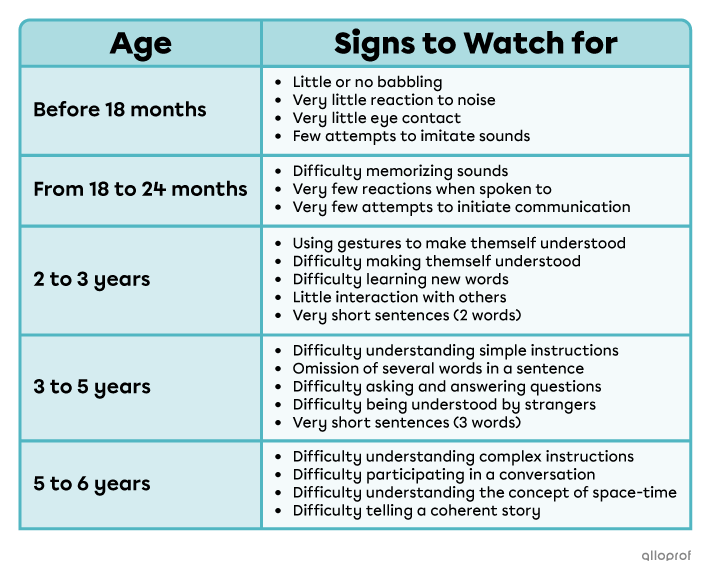
If you have concerns, it’s important to act early. Here are a few steps you can take to get an assessment.
- Contact your local CISSS for an assessment.
- Find a private clinic on the Ordre des orthophonistes et audiologistes du Québec website.
- Have your child’s hearing checked by a doctor or audiologist, as frequent ear infections or congestion can have an impact on language development.
The only professionals who can diagnose DLD are speech therapists and neuropsychologists. However, other professionals from the public, private, or community sectors can help you support your child.
- Resource teacher: A teacher specialized in learning difficulties in the areas of reading, writing, and mathematics.
- Psychologist: An expert in behaviour, emotions, and mental health. Psychologists work with people with psychological struggles.
- Social worker: Helps individuals and families experiencing struggles and crises.
- Occupational therapist: A professional who helps people organize and carry out daily life activities.
- Psychoeducator: Works with people who have adjustment difficulties that have behavioural impacts in various settings.
- Special education technician: A professional who works with people of all ages experiencing a variety of adjustment difficulties in different settings.
- Audiologist: A professional who prevents, assesses, and treats hearing problems.
A diagnosis is not a label to be attached to a child, but rather a key to understanding the difficulties they encounter and opening doors to concrete support.
A diagnosis can help you access many resources, such as rehabilitation services, support and accommodations at school, an individualized education plan, and adaptive measures in the classroom. A diagnosis may even qualify you for subsidies offered under certain government programs.