5 activities to spark your high schooler’s interest in science and technology

Article

Science and technology are cool! They’re all around us and make our lives easier—so many of the objects we use every day wouldn’t exist without them. Here are five simple activities that are sure to capture your teen’s interest in this branch of knowledge.

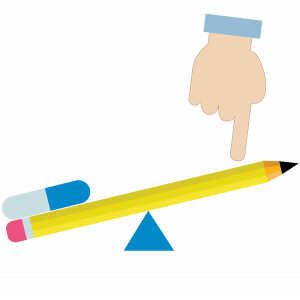
Make a lever prototype

The lever is a simple machine that makes it easier to do certain tasks. For example, levers can be used to lift and move heavy loads. All levers have three basic elements:

  • The effort force (the force required to achieve movement)
  • The fulcrum (the pivot point)
  • The load (sometimes referred to as the resistance force)

To build a lever prototype, your child will need to find materials to represent the elements mentioned above. Here are some examples:

  • Erasers (effort force)
  • A pencil resting on an object (fulcrum)
  • Small rocks or the weight of a finger (load)

You can also encourage your child to make observations by asking them questions:

  • What happens if you move the fulcrum closer to the load? (Answer: It’s possible to lift the load)
  • What happens if the effort force is applied too close to the pivot? (Answer: It’s not possible to lift the load)
  • Does a large effort force have a greater effect than a small one when applied the same distance from the fulcrum? (Answer: Yes)
  • Etc.
5-activités-pour-stimuler-l’intérêt-pour-la-science-et-la-technologie-au-secondaire

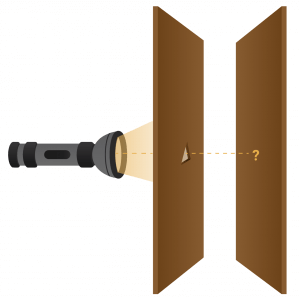
Make a camera obscura

The camera obscura is a device that makes it easier to understand light, vision, and image formation. The following experiment demonstrates that light travels in a straight line and comes from luminous objects, not the eye. To make their camera obscura, your child will need the following materials:

  • A cardboard box with a small hole in the centre (the pinhole)
  • A cardboard box with a triangular opening a few millimetres wide in the centre
  • An intact cardboard box
  • A flashlight

To carry out this experiment, we recommend setting up in a dark room and placing the perforated cardboard boxes in front of the light source one by one. Before getting started, have your child formulate some hypotheses:

  • Do you think the light patterns will match the shapes of the holes? (Answer: The shape of the hole doesn’t matter—only the intensity of the light varies)
  • Does the distance between the light source and the perforated cardboard affect the projected light (Answer: Yes—the closer the light source is to the cardboard, the sharper the projection)
  • Etc.
5-activités-pour-stimuler-l’intérêt-pour-la-science-et-la-technologie-au-secondaire

Bottle a cloud

Clouds form when water vapour cools and condenses. It’s possible to recreate this phenomenon in a plastic bottle. Here’s what your child will need for this fun activity:

  • A plastic bottle with a cap
  • A match
  • Water

Instructions:

  • Pour a few centimetres of hot water into the plastic bottle
  • Light the match and wait a few seconds
  • Blow out the match
  • Quickly place the match in the bottle
  • Twist the cap back on the bottle
  • Squeeze the bottle 10 times
  • See what happens
5-activités-pour-stimuler-l’intérêt-pour-la-science-et-la-technologie-au-secondaire

Make a thaumatrope

The thaumatrope is an antiquated toy that uses movement and optical illusion to create an animated image. To make their own thaumatrope, your child will need a circular piece of cardboard with a bird drawn on one side and a cage drawn on the other. Next, have them follow these steps:

  • Make two small holes in the cardboard, one on either side of the drawings
  • Tie a string to each hole
  • Twirl the strings between your fingers
  • See what happens

You can also encourage your child to carry out variations of this experiment:

  • Draw different images on the cardboard
  • Play with the size of the images
  • Use words instead of images
  • Etc.
5-activités-pour-stimuler-l’intérêt-pour-la-science-et-la-technologie-au-secondaire

Check out this video for a preview of the final result.

Make bread

Making bread isn’t just a sure-fire way to make your home smell incredible; it’s also a great opportunity to observe chemical and physical reactions. For example, bread rises because yeast converts the sugar in the dough to carbon dioxide and ethanol. Ask your child the following questions:

  • What would happen if you didn’t add the yeast? (Answer: The bread would stay flat)
  • What would happen if you over-kneaded the bread? (Answer: It would be hard)
  • Etc.


5-activités-pour-stimuler-l’intérêt-pour-la-science-et-la-technologie-au-secondaire_Plan-de-travail

We recommend making this delicious no-knead bread.

Collaborators

Writing : The Alloprof Parents’ team

References