How to Improve Family Waste Management
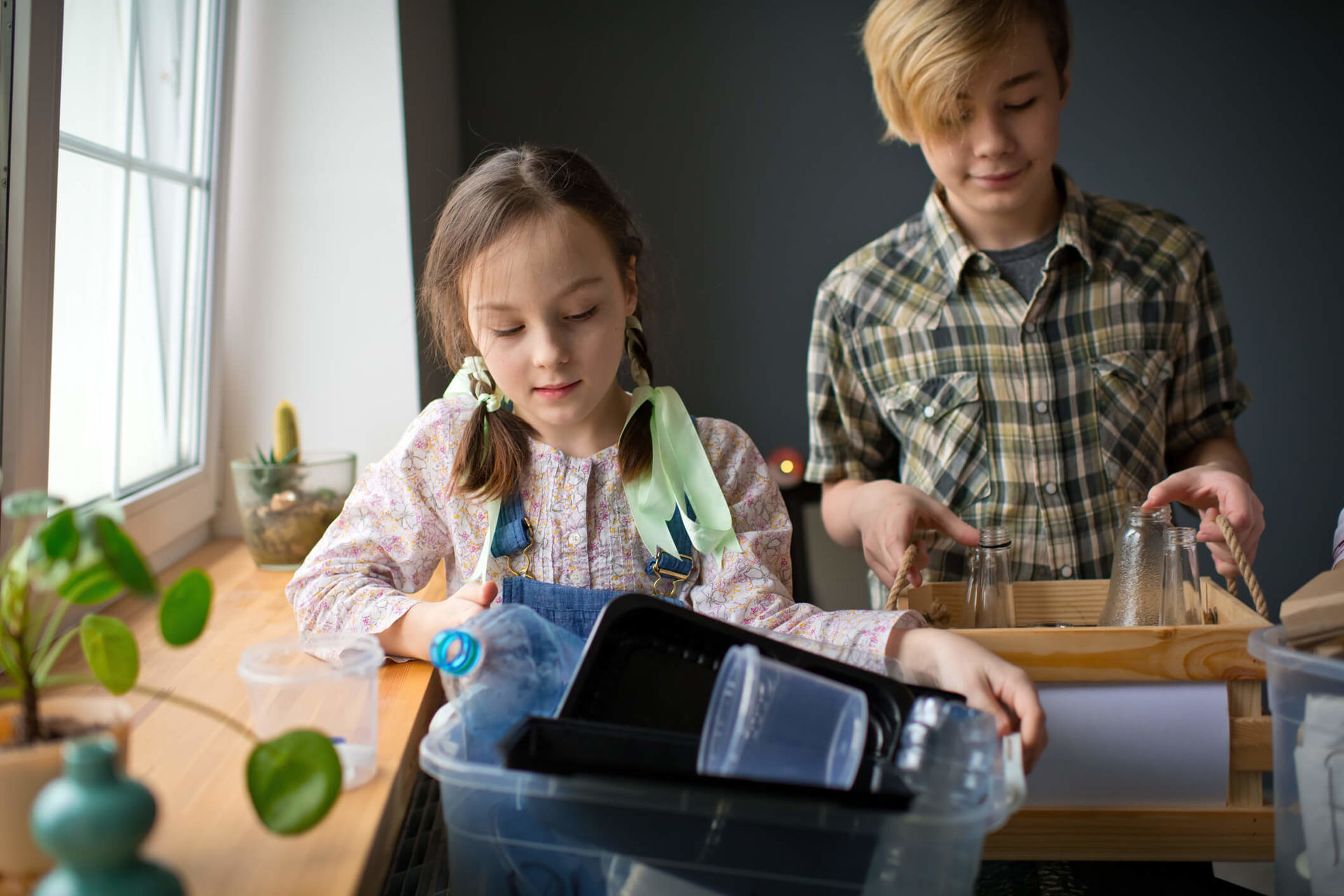

All of us in Quebec have to learn to consume smarter, but more importantly, to consume less. Of course, it can be hard to resist the temptation of a good bargain, especially when we are constantly bombarded with advertisements that encourage us to buy, buy, buy. However, you cannot have infinite growth on a planet with finite resources. Therefore, it is up to us to develop strategies to reduce unnecessary consumption.
In 2021, 716 kg of waste were generated per person in Quebec. Moreover, our beautiful province continues to move away from its waste reduction targets as it generates more and more garbage. This is why it is so important for us to make changes to our lifestyles and accept the fact that we must all work together to consume less.
You have probably heard of the 3Rs, a framework that helps us be more conscious about our daily consumption habits. At Lab22, we take it one step further with the 6Rs: refuse, reduce, reuse, repair, recycle, and recover!
Here are 6 original ways to integrate these concepts into your daily life:
REFUSE to say yes every time your child asks for something they saw on social media, a big driver of overconsumption (link in French). Social media subconsciously feeds into our desire to consume more and more, and young people are particularly vulnerable targets. Feel free to say no when your child asks for yet another pair of shoes or a new phone when the old one still works fine; just make sure to clearly explain your reasoning.
REDUCE the amount of processed foods in your child’s lunchbox (especially individually wrapped products like granola bars) and rediscover the joys of cooking together as a family. There are an endless number of ways to reduce waste on a daily basis. In fact, from October 20 to 29, Quebec celebrates the Semaine québécoise de réduction des déchets (link in French). Visit the event website to learn more!
REUSE instead of buying new. It seems obvious, but it can be harder than you expect. All too often, we default to purchasing new clothes and supplies at the beginning of the school year when the same items could be purchased second hand through Marketplace, Vinted, thrift stores, or Kijiji. Whenever you can, choose used before buying new.
REPAIR backpack zippers, loose boot soles, electronics, binders, etc. You can find an abundance of tutorials on how to repair everyday items online. For more difficult repairs, you can take your damaged items to a seamstress or cobbler.
RECYCLE. In Quebec, misconceptions about recycling abound. To help you separate myth from fact, we recommend reading this short article from Le Soleil (in French only). In addition, you can keep your knowledge up to date with the Ça va où? (link in French) application from Recyc-Québec, which offers helpful tips on how to build good waste management habits, based on your geolocation. Tricentris, a leading sorting centre in Quebec, also posts engaging and insightful content about waste management on its social media pages (link in French). Following them is a great way to stay informed on a daily basis and liven up your news feed. Last but not least, Recyc-Québec also has excellent content on its social media pages.
RECOVER organic waste. While composting food scraps is better than sending them to a landfill, it is always best to prevent food from being wasted in the first place. Of course, some waste is hard to avoid (peach pits, banana peels, etc.). More and more municipalities in Quebec are offering compost collection services, and it is our job to learn how to use our brown bins properly, since our landfills are filling up at a rapid pace. In Montreal, organic matter makes up 55% of landfill waste. That means more than half of the waste in our landfills could have been recovered!
“But compost stinks!” In reality, a well-managed compost bin will not smell or attract animals! There are many things you can do to keep odour and pests to a minimum. Become a brown bin pro with these tips and tricks (link in French), and ask your municipality for more details.