Scientific Investigation: 4 Tips for Cycle 3 Elementary Teachers

Article

The scientific investigation approach is an essential tool for learning science! Of course, it can sometimes be tricky to incorporate it into your lessons. In this article, you’ll discover our top tips to successfully carry out a scientific investigation with your students . As an added bonus, you’ll find learning activities lasting 60 minutes or less for introducing your Cycle 3 students to the scientific investigation approach.
Why Do a Scientific Investigation with Your Students?

Scientific investigations are key to student learning! 

Among other things, they promote:

  • The development of the subject-specific competency Proposes explanations or solutions to scientific or technological problems

  • The development of several cross-curricular competencies:

    • Uses information

    • Uses creativity

    • Solves problems

    • Exercises critical judgment

    • Adopts effective work methods

  • Student engagement and motivation

4 Tips for Leading a Successful Scientific Investigation

Plan your Investigation Carefully

  • When your students are curious about something, take the opportunity to write down their questions and the topics that interest them. Let’s say you're outside for recess and a student asks you why the sky is blue. You could use their question as a jumping-off point when planning your next scientific investigation.

  • Of course, you don’t always need to base your investigation on a student’s question. If there’s a topic you’re passionate about, you can always use it as inspiration, too. The important thing is to get students asking questions.

  • There are many ways to look for answers to scientific questions. Consider alternatives to empirical methods (observation, measurement, etc.). Here are some examples: 

    • Reading articles in scientific journals or online

    • Visiting a natural location or museum

    • Meeting with an expert

      The organization École en réseau allows your class to collaborate virtually with experts of all kinds, including scientists!

Set Clear Limits

  • Testing every students’ hypothesis would take too long to be practical. Instead, group similar hypotheses together or eliminate some hypotheses using logic before you get started. You don’t need to test every single hypothesis for your investigation to be valid.

  • Limit the time and equipment available to students. The investigation protocol needs to be realistic and reasonable. 

  • Share your expectations regarding everyone’s behaviour and roles, so that the classroom climate is conducive to collaboration, but also to reflection. For instance, you can set a noise level rule and ask your students to present their protocols before you give them the laboratory equipment.

Have Students Show Their Work

Throughout the investigative process, provide regular opportunities for your students to show their work (ideas, diagrams, tables, etc.). They can keep a record of their work in a science journal that they update throughout the year. This can be as simple as a three-ring binder filled with loose-leaf paper. A science journal is a handy tool for assessing your students and providing feedback. 

Focus on the Process

  • It’s possible for a student to follow the investigation protocol to the letter without finding the answer to their question—and that’s ok! What’s important is what the students have learned through the investigative process. Perhaps they learned how to clearly articulate their point or use a new tool. The process and the things students learn along the way are just as important as the scientific concepts addressed in the activity.

  • If you try an experiment and it doesn’t go as planned, don’t give up! Take the opportunity with your students to find out what went wrong (too complex a subject, inconclusive results, lack of participation, etc.). Work together to find solutions for the next time. After all, it’s part and parcel of scientific investigation to reflect on what you’ve done. 

Ready-to-Use Learning Activities for Introducing the Scientific Investigation Process

Incorporating scientific investigations into your teaching requires considerable preparation time. Fortunately, students don’t have to go through the whole process all at once! They can be introduced to different aspects of the scientific investigation approach through a number of separate activities. This will make the learning process more accessible for students and easier for you to plan.

Each of the following 4 learning activities addresses a different aspect of the scientific investigation process. Each one can be done in 60 minutes or less and requires little or no laboratory equipment.

In the Lemonade Stand: A Sweet Hypothesis learning activity, students put forth a hypothesis to answer a scientific question.

Teaser of the activity “Lemonade Stand: A Sweet Hypothesis”.

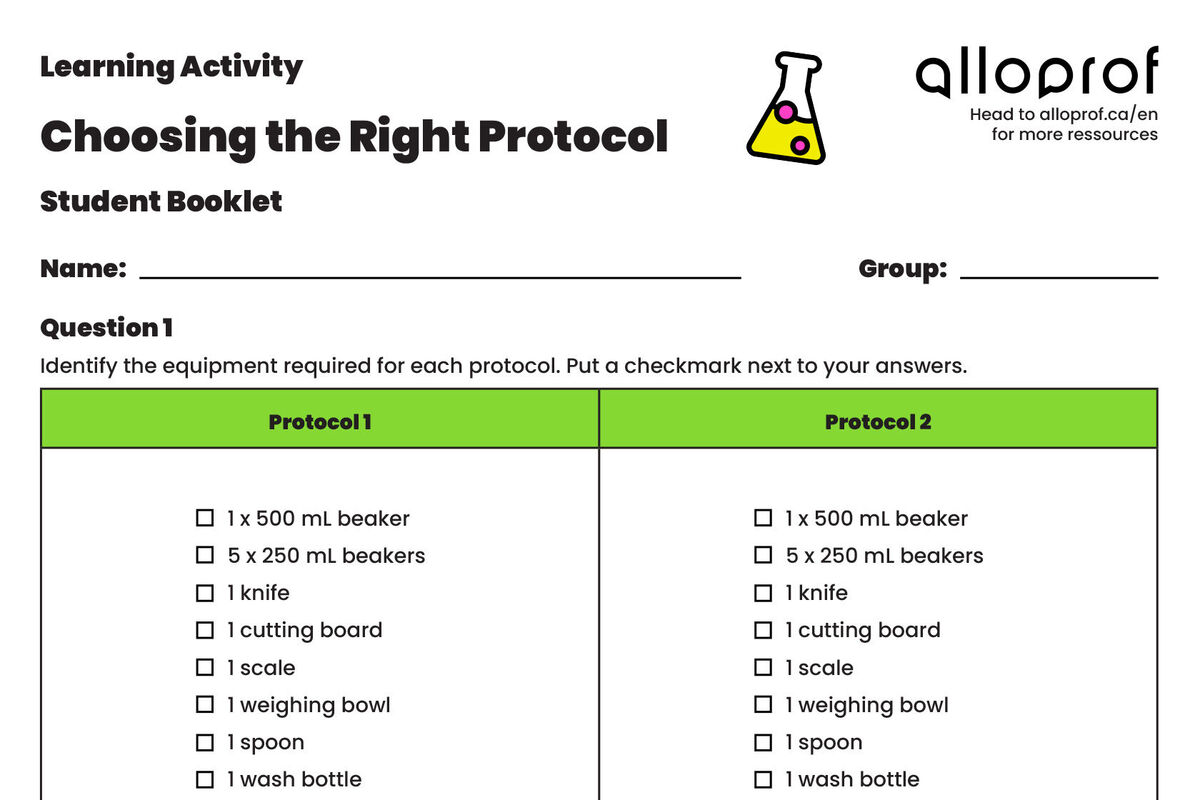
The activity Choosing the Right Protocol asks students to compare two protocols and identify which one will help them answer their scientific question.

ALT: Teaser of the activity “Choosing the Right Protocol”.

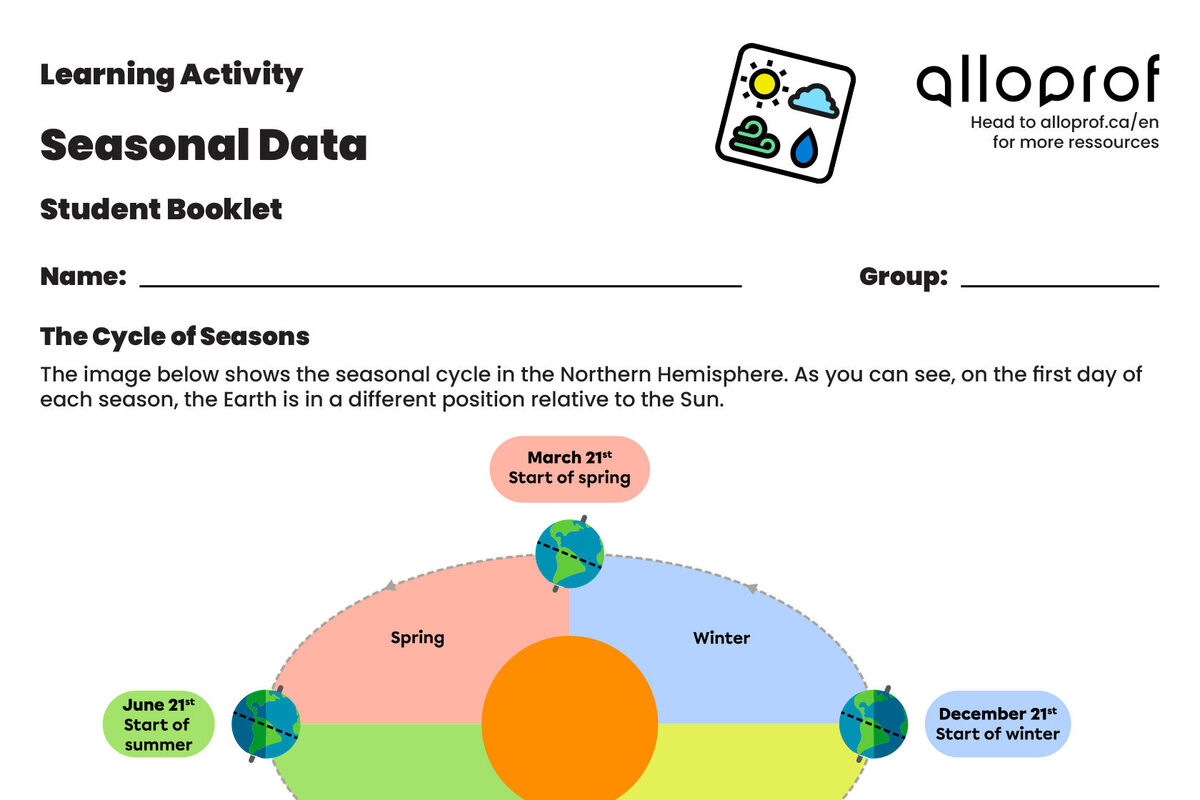
In our Seasonal Data activity, students answer scientific questions by analyzing data and finding results.

Teaser of the activity “Seasonal Data”.

The Spotlight on Diagrams activity asks students to draw a diagram of the phenomenon of light refraction.

Teaser of the activity “Spotlight on Diagrams”.

References

Access our most relevant tools!

To make your life a little easier and receive some of our best Alloprof tools by email, subscribe to our teacher newsletter. You could even win a gift card for your favourite bookstore!