
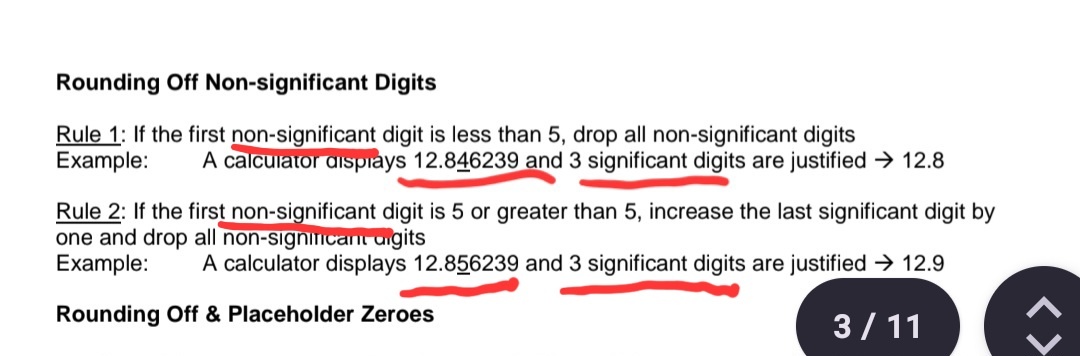
previously asked: "why is the 2nd digit after the decimal point NON significant? WHAT makes it non significant? in the number 12.846239, wouldn't there be 8 sig.fig.? since in the number 2.036 for example, there should be 4 sig.fig., no?
why are only 3 sig.fig. justified..?"
answer recieved ( thank you but i am still confused) : "The 4 is not significant because he is less than 5. You can check the first rule."
however, both the 4 and the 5 aren't significant according to these examples,why? why are those digits non significant when in 2.045, or 3.145, or 45.45, there would be 4 significant figures/digits (?)even if 4 is less than 5 no? i want to know what makes the 4 and the 5 non significant in those contexts.
also why only 3 justified digits? thank you so much for helping, i just want to do well for sure on my exams :)








Explanation from Alloprof
This Explanation was submitted by a member of the Alloprof team.
Hi PommeTimide6892,
Thank you for your question!
First of all, the number of digits in a measurement depends on the accuracy of the device used. For example, in Rule 1, it mentions that there are 3 significant figures. It’s this information that allows us to round afterwards. We then follow Rule 1 or Rule 2 depending on the digit that comes after the last significant figure.
Here is an explanatory sheet that might be useful to you :
I hope I was able to help you. Don’t hesitate if you have any other questions.
Zachary T. :)