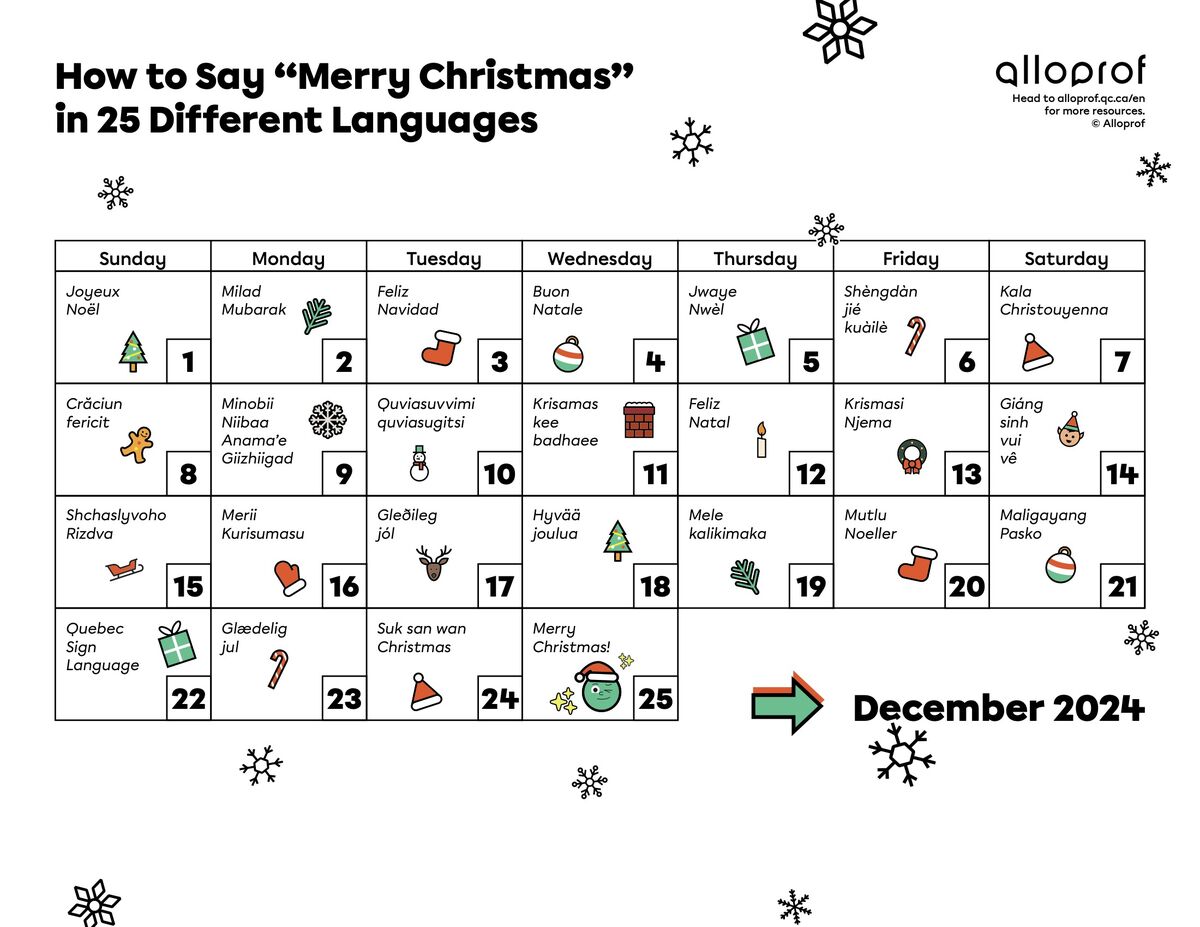
How to Say “Merry Christmas” in 25 Different Languages
Discovering what other languages sound like can be great fun. The curiosity that makes us want to explore a new language can also be a gateway to learning more about the culture of the people who speak it. By using Alloprof’s Language Advent Calendar, you and your family can learn how to say “Merry Christmas” in Inuktitut, sign language, and a host of other languages!
Learn a little about a new language every day in the lead-up to Christmas
How do families in Hawaii wish each other “Merry Christmas”? What signs are used to do the same in Quebec Sign Language (LSQ)? Whether you want to explore a new language out of curiosity, a desire to be more inclusive, or simply a love of learning, a fun activity can be a great place to start. This Advent calendar can teach you to say “Merry Christmas” in 25 languages. Here are a few ideas on how to use it:
- Every day, after learning a new way to say “Merry Christmas,” do some research together on the country or region where that language is spoken. While you’re at it, why not learn about holiday traditions from that part of the world?
- Once a week, prepare a meal inspired by one of the regions you learned about through the Language Advent Calendar. It’s a fun way to learn while broadening your culinary horizons!
- Do arts and crafts with your child that showcase the various languages. For instance, write out the greeting in different languages on some decorations to hang on your Christmas tree.
- Use the greetings to embellish cards or gift tags, adding a little explanation for the recipient. Here’s an example: Mutlu Noeller! (Did you know that's how you say “Merry Christmas” in Turkish? Fun fact: The legend of Santa Claus originated in this country!)
- Turn it into a memory game: Family members can take turns trying to remember how to say “Merry Christmas” in the various languages they have learned.
- Etc.
Want to hear what “Merry Christmas” sounds like in these languages? Try this free tool.