Character Archetypes

Concept sheet | English Language Arts
Definition

Character archetypes are categories of characters that are universally recognizable. An archetype represents character traits, roles and behaviours that are familiar and relatable for the audience. Archetypes are present in all forms of storytelling (legends, folktales, literature, mythology …) and every culture. 

Character archetypes help understand characters in a story by categorizing them by the traits and storytelling functions. Keep in mind that archetypes are flexible categories, not rules.

Here are 12 common character archetypes used in storytelling.
* a.k.a. stands for also known as.

Character Archetypes Who Want to Leave a Mark

Characters like the hero, the wizard and the rebel want to leave a mark in the world, a legacy. They are driven by their ego and want to be remembered for their actions.
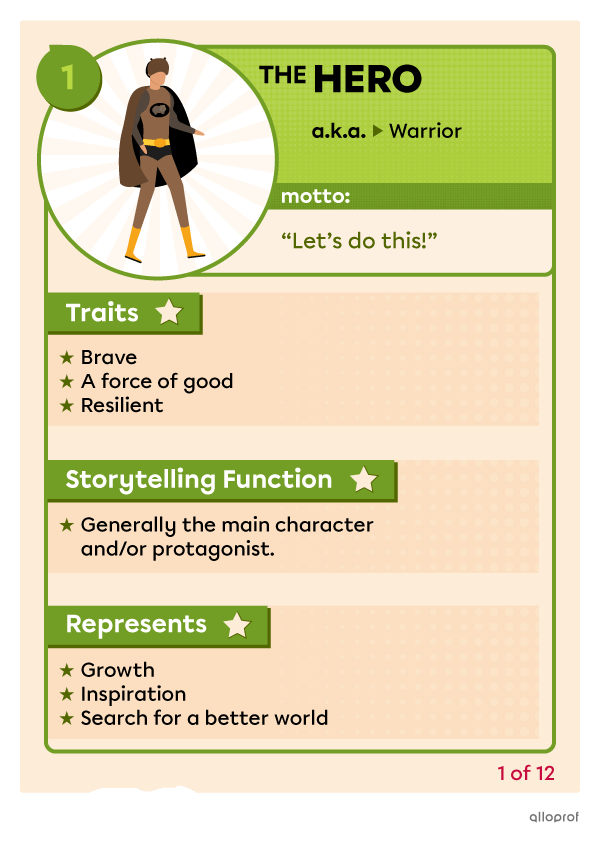
The Hero

Description of the hero character archetype. The hero is generally brave, often the protagonist and represents inspiration.

Hero archetype examples:

  • Katniss Everdeen in The Hunger Games (Collins, 2008)
  • Odysseus in The Odyssey (Homer, 8th century BC)
  • Superman Action Comics #1 (Siegel & Shuster, 1938)

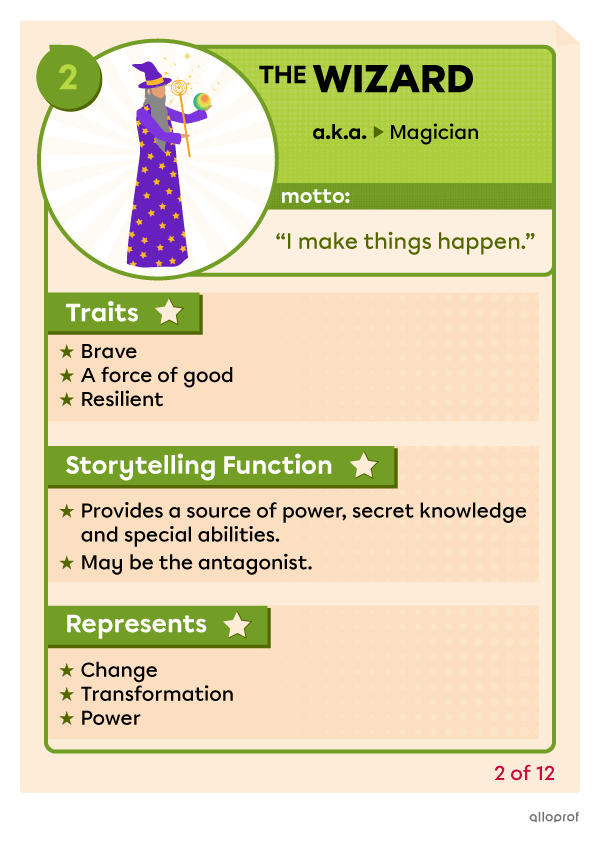
The Wizard

Description of the wizard character archetype. The wizard character archetype is also known as the magician. It is powerful, knowledgeable and represents change.

Wizard archetype examples:

  • Gandalf in The Lord of the Rings series (Tolkien, 1954-1955)
  • Prospero in The Tempest (Shakespeare, 1611)
  • Getafix in Asterix the Gaul (Goscinny & Uderzo, 1961)

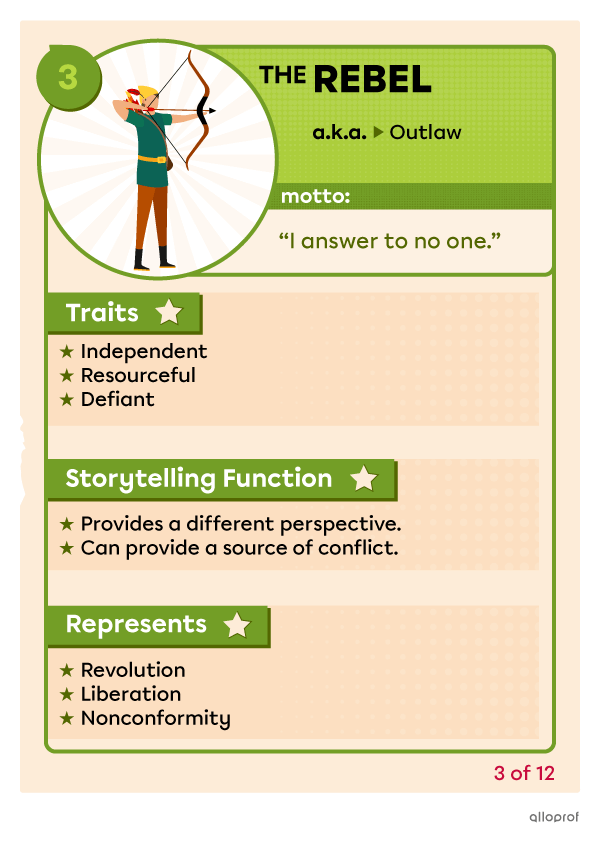
The Rebel

Description of the rebel character archetype. The rebel is independent, provides a different perspective and represents liberation.

Rebel archetype examples

  • Lyra Belacqua in Northern Lights (Pullman, 1995)
  • Robin Hood from The English folk tales (13th-14th century)
  • Wolverine from Giant-Size X-Men #1 (Wein & Cockrum, 1975)

Character Archetypes Who Provide Structure

Characters like the creator, the ruler and the caregiver want to provide structure in the world they live in.
They create order.
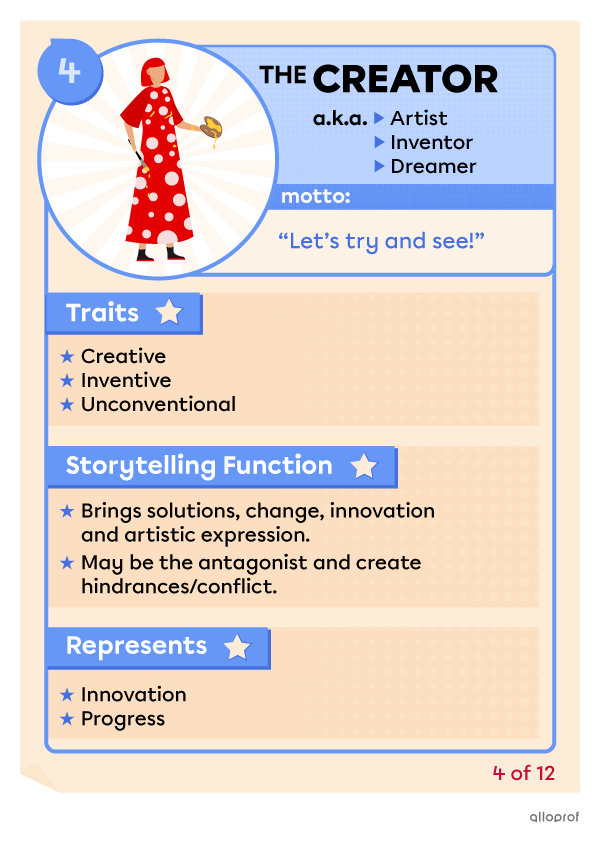
The Creator

Description of the creator character archetype. The creator character archetype is also known as the artist, the inventor and the dreamer. It is creative and represents innovation.

Creator archetype examples

  • Henry Jekyll in The Strange Case of Dr. Jekyll and Mr. Hyde (Stevenson, 1886)
  • Mark Watney in The Martian (Weir, 2011)
  • Tony Stark in Tales of Suspense #39 (Lieber, Lee, Colan, Heck & Ditko, 1963)

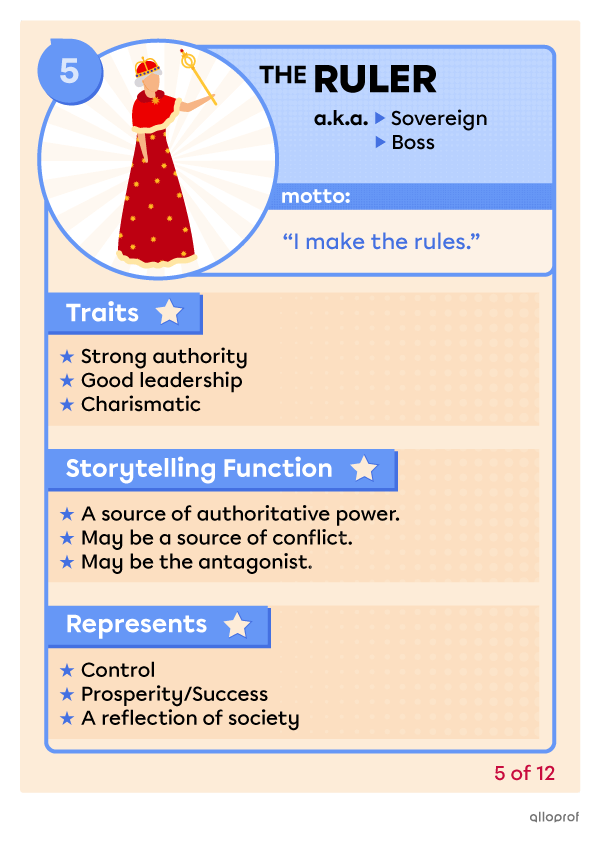
The Ruler

Description of the ruler character archetype. The ruler character archetype is a source of authority and power. It represents control and prosperity.

Ruler archetype examples

  • Aslan in The Lion, the Witch and the Wardrobe (Lewis, 1950)
  • Cersei Lannister in  A Game of Thrones (Martin, 1996)
  • Black panther (T’Challa) in Fantastic Four #52 (Lee & Kirby, 1966)

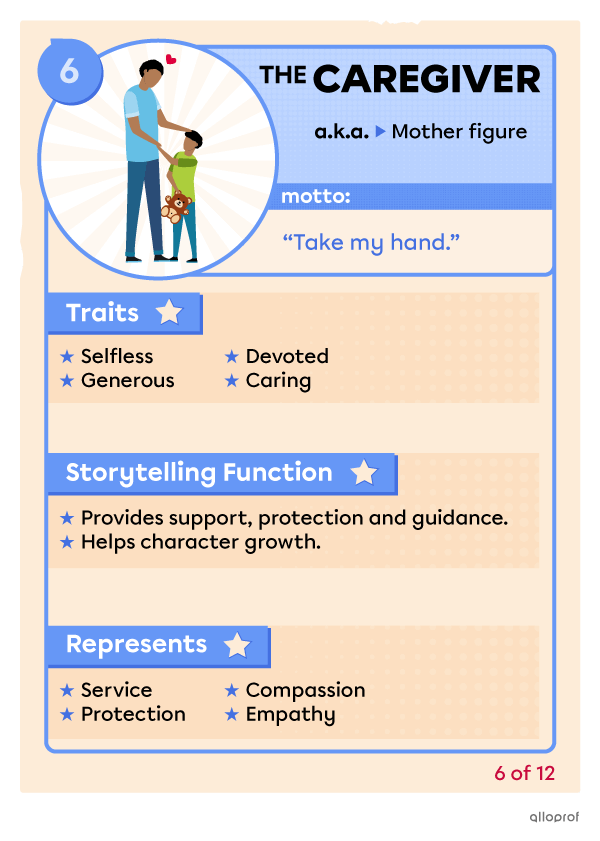
The Caregiver

Description of the caregiver character archetype. The caregiver character archetype is generous, selfless, provides support and represents service.

Caregiver archetype examples

  • Mary Poppins in Mary Poppins (Travers, 1934)
  • Charlotte A. Cavatica in Charlotte’s Web (E.B. White, 1952)
  • Alfred Pennyworth in Batman #16 (Cameron & Kane, 1943)

Character Archetypes Who Want to Belong

Characters like the everyman, the lover and the trickster are social by nature.
They want to belong by making connections.
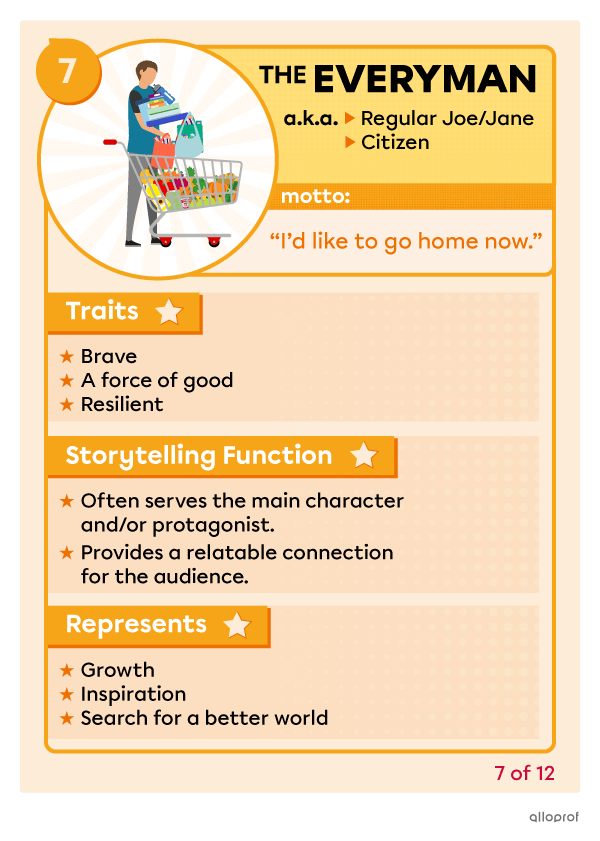
The Everyman

Description of the everyman character archetype. The everyman character archetype is relatable, provides a connection for the audience and represents belonging.

Everyman archetype examples

  • Arthur Dent in The Hitchhiker’s Guide to the Galaxy (Adams, 1979)
  • Bridget Jones in Bridget Jones’s Diary (Fielding, 1996)
  • Kamala Khan (Ms. Marvel) in Captain Marvel #14 (DeConnick, Quinones & Hepburn, 2013)

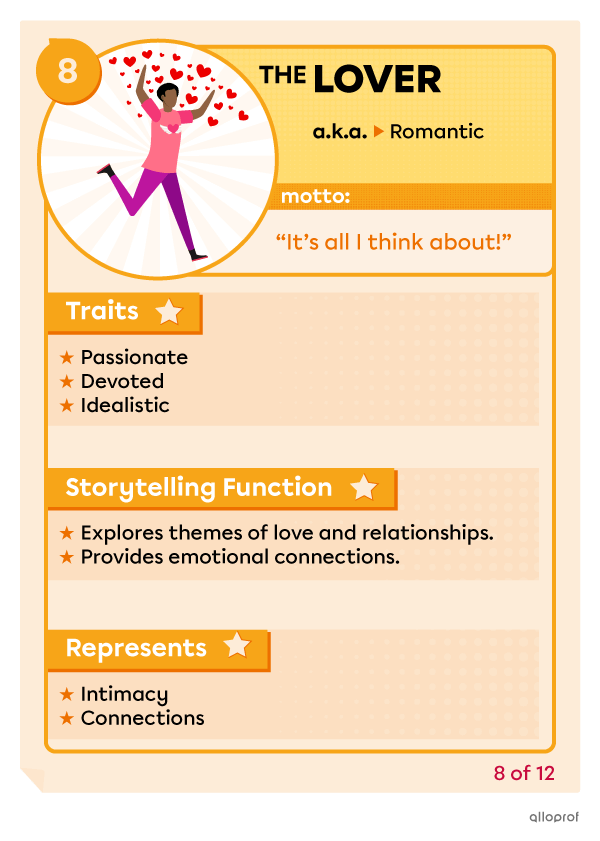
The Lover

Description of the lover character archetype. The lover character archetype is passionate and represents connections.

Lover archetype examples

  • Romeo & Juliet in Romeo & Juliet (Shakespeare, 1597)
  • Noah Calhoun & Allie Nelson in The Notebook (Sparks, 1996)
  • Peter Parker & Mary Jane Watson in The Amazing Spider-Man #25 (Lee & Romita Sr, 1965)

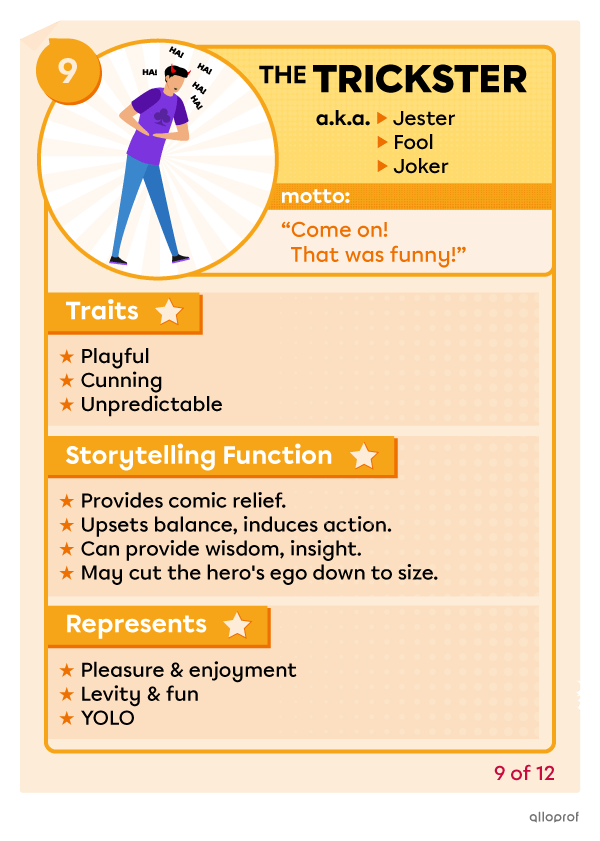
The Trickster

Description of the trickster character archetype. The trickster character archetype is unpredictable, cunning and represents enjoyment.

Trickster archetype examples

  • Tigger in Winnie-the-Pooh (Milne, 1926)
  • Q in the James Bond novels (Fleming 1953-1966)
  • The Cheshire Cat in Alice’s Adventure in Wonderland (Carroll, 1865)
  • Tom Sawyer in The Adventures of Tom Sawyer (Twain, 1876)

Character Archetypes Who Want Independence

Characters like the explorer, the innocent and the mentor are looking for freedom and fulfillment.
They want a better understanding of the world and live freely in it.
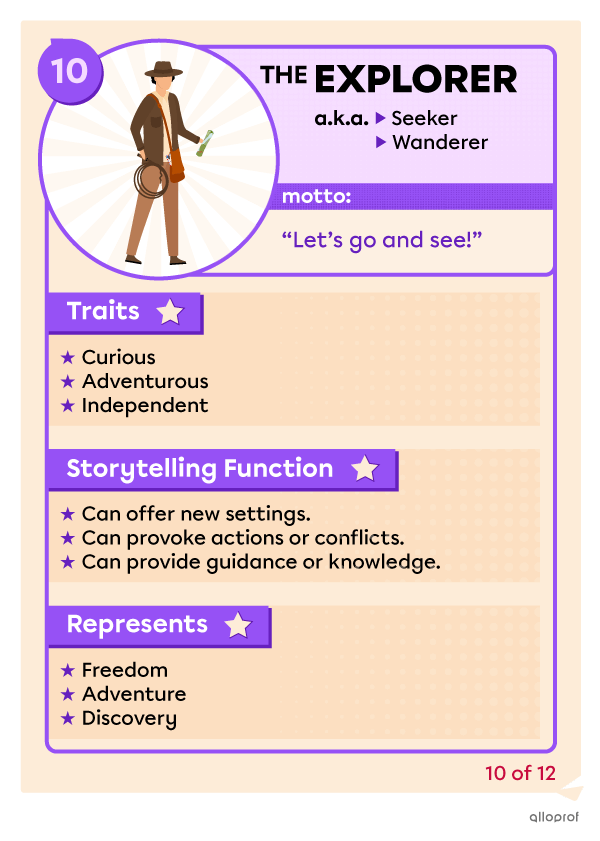
The Explorer

Description of the explorer character archetype. The explorer character archetype is curious, adventurous and represents freedom.

Explorer archetype examples

  • Jim Hawkins in Treasure Island (Stevenson, 1883)
  • Bilbo Baggins in The Hobbit (Tolkien, 1937)
  • Robinsons Crusoe in Robinson Crusoe (Defoe, 1719)

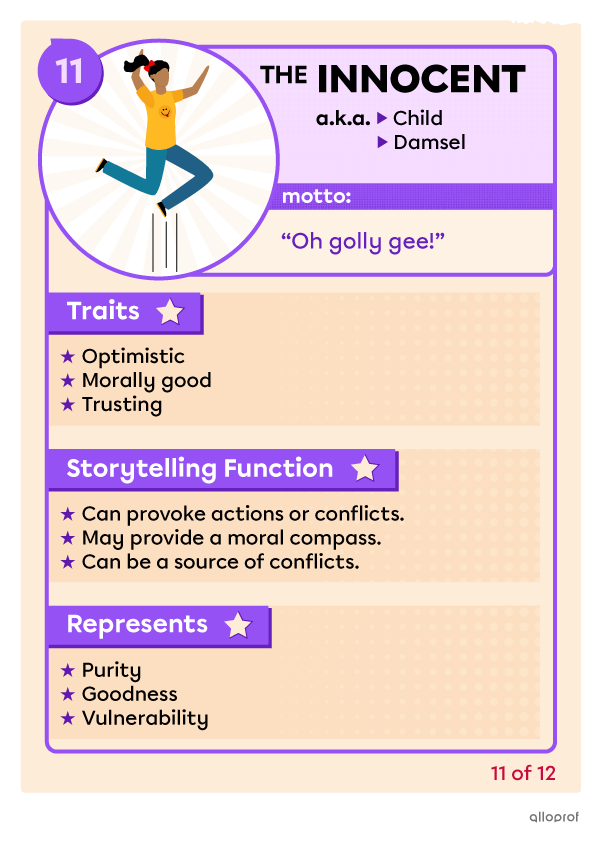
The Innocent

Description of the innocent character archetype. The innocent character archetype is morally good. It represents purity and vulnerability.

Innocent archetype examples

  • Scout Finch in To Kill a Mockingbird (Lee, 1960)
  • Forrest Gump in Forrest Gump (Groom, 1986)
  • Charlie Brown in Peanuts (Schultz, 1950-2000)

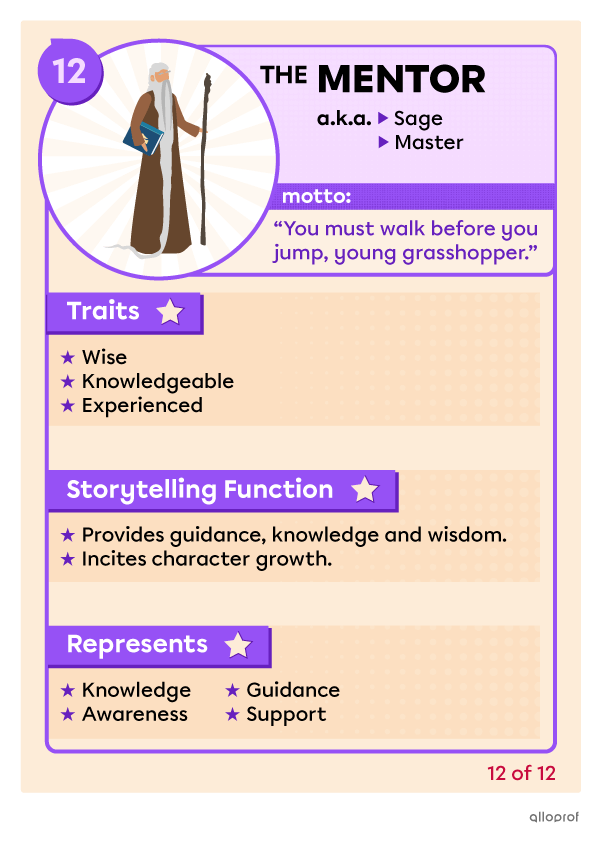
The Mentor

Description of the mentor character archetype. The mentor character archetype is wise, experienced and represents knowledge.

Mentor archetype examples

  • Haymitch Abernathy in The Hunger Games (Collins, 2008)
  • Baloo in The Jungle Book (Kipling, 1894)
  • Professor X in the X-Men #1 (Lee & Kirby, 1963)