Homonyms, Homophones & Homographs

Concept sheet | English Language Arts

What Are Homonyms, Homophones & Homographs?

Definitions

Homophones

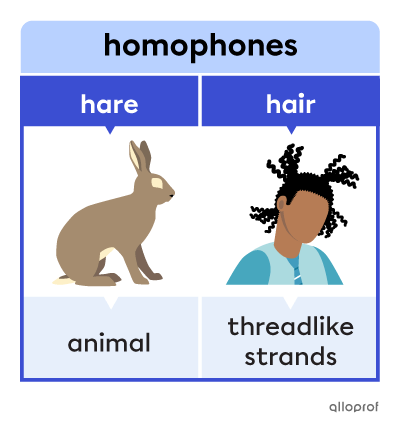
Homophones are words that:

  • sound the same

  • have different spellings

  • have different meanings

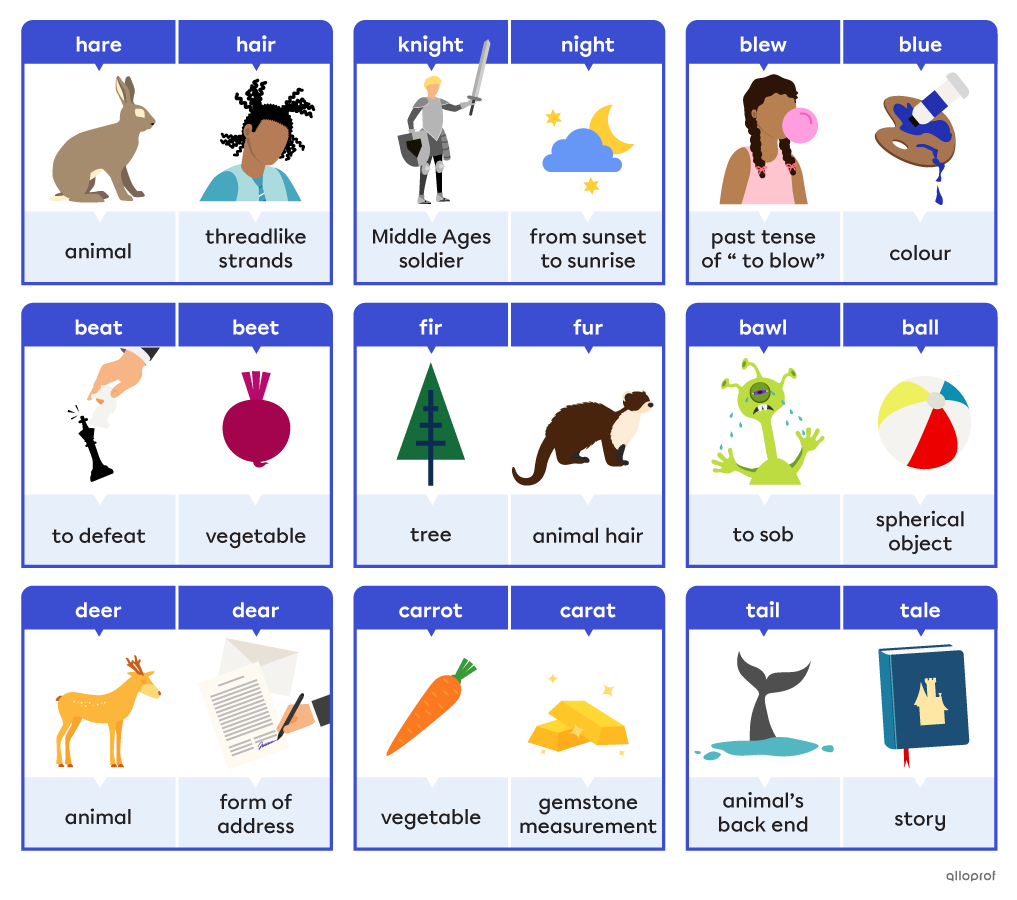
“Hare” and “hair” are homophones. A “hare” is an animal and “hair” is what we have on top of our head.

Homographs

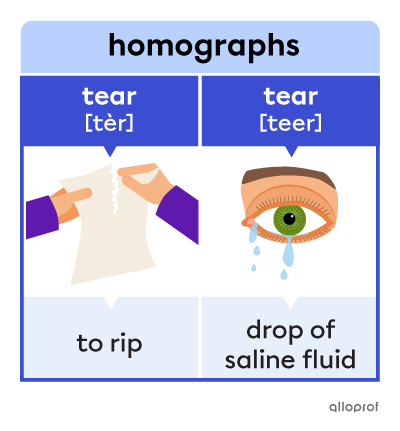
Homographs are words that:

  • have the same spelling

  • sound different

  • have different meanings

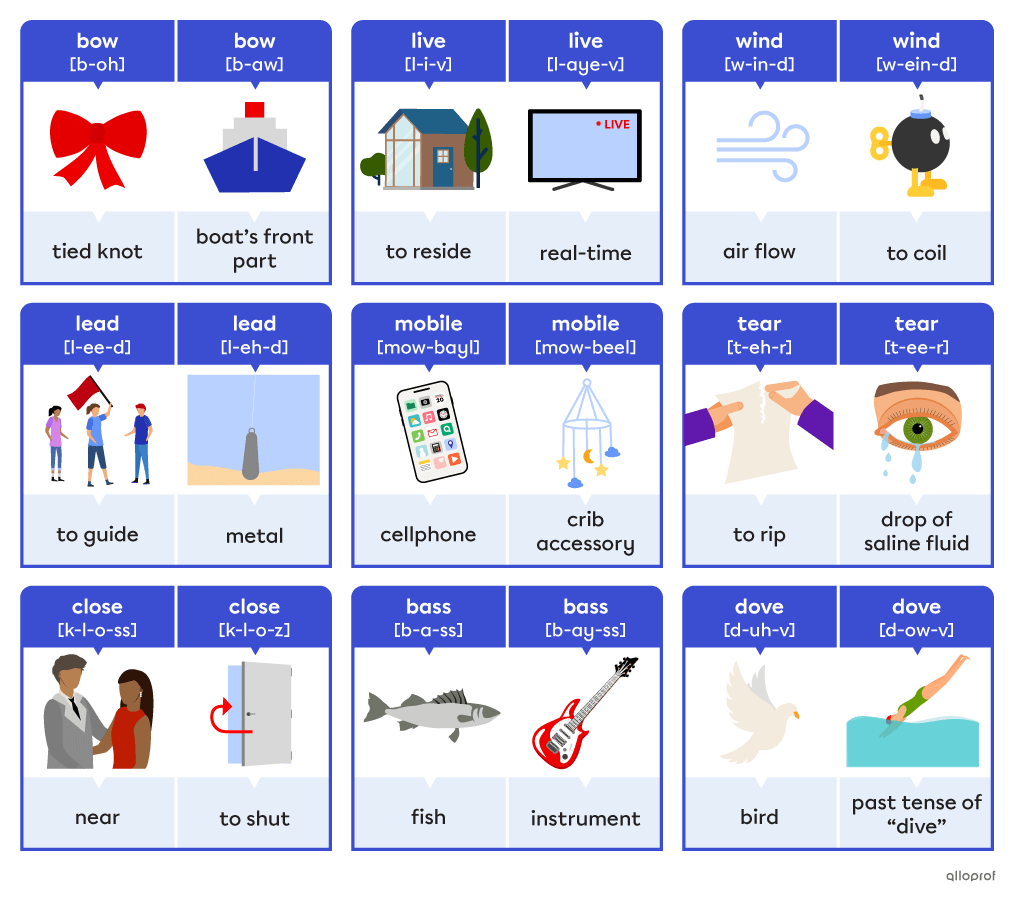
“Tear” and “tear” are homographs. One means “to rip” and one refers to the “drop of saline fluid” that comes out of our eyes when we cry.

Homonyms

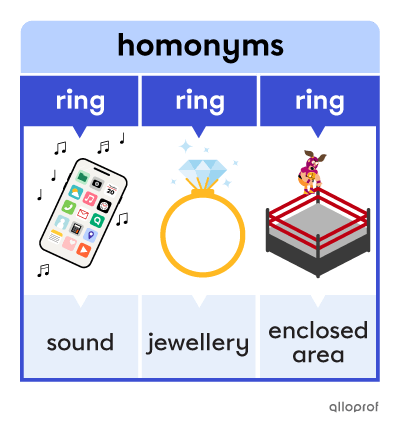
Homonyms are words that:

  • sound the same

  • have identical spellings

  • have different meanings

The word “ring” is a homonym. It has several meanings. A ring can be a sound, a jewellery or an enclosed area.

Which is Which?

Tip

The words homophone, homograph and homonym have Greek origins. They can be split into smaller words, each with their own meaning.

The etymology of the words “homophone,” “homograph” and “homonym.” “Homophone” means “same sound,” “homograph” means “same writing” and “homonym” means “same name.”

*Name refers to the word itself. It means the same word (same in sound and spelling). Homonyms are both homophones and homographs at the same time.
Homophone Examples

Examples
Different examples of homophones, like “knight” (k-n-i-g-h-t) and “night” (n-i-g-h-t). “knight” refers to a person whereas “night ” refers to the opposite of “day.”
'

Homograph Examples

Examples
Different examples of homographs including “bow” and “bow.” One means a tied knot and is pronounced “boh” and one refers to the front part of a boat and is pronounced “baw.”
'

Homonym Examples

Examples
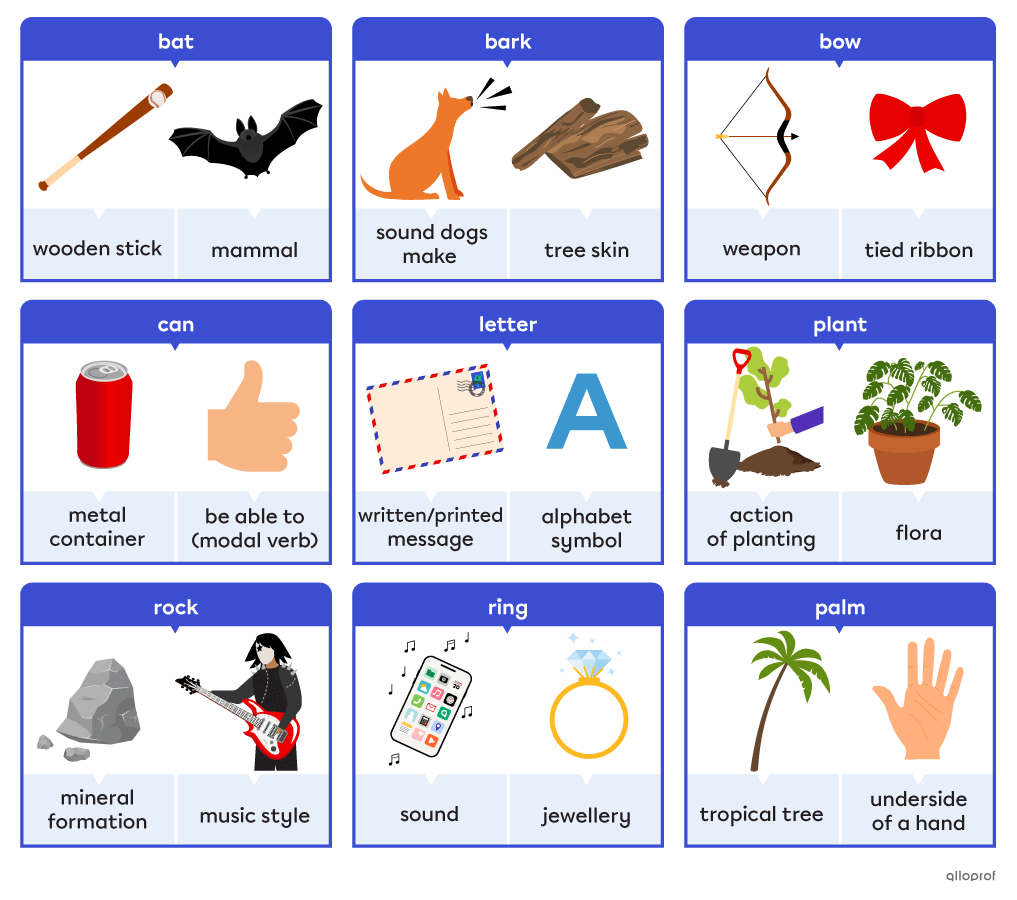
Different examples of homonyms including the modal verb “can” and the metal container “can,” or a “bat” as in the animal or a “bat” as in the stick used to hit a ball.
'