Subjects
Grades
To access the other sheets in the Forest Regions unit, check out the See Also section.
 100%
100%
 100%
100%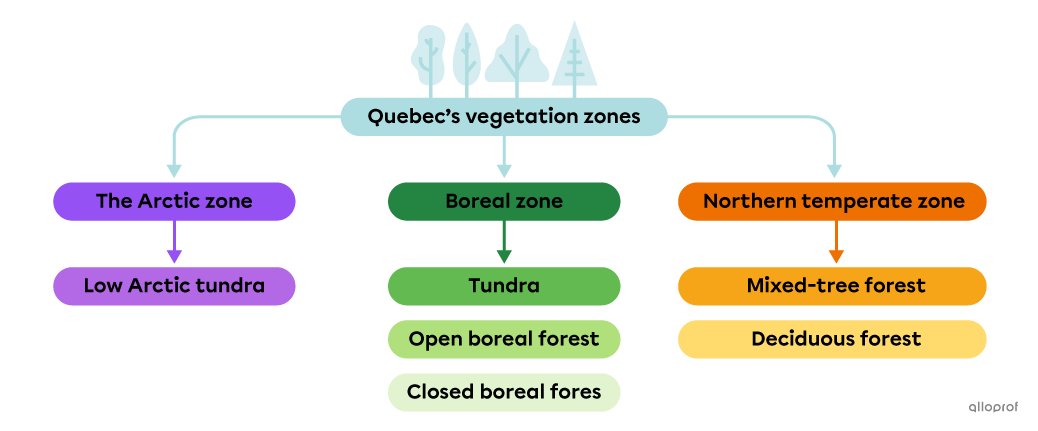 100%
100%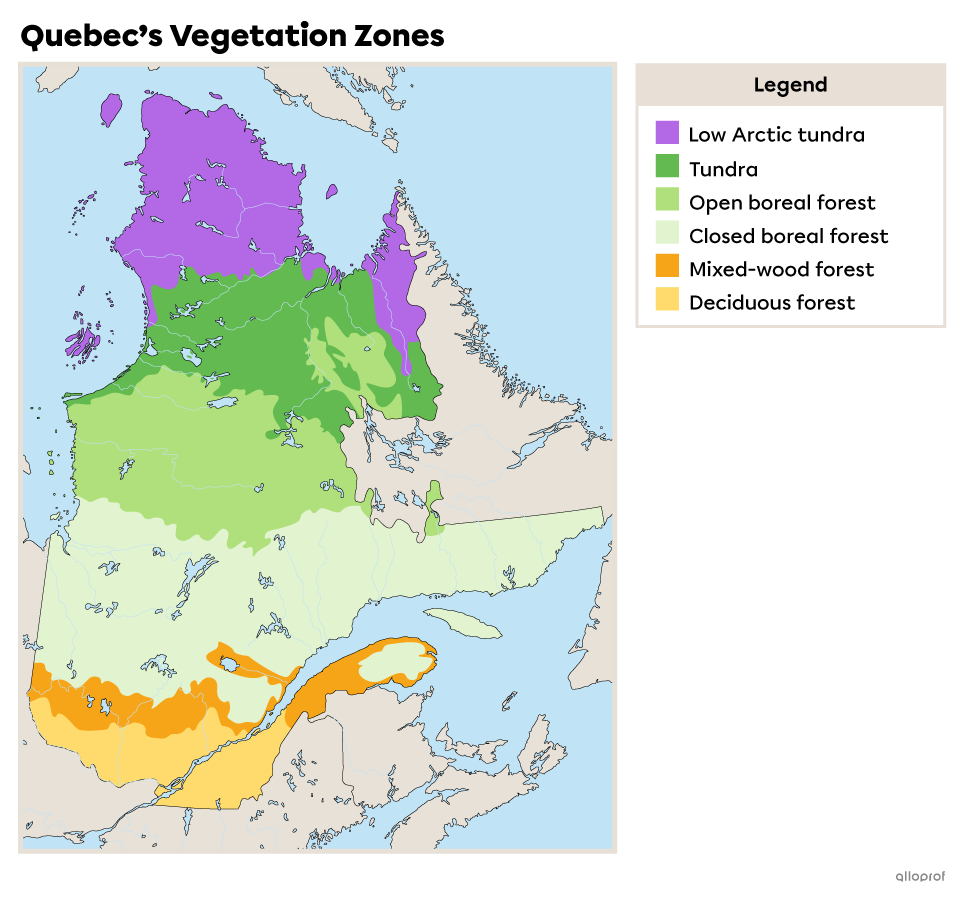 100%
100%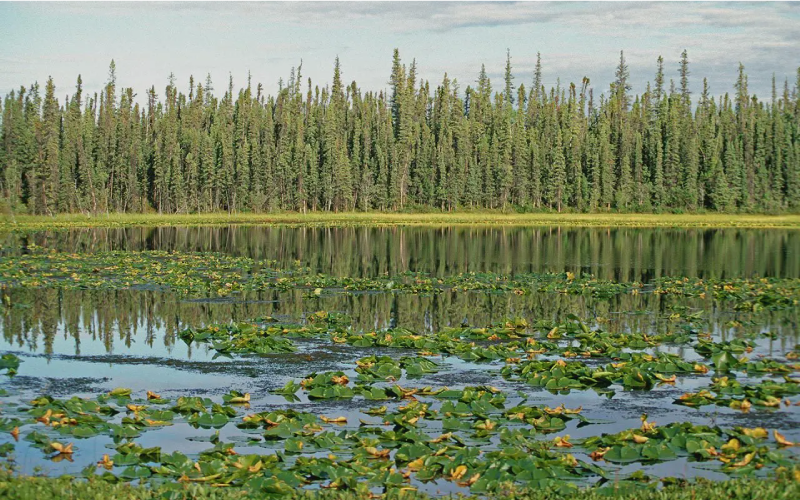 100%
100%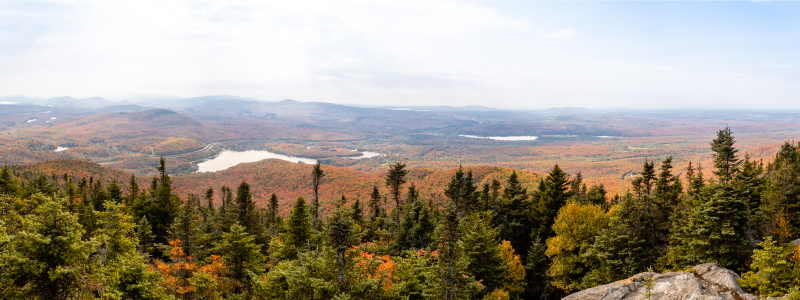 100%
100%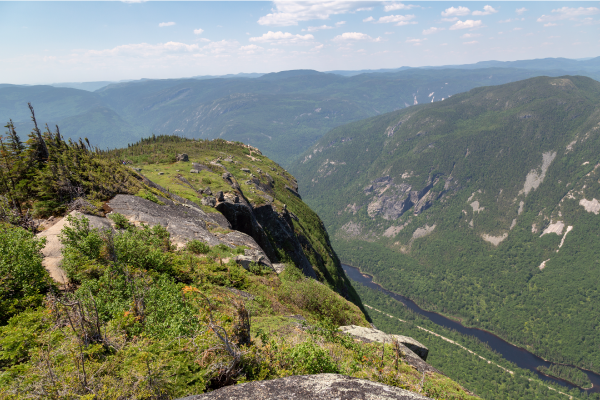
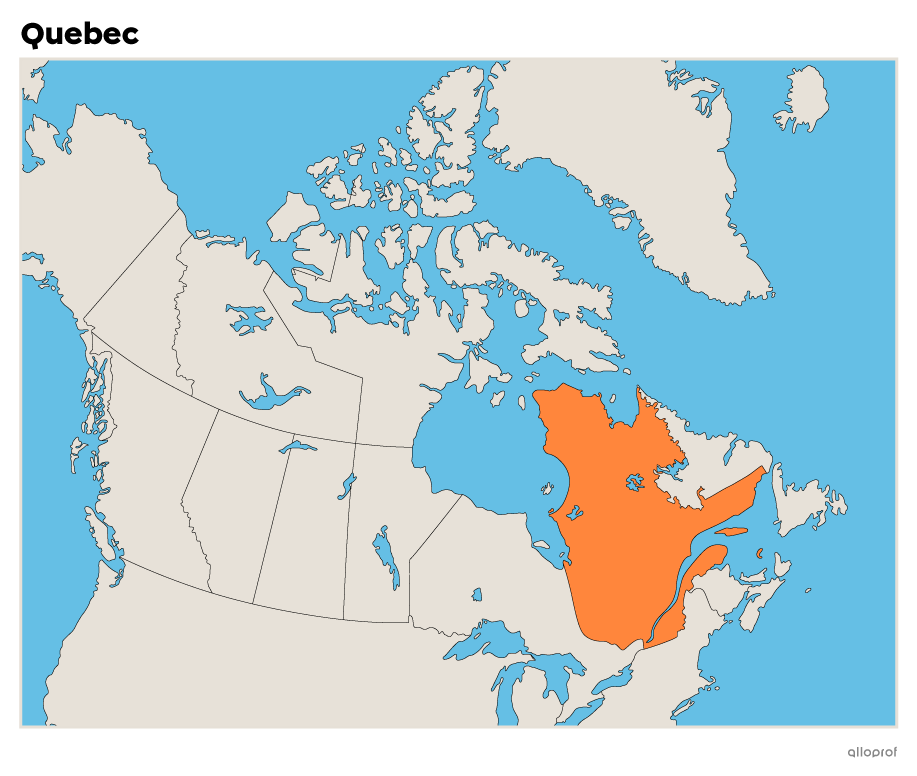
Quebec is a province in Eastern Canada.

Quebec is divided into different vegetation zones and subzones.
A marsh in the boreal forest
The forest industry is an important economic sector in several regions of Quebec, including Abitibi, Saguenay–Lac-Saint-Jean and Mauricie. In 2020, there were 53 480 jobs in the forest products sector, from logging and processing to manufacturing wood products[4].
Recreational tourism is an important economic activity because it creates jobs. Quebec’s public forests are territories that are open to the public for various uses, including wildlife reserves and areas for hunting and fishing. Each type of use involves a particular kind of planning and development.
In parks run by the Société des établissements de plein air du Québec (SÉPAQ), people are hired for:
administrative tasks
communications
conservation of natural environments
wildlife protection
planning and development of the territory
building maintenance
customer service
Fauna refers to the species of animals living in a given territory.
Parc national du Mont-Orford
This park is part of the SÉPAQ network
Parc national des Hautes-Gorges-de-la-Rivière-Malbaie offers a wide variety of activities, such as:
Hiking
Canoeing
Kayaking
Fishing
Biking
Rabaska expeditions
Snowshoeing
Cross-country skiing
Ice climbing
The Parc national des Hautes-Gorges-de-la-Rivière-Malbaie
View from the Acropole-des-Draveurs trail, one of the most challenging trails in the SÉPAQ network.
Quebec’s forest regions play an important cultural role for the province’s Indigenous nations because these are their ancestral lands where they can reconnect with their roots and practise traditional activities, such as trapping.
Quebec’s forest regions are divided into two main types:
private forests
public forests
This land is owned by individuals who are permitted to do various things on it, like build a cottage, hunt or fish. However, they still have to respect the laws regarding logging and the use of forest regions.
Public forests are lands owned and managed by the government.
A line was drawn to indicate the public lands in Quebec that can be logged: forests north of this line cannot be logged. This line is called the northern boundary for forest allocations (Limite nordique des forêts attribuables).
There are logging zones across Quebec. They are accessed by logging roads, which the Quebec government is usually responsible for building and maintaining.
Quebec has many mills for processing trees into various products.
Quebec’s forest regions are also divided into various controlled zones, including:
national parks
wildlife reserves
controlled harvesting zones known as ZECs
hunting and fishing outfitters
Some of the zones in these regions are also governed by agreements between the government and various Indigenous nations so that these nations can access their ancestral lands and, in some instances, play a role in managing them.
In its caterpillar form, the spruce budworm attacks the buds of softwood trees, mainly balsam fir and white spruce. While it has always been present in Quebec, there are cyclical epidemics approximately every 30 years, during which these insects kill approximately 75% of firs in the oldest tree stands (a homogenous group of trees that have uniform characteristics)[7]. They first attack the oldest tree stands and then, if they need more food, they spread to younger tree stands. These epidemics are a natural part of a forest’s cycle, but they can be damaging to the forest industry and landscape. The province of Quebec has been experiencing a spruce budworm epidemic since 2022.
To find out more about this insect and its impact on Quebec’s forests, consult the article The Spruce Budworm on the Quebec government’s website.
The development of Quebec's forests, such as logging or recreational tourism, must respect the rights of Indigenous peoples living on their ancestral lands. These communities are to be included in the decision-making process, be it with the government or businesses.
Managing forests in collaboration with First Nations can take different forms based on the different visions of the various communities.
The logging company Resolute Forest Products has a partnership with the Kitigan Zibi Anishinabeg community from the Algonquin First Nation, in the Outaouais region. Renewed in 2020, this agreement allows the company to develop and log on Algonquin land in exchange for cutting rights.
Social and Cultural Role
Recreational Tourism
Recreational tourism also plays an important social and cultural role because it provides people with access to public forests for hiking, camping, kayaking, hunting and other activities.