Subjects
Grades
The colonial empires of the time were able to grow rich through trade. However, this trade also caused conflict between them.
The world economy is the term used to define the global economic network that developed with the creation of the colonies by the Europeans.
The term triangular trade is used to describe trade between Europe, Africa and America. The aim of this trade is always to enrich the metropolis. In fact, in the triangular trade, the metropolis used its colonies to enrich itself by exchanging raw materials, manufactured goods and slaves.
The raw materials that the metropolises seek out in the colonies are numerous: precious metals, furs, plants, fish, coffee, tobacco, sugar, etc.
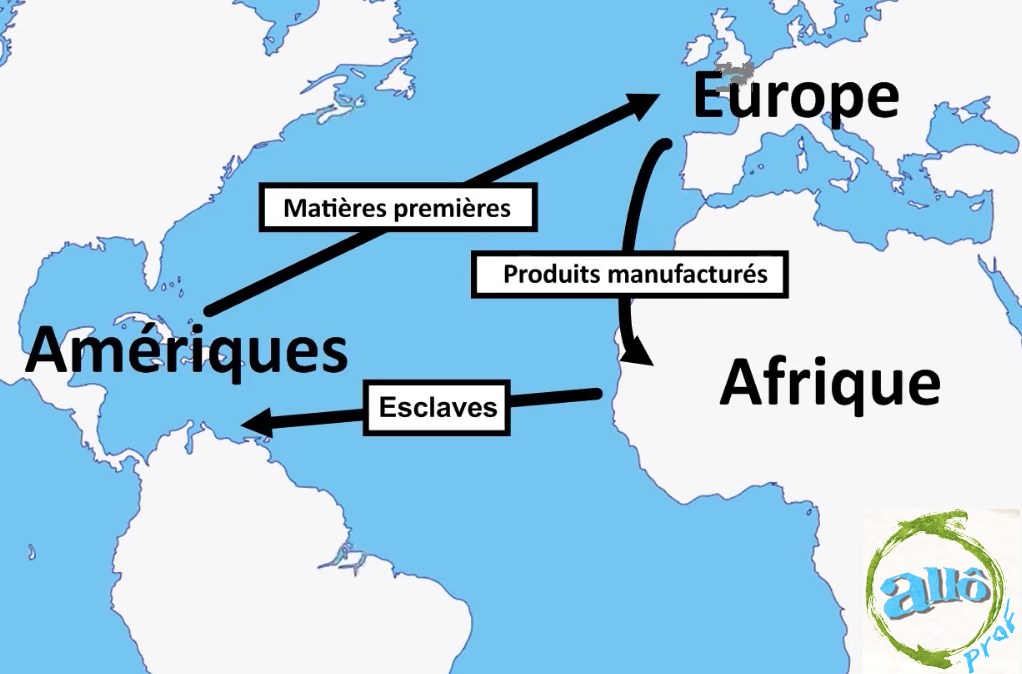
Note: English image coming soon
Here's an example of a French merchant using the triangular trade to enrich France:
In the triangular trade, the aim of the metropolis was not to enrich its colonies. In fact, the colonies were obliged to supply the metropolis with raw materials, and it was the metropolis that then produced the manufactured goods. The colonies were not allowed to sell manufactured goods themselves and were not allowed to compete with their metropolis. What's more, the inhabitants of the colony were obliged to buy products from their metropolis. All these conditions meant that the metropolis grew rich at the expense of its colonies.
Driven by the desire to enrich themselves, colonial empires did not hesitate to use slaves to increase their profits. The inhuman nature of the slave trade cannot be questioned. The treatment of slaves travelling from Africa to America was appalling. They were crammed into the holds of merchant ships in order to transport as many as possible. The living conditions inside the ships were so unbearable that 10 to 20% of the slaves did not survive the crossing. What's more, once they arrived in America, the slaves were abused, sometimes to the point of death, by the merchants or their masters.
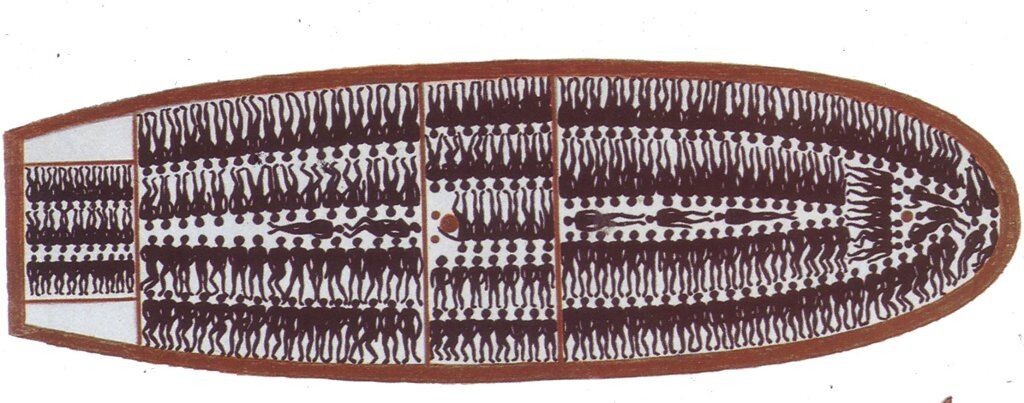
Plan of a ship's hold filled with slaves
Colonising states regularly go to war with each other to take possession of each other's colonies. This is why colonies sometimes change metropolis following a conflict or war.
This treaty was written in 1494 in the city of Tordesillas in Spain. It was the result of negotiations between Portugal and Spain, who shared the ‘New World’ following the discovery of America. This treaty was not respected by the metropolises of France and England, who also colonised America.
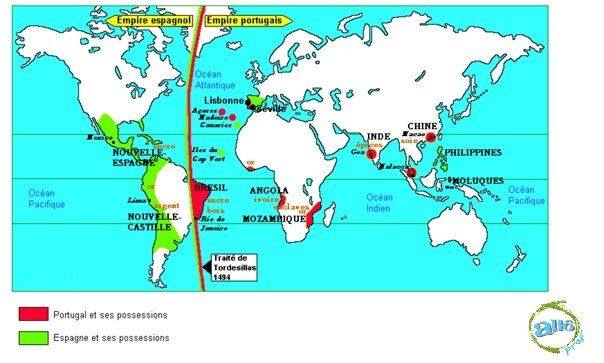
Map illustrating the division of the New World by the Treaty of Tordesillas
Note: English image coming soon
The discovery of the new continent intensified the conflicts between the colonial empires. The colonial empires did not hesitate to invest more money in order to gain as many possessions as possible on American soil.