Primary Source
Using these many documents, we can define two classifications: those described as eyewitness documents (also called primary sources) and those described as indirect sources (also called secondary sources). A primary source document is a document that was created at the time of the event we wish to study, or shortly thereafter.
If we were studying the Second World War, we would consider a well-preserved page from a newspaper printed at the time of the war, found in the archives of a library, to be a primary source. This newspaper page is a primary source.
We usually recognize a primary source when the person who wrote or created the document (newspaper, book, etc.) was a direct witness to the scene or event. We can get a good idea of this from the publication dates of documents.
The journalist who wrote the 1940 article we found about the Second World War was a direct witness to that war. He described what he saw. Another good example is the travel diary of a Jesuit missionary. We can learn much about the beginnings of the colony in New France from such a document.
Here are some primary sources:
- Newspapers, magazines;
- Letters, correspondence;
- Photographs;
- Films and videos;
- Works of art (books, sculptures or paintings) that directly depict events;
- Original sound recordings.
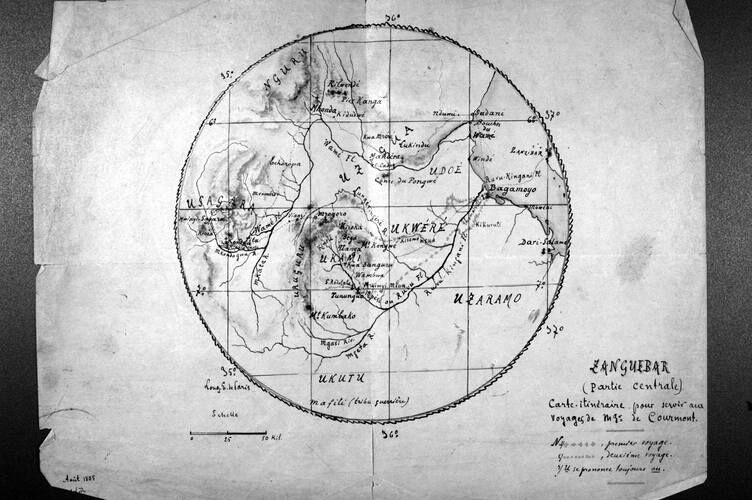

Original map of West Africa, drawn by Père Le Roy in 1888