Subjects
Grades
 100%
100%
 100%
100%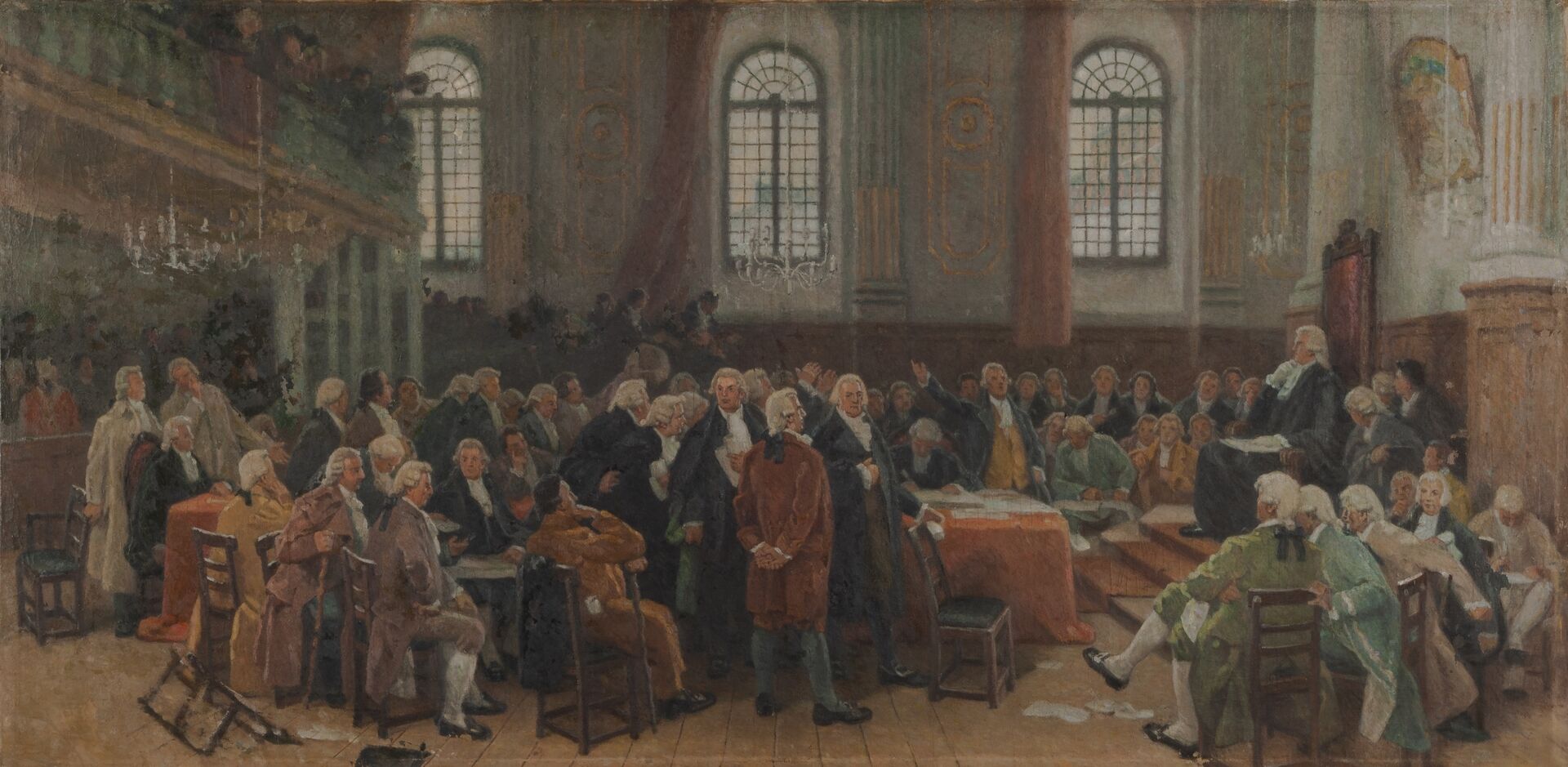
After the Constitutional Act was adopted in 1791, the population of Lower Canada remained overwhelmingly Francophone and Catholic. During this period, the population of Upper Canada remained predominantly Anglophone and Protestant.
In Lower Canada, the population grew from about 160 000 in 1791 to 600 000 in 1840, an increase of 440 000 people in about 50 years. Since French immigration stopped after the War of the Conquest, natural growth accounted for this major increase in the population.
The table below shows how the population in Lower Canada changed between 1791 and 1840. Although some data is missing, a large increase in the population is still evident.
| 1791 | 1806 | 1814 | 1822 | 1825 | 1827 | 1831 | 1840 |
| 160 000 | 250 000 | 335 000 | 427 465 | 479 288 | 473 475 | 553 134 | 600 000 |
Data source: Statistics Canada, 2015, and Campeau, Fortin, Lavoie, Parent, 2017. |
|||||||
As for Anglophones, natural growth and immigration were responsible for the increase in their population in both Canadas.
From 1791 to 1812, most Anglophone immigrants came from the United States. Many immigrants came to Lower Canada because the mother country offered them free land. As a result, the population of Lower Canada increased by 15 000 Anglophone inhabitants during this time. Anglophones chose mainly to live in Montreal, Quebec City, Gaspé, William-Henry (Sorel) and the Eastern Townships.

The War of 1812 between the United Kingdom and the United States changed the origin of Anglophone immigration. By 1815, most immigrants travelled from the British Isles (England, Scotland and Ireland) as opposed to the United States. These new inhabitants first settled in Lower Canada, which increased the number of Anglophones living there. This immigration later shifted to Upper Canada, which saw the Anglophone population grow from 10 000 people in 1791 to some 450 000 by 1840.
In 1801, the kingdoms of Great Britain (England and Scotland) and Ireland united. This new kingdom was called the United Kingdom.
In 1793, Upper Canada introduced a law to gradually abolish slavery in its territory. In 1833, the United Kingdom passed a law abolishing slavery on British soil and throughout its colonies, including the two Canadas. The Canadas represented freedom and became a refuge for thousands of Black slaves escaping the United States between 1815 and 1860 (Canadian Encyclopedia, 2015).
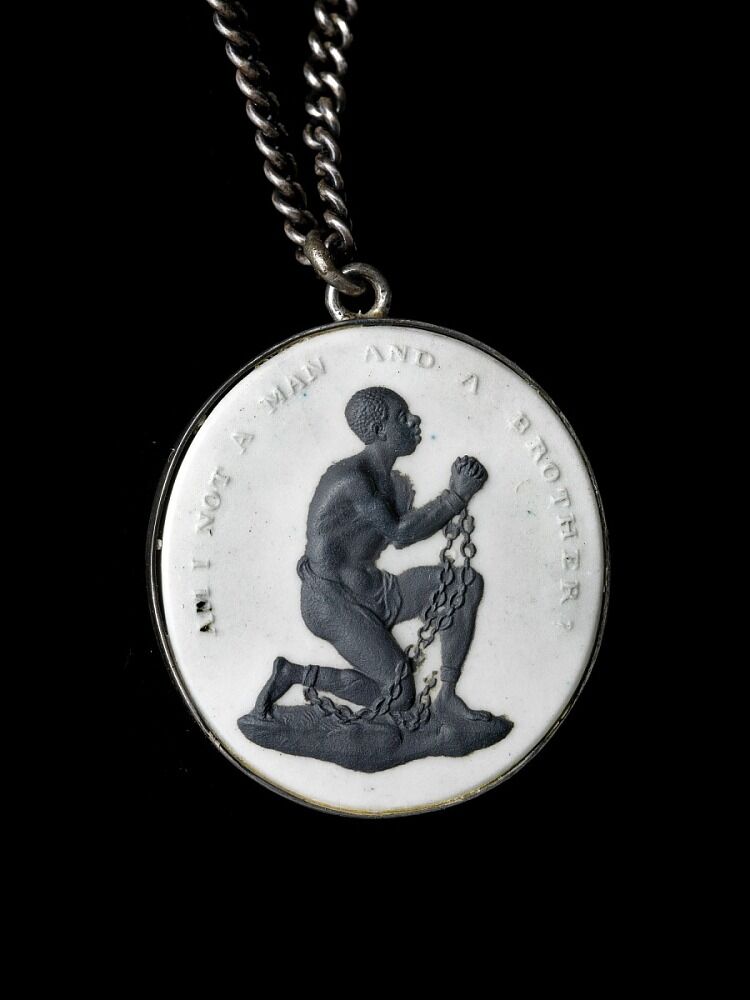
Anti-slavery medallion
“Am I not a man and a brother?”
Campeau, F., Fortin, S., Lavoie, R. et Parent, A. (2017). Mémoire.qc.ca : des origines à 1840 - 2e cycle (1re année) [Manuel de l’élève]. Chenelière éducation.
Huot, C. (1910-1913). Étude pour « Le Débat des langues » [Toile]. MNBAQ. https://collections.mnbaq.org/fr/oeuvre/600003329 *Extrait employé par Alloprof conformément à la Loi sur le droit d’auteur dans le cadre d’une utilisation équitable aux fins d’éducation [https://laws-lois.justice.gc.ca/fra/lois/c-42/page-9.html]
L. Henry, N. (2015, 29 janvier). Abolition de l’esclavage, loi de 1833. Encyclopédie canadienne. https://www.thecanadianencyclopedia.ca/fr/article/abolition-de-lesclavage-loi-de-1833
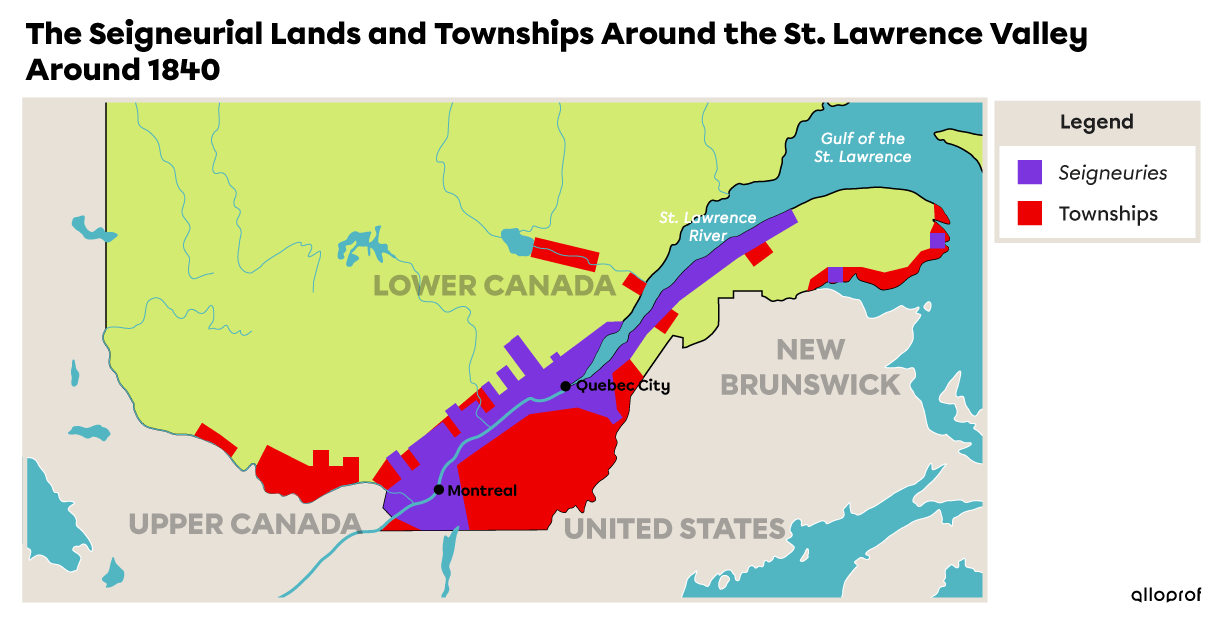
Leclerc, J. (2015). Vers 1840 [Carte]. CEFAN Université Laval. http://www.axl.cefan.ulaval.ca/francophonie/HISTfrQC_s3_Union.htm
Statistique Canada. (2015, 26 aout). Les années 1800 (1806 à 1871). https://www150.statcan.gc.ca/n1/pub/98-187-x/4064809-fra.htm
Wedgwood, J. (Après 1787). Antislavery Medallion [photographie]. National museum of American history. https://americanhistory.si.edu/collections/search/object/nmah_596365 *Extrait employé par Alloprof conformément à la Loi sur le droit d’auteur dans le cadre d’une utilisation équitable aux fins d’éducation [https://laws-lois.justice.gc.ca/fra/lois/c-42/page-9.html].
Social Groups in Lower Canada
At that time, Lower Canada’s society was very hierarchical.
Social Groups in Lower Canada
(large Anglophone majority)
Senior officials (members of the Legislative and Executive Councils, judges, Anglican bishop)
Military officers
(Anglophone majority)
Some French Canadian merchants
Priests
Parish priests
Religious communities of monks and nuns
(Francophone majority)
Lawyers
Doctors
Journalists
Surveyors
Etc.
(Francophone majority,
British-American, English, Scottish and Irish immigrants)
Farmers
Soldiers
Workers
Small merchants
Etc.
The Anglophone Elite
Colonial administrators chosen by the British Parliament governed Lower-Canadian society. They controlled all government institutions except the Legislative Assembly.
The business class had a great deal of influence on the colony’s economy. Unlike the ruling class, the business class believed the Legislative Assembly was to their advantage, since it allowed them to take part in politics. However, members from the business class were few in number and held only a minority of seats in the Legislative Assembly. This made it difficult for them to have the influence they wanted in the colony.
The Francophone Elite
The professional middle class gained influence in the late 18th century. These professionals could be elected to the Legislative Assembly and take part in the colony’s politics, defending the interests of the Canadiens.
The Language Debate
Language Debate at the first Legislative Assembly of Lower Canada, January 21, 1793
Source: Study on “The Language Debate” [Canvas], Huot, C., 1910-1913, MNBAQ (URL).*
The Catholic clergy continued to act as intermediaries between the Catholic population and the colonial rulers, generally avoiding political issues. The Clergy would only get involved if these issues were considered relevant, such as education.
As for lords, they lost their influence following the War of the Conquest. The business and professional middle classes took their place.
The People
The majority of the population in both Lower Canada and Upper Canada was made up of working class people, including the Canadiens, British immigrants and Indigenous peoples.