Subjects
Grades
 100%
100%
 100%
100%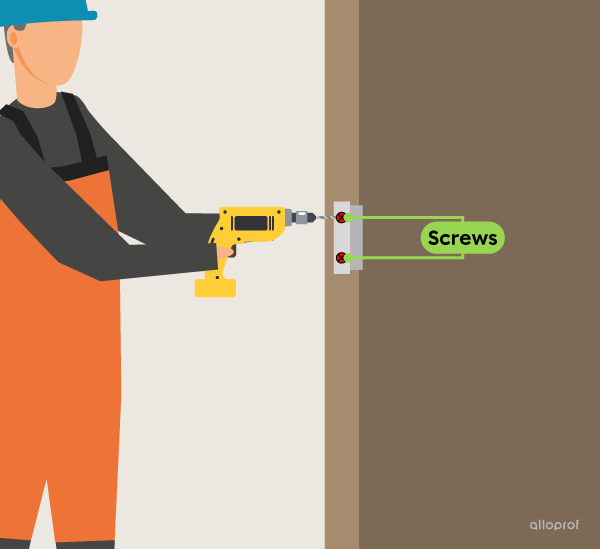 100%
100%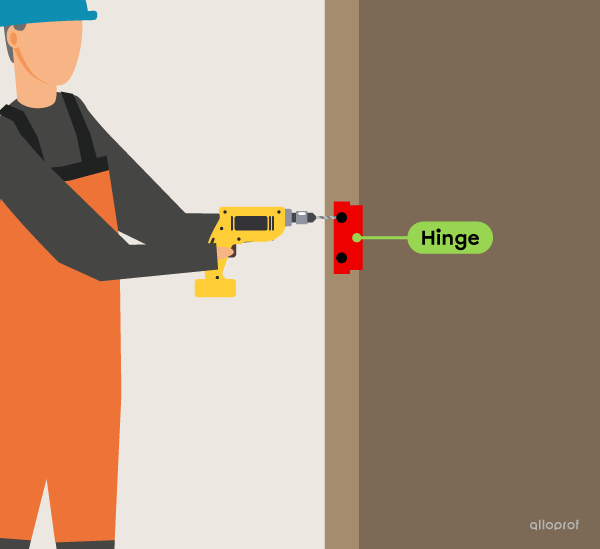 100%
100% 100%
100%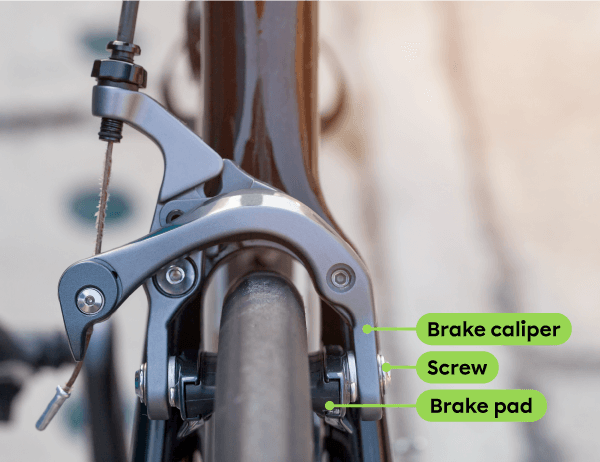 100%
100%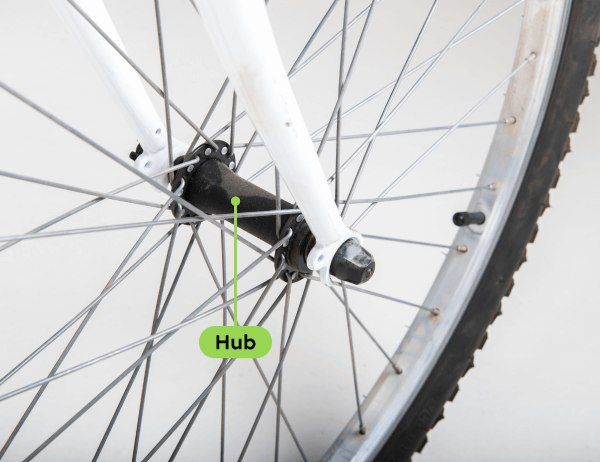
Each component of a technological system has a specific mechanical function to ensure that it functions properly.
A component is a part of a technological system.
A technological system is an organized set of interconnected components that influence one another to accomplish an overall function.
The mechanical function is the role fulfilled by a component or a mechanism in a technological system.
Here are two examples referring to a door with hinges and screws.

Installing a door with hinges
The screws on a door hinge hold the door within its frame. The screws are the components that serve the mechanical function of linking in the door’s technological system. They are called linking components.
Screws
The hinge guides the rotational motion of the door. The mechanical function of the hinge is guiding control, so it is called a guiding component.
Hinge
A basic mechanical function is the role fulfilled by a component in a technological system.
There are four basic mechanical functions.
A component can perform more than one basic mechanical function.
For example, the rivet in a pair of scissors performs a linking function and a guiding function.
A rivet in a pair of scissors
Linking is the function provided by a component that holds different parts of a technical object or technological system together.
A component that provides the linking function is called a linking component. When the link between parts is direct, there is no linking component.
A screw connects a bicycle’s brake pads to the brake caliper. The screw is the linking component.
Links in a bicycle
Guiding control is the function provided by a component that directs and controls the motion of one or more other components.
The component that fulfills the guiding control function is called the guiding component.
The hub guides the wheel in a rotational motion. The hub is the wheel’s guiding component.
Guiding control in a bicycle