Subjects
Grades
This section explains the procedure to be followed to determine the nature of certain salts.
Usually, salts that are not dissolved look like small crystals. To the naked eye, these crystals are very similar and even with the use of a magnifying glass or binoculars, it is extremely difficult to see the difference between some salts. Exposing these crystals to a flame and observing their colour is a good way to identify the different salts.
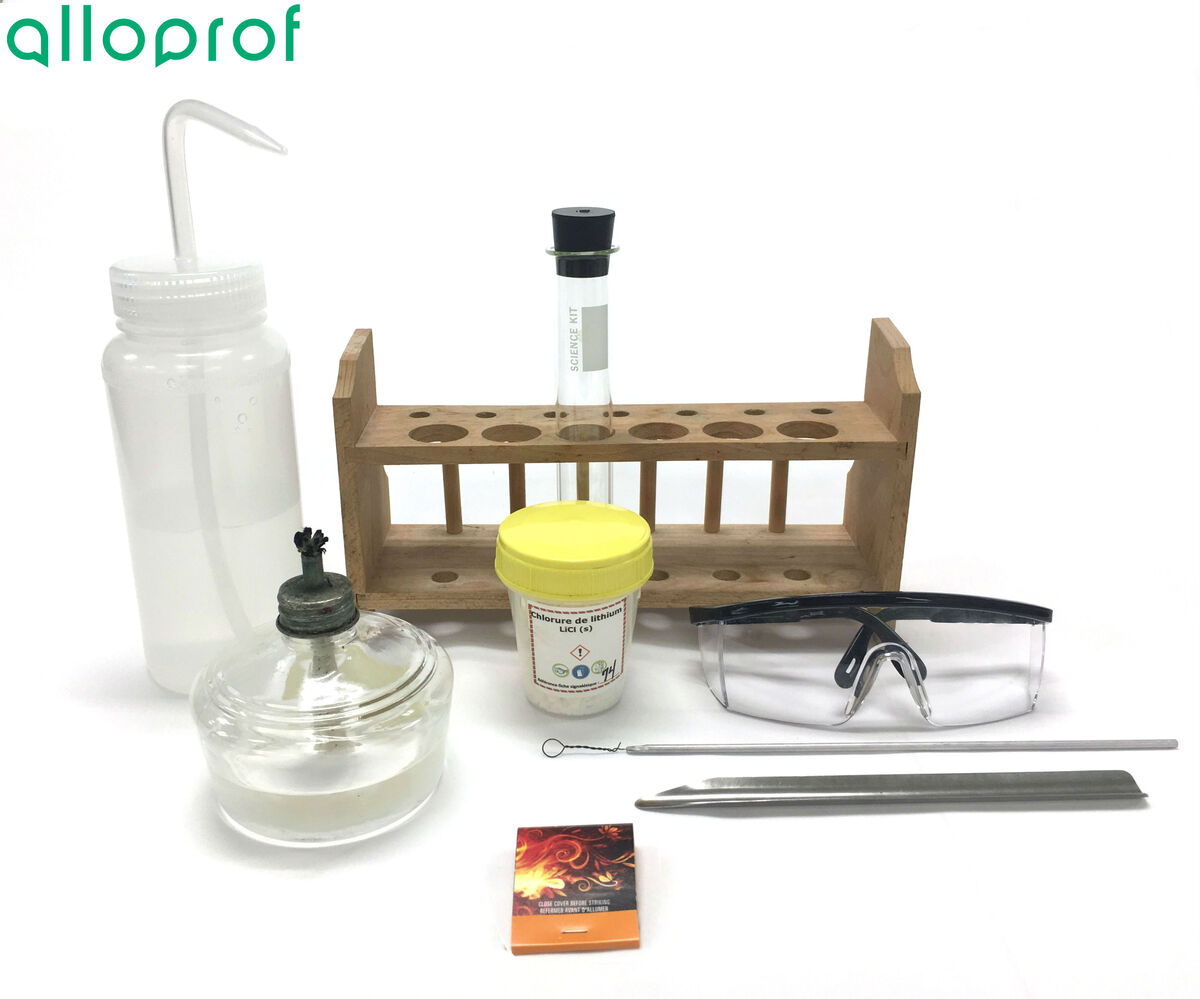
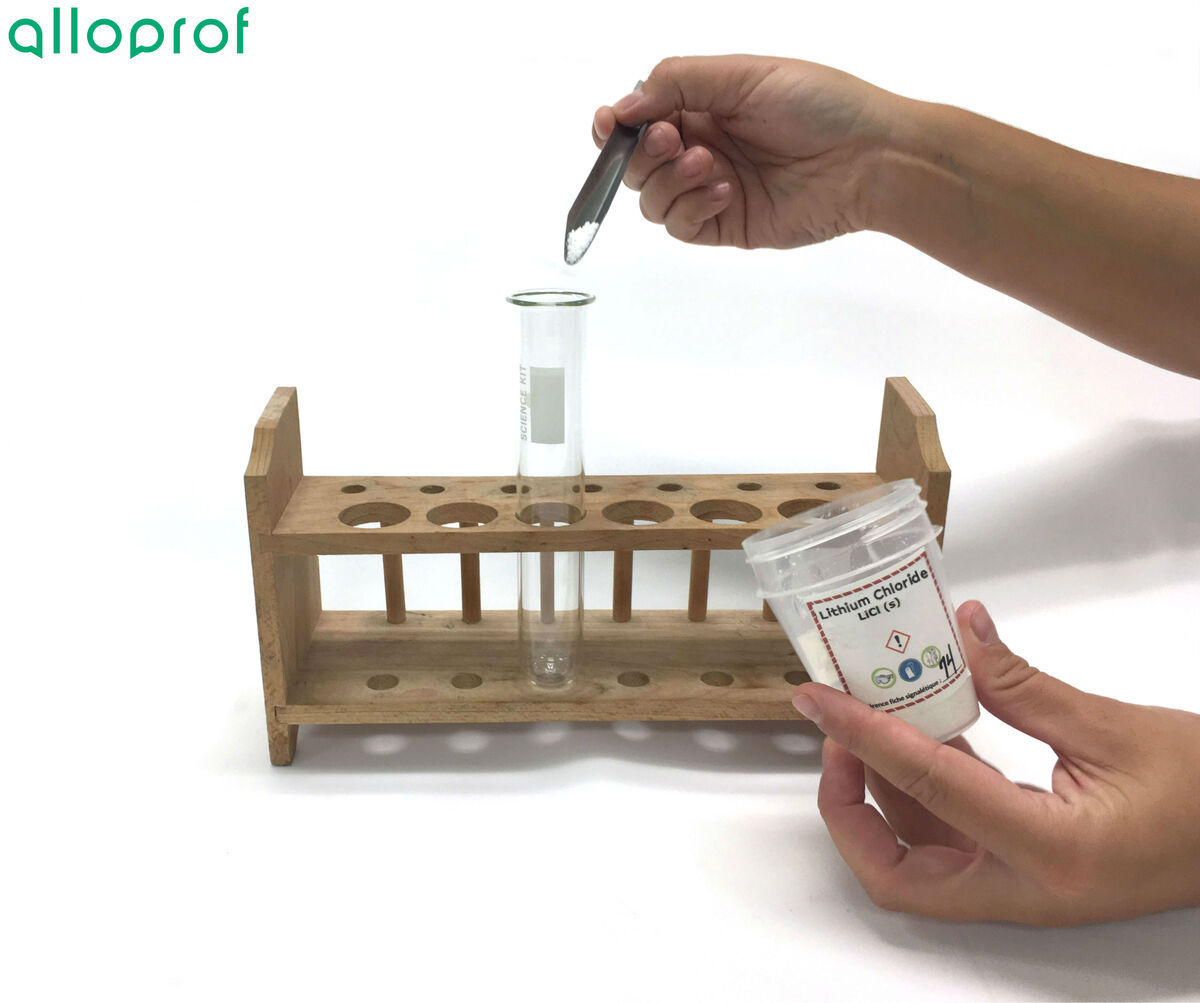
1. Take the tip of a spatula of salt and place this salt in the test tube.
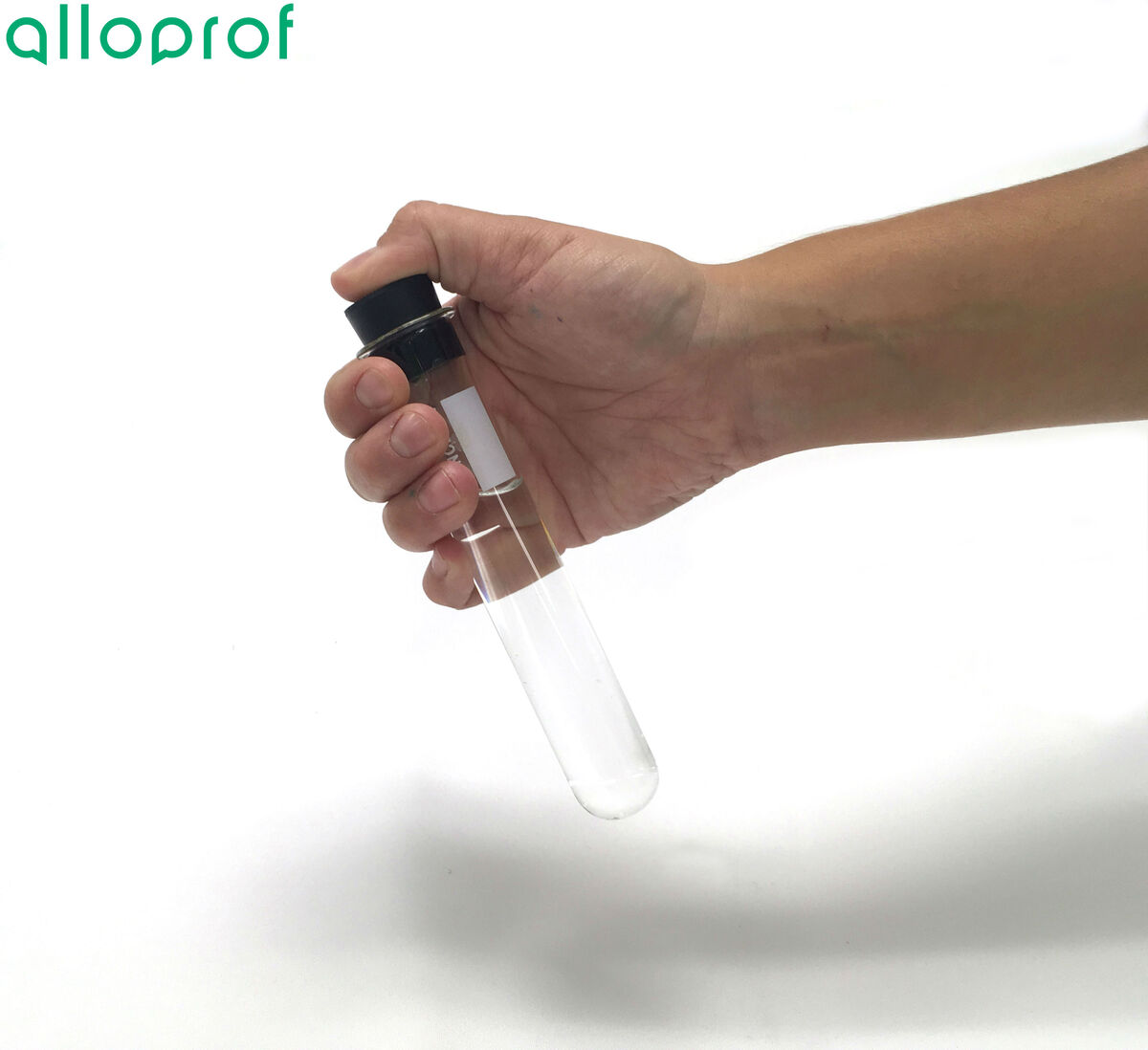
2. Add water up to two-thirds.

3. Shake the test tube thoroughly.
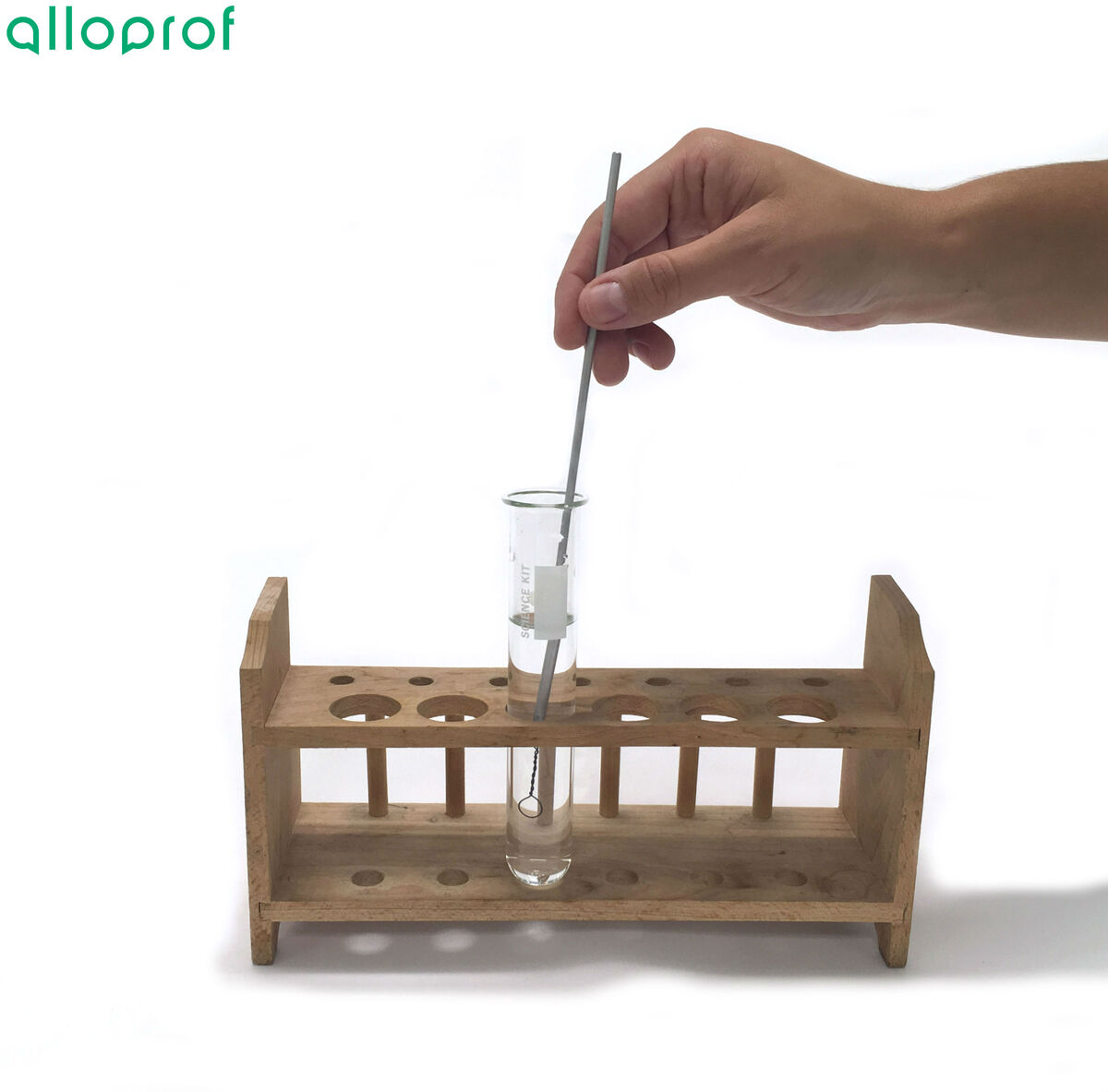
4. Place the loop of the metal rod into the liquid in the test tube.
5. Light the burner to obtain a bright flame.
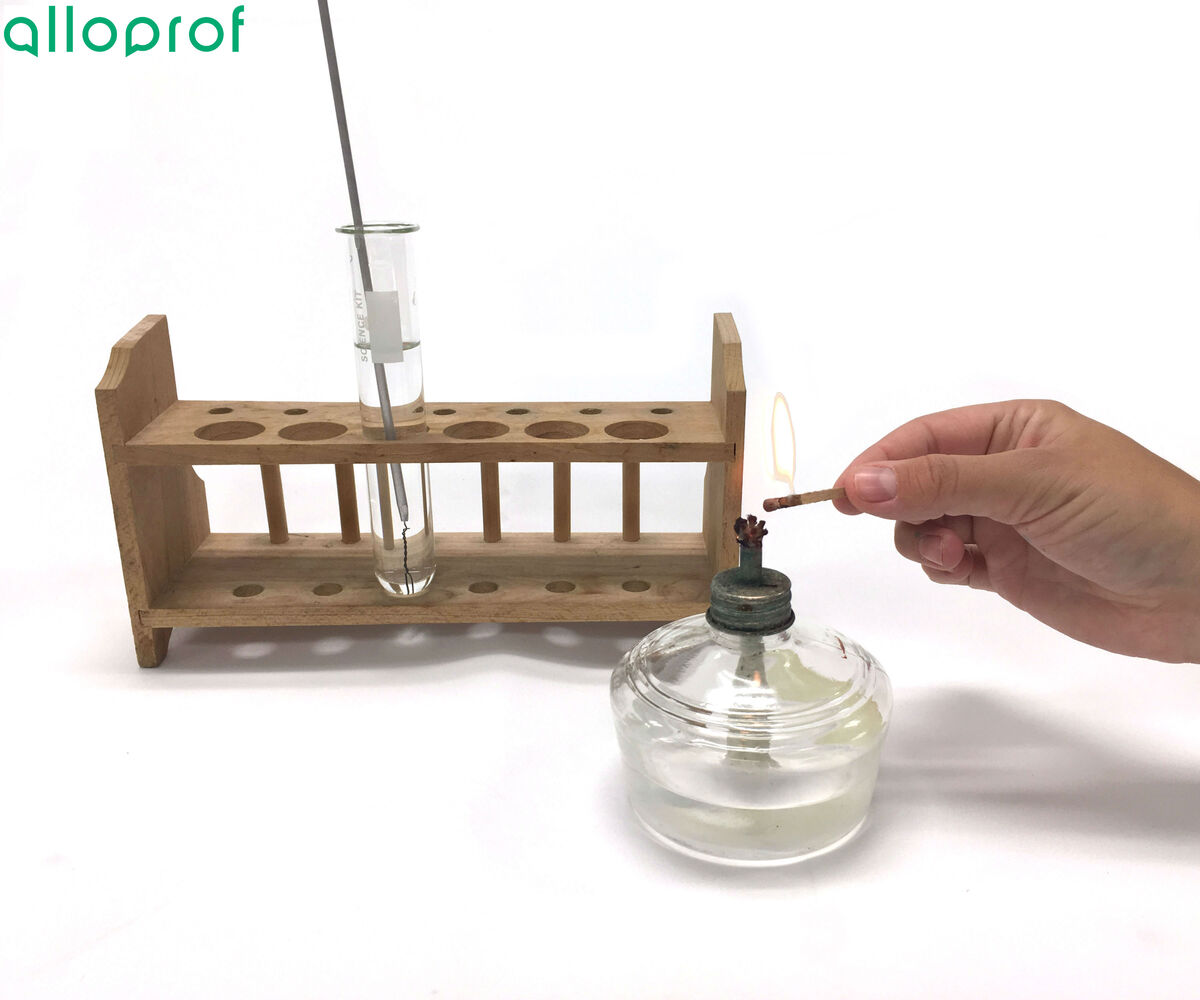
Always work safely when using a burner.
6. Position the loop of the metal rod over the flame. Observe the colours produced.
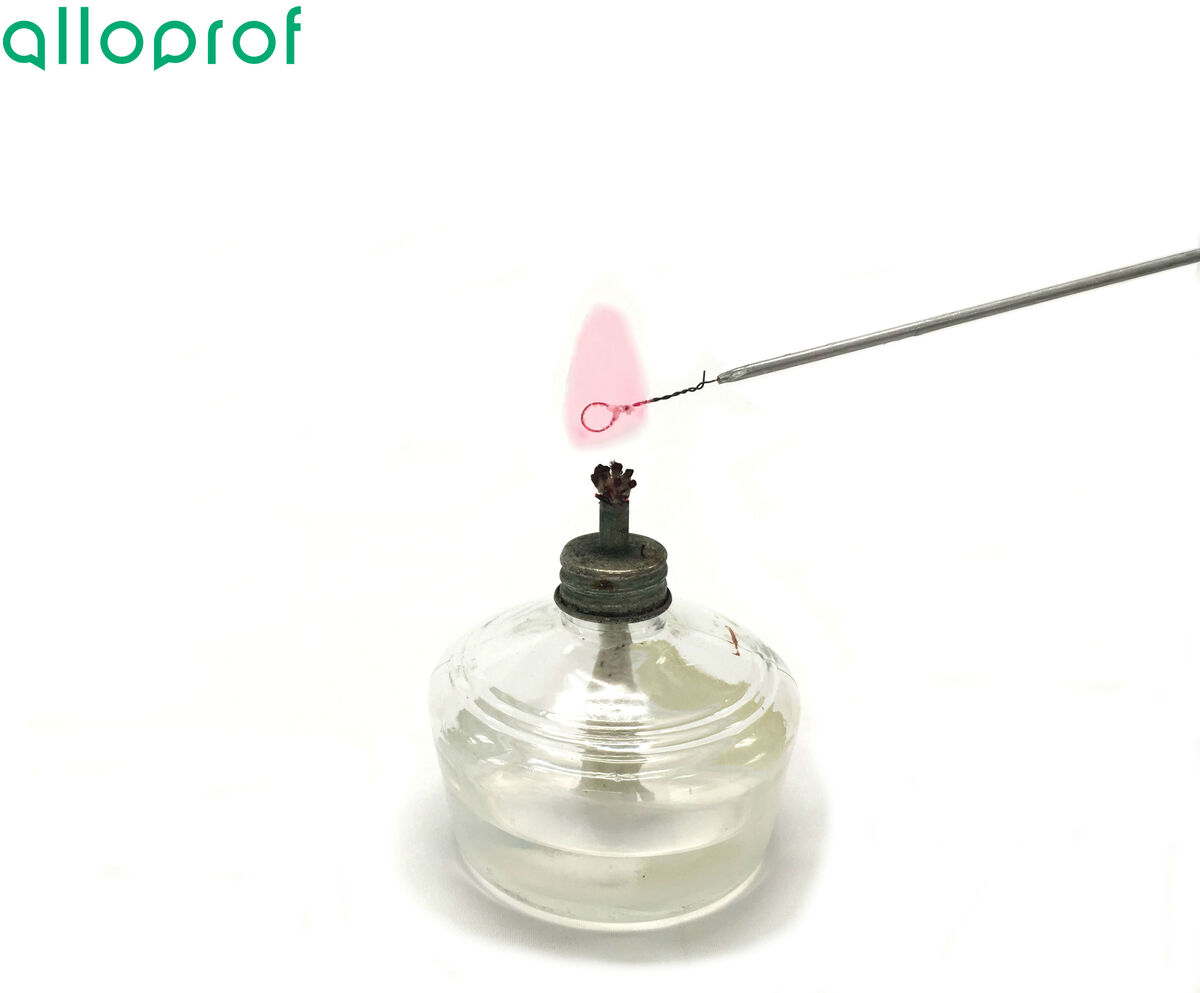
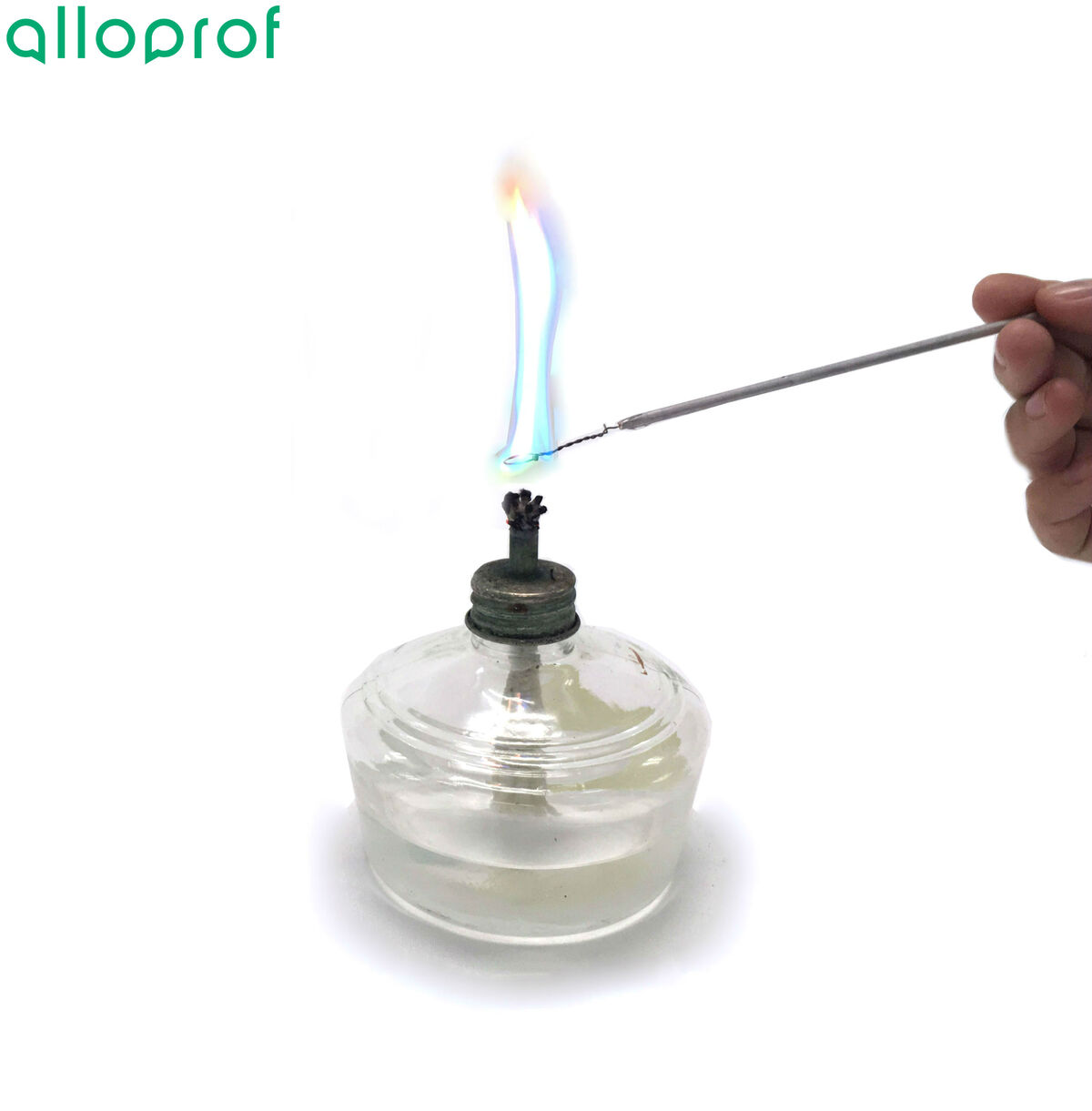
The colour of the flame produced by the salt combustion usually depends on the metal cation it contains. This table shows the colour that a salt will take depending on the metal cation.
| Cation | Copper|\left( Cu^{2+} \right)| | Barium|\left( Ba^{2+} \right)| | Strontium |\left( Sr^{2+} \right)| |
|
Flame colour
|
Green-blue | Pale green - yellow | Red |
 |
 |
 |
|
| Potassium |\left( K^{+} \right)| | Lithium |\left( Li^{+} \right)| | Sodium |\left( Na^{+} \right)| | |
| Lilac | Fuchsia pink | Orange yellow | |
 |
 |
 |