Subjects
Grades
 100%
100%
 100%
100%
Permafrost is a type of soil that is constantly maintained at a temperature of 0 °C or below for at least two consecutive years. It is therefore permanently frozen during this period of time.

Moments in the video :
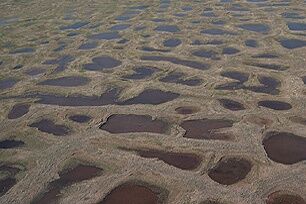
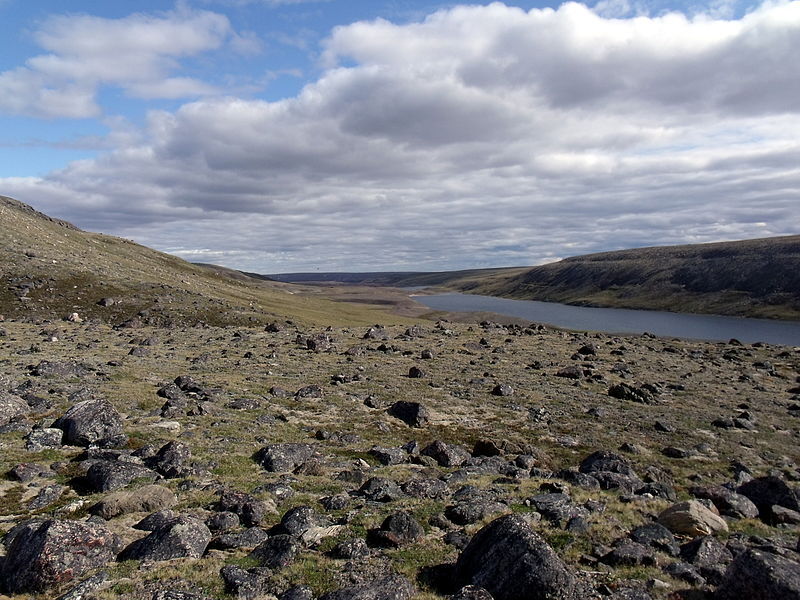
Permafrost is found in cold regions, that is in high latitudes near the poles and at high altitudes on top of some mountains. It covers about 20% of the Earth's surface, mainly in North America, Greenland, and Siberia. It covers almost half of Canadian territory.
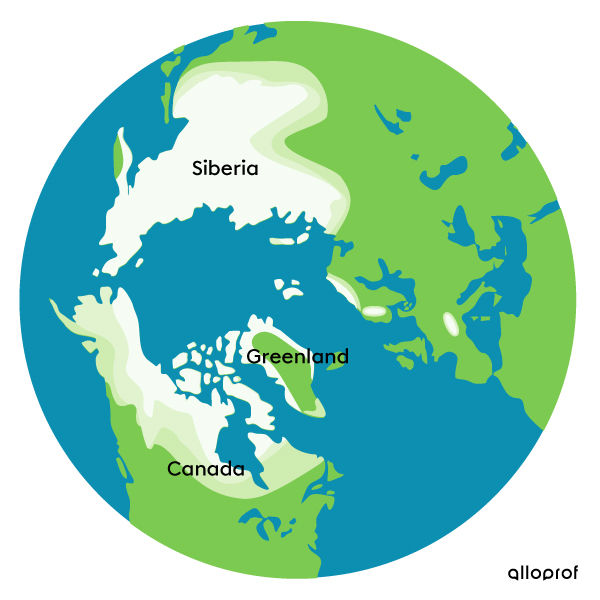
Distribution of permafrost types around the North Pole
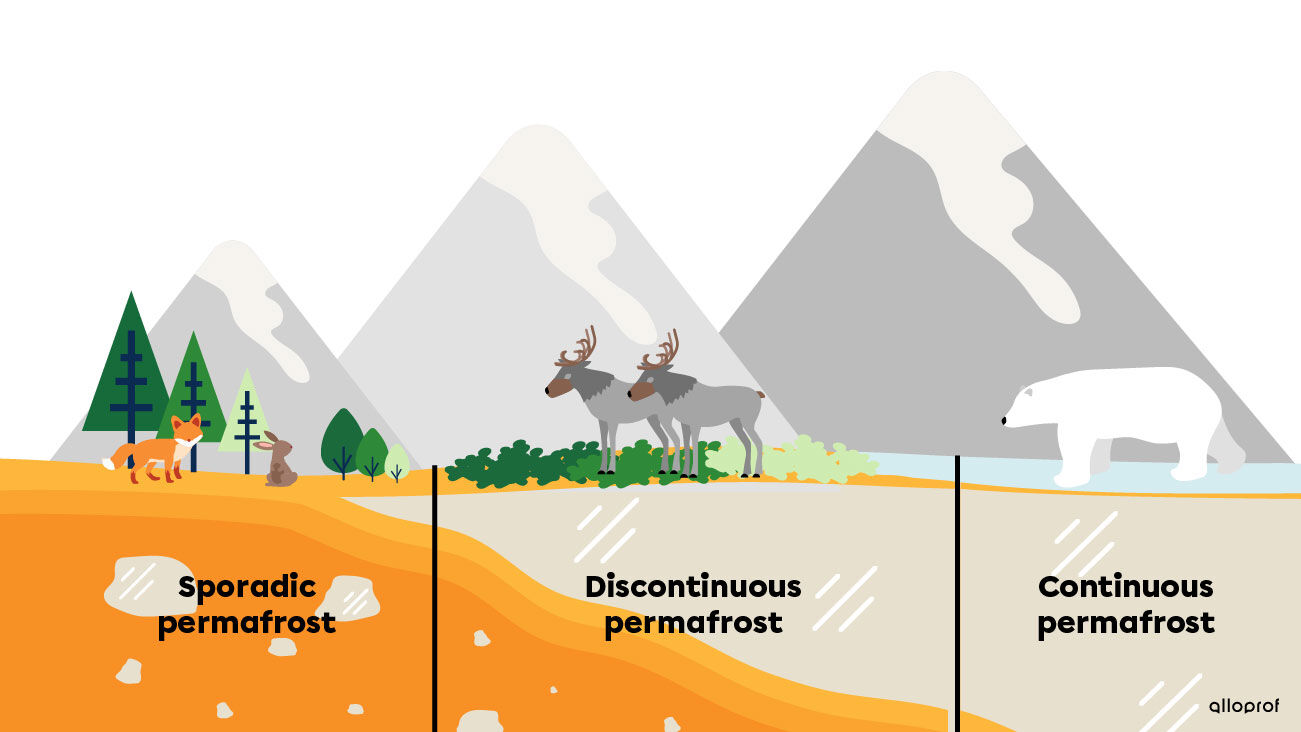
The permafrost area varies. It can be continuous (100% of the soil is frozen), discontinuous (50 to 90% of the soil is frozen), or sporadic (10 to 50% of the soil is frozen).

Sectional view of permafrost, from sporadic to continuous
Permafrost forms below the Earth's surface when the ground cools sufficiently during winter and does not thaw during summer. Its thickness is very variable, from 30 cm in the areas to the south to 500 m in the north. Regardless of its thickness, permafrost is topped with a surface layer called the active layer. The soil that makes up the active layer thaws in summer and allows tundra vegetation to grow for a short period of time.
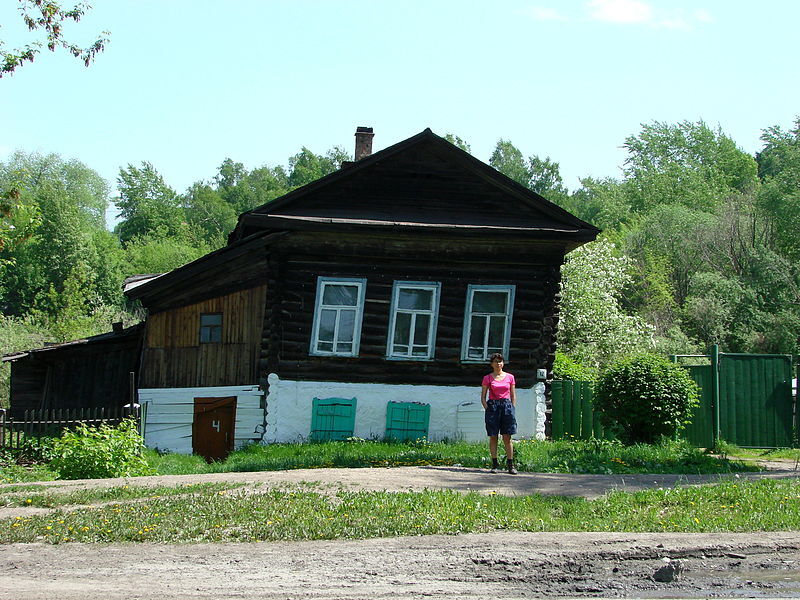
Permafrost changes as a result of climate change. Scientists agree that the permafrost is heating up and that the impacts are multiple. For example: the ice water underneath the earth liquefies, which makes the earth muddy and unstable. It then becomes impossible to build roads or paths. The northern villages will thus become more and more isolated.
In addition, melting permafrost can lead to the release of gases buried in the ground. Methane, for example, is trapped in the frozen permafrost ground. However, Earth's increasingly warm temperature could lead to the release of these gases into the atmosphere, thus intensifying the greenhouse effect.