Subjects
Grades
A magnetic field is produced when an electric charge is in motion. You can use the first or second right-hand rule to determine the direction of the magnetic field, depending on whether the current is flowing through a straight wire or a solenoid.
 100%
100%
 100%
100%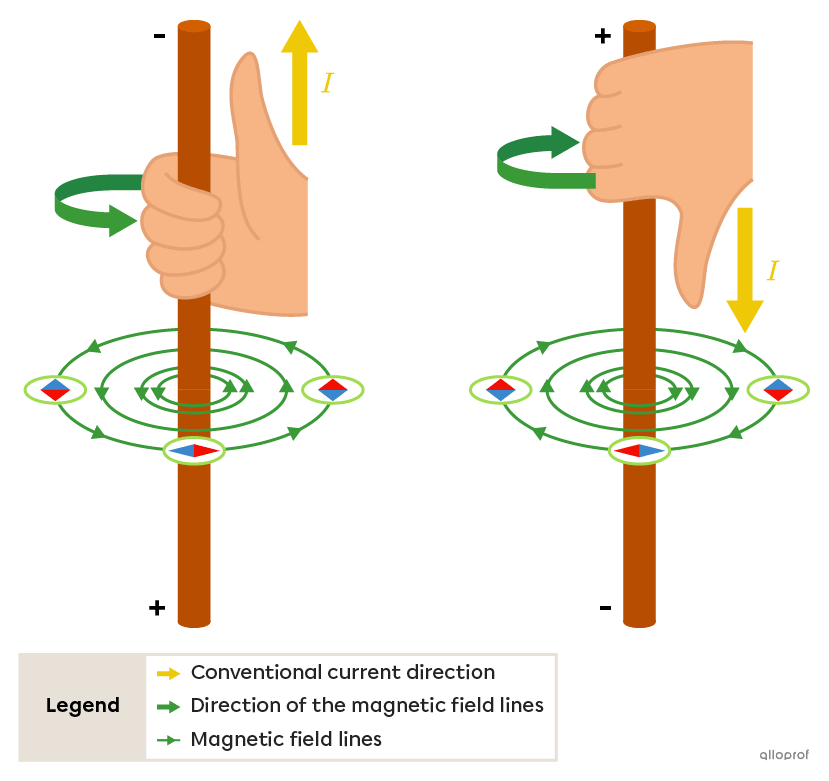 100%
100%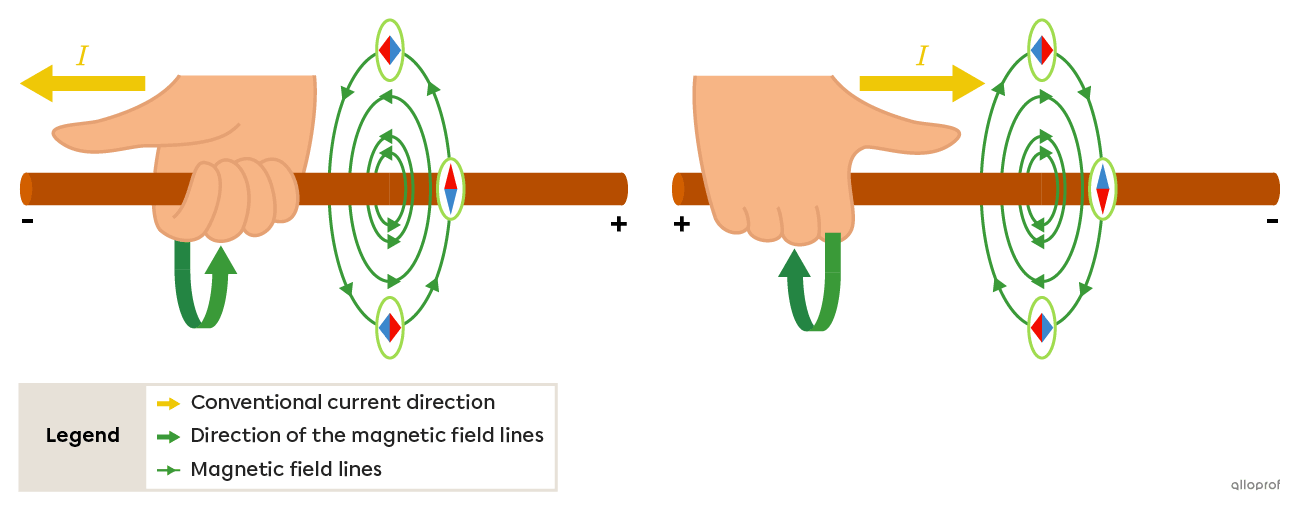 100%
100%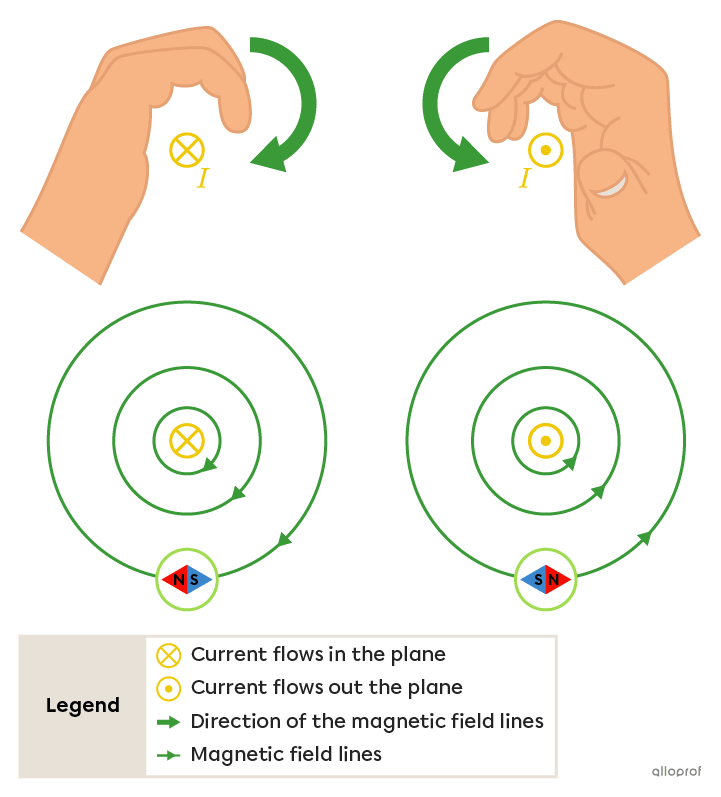 100%
100%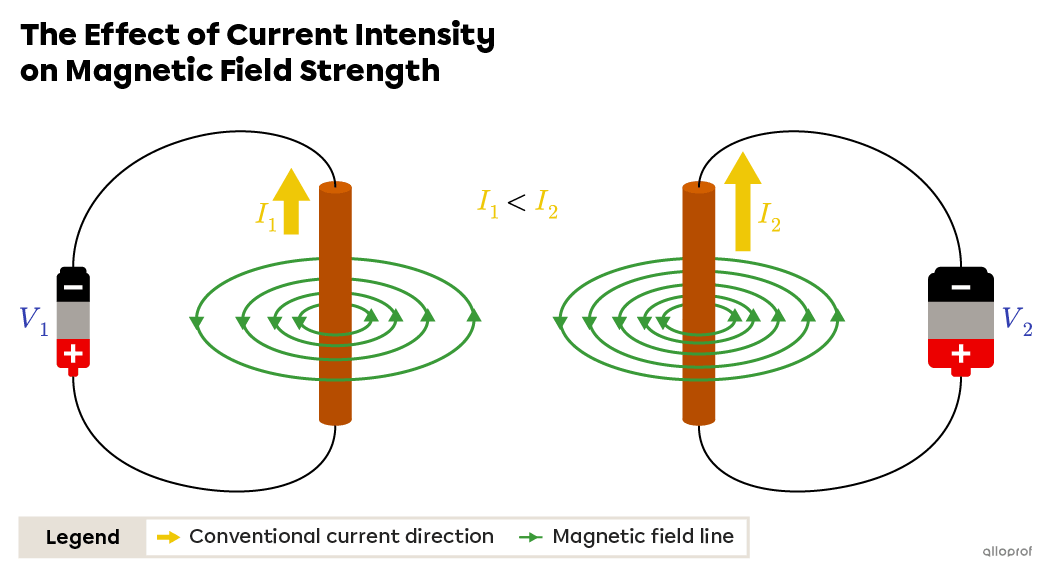 100%
100%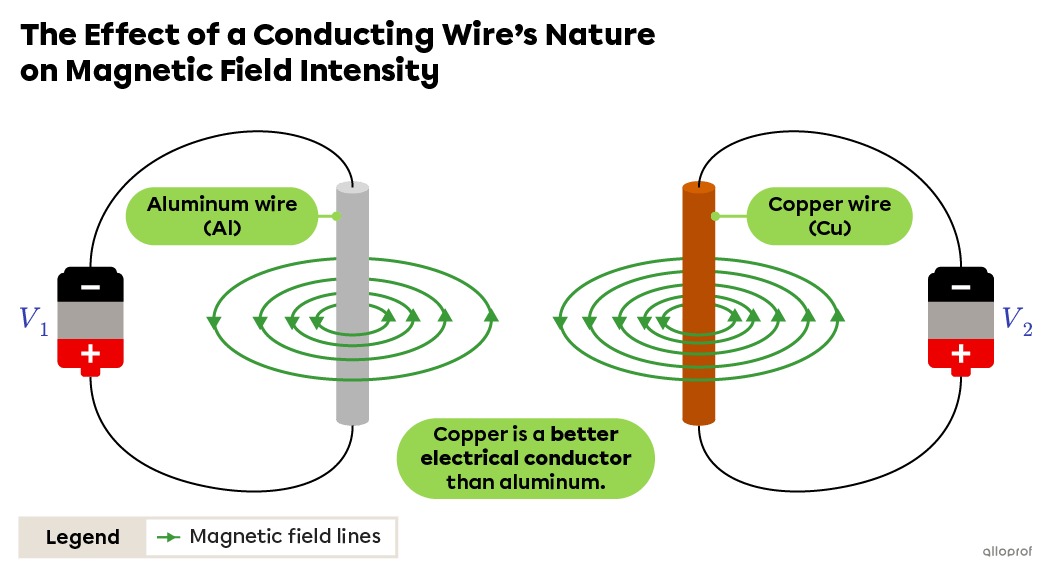 100%
100%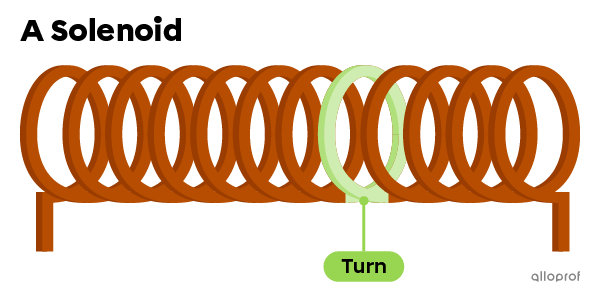 100%
100%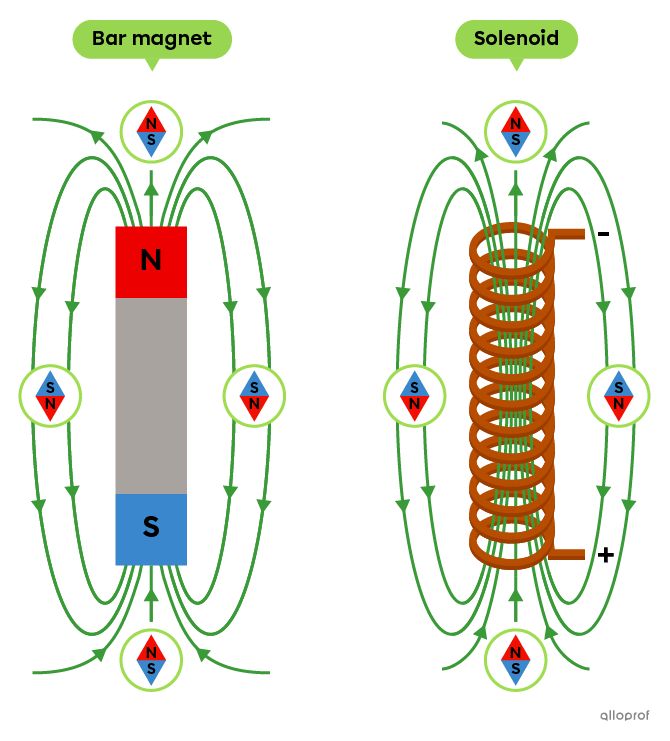 100%
100%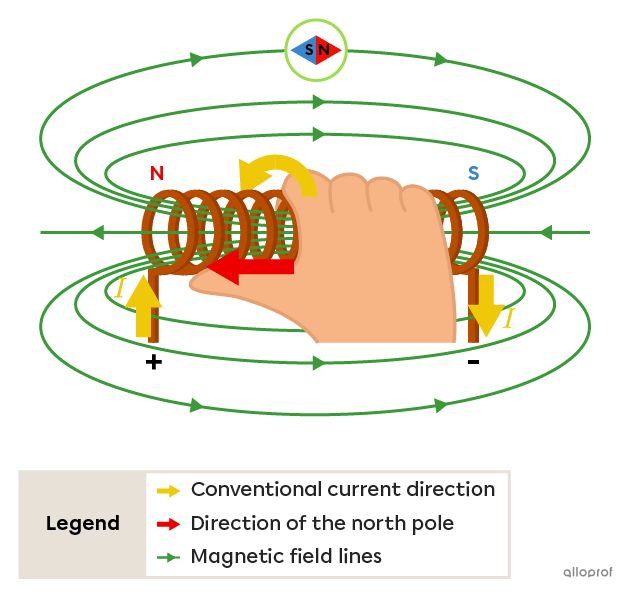 100%
100%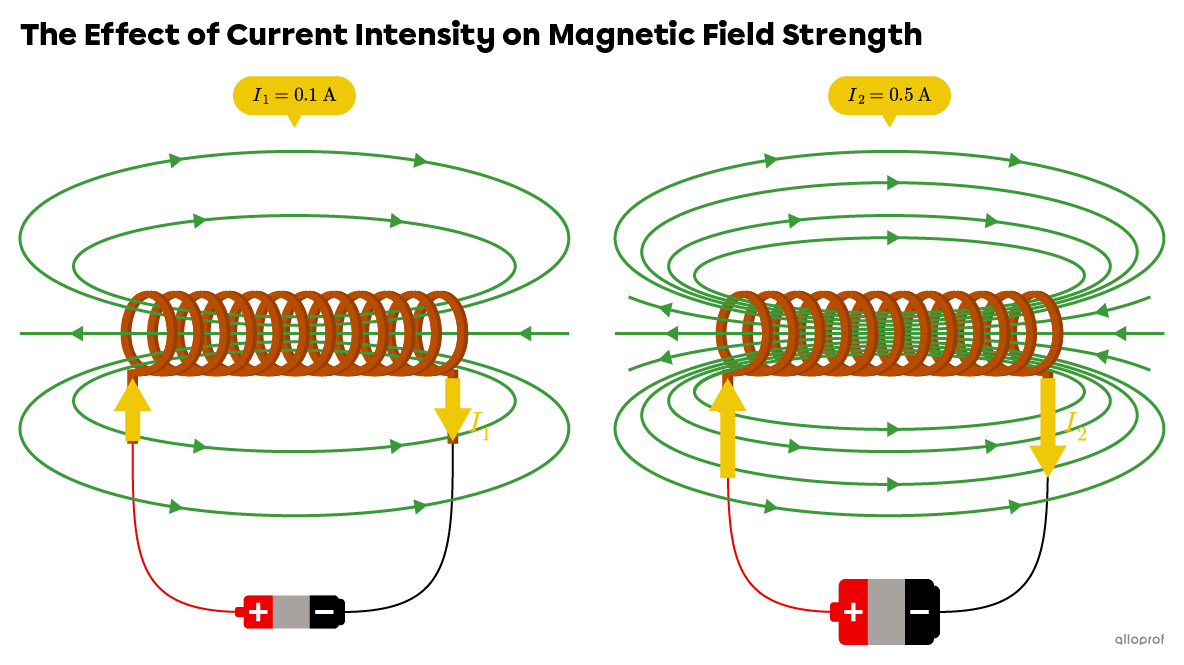 100%
100%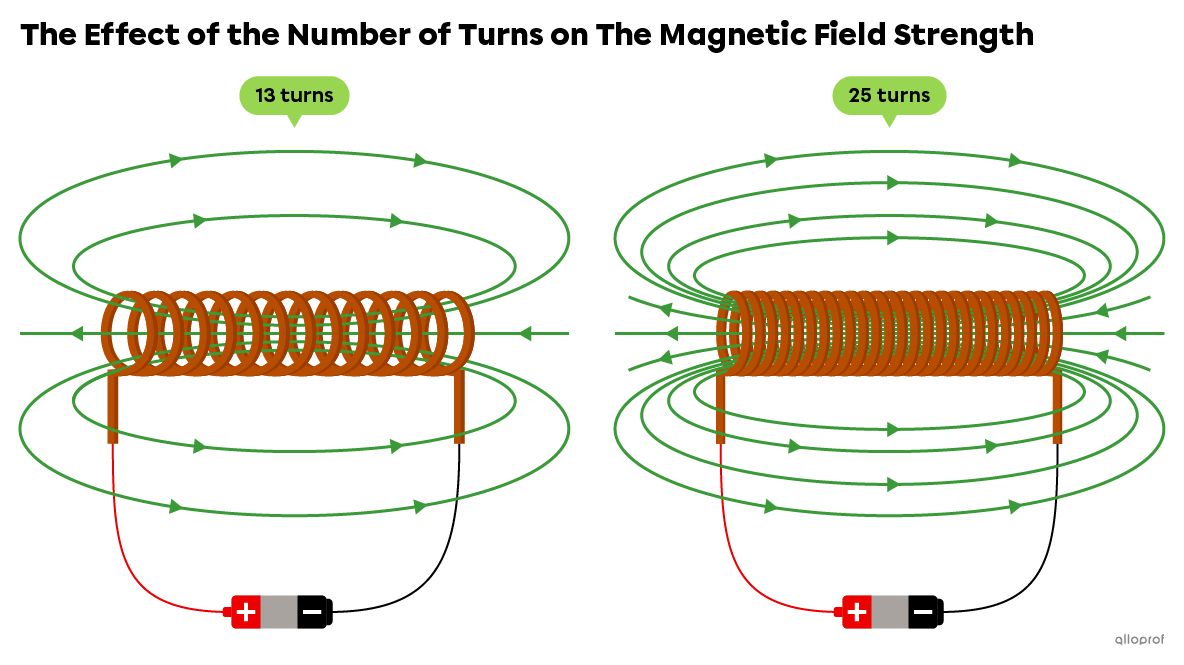 100%
100%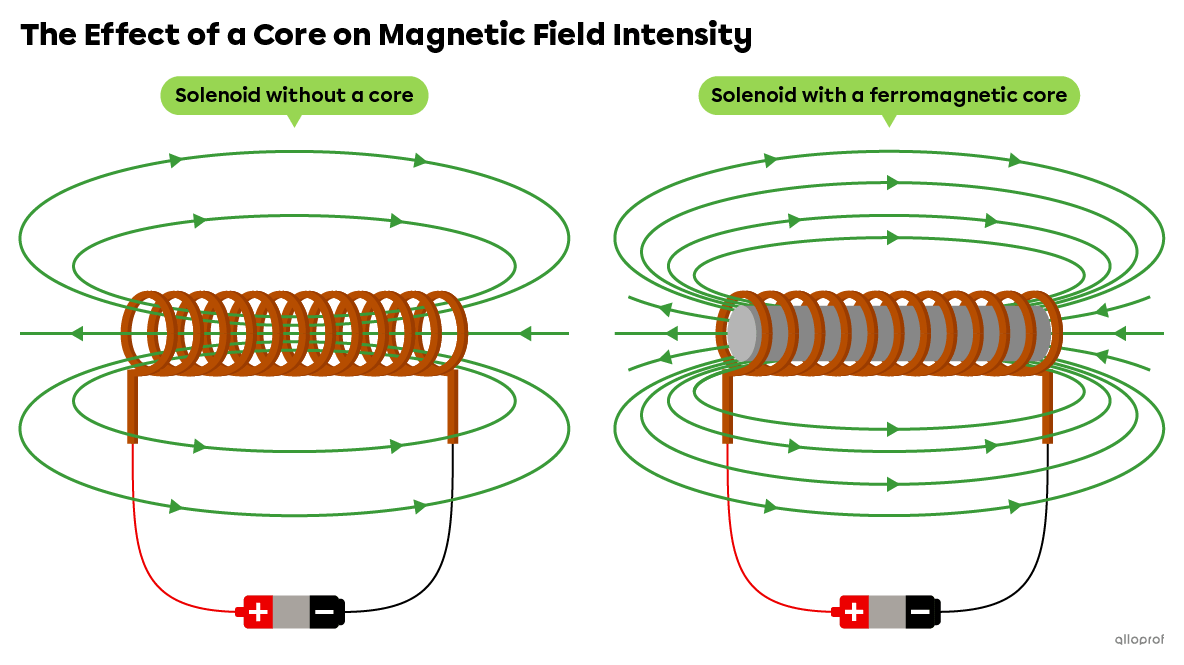 100%
100%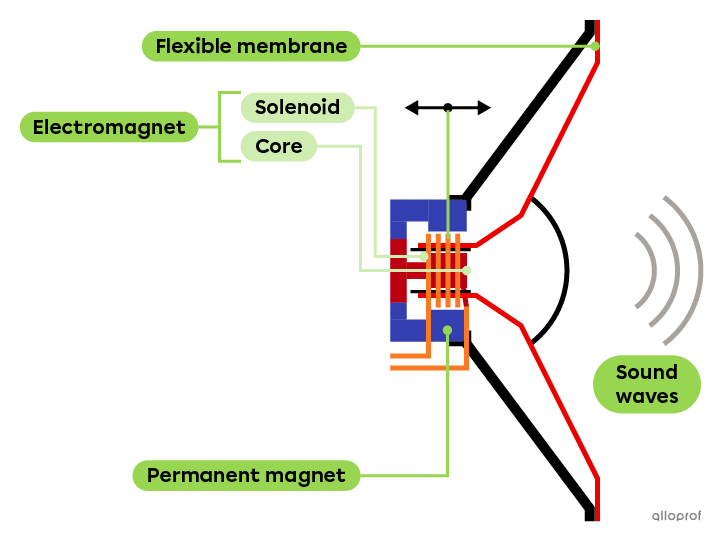 100%
100%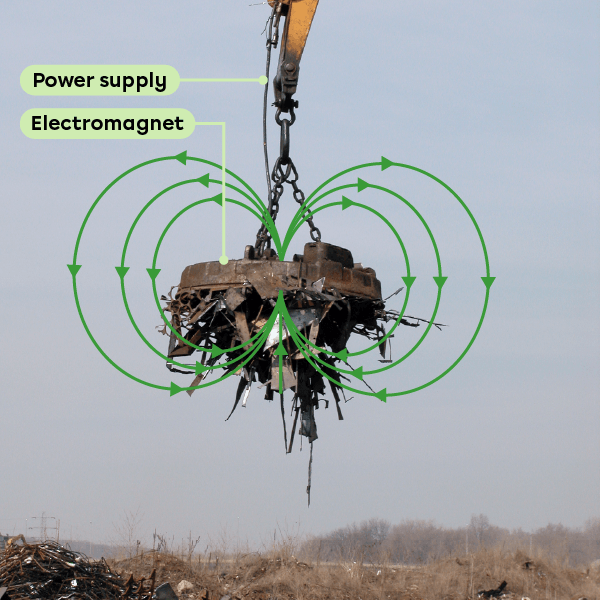
A magnetic field is invisible to the naked eye. In order to visualize it better, it is represented by imaginary lines called magnetic field lines.
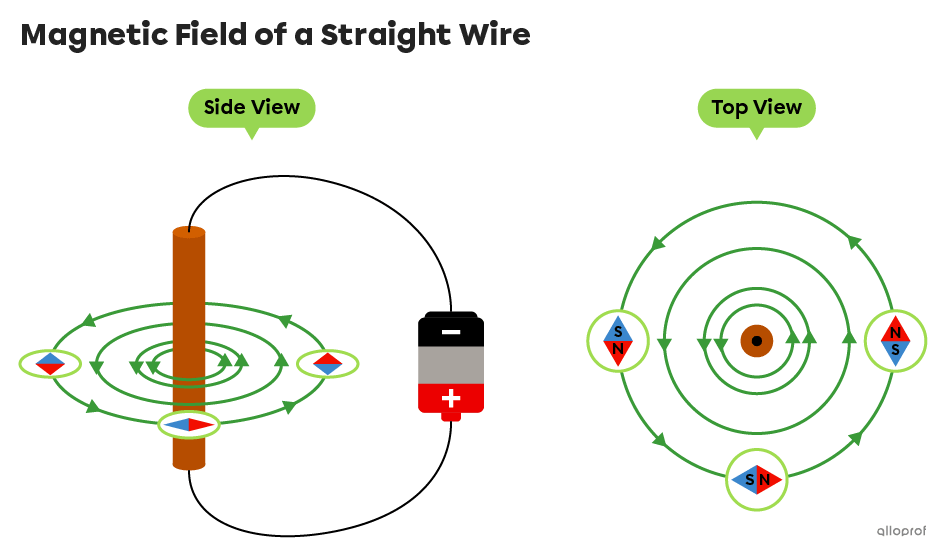
When an electrical current flows through a straight wire, a circular magnetic field is produced around the wire.
This is represented by circles with the same centre (the wire), called concentric circles. The further away a circle is from the wire, the weaker the field, which is why the outer circles have more space between them.

You can use the first right-hand rule to determine the direction of magnetic field lines (or the orientation of the north pole of a compass) around a straight wire.
The intensity of the magnetic field produced around a straight wire depends on several factors, including:
The greater the current intensity (I), the more powerful the magnetic field produced will be.
The greater the electrical conductivity of the wire’s material, the more powerful its magnetic field will be.
A solenoid is a conducting wire wound into a helix shape (like a spring). Each coil of wire is called a turn.
When an electrical current flows through a solenoid, the magnetic fields produced around each turn of wire combine to form a single, much more powerful field, similar to the field produced around a bar magnet.
As with a bar magnet, the magnetic field outside a solenoid runs from its north pole to its south pole. Inside a solenoid, the magnetic field runs from its south pole to its north pole.
The position of the north pole and south pole of a solenoid is dictated by the direction of the electrical current flowing through it. The poles of a solenoid can therefore be inverted by changing the direction of the current in the circuit.
You can use the second right-hand rule to find the north pole of a solenoid.
The intensity of the magnetic field produced by a solenoid depends on several factors, including:
The higher the intensity of the electric current, the stronger the magnetic field produced by a solenoid.
The more turns a solenoid has, the stronger the magnetic field will be.
The addition of a ferromagnetic rod in the centre of a solenoid will considerably increase the intensity of its magnetic field. This rod is called a core.
When an electrical current flows through a solenoid, the core becomes magnetized and its magnetic field reinforces the field produced by the solenoid. The nature of the core also affects the intensity of the magnetic field.
A device capable of producing a powerful, temporary magnetic field is called an electromagnet. Solenoids with ferromagnetic cores are electromagnets.
In engineering, electromagnets are commonly used to make many technological objects all around us.
A speaker needs an electromagnet to work.
A speaker is made up of a flexible membrane attached to the solenoid of an electromagnet. The solenoid is mounted in the centre of the speaker, so that it only allows translational motion.
The electromagnet is surrounded by a permanent magnet. This makes it so that when an electrical signal passes through the electromagnet, the magnetic field it produces interacts with the permanent magnet.
Depending on the direction and intensity of the current flowing through the electromagnet, the solenoid is attracted or repelled by the permanent magnet, causing it to oscillate.
The oscillating motion of the solenoid is then transmitted to the flexible membrane, enabling it to momentarily compress the surrounding air particles and produce a sound wave.
The Role of Electromagnets in Speakers
A lifting electromagnet is commonly used in metal recycling yards to move scrap metal around. When powered by an electrical current, these gigantic electromagnets produce a magnetic field capable of attracting tons of ferromagnetic waste.