Subjects
Grades
 100%
100%
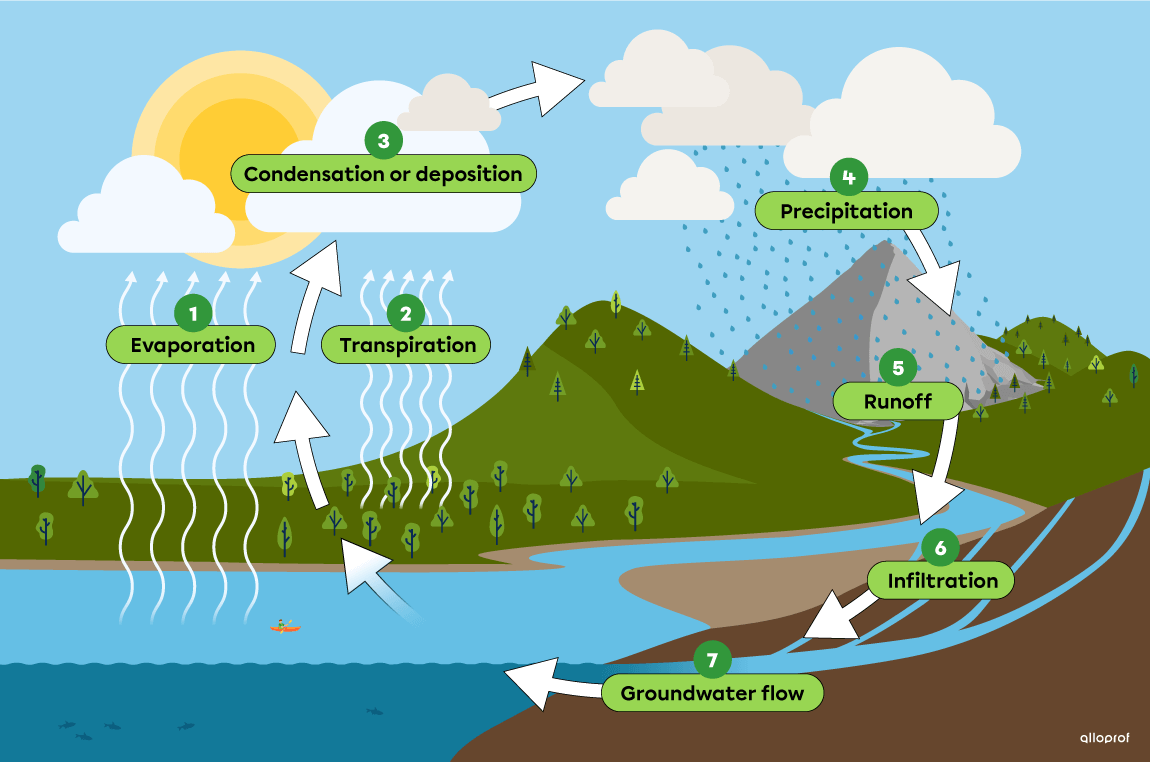
The water cycle is the continuous circulation of water molecules in the hydrosphere.
The hydrosphere refers to all liquid, solid and gaseous water on Earth.
During the water cycle, water molecules circulate between the atmosphere, the lithosphere and the biosphere. At certain stages, water changes states. It can be solid, liquid or gaseous.
The following image shows the different stages of the water cycle.

The water cycle
Evaporation is the transformation of water from liquid to gaseous state at ambient temperature.
Liquid water on the Earth's surface evaporates due to the heat of the Sun and other atmospheric conditions, such as low humidity or the presence of winds. Once in gaseous state, water mixes with other gases in the atmosphere.
Since gaseous water is invisible, the evaporation process cannot be seen.
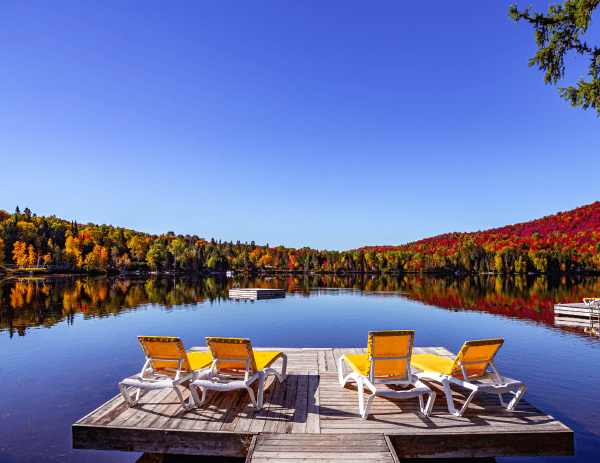
Evaporation of water from a lake
Transpiration is one of the processes by which water is eliminated from the bodies of living organisms.
Although transpiration occurs in both animals and plants, the water transpired by plants has a greater impact on the water cycle. Liquid water is first absorbed by their roots, then eliminated mainly through their leaves in gaseous form. The water vapour then mixes with other gases in the atmosphere.
Since gaseous water is invisible, we cannot see the transpiration process of plants.
Together, the transfer of water due to evaporation from the soil and transpiration in plants is referred to as evapotranspiration.
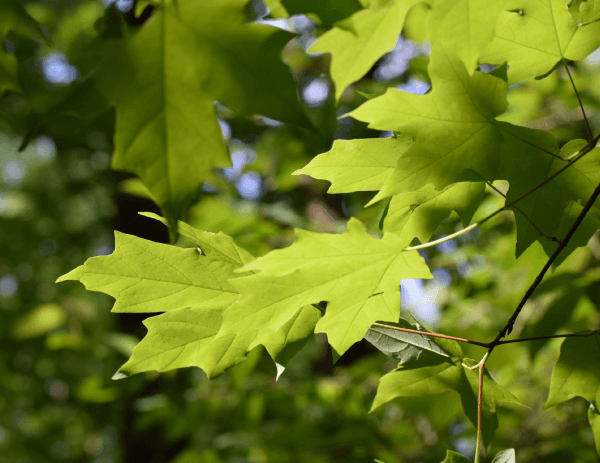
Transpiration in plants
Condensation and deposition are transformations of water from gaseous to either liquid or solid state in the atmosphere.
Gaseous water (water vapour) cools as it rises in the atmosphere and comes into contact with cold air masses. It loses heat and condenses into fine liquid droplets or deposits in the form of small solid particles, depending on the temperature.
Some clouds, fog and mist are examples of condensation. Generally speaking, clouds at low altitudes are made up of droplets of liquid water, while clouds at higher altitudes are composed of ice crystals formed through deposition.
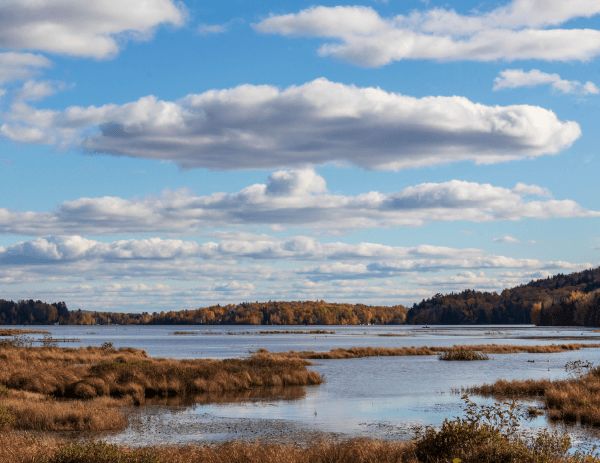
Formation of clouds
Precipitation is the transfer of liquid or solid water to the ground from clouds.
When the particles of liquid or solid water suspended in the atmosphere become too large and heavy, they fall from the clouds and return to the ground.
Precipitation can take several forms, depending on temperature and weather conditions. It can be solid (e.g., snow, hail) or liquid (rain).
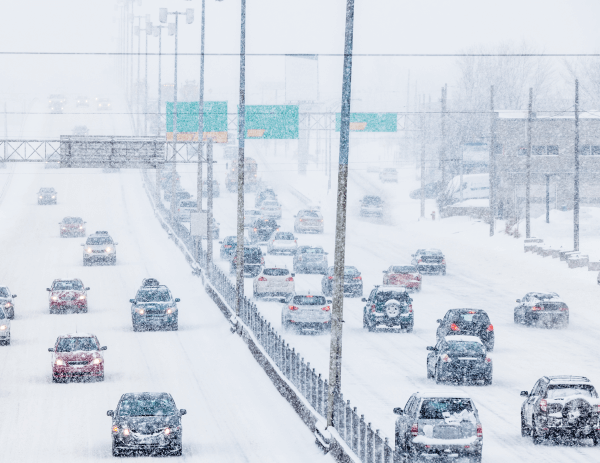
Snow

Rain
Runoff is the flow of liquid water over the surface of the ground.
Liquid water from precipitation or melting snow flows down mountains to join streams and eventually return to the ocean.
Creeks, rivers and streams are examples of runoff.
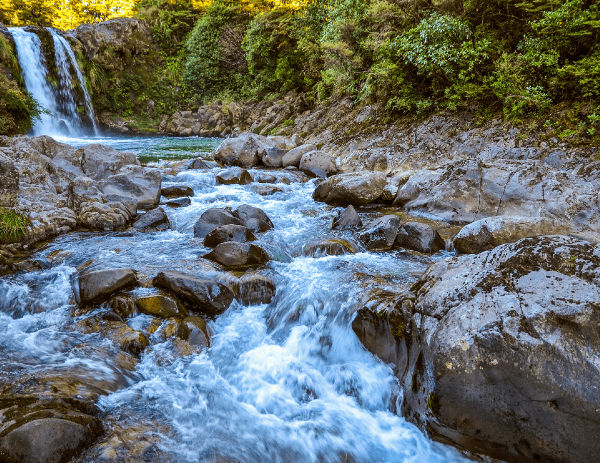
A water stream
Infiltration is the process by which liquid water penetrates the soil.
Liquid water from precipitation or melting snow seeps into the ground. Some types of soil are better at allowing water to infiltrate than others. Once it is in the soil, the water is either used by plants or joins the groundwater reservoirs.
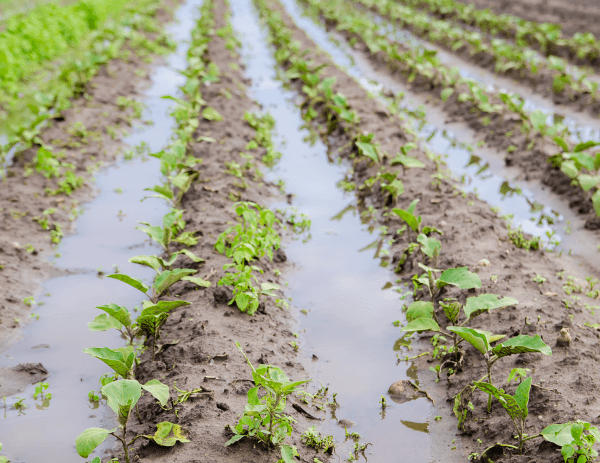
Infiltration in a field
Groundwater flow is the circulation, or movement, of water beneath the Earth's surface, in the Earth's crust.
Groundwater is stored underground and eventually returns to lakes or oceans. It is used to supply drinking water via artesian wells.
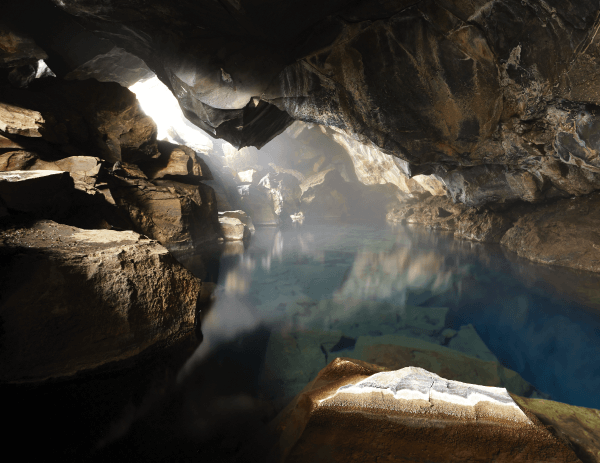
Groundwater
Tsauner, O., Huang, S., Greenberg, E., Prakapenka, V. B., Ma, C., Rossman, G. R., Shen, A. H., Zhang, D., Newville, M., Lanzirotti, A. et Tait, K. (2018). Ice-VII inclusions in diamonds: Evidence for aqueous fluid in Earth’s deep mantle. Science, volume 359 (6380) 1136-1139. https://www.science.org/doi/10.1126/science.aao3030