Subjects
Grades
 100%
100%
 100%
100% 100%
100%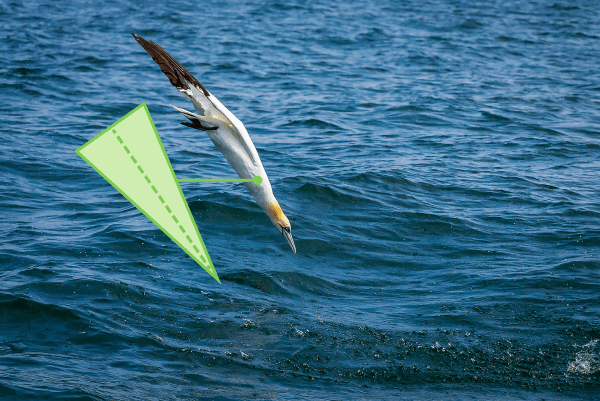
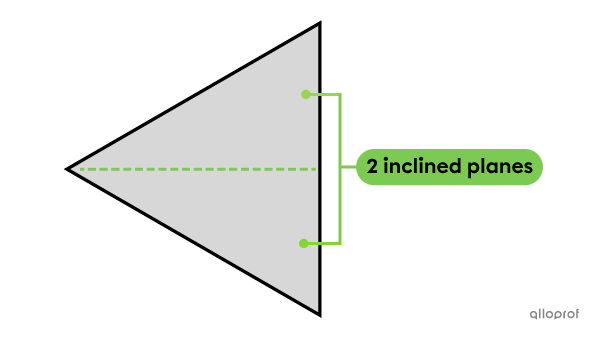
The wedge is a simple machine that consists of two inclined planes placed against each other. It is used to reduce the force required to separate objects.

The wedge
The slope of the two inclined planes that form a wedge influences the force that needs to be applied to penetrate an object and the depth to which it must be inserted for separation.
The sharper the wedge, the further it has to be pushed to separate the object, but the smaller the force to be applied.
In the following two cases, an object is separated by more or less pointy wedges.
The two inclined planes forming the wedge in the following image have steep slopes. The wedge is therefore not very sharp.
This wedge needs to be driven less deeply into the object to separate it, but the force to be applied is greater.
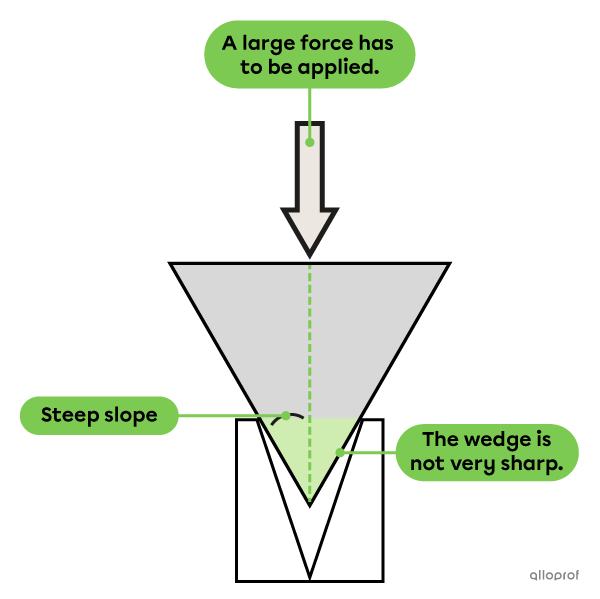
A less sharp wedge
The two inclined planes forming the wedge in the following image do not have very steep slopes. The wedge is therefore very sharp.
This wedge needs to be driven more deeply into the object to separate it, but the force to be applied is lower.
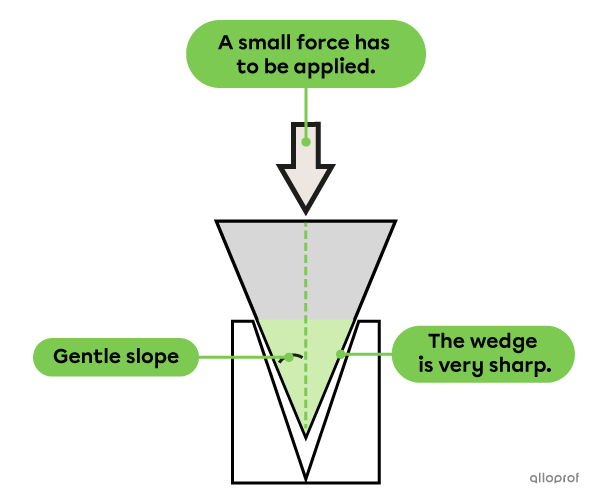
A very sharp wedge
The ax and the body of the northern gannet during a dive are examples of wedges.
An ax
The ax reduces the force required to split the wood.
A northern gannet
The gannet's pointy body profile allows it to cut through the water with little effort.