Matières
Niveaux
 100%
100%
| 2:05 - It's five past two. - Five minutes have gone since 2 o'clock. |
| 2:15 – It’s fifteen past two or It’s quarter past two (quarter of an hour being 15 minutes). - Fifteen minutes have gone since two o'clock. |
| 2:18 – It’s eighteen past two. - Eighteen minutes have gone since two o'clock. |
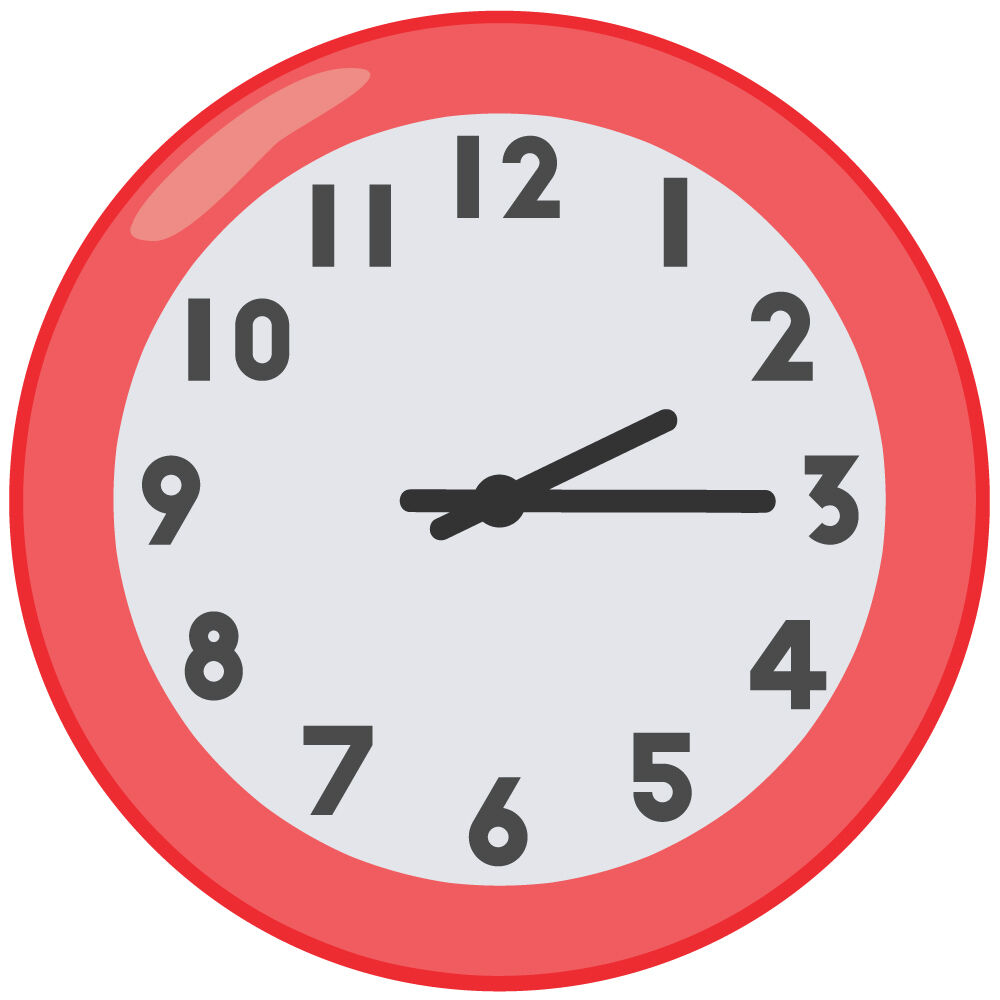
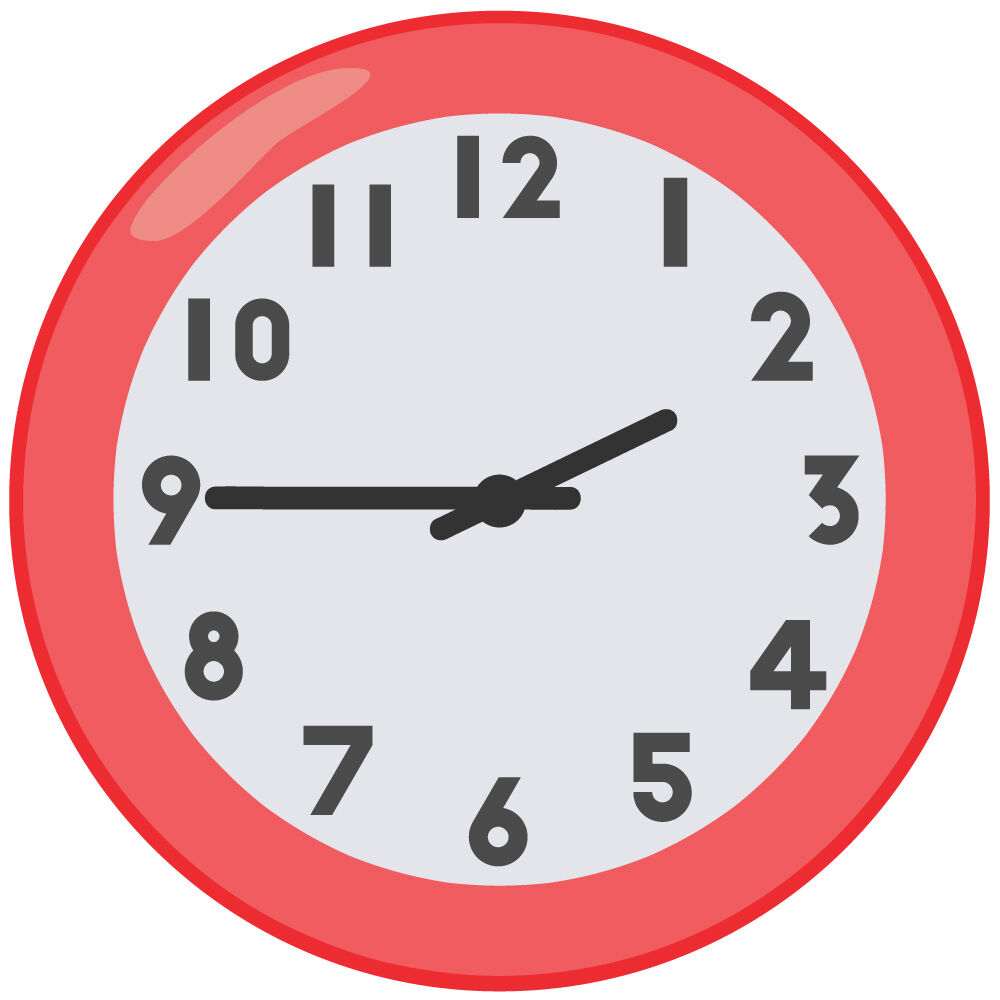
| 2:30 – It's half past two. - Half an hour has gone since two o'clock. |
| 2:35 – It’s twenty-five to three. - There are twenty-five minutes left before three o'clock. |
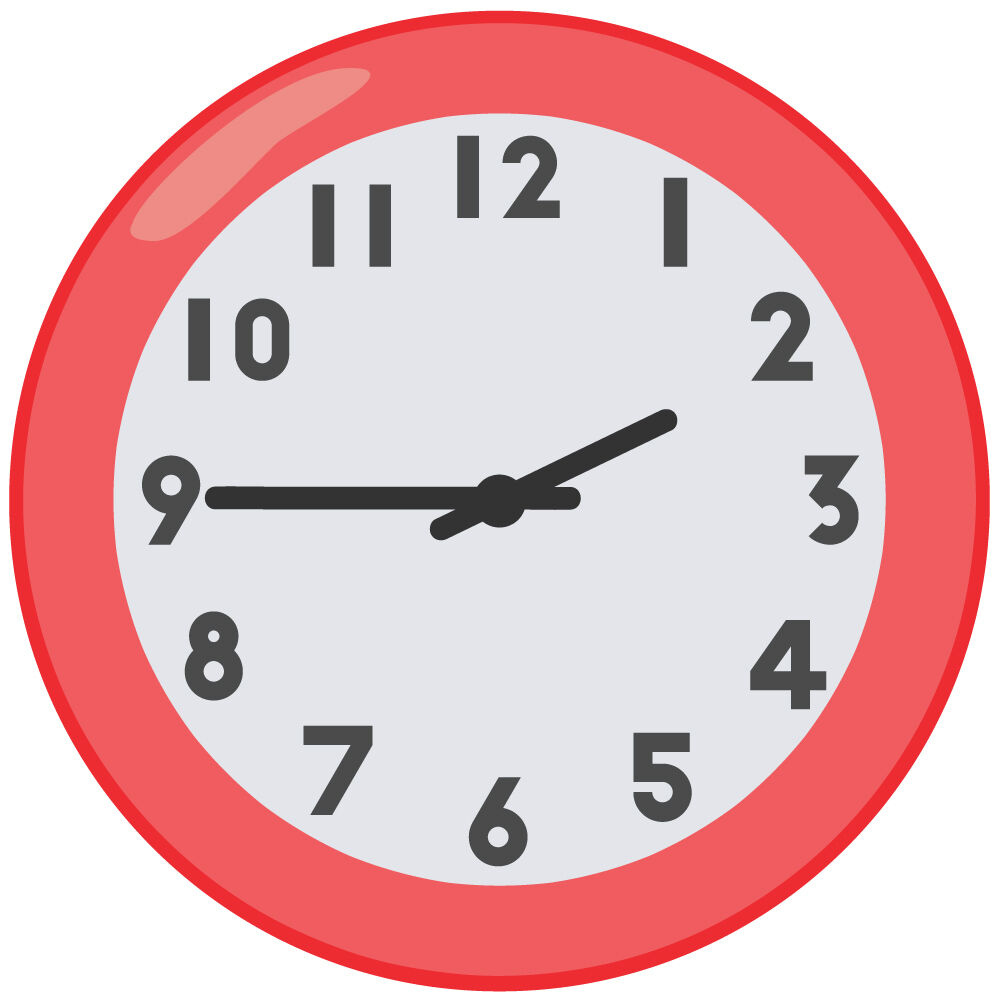
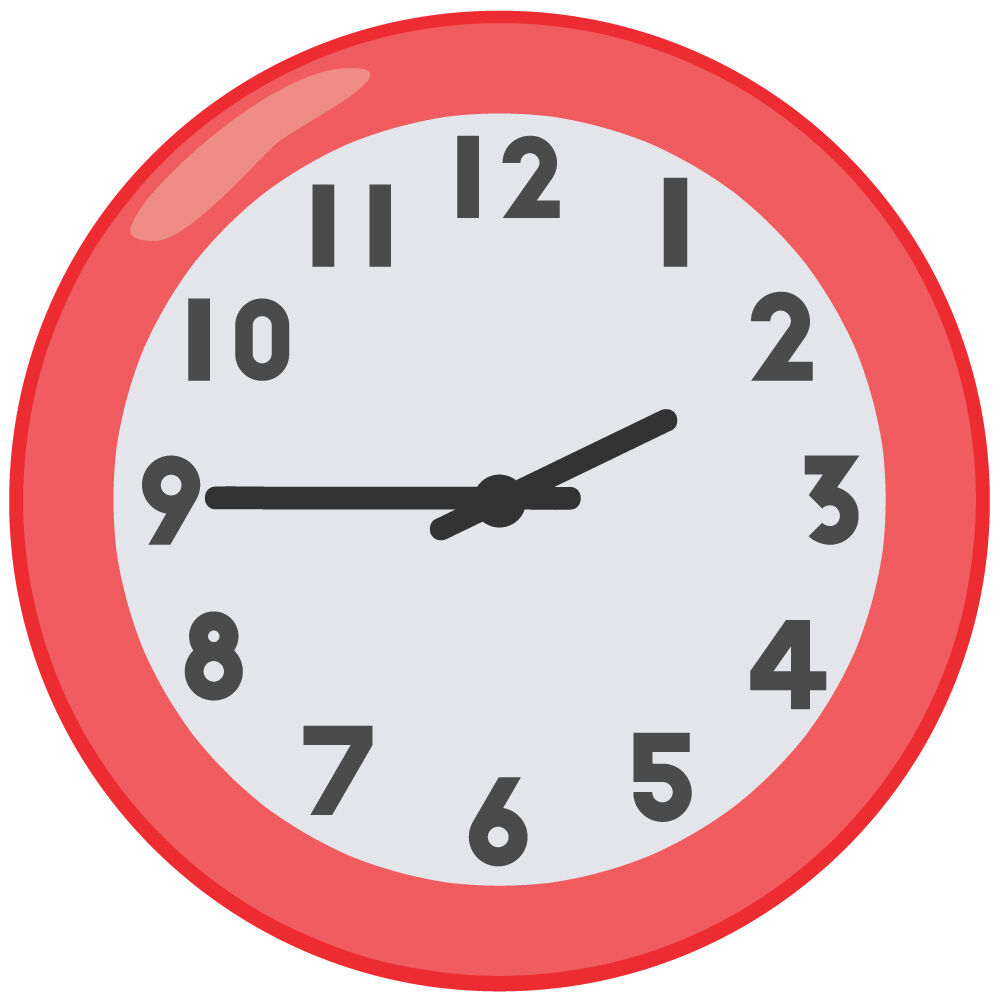
| 2:45 – It’s fifteen to three or It’s quarter to three. - There are fifteen minutes/a quarter of an hour before three o'clock. |
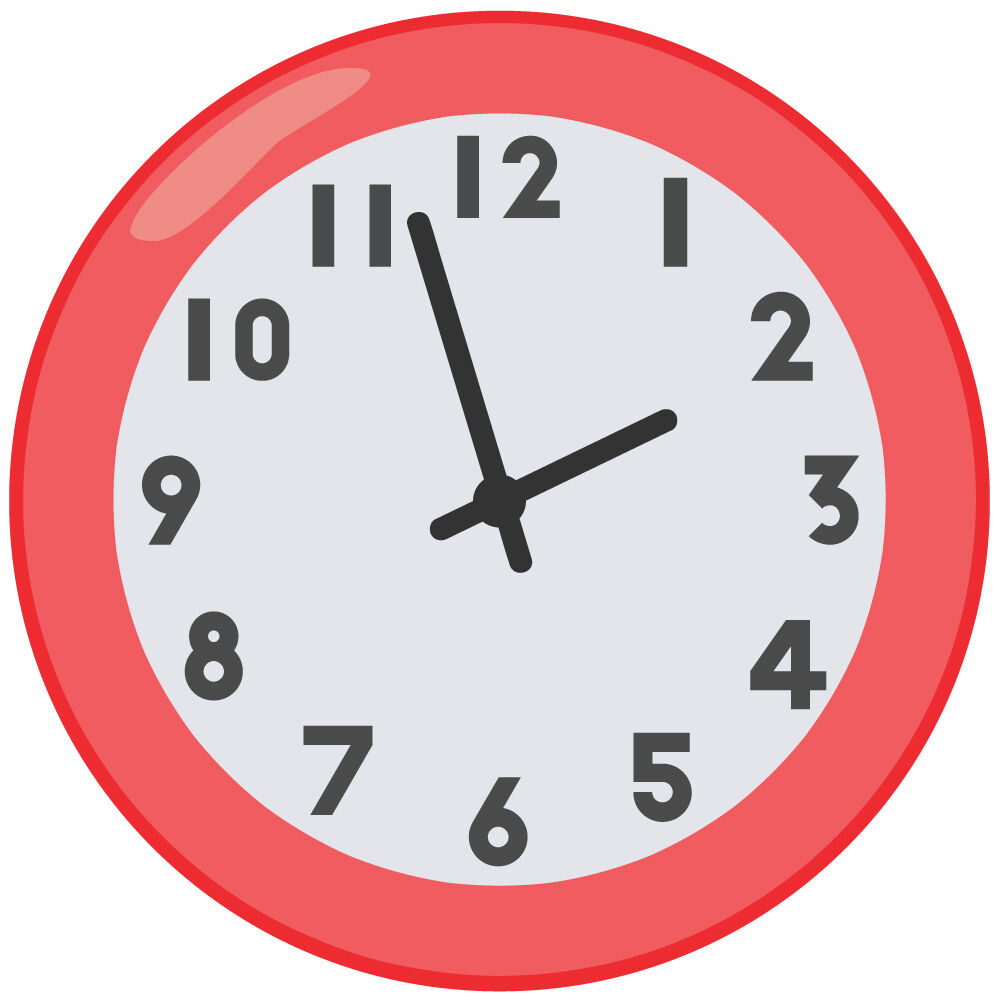
| 2:58 – It’s two to three. - There are two minutes left before three o'clock. |
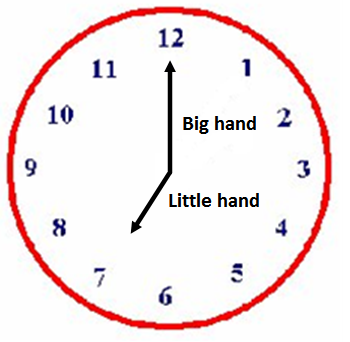
In English, just like in French, each hand on a clock serves a purpose. The little hand tells the hour and the big hand tells the minutes.

Below are words important to know when you want to tell time in English.
| Word | Definition | Example |
| o'clock | Use when the big hand is on the 12. | It is four o'clock. It is 4:00. |
| a.m. | Use a.m. when talking about early in the day. | I start work at 9:00 a.m. |
| p.m. | Use p.m. when talking about later in the day and at night. | I finish work at 5:00 p.m. |
| noon | Twelve hours into the day. | I eat lunch at noon. I eat lunch at 12:00 p.m. |
| midnight | A new day begins at midnight. | I go to bed at midnight. I go to bed at 12:00 a.m. |
| past | Use when saying how many minutes have passed after the hour. | Meet me at 15 past 4. Meet me at 4:15, fifteen minutes after 4 o'clock. |
| to | Use when saying how many minutes are left until the hour. | I will be there at 10 to 4. I will be there at 3:50, ten minutes before 4 o'clock. |
| quarter | Fifteen minutes. | We start at a quarter to 8. We start 15 minutes before 8. |
| half | Thirty minutes. | It is half past 12. it is 30 minutes after 12. |
In English, we use a.m. and p.m. So, 1 p.m. and 2 p.m. are used instead of 13:00 and 14:00.
I start my workday at 9:00 a.m. and finish at 5:00 p.m.
I eat lunch at 12:00 p.m., or I eat lunch at noon (noon signifies the middle of the day, hence afternoon).
I go to bed at 12:00 a.m., or I go to bed at midnight.
When you want to say just the hour, the word o'clock is used.
4:00 - four o'clock
7:00 - seven o'clock
10:00 - ten o'clock
| 2:05 - It's five past two. - Five minutes have gone since 2 o'clock. |
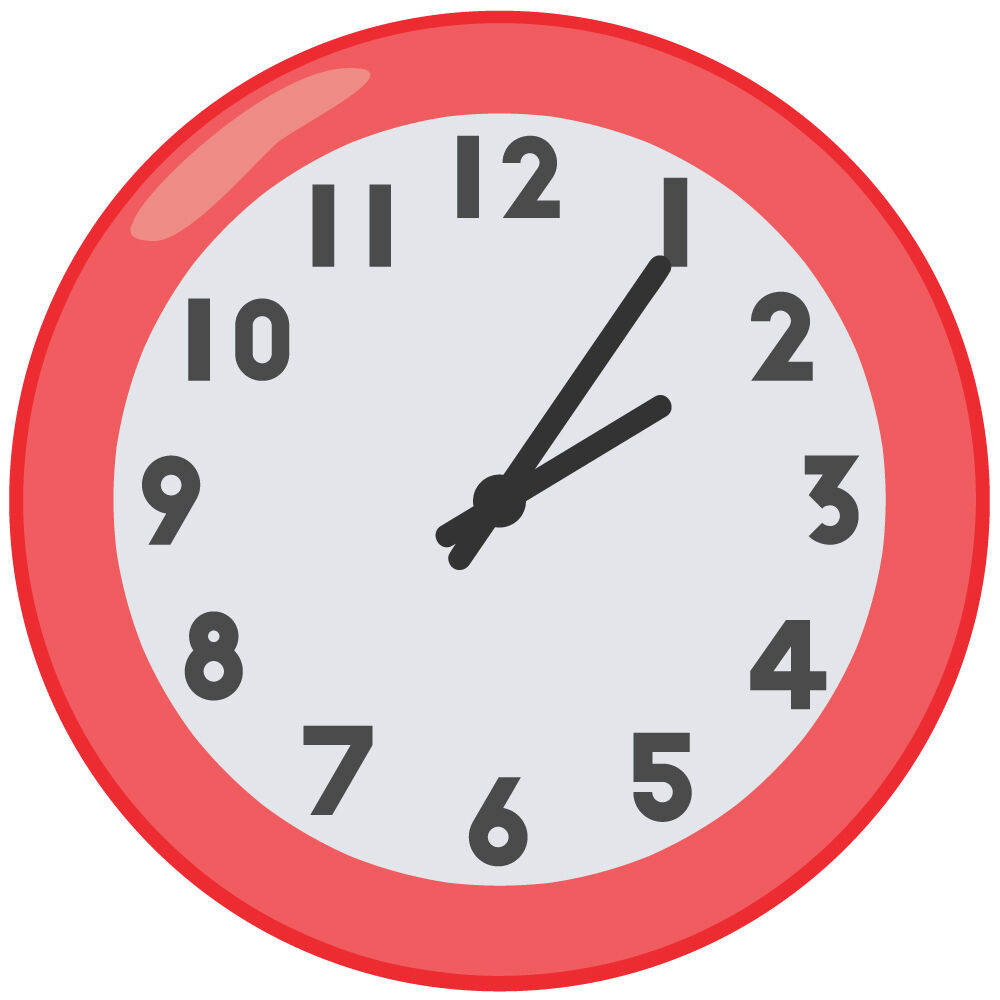
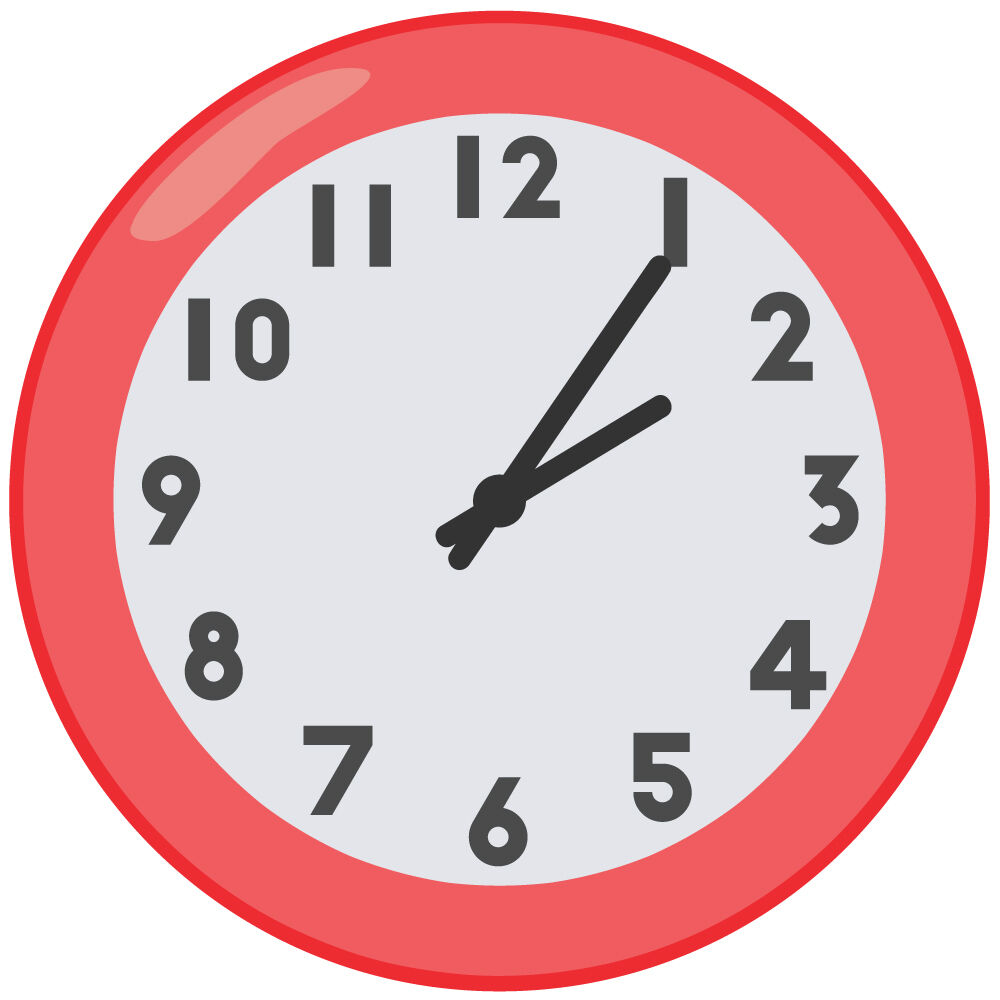
| 2:15 – It’s fifteen past two or It’s quarter past two (quarter of an hour being 15 minutes). - Fifteen minutes have gone since two o'clock. |
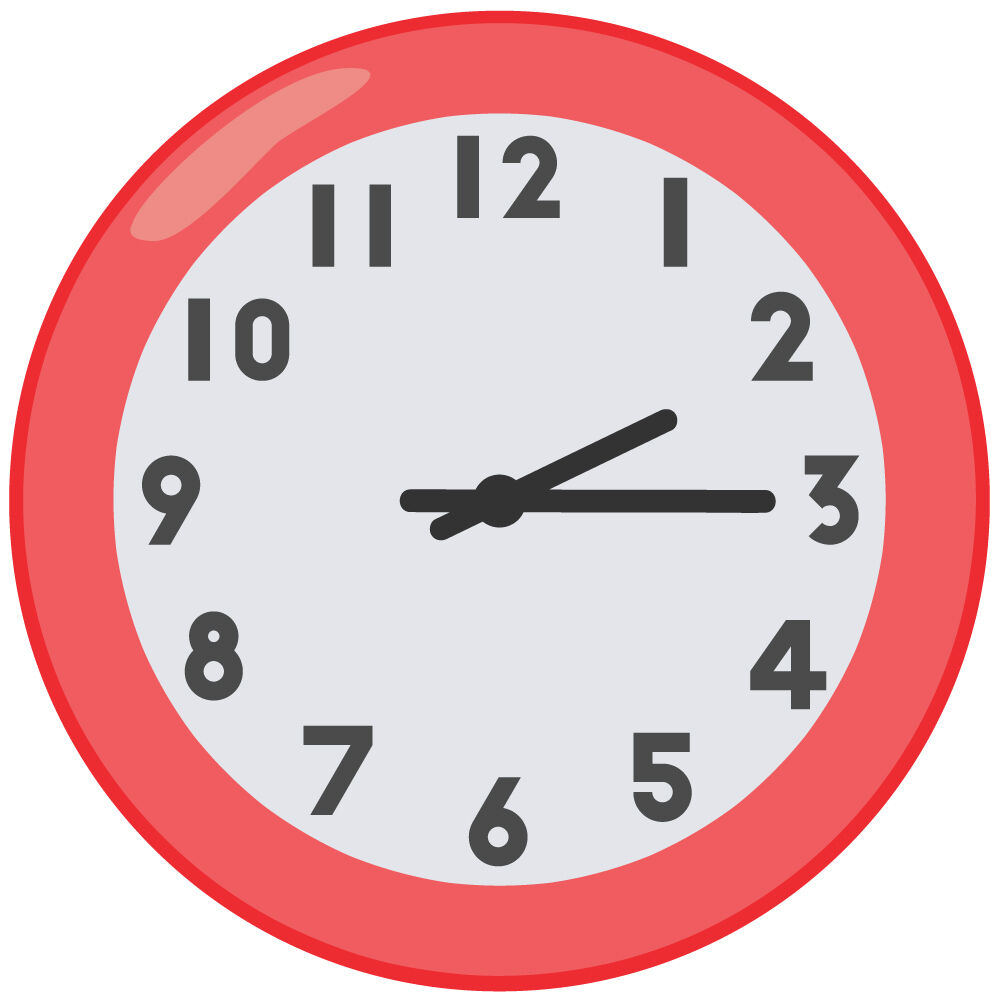
| 2:18 – It’s eighteen past two. - Eighteen minutes have gone since two o'clock. |
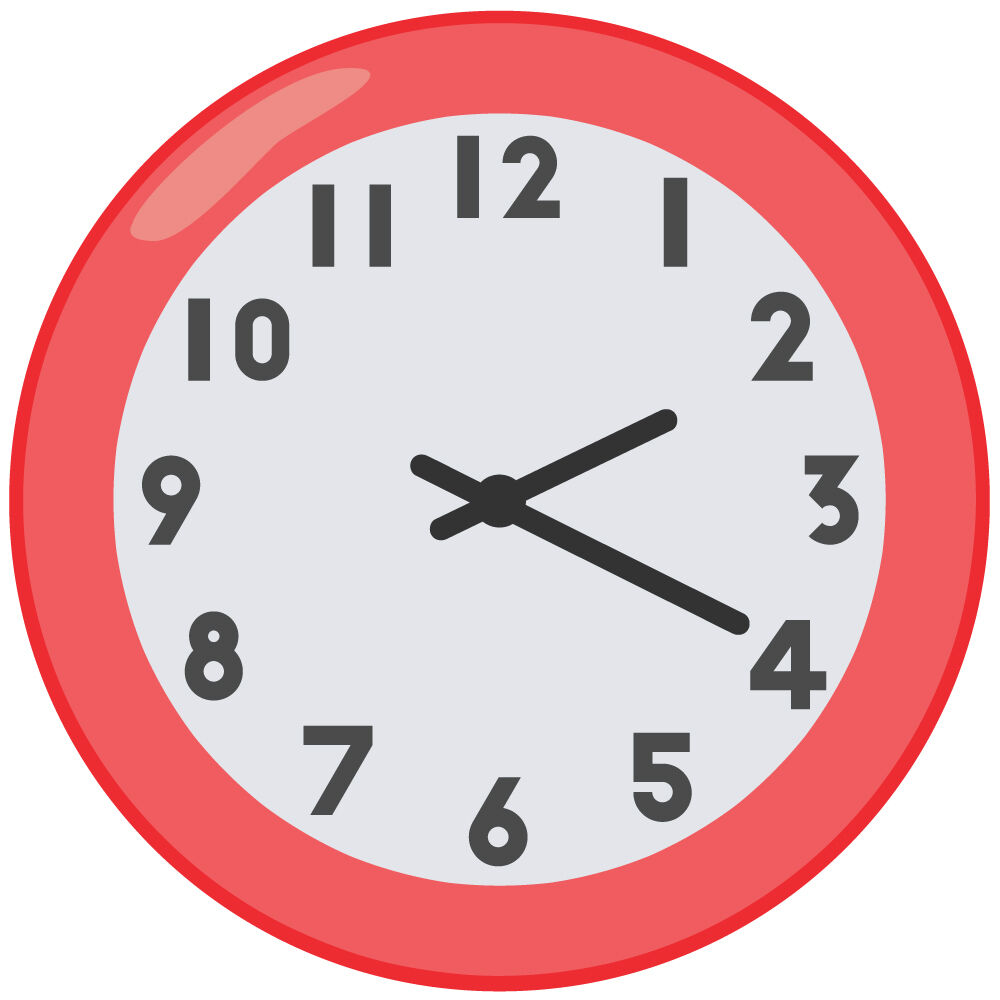
| 2:30 – It's half past two. - Half an hour has gone since two o'clock. |
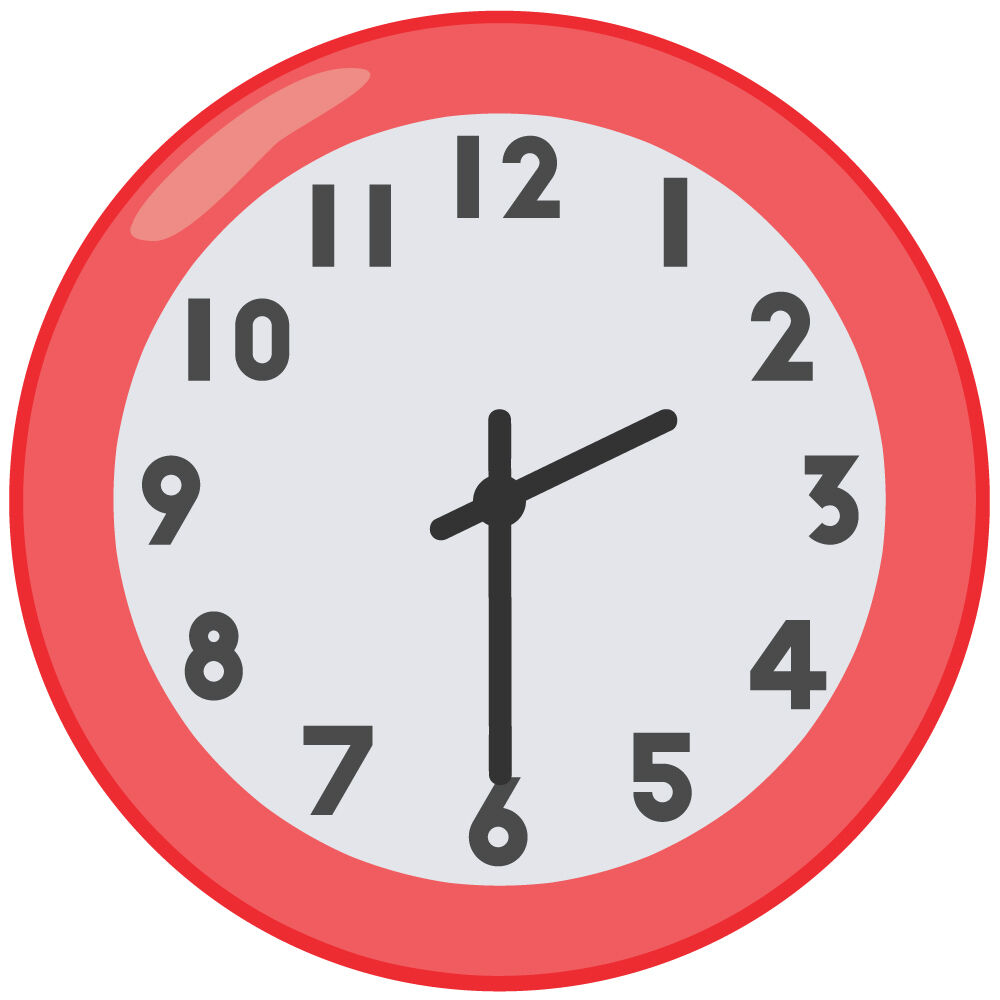
| 2:35 – It’s twenty-five to three. - There are twenty-five minutes left before three o'clock. |
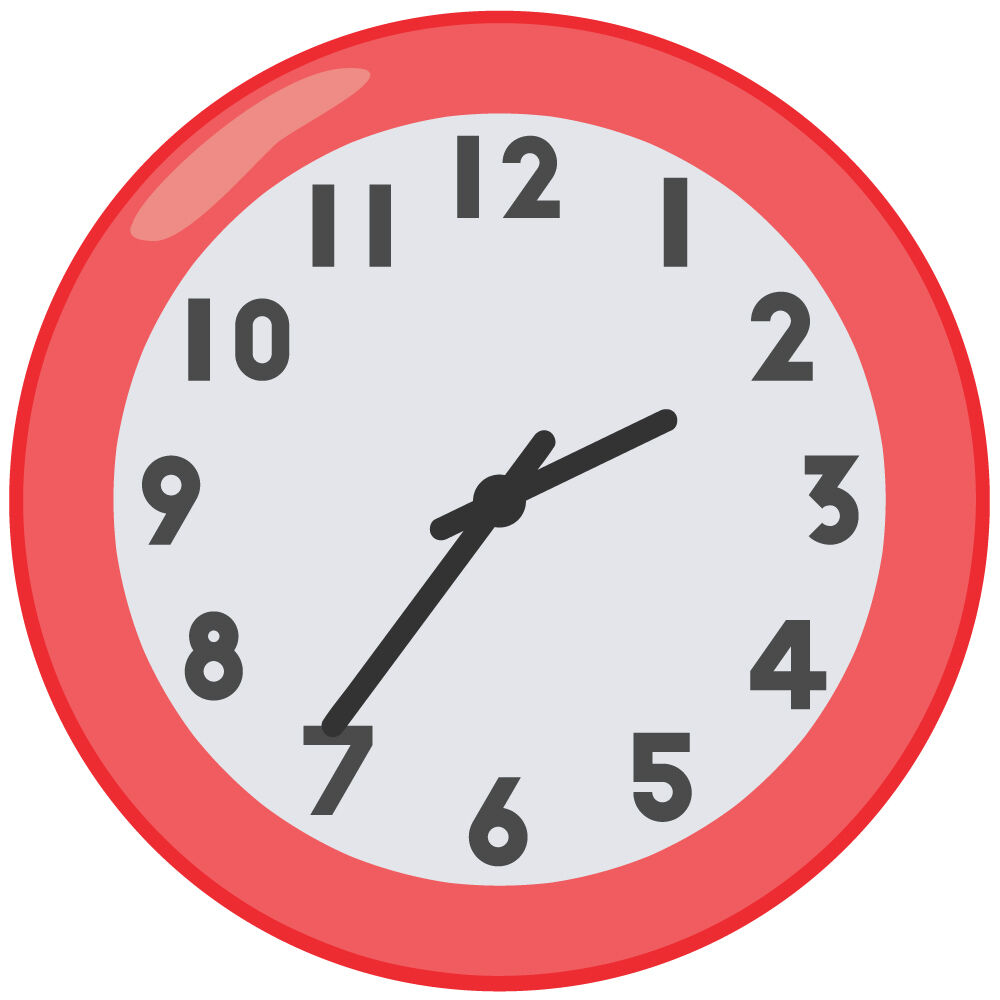
| 2:45 – It’s fifteen to three or It’s quarter to three. - There are fifteen minutes/a quarter of an hour before three o'clock. |
| 2:58 – It’s two to three. - There are two minutes left before three o'clock. |
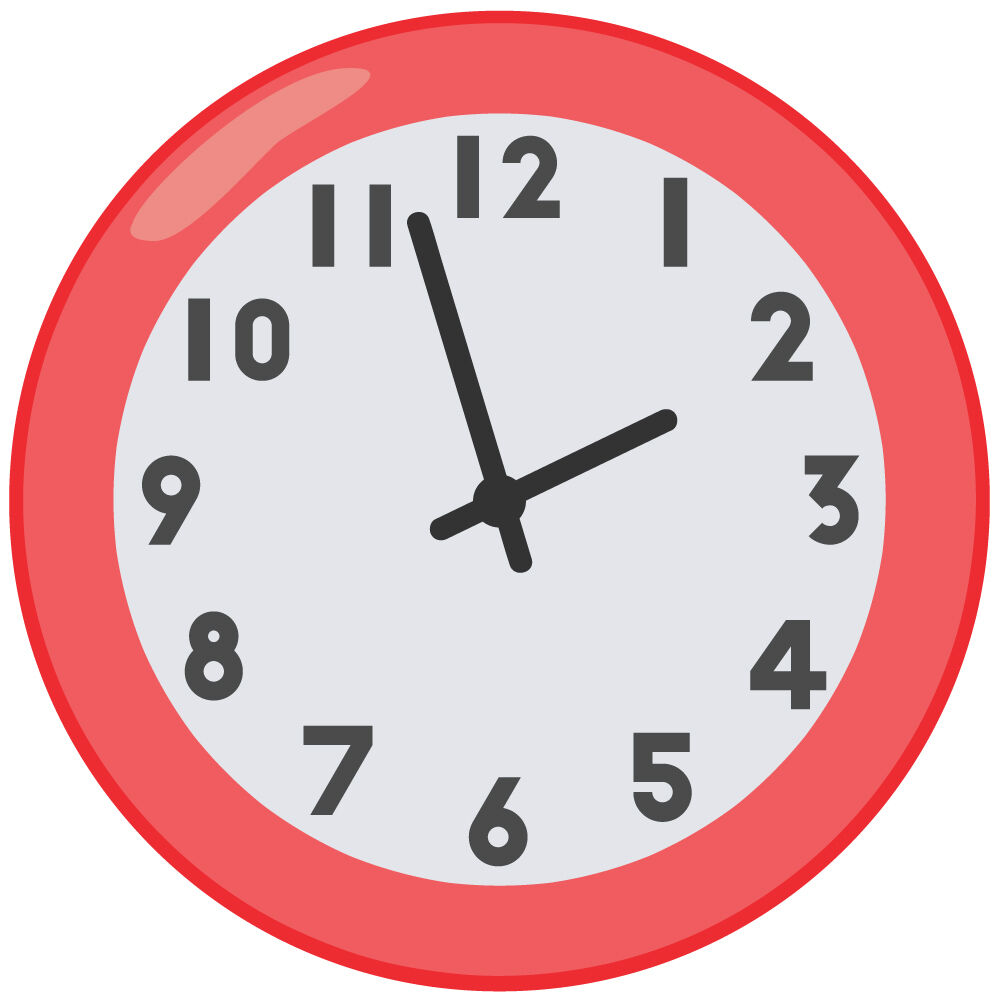
The second way looks a lot more like French. You simply read the numbers, dividing the time in two. You say the hour, and then you say the minutes.
The second way looks a lot more like French. You simply read the numbers, dividing the time in two. You say the hour, and then you say the minutes.
7:35 – It’s seven thirty-five
10:12 – It’s ten twelve
11:53 – It's eleven fifty-three