Developing Fluency

Article
Update : July 22, 2026

Learning Together: an Institut des troubles d’apprentissage initiative to teach children winning strategies to overcome difficulties in French and math. Discover our activities designed to help you support your child as they develop their literacy and numeracy skills!
Reading fluency enables children to read with ease and accuracy and to better understand and interpret a text. As your child’s reading fluency improves, their working memory isn’t called on as often because word decoding becomes more spontaneous. Fluency goes a long way towards developing a love of reading!

Important!

These seven activities are designed to fit easily into your family routine and to be done in order. They were created specifically to help children with learning disabilities, but all children can benefit from them!

You will need:

  • Sentence bank in appendix
  • Pencils and highlighter
  • Leaves
  • Sports balls, jump rope, or other sports equipment
  • Fly swatter, laser pointer, or foam dart gun
  • 6-sided die

Activity #1 : Tips to Develop Reading Fluency

Activity #1 : Tips to Develop Reading Fluency

This activity shares three practical tips that will help your child improve their reading fluency while having fun and staying motivated.

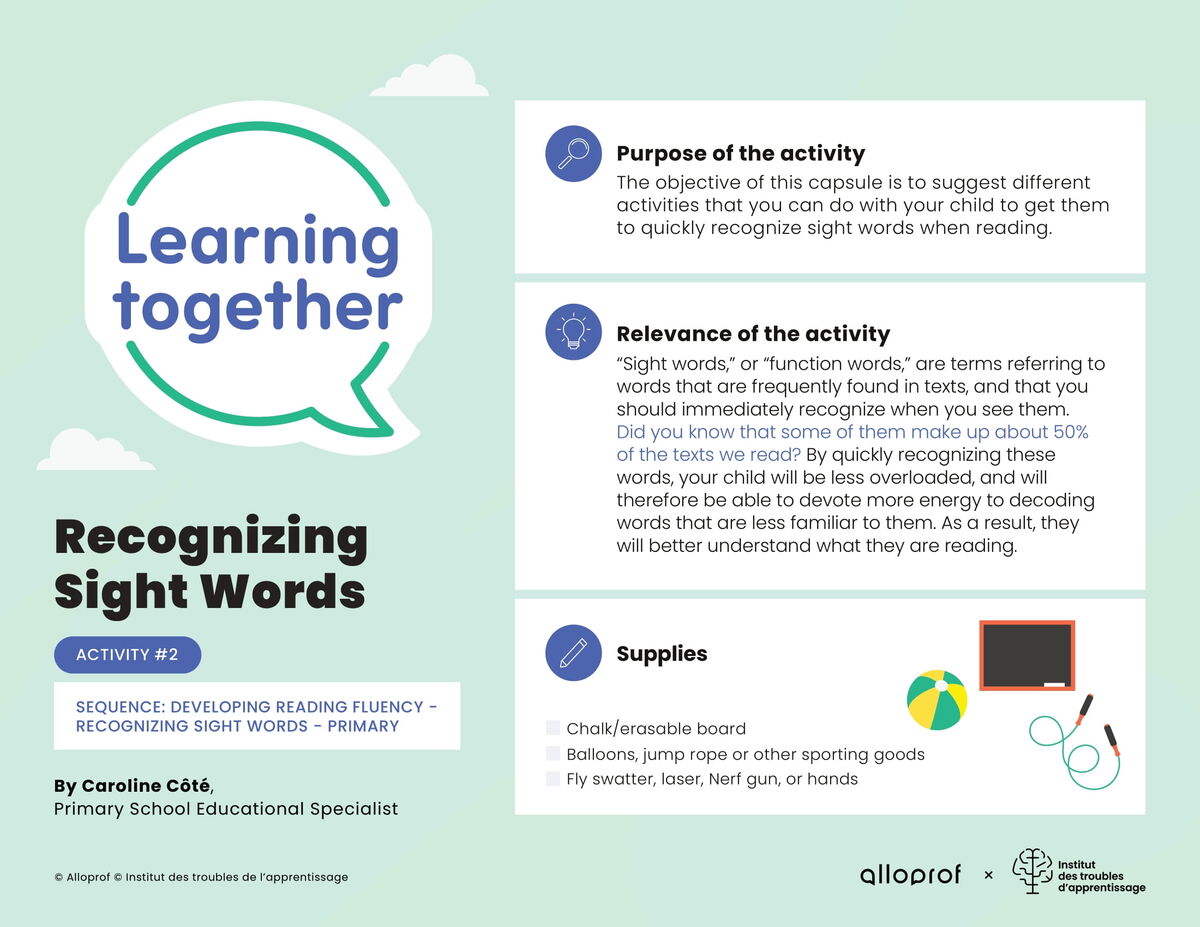
Activity # 2 : Recognizing Sight Words

Activity # 2 : Recognizing Sight Words

When they first start school, your child will put a lot of effort into matching letters to the sounds they make. Fortunately, the more time they spend practising reading and playing with words, the more words they’ll be able to recognize without sounding them out. Try doing these fun activities with your child to help them recognize common words.

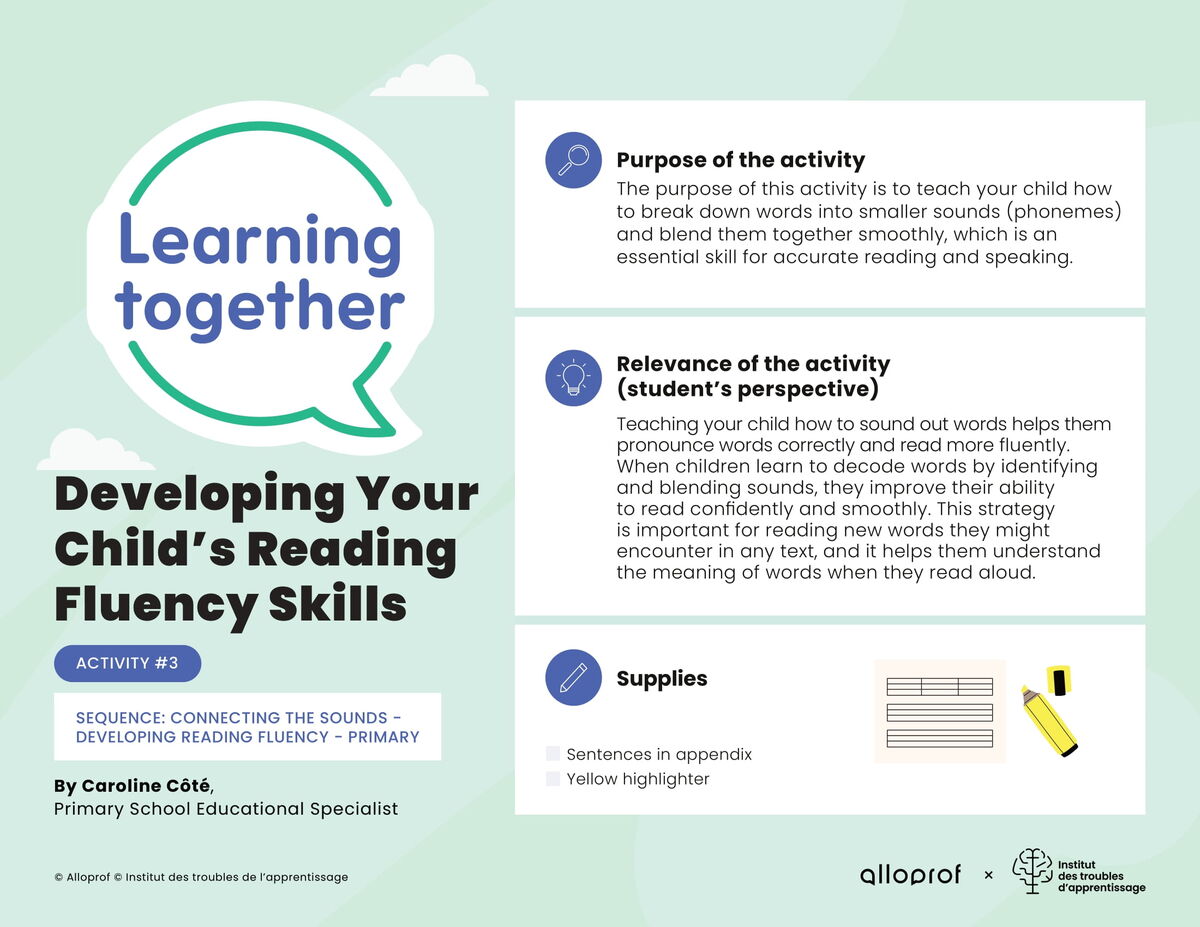
Activity # 3 : Developing Your Child’s Reading Fluency Skills

Activity # 3 : Developing Your Child’s Reading Fluency Skills

Why do we say les-z-habitudes (les habitudes), but not les-z-hiboux (les hiboux)? In spoken French, some liaisons are required, some are optional, and some are not allowed. It’s important for your child to learn how to make the correct liaisons so they can read at a natural pace. This activity provides guidance on how to model sentence reading by making the appropriate liaisons.  

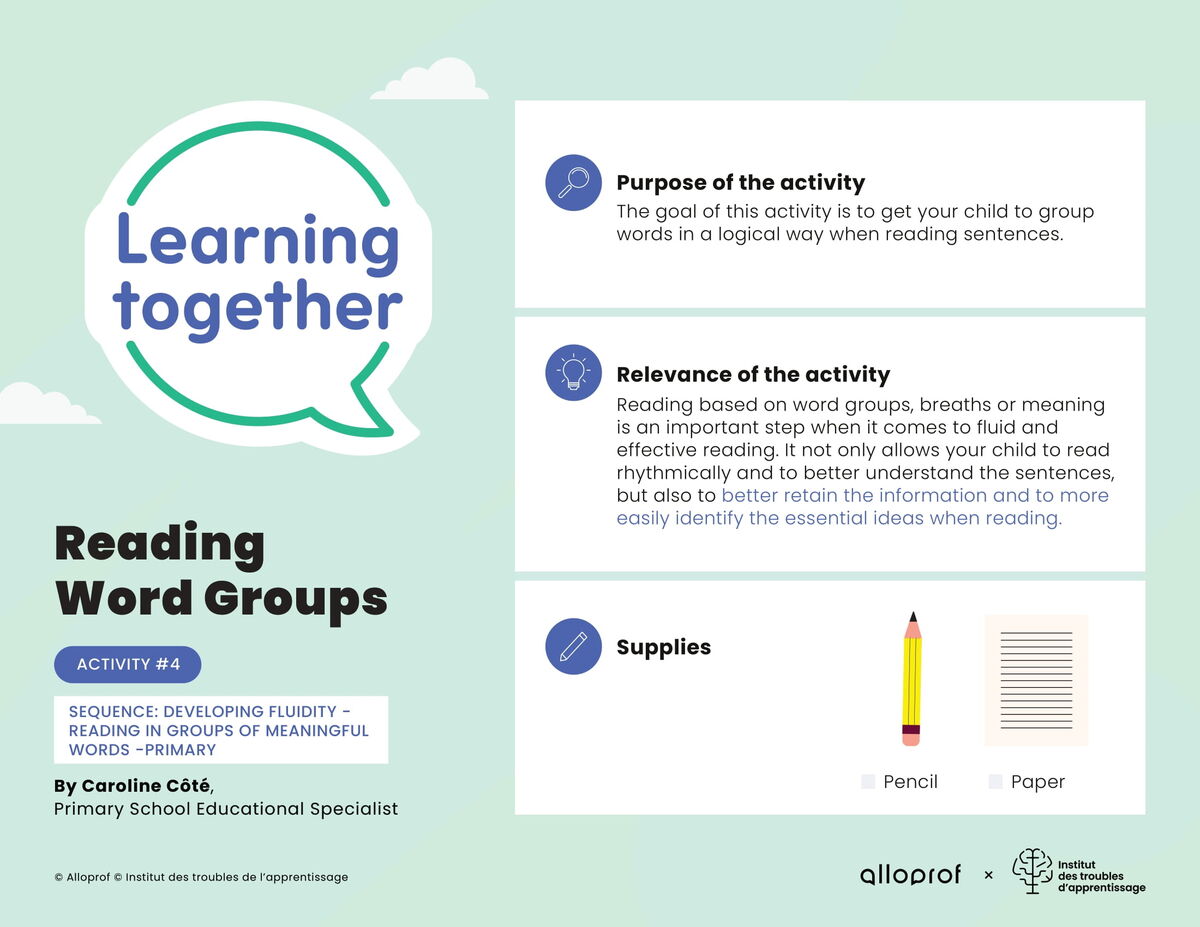
Activity #4 : Reading Word Groups

Activity #4 : Reading Word Groups

Chunking words (reading groups of words) is crucial to the development of reading fluency in children. Instead of focusing on each word individually, chunking words can help your child understand the overall meaning of a sentence. In this activity, you’ll find practical examples that show you how you can help your child chunk words, step-by-step.

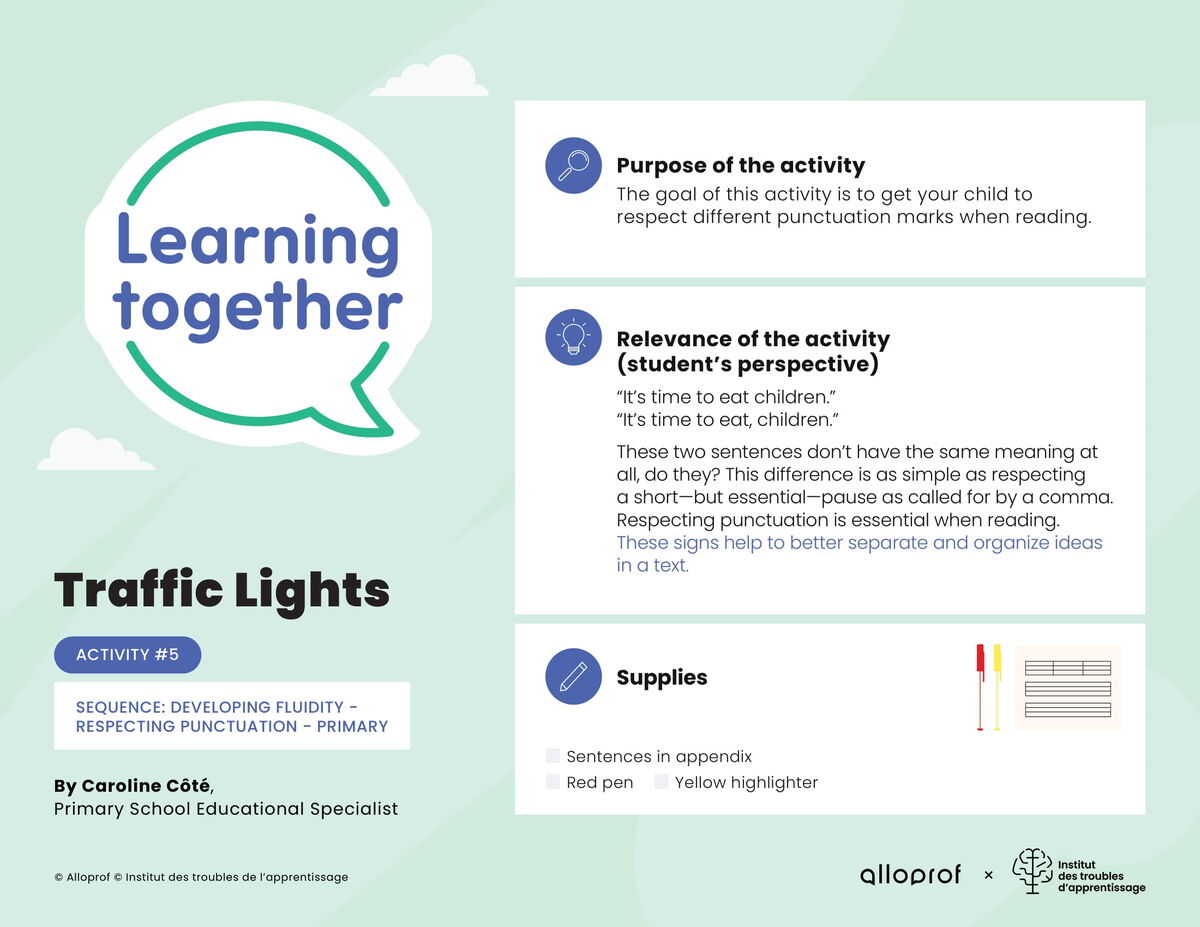
Activity # 5 : Traffic Lights

Activity # 5 : Traffic Lights

Mastering punctuation not only helps us to understand a text, but it also allows us to bring it to life when reading aloud. Punctuation marks are sort of like traffic lights: They tell us when to pause for a breath and what rhythm and intonation to use. You’ll find some fun tips to help your child learn to follow punctuation marks when reading.

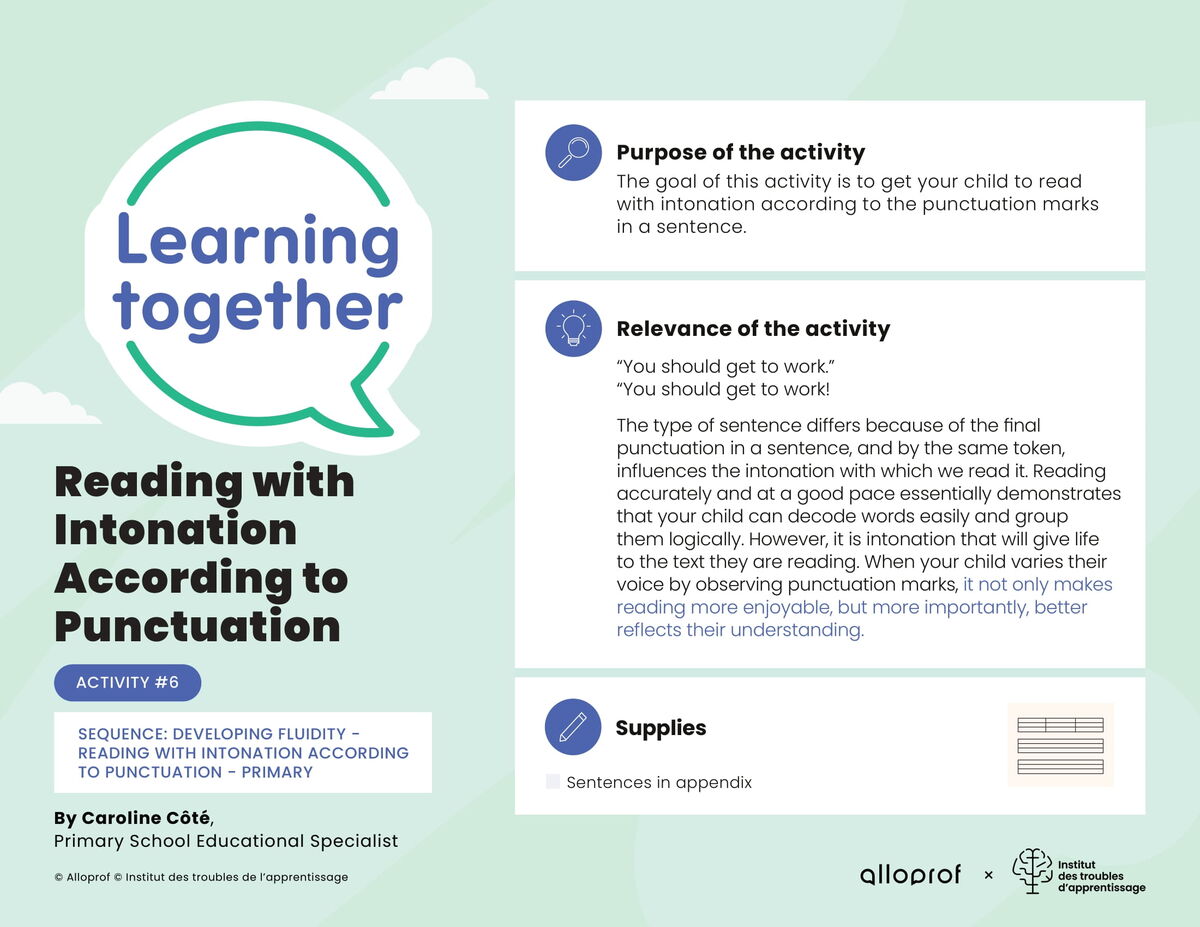
Activity # 6 : Reading with Intonation According to Punctuation

Activity # 6 : Reading with Intonation According to Punctuation

Intonation in reading is like the melody of a song: It gives life and energy to the text and communicates the emotions of each sentence. It plays a crucial role in reading fluency. By practising this aspect of reading, your child will develop their skills and their love of reading!

Activity # 7 : Reading With Intonation Based on Emotion and Dialogue Punctuation

Activity # 7 : Reading With Intonation Based on Emotion and Dialogue Punctuation

To make reading more engaging, it’s important to adapt your intonation to the emotions the characters in the story are feeling. This expressive dimension of reading also helps your child develop their emotional intelligence, as it helps them learn to see things from someone else’s perspective. To practise reading with intonation and expression, click here!

Learn more about the Learning Together topic

Well done! You have completed all the activities.

This sequence is part of a collection of tools and resources to help your child develop reading, writing, and math skills.

Check out our featured topic Learning Together to explore our entire collection of activities!

See Also

Collaborators

These activities were created by learning specialist Caroline Côté for Institut TA.