Subjects
Grades
Mamadou is 14 years old and has been dreaming of going to Europe for years. He has seen so many pictures online of far-away countries where life seems better. He dreams of becoming a soccer star. His home country in Africa has no armed conflicts, but life is still difficult because he is extremely poor and barely has enough to eat. He wants more out of life. He lives with his mother and younger brothers. His mother does not earn a lot of money and supports Mamadou’s plan.
He wants to travel with some of his school friends through several African countries. Departing from the North African country of Libya, he hopes to cross the Mediterranean Sea to Italy. To do this, he would have to pay a smuggler thousands of dollars. From Italy, he wants to move to France where some of his distant cousins live. They will help him start his new life.
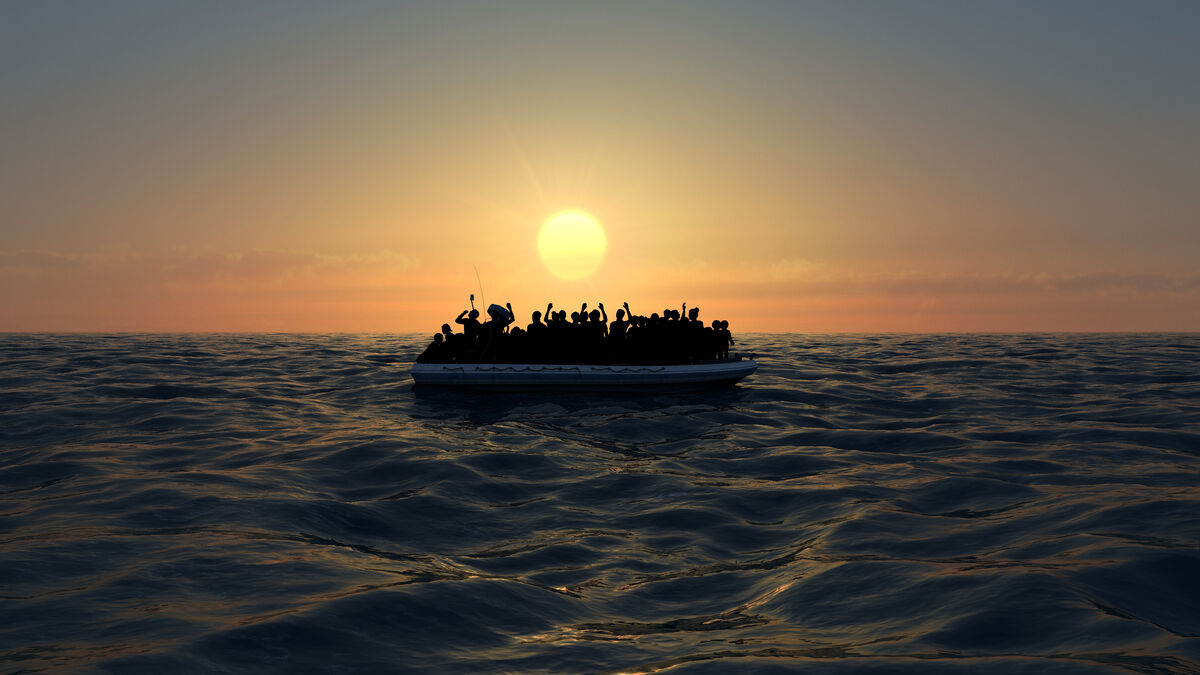
Refugees on a Large Rubber Dinghy in the Middle of the Sea.
Source: Naeblys. Shutterstock.
Mamadou’s plan is considered a form of illegal immigration. It is estimated that between 1 and 3% of migrants immigrate to developed countries illegally. In Canada, this represents between 200 000 and 500 000 people. However, it is difficult to get accurate data.
Unlike refugees and immigrants who follow the host country’s immigration laws, illegal immigrants have a much more difficult situation.
There are two ways to become an illegal migrant:
In Canada, most illegal migrants enter the country legally, but prolong their stay illegally. Some countries build walls at their borders to prevent illegal immigration, such as the United States.
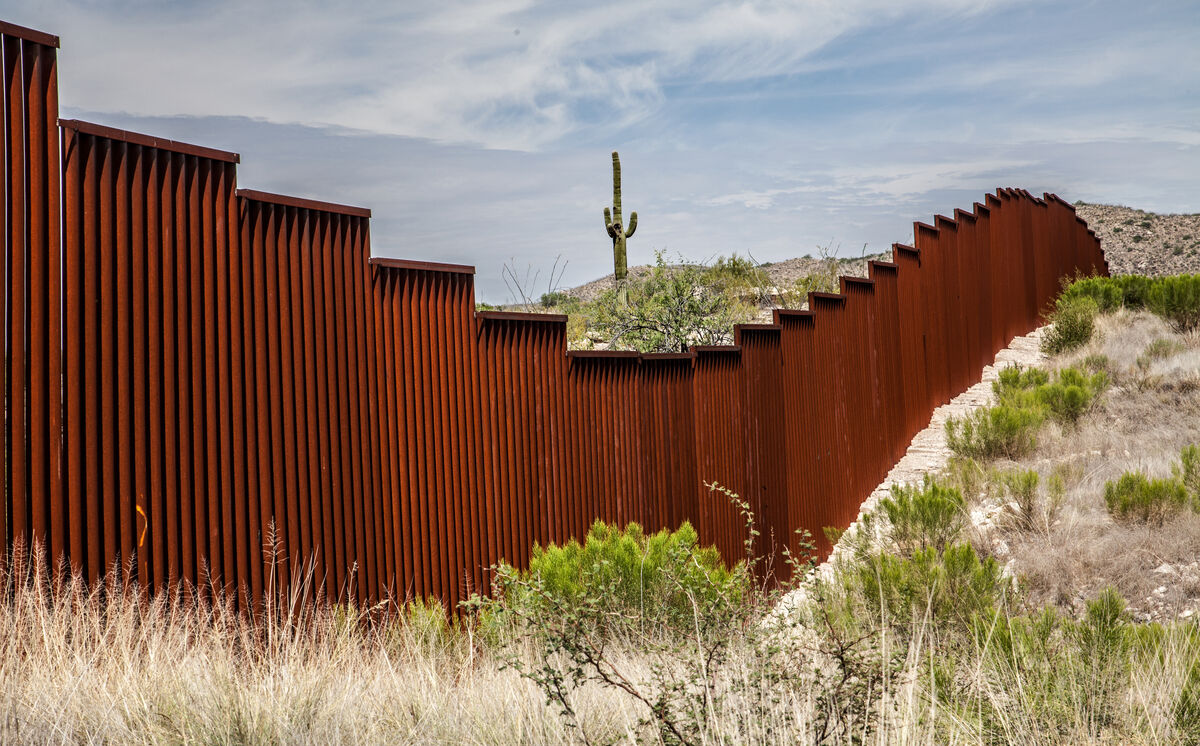
US-Mexico Border in Arizona, United States
Source: Ocampo, Chess. Shutterstock.
Also known as the U.S.-Mexico border wall, this is a barrier between the United States and Mexico. These are walls or fences built along the Mexican border to prevent illegal immigration and drug trafficking across borders.
An immigrant is a person who settles in a foreign country (host country), temporarily or permanently, after leaving their country of origin (home country).
Immigration is when a person settles in a foreign country (host country) temporarily or permanently.
A refugee is a person who has been forced to leave their home country to escape a natural disaster, war or persecution that threatens their life and safety.
The causes of illegal immigration include:
A developed country is an industrialized country whose economy includes many high-tech industries and where the people enjoy a generally high standard of living.
If someone follows the immigration rules, it can take several months to obtain permanent residence and years to obtain citizenship in a host country. Some people apply, but when their application is rejected, they decide to stay in the country illegally.
Countries are adopting stricter immigration policies, making it increasingly difficult to go through the process. This is one of the reasons why some immigrants cross into a country illegally. Since the borders are heavily guarded, immigrants have to find other ways into the country. Some methods include:
A state is a territorial and political entity administered by a government. It has defined borders within which a population lives.
Many people leave their home country seeking a better future. The country may have widespread poverty and lack services such as health care and education. This is why they decide to move to another country that can offer more than their own.
Geographical proximity can be an important factor when choosing a country. Many people choose a neighbouring country or continent, such as travelling from the continent of Africa to Europe.
Many illegal migrants use international smuggling networks to enter countries by paying a member of the network to get them across the border. This usually costs thousands of dollars and is often very dangerous. Numerous people risk their lives on these journeys.
Organizations or individuals who help illegal immigrants cross borders are guilty of human trafficking. The United Nations considers this a crime against humanity. Organizations such as theInternational Criminal Police Organization (INTERPOL) work all around the world to find and stop human trafficking networks.
Beaulieu, Isabelle and collabs. Mondes, 2010, pp. 100-102.
Brodeur-Girard, Sébastien and collabs. Immédiat, 2009, pp. 26.
Ladouceur, Maude and collabs. Globe, 2014, pp. 181.