Fables – Types of Texts | Elementary

Concept sheet | English Language Arts

What Are Fables?

Fables are stories that teach a moral or a lesson, usually with animals acting like humans.

How Do We Know a Story Is a Fable?

Here are some of the key features specific to fables.

Teachable moments
Clear moral or lesson
 Often explicitly stated at the end

Characters involved
 Animals that behave like humans
→ Display human strengths & weaknesses
 Regular people (in some cases)

Setting
 Simple, not detailed
 Familiar places used as symbolic meaning
→ Places used to represent something else like an idea or a feeling

Story format
 Short, with a simple plot
 Often involve a small problem and a quick solution
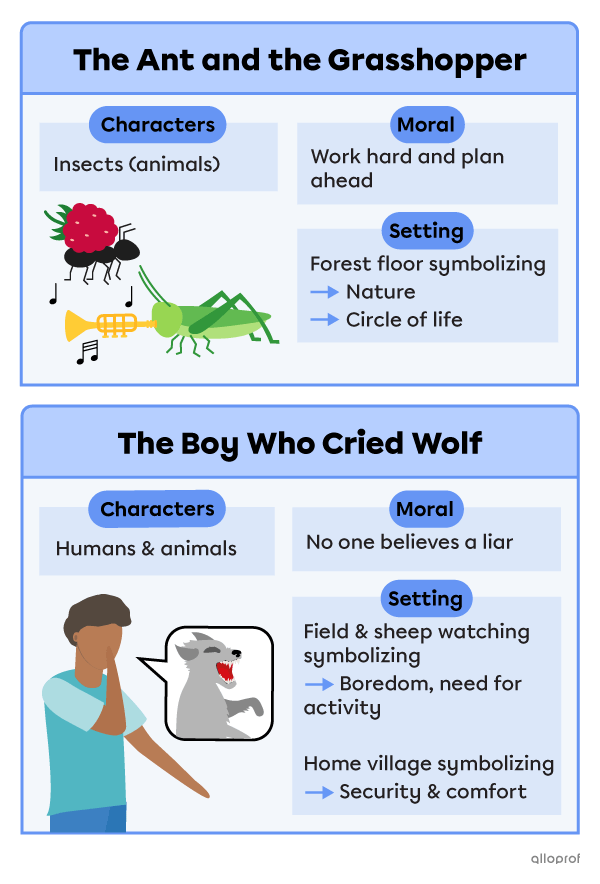
The moral of the fable “The Ant and the Grasshopper”: Work hard and plan ahead; insects (animals) as characters; is set on the forest floor, symbolizing nature and the circle of life. The moral of the fable “The Boy Who Cried Wolf”: No one believes a liar; both human and animal characters; is set in a field, symbolizing boredom and the need for activity.

Are Myths, Legends, Fables & Folktales Different?

Similarities

Often, myths, legends, fables and folktales can be mistaken for one another because of their similarities.
Here are some examples of features they all share.

Story structure
They all use characters and settings to tell their stories.
 All their plots have a beginning, a middle and an end.

Oral tradition origins
 People told these stories for a long time before they were written down.
 This is why there are many variations of similar stories told all over the world.

Teach and entertain
 They often have teaching moments on lessons, cultural values, beliefs, historical facts or traditions.
 They are engaging and very imaginative.
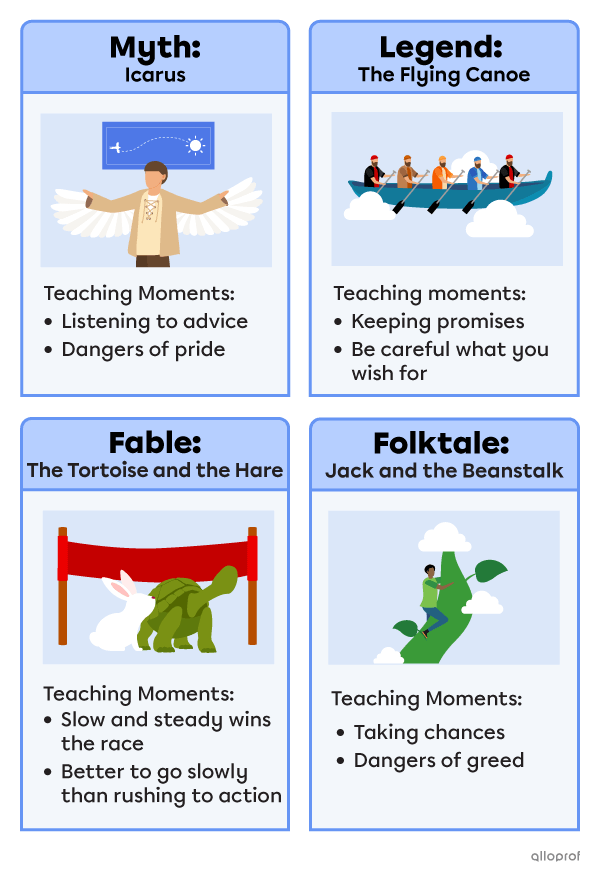
The deeper meaning of the Icarus myth: listening to advice and the dangers of pride. The deeper meaning of The Flying Canoe legend: keeping promises and being careful of what you wish for. The deeper meaning of The Tortoise and the Hare fable: slow and steady wins the race. The deeper meaning of the Jack and the Beanstalk folktale: taking chances and the dangers of greed.

Differences

Here are examples of some key features that differentiate myths, legends, fables and folktales.
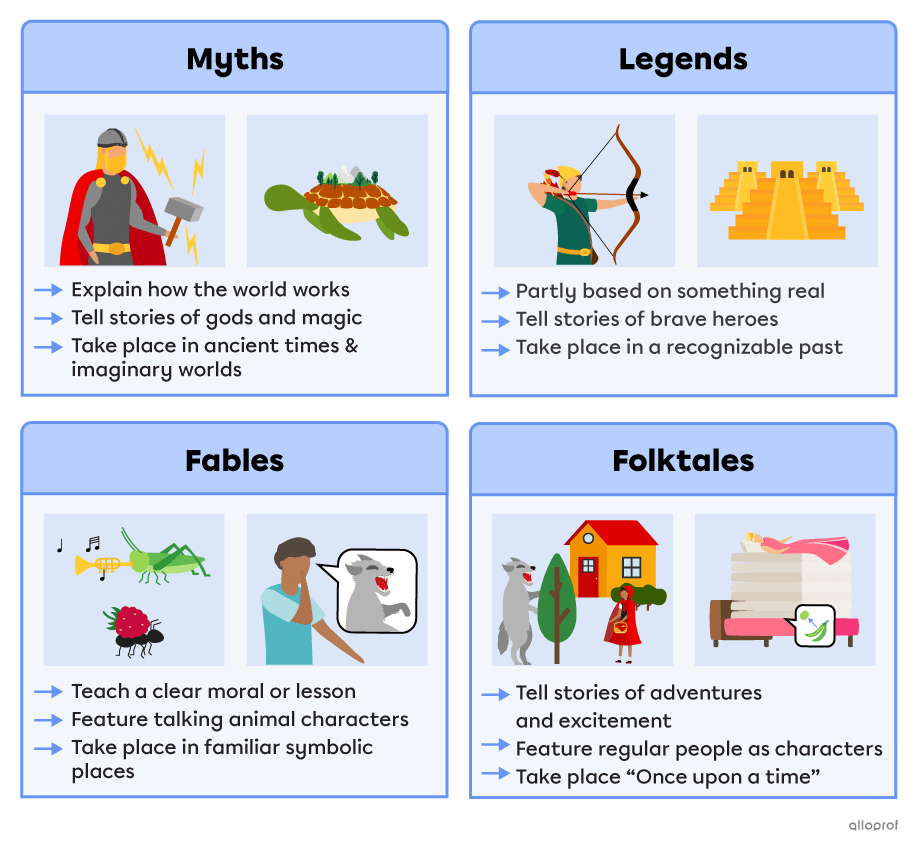
Myths explain how the world works, tell stories of gods and magic and take place in ancient times & imaginary worlds. Legends are partially based on something real, tell stories of brave heroes and take place in a recognizable past. Fables teach a clear moral or lesson, feature talking animal characters and take place in familiar symbolic places. Folktales tell stories of adventures and excitement, feature regular people as characters and take place “Once upon a time.”