Subjects
Grades
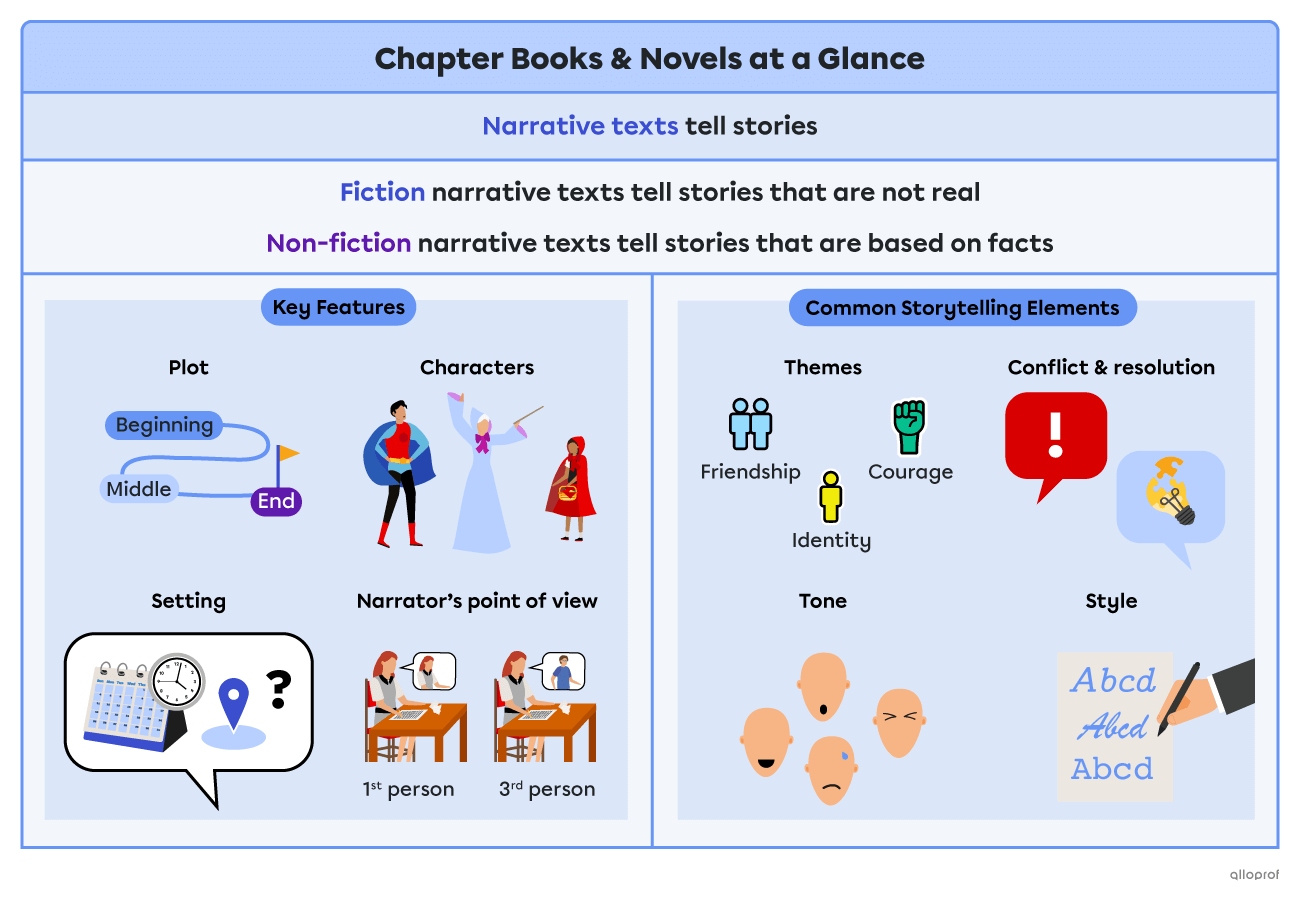
Narrative texts tell stories. They have a beginning, a middle and an end, and are organized as a series of connected events.
Narrative texts can be split into 2 broad categories: fiction and non-fiction.
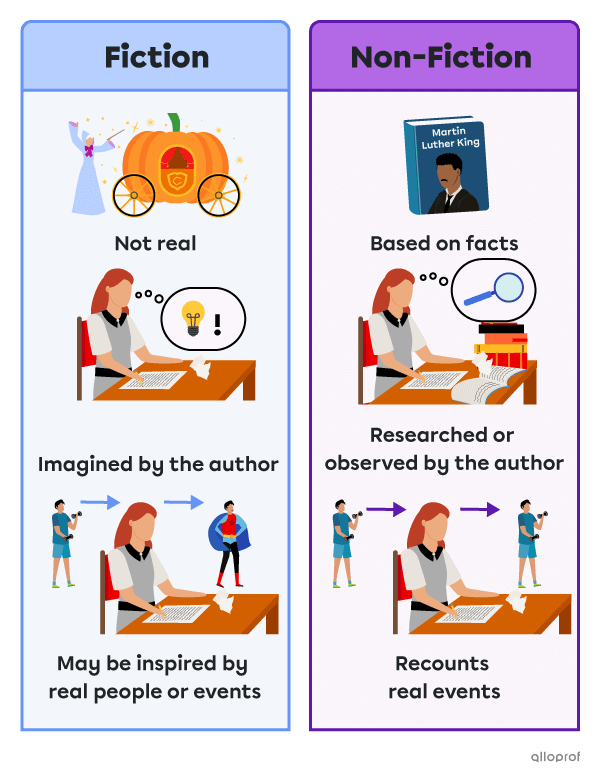

| Fiction stories | |||
| Not real | |||
| Imagined by the author | |||
| May be inspired by real events or people | |||
| Examples of fiction text types | |||
| Nursery rhymes | Fairy tales | Poems | |
| Myths | Legends | Short stories | |
| Chapter books & novels | Comics | ||
| Non-fiction stories | |||
| Based in facts | |||
| Researched or observed by the author | |||
| Recount real events | |||
| Examples of non-fiction text types | |||
| Biographies | Autobiographies | Memoirs | |
Here are some of the key features of narrative texts.
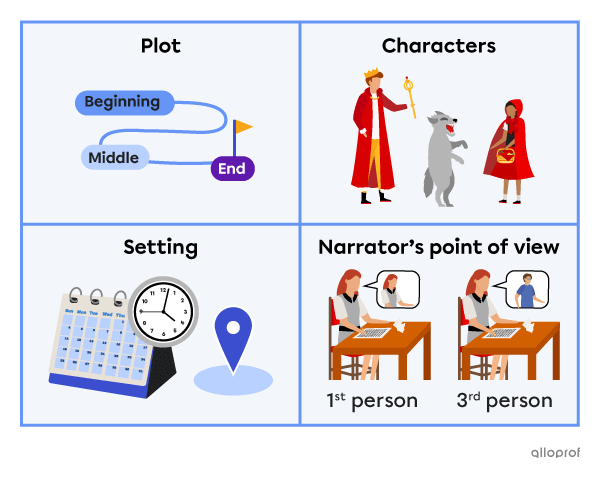
| Plot | The events that take place in the story |
| Has a beginning, a middle and an end | |
| Characters | People, animals or creatures in the story |
| Setting | Where and when the story takes place |
| Narrator’s point of view → Who is telling the story | 1st person uses I |
| 3rd person uses he/she/they |
Here are some examples of common elements often found in narrative texts:
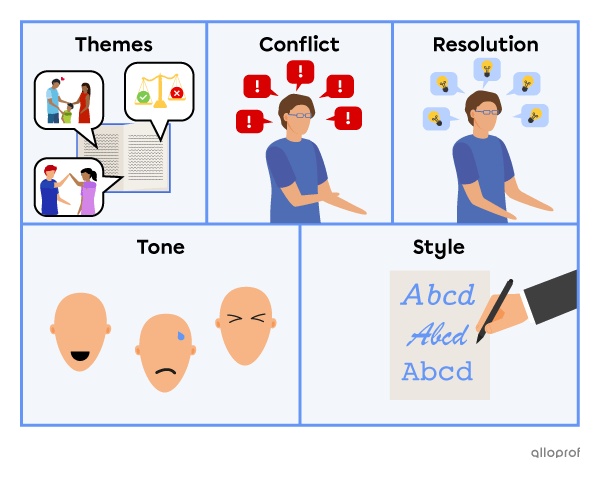
| Themes | Central topic or message in the story |
| Lessons or morals that can be taken from the story | |
| Examples: friendship, courage, identity | |
| Conflict | Problems or challenges the characters face |
| Key element to the plot | |
| Examples: character vs. character, man vs. nature, character vs. society | |
| Resolution | Solutions to the conflict |
| At the end of the story | |
| Tone | Mood of the story (funny, serious, scary…) |
| Style | Author’s choice of words |
| Author’s sentence structures | |
| Use of figurative language | |
| Author’s choice of themes |