Subjects
Grades
Acculturation refers to changes or adaptations in the culture, values and traditions of a population or individual as a result of encountering different populations.
Acid rain is a form of atmospheric pollution. It is caused by polluting gases emitted by factories and vehicles.
Active population refers to all of the people in a given population who are able to work, whether they are working or looking for a job.
An agglomeration is an urban area made up of a main city surrounded by other cities or municipalities.
The agri-food industry is the set of activities involved in the production, processing and distribution of agricultural products intended for consumption.
An agricultural operation is a business that grows crops or raises livestock for the purpose of selling its products.
Agriculture refers to all of the human activities related to cultivation (fruits, vegetables or grains) and raising livestock.
Altitude refers to the elevation (height) of a place in relation to sea level.
Ancestral rights refers to the fishing, hunting and trapping rights accorded to one or more Indigenous groups based on their ancestral customs.
An archipelago is a group of islands.
The term arid refers to something that is dry, desert-like.
An artificial risk is a hazard related to human action.
An at-risk environment is an area subject to natural or artificial risks.
Autonomy refers to the capacity to be independent of any individual or group.
A band is a First Nations community. Certain members of First Nations prefer not to use this term.
A bay is a body of water partially enclosed by land but with access to a sea or a lake. A bay is smaller than a gulf.
Biodiversity refers to the diversity of species (animals, plants, bacteria, fungi and protists) and ecosystems in a given area.
Biofuel is a type of fuel made from plant matter.
Biomass refers to organic matter like firewood, agricultural waste and animal excrement.
A blizzard ressembles a snowstorm, but is accompanied by high winds, which causes low visibility.
A borough is an administrative unit within a region or city.
The term cattle refers to cows.
A change occurs when something is modified or transformed over time.
A claim is a request to obtain or recover a right.
Clearing land is the action of removing the existing vegetation (trees, shrubs) so that the land is ready for cultivation.
A cliff is a rocky escarpment with a steep slope.
Climate change refers to modifications to the Earth’s climate over many years due to natural variations and human activities. Since 1800, human activities have been the main cause of climate change.
Climate risks are natural hazards that result from climate phenomena.
Commercialization refers to all of the actions taken to sell a good or a service, from the exploitation of natural resources through to the sale of a manufactured good.
Concentration refers to a grouping of several elements on the same territory.
A confluence is a place where at least two waterways meet.
Conservation is an action that seeks to protect an object, a building or a natural environment from deterioration.
A constitution is a legal document, often the founding document of a state or a colony, that determines its structure and how it functions.
A continent is a large expanse of land surrounded by one or more oceans.
There is continuity when something remains similar over time.
A convention is an agreement reached between people or groups.
A cove is a shallow bay.
Cultural heritage can be an object, monument or building representing human traces of the past that has been identified for preservation for future generations. It can also refer to a tradition or knowledge.
A cultural site is a site that promotes an element related to human traditions, beliefs or achievements.
Culture is a set of elements specific to a group of people, such as language, traditions, way of life and beliefs.
A cyclone is a violent storm that originates in the oceans close to the equator. It can also be referred to as a typhoon or a hurricane depending on the region where it forms.
Deforestation refers to the human action of permanently eliminating an area of forest.
Degradation refers to something that deteriorates or is damaged, either over time or by human action.
A delta is the place where a river divides into different branches before emptying into the ocean. The land around a delta is often very fertile due to the sediment carried there by the river.
Desertification is the degradation of fertile lands. They dry out naturally or as a result of human activities and become desert-like.
A developed country is an industrialized country where the population generally has a high standard of living.
A developing country is a country where the population generally has a low standard of living.
Development occurs when something grows, progresses or improves.
The term disadvantaged refers to someone or something lacking in economic, social or cultural resources.
Disequilibrium occurs when there are inequalities between different elements (people, countries, etc.).
Distribution represents all of the operations (transportation, delivery, etc.) required to get a product to consumers.
A drainage basin, also referred to as a ‘hydrographic basin’, is an area where all of the waterways drain toward a common point.
Draining is the evacuation of water from land that is flooded or too wet. This can occur naturally or through human action.
Drifting snow is fine snow that is lifted and carried by the wind.
An earthquake is a more or less violent shaking of the Earth’s crust caused by the movement of tectonic plates.
An earthquake-resistant building is a building that is designed to withstand earthquakes.
An economic recession is when there is a decline in economic growth for several months.
An ecosystem refers to all of the interactions within a physical environment including between the organisms that live in it.
Emigration occurs when a person leaves their country to settle in another country.
Endemic refers to an animal or plant species that lives on a specific territory.
Energy dependence occurs when a country or region consumes more energy than it produces and, therefore, must purchase it from another country.
An energy source–also called an energy resource– corresponds to a natural resource that allows energy to be produced. For example, wind produces wind energy, the sun produces solar energy, water produces hydraulic energy, etc.
The environment is the surroundings of a living organism. This consists of natural, cultural, social and other elements.
The equator, also known as the equatorial line, is the parallel that separates the Earth into two hemispheres: the Northern Hemisphere and the Southern Hemisphere. It corresponds to latitude 0.
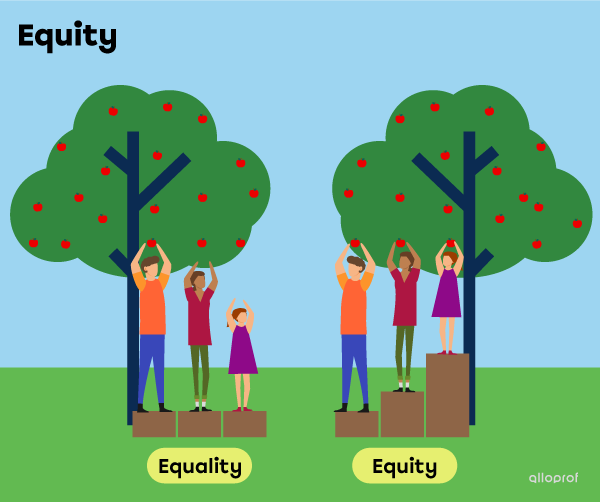
Equity is a principle of fair sharing of resources, profits or other benefits between individuals.
Erosion is the degradation of soil by wind, water or human action.
The exchange is a place where business shares are bought and sold.
Export is the sale of products to foreign countries.
Extensive agriculture refers to a type of agriculture in which yields are low because the goal is not to maximize productivity.
Extreme poverty occurs when a person does not have enough money to meet their basic needs, such as food, housing, etc.
A factory is where goods are made for consumption.
Fallow is the name given to land that is not cultivated for some time intentionally so that it can regenerate.
In geography, a farm is an agricultural, industrial or commercial enterprise that generates produce and/or products.
A fault is a break in the Earth’s crust.
Fauna refers to the species of animals living in a given territory.
A flood occurs when a large quantity of water occupies a territory that is usually dry.
The term flood also refers to a rise in the water level of a waterway due to melting snow or heavy precipitation causing overflow.
Flora refers to the plant species present on a given territory.
Food crops are grown to meet the food needs of the local population.
A forest activity is an activity carried out in a forest, such as forest exploitation, recreation or mushroom picking.
Forest cover refers to forest that covers a territory.
Forest management refers to all of the economic activities related to the production and processing of wood.
Fossil fuel is a non-renewable natural resource that produces energy when it is burned (coal, natural gas, oil).
A gas pipeline is a pipe used to transport natural gas over long distances.
Geography is a science that studies all the natural and human phenomena that occur on the planet.
Geological hazards are natural risks related to the movement of tectonic plates and the Earth’s crust.
Geology is the science that studies the composition and evolution of the Earth.
Global warming is the rapid increase in the Earth's average surface temperature that has been observed for many years.
Globalization is the multiplication of economic, political and cultural exchanges between different countries thanks to improved modes of transportation and communication.
Greenhouse effect is a natural phenomenon in which some of the Sun’s heat is trapped in the planet’s atmosphere.
Greenhouse gas is a gas that retains some of the Sun's heat in the atmosphere.
The Greenwich meridian is the meridian that separates the Earth into two hemispheres, the Eastern and the Western. It corresponds to the degree of longitude 0. It is sometimes called the origin meridian or the zero meridian.
Gross domestic product (GDP) is used to estimate a country’s wealth by calculating the value of the goods and services it produced in one year.
The growing method represents the set of techniques used in agriculture. Extensive agriculture and intensive agriculture are two examples of cultivation methods.
The growing season is the period when the temperature is higher than 5 degrees Celsius for more than 100 days, making agriculture possible.
Growth is the increase or development of a phenomenon, such as population or economic activity.
A gulf is a place where the sea advances inland. A gulf is larger than a bay.
A head office is the main quarters of a company or organization. This is where important administrative and legal decisions are made.
A hectare is a unit of measurement equivalent to 10 000 m2.
A hemisphere is one half of the globe, and it is separated by the equator (Northern Hemisphere and Southern Hemisphere) or by the Greenwich meridian (Eastern Hemisphere and Western Hemisphere).
Heritage refers to elements in a society that have been identified for promotion and protection for future generations.
A heritage site is a place that contains one or more important elements that need to be protected. These elements are often related to history or architecture.
A hill is a small elevation of land with a rounded summit.
A household represents one person or a group of people (roommates, family) living under one roof.
A hydrocarbon is a compound of hydrogen and carbon. Petroleum and natural gas are examples of hydrocarbons.
Hydroelectricity is electricity that is generated by the power of water (hydropower).
Hydrography represents all waterways and bodies of water (lakes, rivers, seas, oceans).
An ice storm occurs when there is freezing rain, which is a form of rain that freezes instantly when it comes into contact with the ground or an object. The layer of ice formed is called glazed frost.
Immigration refers to people entering a new country with the aim of settling there.
Import is the purchase of products from another country.
An Indigenous person is someone born on the land they inhabit and/ or whose ancestors were the first inhabitants to have occupied this land.
Industrialization refers to the mechanization and increased production of factories.
The term industrialized defines a territory in which several industries exploit raw materials, transform them and produce goods.
Industry refers to all of the activities related to the exploitation of natural resources and the manufacture of goods.
Infrastructure refers to a structure or set of structures (roads, bridges, buildings, sewers, etc.) that enable the planning and development of a territory.
Instability refers to something that is fragile or in a state of disequilibrium. When referring to a natural hazard, the term instability refers to the unpredictability and danger related to natural phenomena in a territory.
An institution is an organization, governed by regulations and laws, that plays a specific role in society. This role can be of a political, social, economic or religious nature.
Une inondation se produit lorsqu’une grande quantité d’eau se trouve sur un territoire qui est habituellement sec.
An international border is a territorial boundary that separates two countries.
Irrigation is the action of watering land when there is not enough precipitation.
An island is a piece of land completely surrounded by water.
In geography, an issue is a problem related to the use or the planning and development of a territory. An issue can be environmental, economic, political, social, etc.
A lagoon is a body of water separated from the sea by a strip of land or by a coral reef.
A lahar is a mudflow made up of ash, other volcanic debris and water.
A lake is an expanse of water, most often fresh, that can vary in size and is found inland.
A landfill site is a place where household and industrial waste is buried.
A landslide occurs when the soil along a slope becomes unstable. The soil collapses and can lead to the downward movement of mud, earth, rocks and debris.
Latitude is the position of a place in relation to the equator. Latitude is expressed in degrees.
The level of development of a country refers to the wealth and living conditions of its population, such as quality of life, life expectancy and level of education.
Life expectancy measures the average number of years that a country's inhabitants live.
The literacy rate is the percentage of the population aged 15 and over who can read and write.
Longitude is the position of a location relative to the Greenwich meridian. Longitude is expressed in degrees.
Low income cutoff (LICO) refers to a situation in which too large a portion of a household’s income is spent on meeting basic needs (housing, food, clothing).
Lumber refers to wood used for construction, such as planks and beams.
Magnitude is the strength of an earthquake. It is measured using the Richter scale, which ranges from 1 (the weakest) to 9 (the strongest).
A market refers to all of the possible consumers for a given good or service.
Market gardening is the cultivation of fruit and vegetables.
Marketing refers to all the operations required to sell products to consumers (such as processing, packaging, distribution, etc.).
Mass tourism allows many people to travel to the same places. This often leads to overcrowding in certain tourist areas
Median income is the middle income of a population, that is, half of the population earns more than this amount, while the other half earns less.
The meridians are imaginary vertical lines connecting the two poles.
A metropolis is a large urban territory in which millions of people live, with a concentration of activities and services as well as economic and political power.
Migration refers to the movement of people leaving one place to go to another.
Monoculture refers to the cultivation of a single species of plant.
A monsoon is a seasonal wind in tropical regions that brings heavy precipitation (rain) for several months.
A mountain is a land formation that rises very high.
Multiethnicity is a term that describes a population composed of people from different origins living in the same area.
A multinational is a company that has commercial activities in many countries.
A nation refers to a group of people who live on a given territory and share a common history and culture.
The national agricultural area represents the entire agricultural territory of a country or region.
A national border is a territorial boundary that divides areas within a country.
A national park is a protected territory that is managed by a government with the goal of preserving it while enabling the population to visit it.
A native species, in ecology, refers to a plant or animal species that naturally grows or lives in a particular region.
A natural disaster is a natural phenomenon that causes material damage (to buildings, roads, etc.) and human victims (injuries, loss of life, etc.).
A natural hazard is a danger related to a natural phenomenon.
Natural heritage refers to all of the elements in nature that constitute a source of wealth for humanity to be preserved and protected.
A natural park is a natural environment that has been planned and developed to ensure its protection and conservation while allowing the population to visit it.
A natural phenomenon is an event that occurs in nature, without any human intervention. This could be an earthquake, hurricane, aurora borealis, etc.
A natural resource is an element present in nature (minerals, oil, wood, etc.) that is exploited by humans.
A natural site is a place whose functions are related to the natural environment.
A nomad is a person who regularly travels from place to place to meet their food needs.
Non-renewable energy is a resource that does not regenerate naturally or regenerates at a slower rate than it is used.
Non-Status Indian is a legal term used to identify First Nations members who are not registered as Indians with the Canadian government.
Nordicity refers to all of the characteristics of living conditions in northern regions (cold, snow, isolation).
An ocean is an immense expanse of salt water located between two continents.
Offshoring is the action of relocating industrial activities, such as factories, to another country to reduce production costs.
The oil sands are a mixture of, among other things, sand and bitumen, where oil is extracted.
An old-growth forest is a forest that humans and natural phenomena have had little impact on, allowing the trees to grow very old.
An oleoduct is a pipeline (large pipe) used to transport crude oil over long distances.
Organic waste is waste that comes from a plant or an animal.
The parallels are imaginary horizontal lines parallel to the equator that circle the Earth.
A pasture is land covered in grass suitable for grazing farm animals.
A peninsula is an area of land projecting out into a body of water.
Permafrost is the name given to the soil in polar regions that is frozen year-round for at least two consecutive years.
To better understand what permafrost is, check out the video on Permafrost.
A plain is a flat region.
Planning and development is the modification or transformation of a territory with the goal of making it accessible, functional and usable.
A plateau is a relatively flat area that can be found at different altitudes. Plateaus are carved by valleys through which rivers flow.
Plywood is a wood panel made of thin layers of wood glued together and is used, for example, to build floors and walls.
Poaching is the illegal practice of hunting, fishing or trapping.
Population density refers to the average number of individuals living in a given area. It measures the number of inhabitants per square kilometre (inhabitants/km2).
Population density can be calculated using the following equation: Number of inhabitants ÷ Area = Population density.
Poverty occurs when a person does not have enough money to ensure decent living conditions.
Precarity refers to something that is unstable or uncertain.
Precipitation refers to water falling from the atmosphere. It can fall as rain, snow, hail, etc.
Prevention refers to all of the measures taken to reduce or avoid the impacts of a natural disaster.
Productivity refers to the efficiency of a business or a farm.
A pyroclastic flow is made up of volcanic gases, water vapour and solid elements, such as volcanic rocks, that flow down the slopes of a volcano at great speed.
A raw material is a substance of natural origin that must be transformed in order to be used in the manufacture of a product.
A recreational activity is something people do for fun and relaxation.
Recreational tourism is a form of tourism focused on outdoor leisure.
Regeneration refers to the renewal of something.
A regulation refers to the laws and rules that govern or an activity, a place, etc.
The relief is the set of terrain variations (humps, hollows, plains) present on the Earth's surface.
Renewable energy is a form of energy that regenerates naturally at the same or faster rate than it is used, which means that it will always be available.
A reserve is a territory that belongs to the Canadian government, but its use is reserved for First Nations members.
A resource refers to natural, human or economic wealth of a region.
Restoration represents all of the actions taken to return something to its original state.
A rice paddy is land where rice is grown.
A river is a waterway that empties into another waterway.
A royalty is an amount of money that must be paid at specific times.
Rural exodus is a phenomenon that occurs when large numbers of people leave the countryside to settle in cities.
Rurality refers to the particularities and characteristics of life in the countryside.
A sawmill is where logs are cut and milled.
A sea is a large expanse of salt water, smaller and less deep than an ocean.
Sedentary refers to a person or group of people who are permanently settled on their territory.
The term seismic refers to anything related to earthquakes.
Self-sufficiency refers to the capacity of an individual, a group or a country to meet its own needs without external help.
A site is a place with a specific function, such as a tourist site, an industrial site or a commercial site.
A slum is a living area close to a metropolis where very disadvantaged people live. Slums have few or no basic services (water, sewers, electricity, etc.).
Smog is a dense fog composed of atmospheric pollutants that are hazardous to health. The word smog is a combination of the words smoke and fog.
Soil degradation occurs when land loses its fertility.
Solar time is time that is determined based on the position of the sun. Noon is the moment where the sun reaches the highest point in the sky (zenith).
Standard of living reflects the quantity of goods and services to which a person or a population has access.
Standard time is the time determined by the government of a country based on the timezone you’re in.
Status Indian is a legal term used to identify First Nations members who are registered as Indians in the official register under the Indian Act.
A stream is a very small waterway.
Subsistence agriculture is the practice of growing food to meet the basic needs of farmers and their families.
A suburb is an urban area on the outskirts of a metropolis or a city.
Sugar maple growing is the cultivation and exploitation of sugar maples to produce maple syrup and other maple products.
Sustainable development refers to development that respects the environment, the population and the economy with the goal of protecting them for future generations.
Sustainable tourism is a type of tourism in which development respects the population, economy and environment of each region.
A sweatshop country is a country where the workforce is inexpensive and much of the goods are produced in a factory.
Sylviculture is a set of rules and techniques designed to exploit the forest while ensuring its regeneration and protection.
Tectonic plates are pieces of the Earth’s crust that can move away from each other, rub against each other or collide with each other. The continents and oceans sit on tectonic plates.
A thermal power plant produces electricity from fossil fuels (natural gas, oil, coal) or biomass (organic matter).
A threatened species is an animal or plant species that is at risk of disappearing.
A tide is the daily rise and fall in water level caused by the effects of the gravitational pull of the Moon and the Sun.
A tornado is a funnel of violent winds that extends from the base of a cloud to the ground.
Tourism refers to the act of travelling to visit a place different to where one resides.
Tourist flow is the movement of tourists from one place to another on a national or international scale.
A tourist hotspot is a place (city, region, country) that attracts a large number of tourists.
A tributary refers to a waterway that empties into another waterway.
A tsunami is a series of huge waves triggered in the ocean that can cause major damage to inhabited areas along the coast.
A typhoon is a violent storm that originates in the oceans close to the equator. It can also be referred to as a cyclone or a hurricane depending on the region where it forms.
Unemployment refers to a period during which a person is without a job, but is able to work and is actively looking for a job.
The unemployment rate refers to the percentage of people who are not employed in a given population.
UNESCO is the United Nations Education, Science and Cultural Organization.
Unsanitary refers to something that is a health risk. A place is considered unsanitary when it is dirty and a health hazard (presence of mould, pest infestation, etc.)
Urban sprawl is the progressive spreading of a city over a greater area.
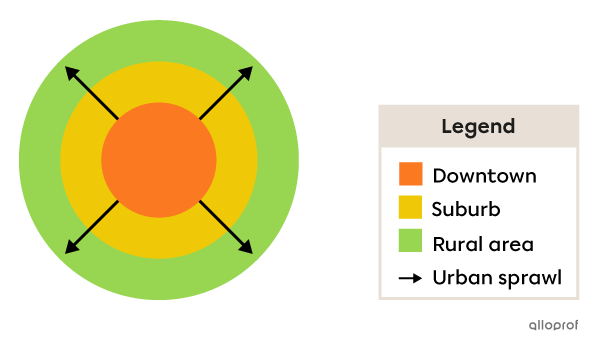
Urbanization refers to population growth and development of an urban territory.
A valley is a hollow located between two elevated zones (mountains).
A volcanic eruption is the expulsion of lava, gas and/or ashes by a volcano.
Wastewater is the water used by humans for domestic use (for the toilet, shower, bath, etc.) or industrial use (factories, etc.). These waters are discharged into sewers and septic tanks.
Water erosion is erosion caused by water.
A water table is a reserve of water located below the ground near the surface.
The watt (W) is a unit of measurement for expressing the energy produced per second. One megawatt (MW) corresponds to 1 million watts.
A watt-hour (Wh) is a unit of measurement for expressing energy consumed per hour. One terawatt-hour (TWh) corresponds to 1 billion watt-hours.
The term western means that which is to the west. The term Western countries refers to the countries of America, Europe and Australia, as well as New Zealand.
Wind erosion is erosion caused by the wind.
A wind turbine is a machine that captures and converts the energy of the wind. In most cases, this energy is converted into electricity.
The workforce represents all the workers in an industry, company, region or country.
The World Bank is an international organization created to fight poverty in developing countries. It offers various financial assistance measures to countries facing poverty.
Zoning is the division of a territory into zones in which specific activities are permitted.