Subjects
Grades
To access the other concept sheets in the Heritage Cities unit, check out the See Also section.
There are many heritage organizations that study and identify heritage sites.
A heritage site is a place that contains one or more important elements that need to be protected. These elements are often related to history or architecture.
Identifying heritage sites in Canada is the responsibility of the Historic Sites and Monuments Board of Canada.
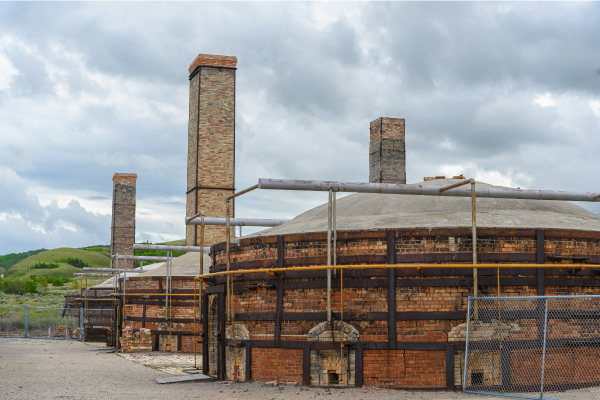
Claybank Brick Plant National Historic Site
This site, located in Saskatchewan, is where bricks used to be made. It is one of the heritage sites designated by the Board.
In Quebec, the Conseil du patrimoine culturel du Québec, formerly the Commission des monuments historiques, is responsible for advising the government on questions related to cultural heritage.
The United Nations Educational, Scientific and Cultural Organization (UNESCO) is an international agency that identifies the most important heritage sites around the world. This is what constitutes world heritage. Several criteria are used to identify world heritage. In 2021, there were 1154 heritage sites on the World Heritage List[1]. This number increases from year to year as new sites are regularly added to it.

One of UNESCO’s missions is to preserve the diversity of cultures in the world.
A heritage city is a place with one or more heritage sites. UNESCO has a list of 10 criteria to determine whether or not a site is part of world heritage. If a site meets at least one of these criteria, it can become a world heritage site. Here are the five criteria for cultural heritage:
Criteria
1. Be considered a masterpiece, something remarkable, created by humans
Example of a heritage site
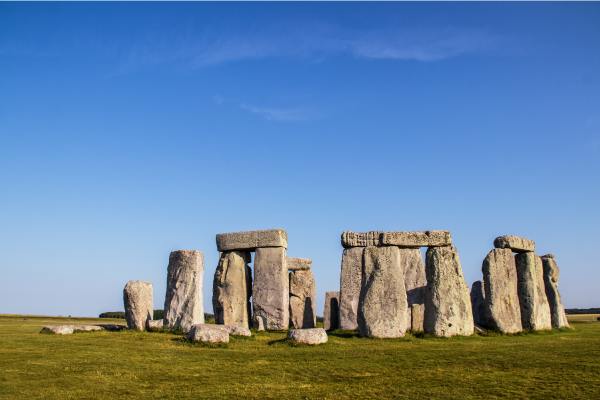
Stonehenge, Avebury and Associated Sites
These assemblies of stones at Stonehenge and Avebury, in the United Kingdom, are among the most famous in the world. They are two remarkable prehistoric accomplishments.
2. Have a major influence on the architecture, art or urban planning of other human populations

Vatican City
Vatican City is home to impressive artworks as well as unique architectural structures. These have been a source of inspiration for generations of painters, sculptors and architects.
3. Be a unique example of a cultural tradition or of a civilization that is living or has disappeared
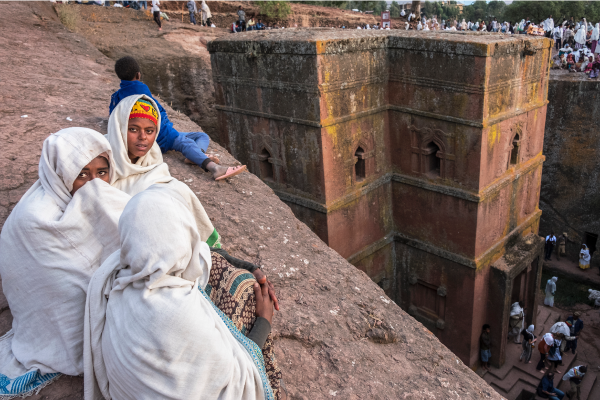
Churches Carved Out of Rock in Lalibela
Close to Lalibela, in Ethiopia, 11 churches were carved out of rock, each in a single block. Dating from the 12th century, they are a pilgrimage site to this day, and have had a lot of influence on Christianity in Ethiopia.
4. Be an outstanding example of architecture or technology illustrating one or more important stages in history

Rideau Canal
The Rideau Canal, linking Ottawa to the Kingston Harbour, in Canada, is an example of a well-preserved and still functional construction. It was built at the beginning of the 19th century for military purposes and to protect Canada’s territory. It illustrates a significant period in history, since it is an example of the fight for control of this part of the North American continent. It is also one of the first canals to have been specially conceived and built for steam boats.
5. Be an example of traditional planning and development of a territory
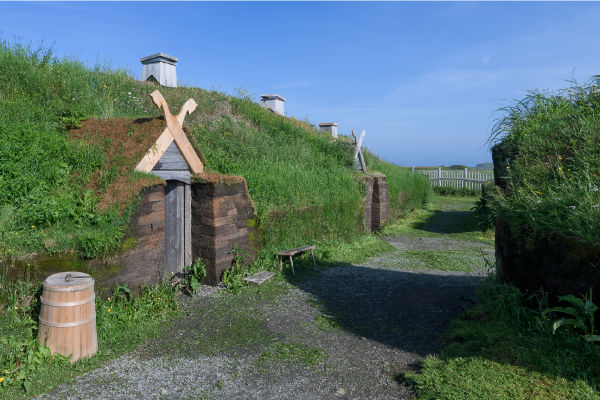
Reconstitution of Part of the L’Anse aux Meadows Site
The L’Anse aux Meadows site, in Newfoundland, is the only known site to date showing a Viking presence in North America. It also shows the first traces of colonization of North America by Europeans.
Based on these criteria, UNESCO identifies heritage sites in the world. Once the site is recognized, it is added to the World Heritage List. For a city, having a site within its territory that is on this list has a number of benefits. It is possible to receive assistance from international organizations to preserve this cultural heritage, and world recognition attracts tourists and helps stimulate the city’s economy.
A description of all of the world cultural heritage sites is available on this interactive map: World Heritage Interactive Map.
A heritage site located within a city leads to additional challenges for its protection since it is necessary to respond to the needs of the city’s inhabitants while also ensuring conservation of the site.
Since they share many points in common, heritage cities that have one or more sites recognized by UNESCO came together under the Organization of World Heritage Cities (OWHC) in the early 1990s. The OWHC’s mission is to help cities that are members to manage their territory and protect their heritage sites. It also promotes collaboration between these cities and cultural heritage specialists. To become a member of the OWHC, a city must have at least one heritage site recognized by UNESCO within its territory and this site must be inhabited.

To access the rest of the unit, you can consult the following concept sheets.
1. UNESCO. (2022).World Heritage List Statistics. https://whc.unesco.org/en/list/
2. UNESCO. (n.d.). UNESCO Logo [Image]. (URL). *Content used by Alloprof in compliance with the Copyright Act in the context of fair use for educational purposes. [https://laws-lois.justice.gc.ca/eng/acts/c-42/page-9.html].
3. OWHC. (n.d.). OWCH logo [Image]. (URL). *Content used by Alloprof in compliance with the Copyright Act in the context of fair use for educational purposes. [https://laws-lois.justice.gc.ca/eng/acts/c-42/page-9.html].