Subjects
Grades
A fact can take many forms. A fact can be an event or an action. It is something that happened and can be confirmed by anyone. No one can dispute a fact because there is a lot of evidence to support it.
Stating that the explosion of the nuclear reactor at Chernobyl happened on April 26, 1986 is a fact, because it can be verified. There is evidence to support it, such as newspaper articles, videos, documentaries, witness statements, etc. It does not matter who is researching it, the end result will be the same: the explosion took place on April 26, 1986.
Find out more by consulting this site regarding the Chernobyl disaster.
Whenever you are faced with a task related to history, regardless of its nature, you must first establish facts. To establish a fact means to put knowledge into words. An example of this is to state that the year of the creation of Canada is 1867. Sometimes the documents provided in order for you to accomplish a task can help you to recall knowledge, but be careful, these documents don’t give you the answer.
It is highly recommended that you read the concept sheet on intellectual operations to fully understand how to complete the tasks related to different intellectual operations.
The two examples below are similar to what you might encounter in an exam. Try to complete the task before looking at the detailed answer. This will help you see how well you can complete the intellectual operations.
The two examples below are related to concepts that you might not have seen before. If so, don’t worry, you’ll learn them when they are introduced in class.
The example for Cycle One(Secondary 2) relates to the module on the Renaissance.
The example for Cycle Two (Secondary 3) relates to the module on Indigenous peoples and the settlement project.
Statement: Using documents 1 and 2, name the theory promoted by the Church during the Renaissance.
Document 1

Document 2
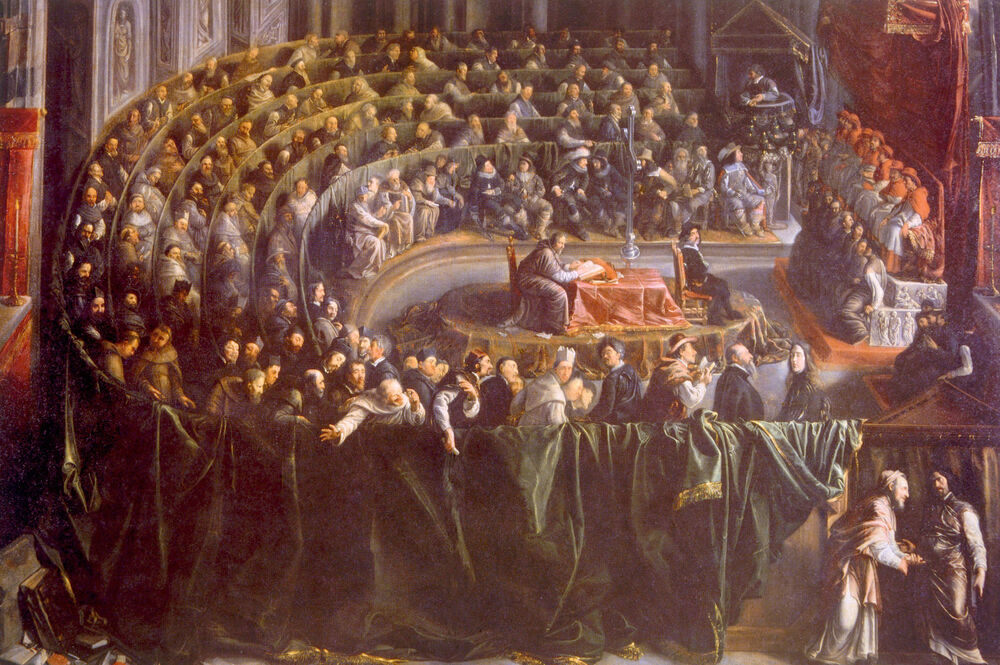
Galileo’s Trial (1680)
Galileo Before the Inquisition in Rome (April 12 to June 22, 1633).
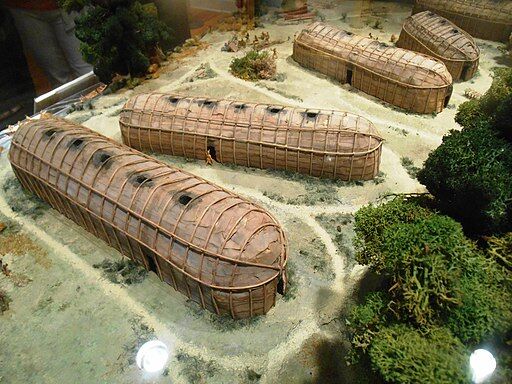
Statement: Document 1 is an illustration of an Indigenous dwelling. Name the great Indigenous language family that lived in this type of dwelling.
Document 1
Knowing how to establish facts is a central component for all intellectual operations. Once you have established facts, you can use this knowledge to complete different tasks.
You can find the causes and effects of these facts, for example, along with the similarities and differences between them. You can also place them in chronological order. These are just a few examples of what you will be asked to do with facts.
Gagnon, J. (2014, 25 mai). Maisons longues [Photographie]. Wikimedia commons. https://commons.wikimedia.org/wiki/File:Maisons_longues_01.jpg