Subjects
Grades
 100%
100%
 100%
100%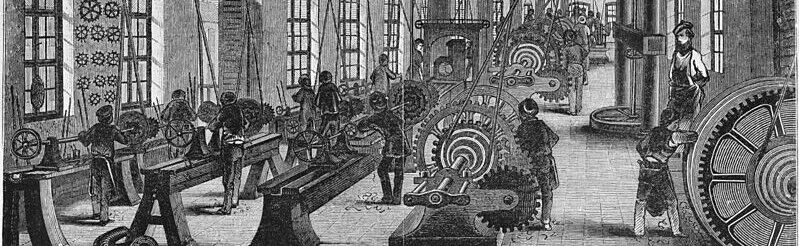
In the 18th century, just before it became industrialized, England was a veritable empire. With colonies all over the world, the English bourgeoisie were accumulating colossal wealth and wanted to make even more profit. It was against this backdrop that a number of factors aligned for England to begin its industrialization. This was the beginning of what many historians call the Industrial Revolution.
Industrialization represents the spread of mechanisation and a sharp increase in factory and plant work. Industrialization is also explained by the transition from an artisanal mode of production (goods made entirely by hand by craftsmen) to an industrial mode of production (goods made in factories by machines and workers).
The Industrial Revolution is the historical period during which a number of technical innovations took place that changed many aspects of society and the economy. The rapid social and economic changes explain the use of the term revolution.
English society and the economy underwent major transformations. Among these changes, the shift of the majority of the population from the countryside to the city, urbanization, would in turn bring about considerable modifications. This revolution began by profoundly changing the West, then spread to the whole world.

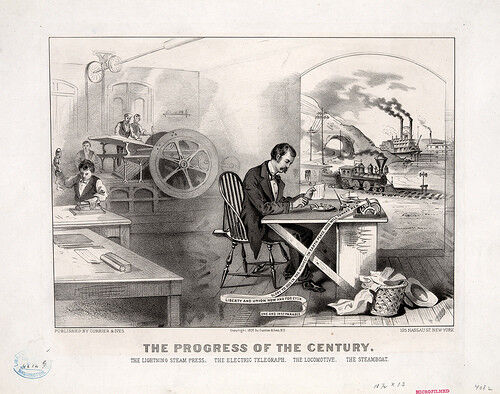
Progress in the 19th century
With the advent of machinery, a new way of working was introduced, promoting the division of labour. With this new way of working, each worker performed a small, simple task in the manufacture of goods or commodities.
Division of labour in a factory
The first sectors to industrialise were
For more details on industrialization: an economic and social revolution, see the following factsheets:
The concepts covered in the following sheets go beyond those seen in secondary school. They are intended as a supplement for those who are curious to find out more.