Subjects
Grades
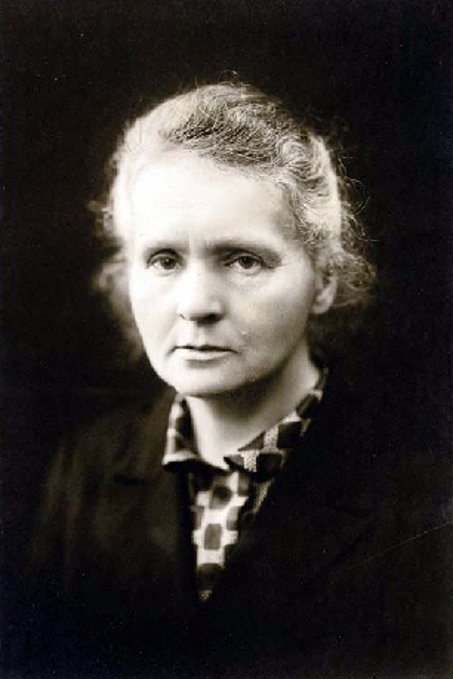
Marie Sklodowska-Curie was a Polish chemist and physicist. Together with Henri Becquerel and her husband, Pierre Curie, she discovered natural radioactivity, for which they were awarded the Nobel Prize. She went on to discover two elements: radium and polonium, which earned her her second Nobel Prize.
1867: Marie Salomea Sklodowska is born on November 7 in Warsaw, Poland.
1891: She moves to Paris to study science.
1894: She meets Pierre Curie, her future husband.
1903: She, along with her husband and Henri Becquerel, receive the Nobel Prize in Physics for their contributions to the study of radioactivity.
1904: She is appointed head of the Physics Chair at the Faculty of Science, University of Paris.
1911: She receives the Nobel Prize in Chemistry for her discovery of radium and polonium.
1918: She joins the Radium Institute, later to become the Institut Curie.
1934: She dies in France on July 4 as a result of prolonged exposure to radiation (since 1898).