Subjects
Grades
In 1663, the fur trade was still the most lucrative economic activity in New France. As Huronia had been destroyed in 1650, the French had no choice but to go and look for furs in the Great Lakes region. This was when the coureurs des bois first appeared. They played a significant role in the fur trade in New France.
The habitants of New France were free to choose their profession. Seeing as the fur trade was more profitable than working the land, many abandoned farming to trade furs. This worried the new Royal Government as the inhabitants moving into the forests went against its greatest ambition: increasing the number of inhabitants in the colony.
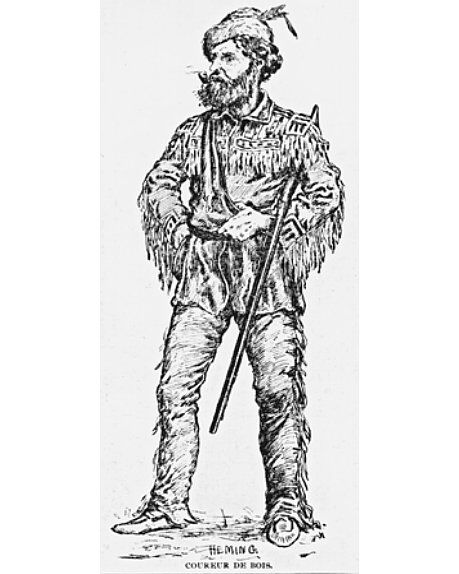
Coureurs des bois
In 1676, to prevent all the colonists heading into the forests, the authorities decided to prohibit fur trading. However, the independent spirit of the Canadiens that came, amongst other things, from contacts with the Indigenous peoples, drove the colonists to defy these orders and to continue this profitable business. In 1681, the authorities therefore decided to distribute permits granting the right to trade furs. They were called “congés de traite”. Once again the colonists worked around this system by selling furs illegally to the British and to smugglers.
Fur trading agent: A fur trading agent was someone who actively participated in this trade. In 1663, there were four types of agents:
Companies
Merchants
Voyageurs
Indigenous people
Implementing the congé de traite system somewhat changed the fur trade. From 1681, the colony authorities awarded twenty-five trading permits to merchants or military officers. Each permit allowed three voyageurs to go into the forest. These voyageurs headed to the Great Lakes region to exchange objects for furs with the local Indigenous peoples. These furs were then brought back to the city to be exported to the mother country. Once they arrived in France, they were managed by the companies.
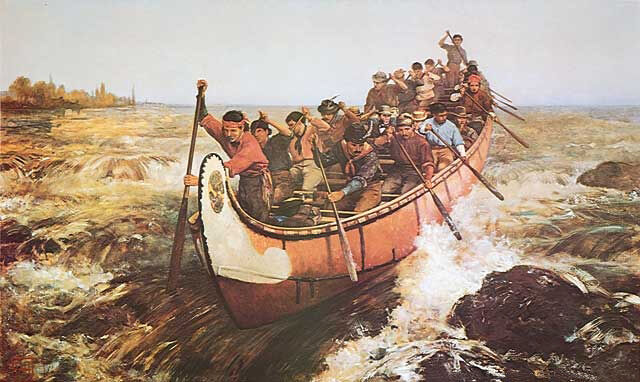
Voyageurs descending rapids
| The roles of the fur trading agents | |
|---|---|
| Different trading agents | Roles of the different trading agents |
| Company in France |
|
| Merchants in New France |
|
| Voyageurs |
|
| Indigenous peoples |
|