Subjects
Grades
The intercolonial wars were a series of armed conflicts between France and England that occurred in the 17th and 18th centuries. These wars reached their colonies: New France and England’s Thirteen Colonies. In North America, the conflicts centred on control of the fur trade, fisheries, and territories such as the Ohio Valley. They led to the Seven Years’ War.
 100%
100%
 100%
100%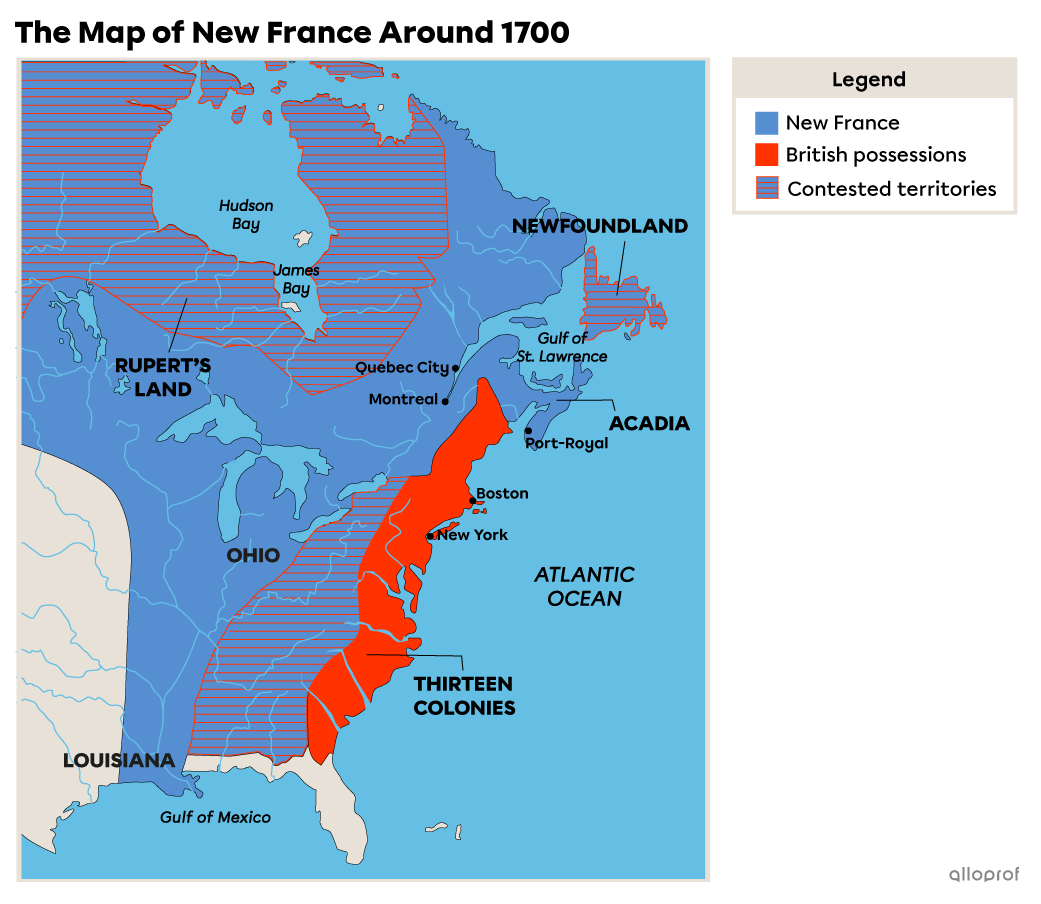 100%
100%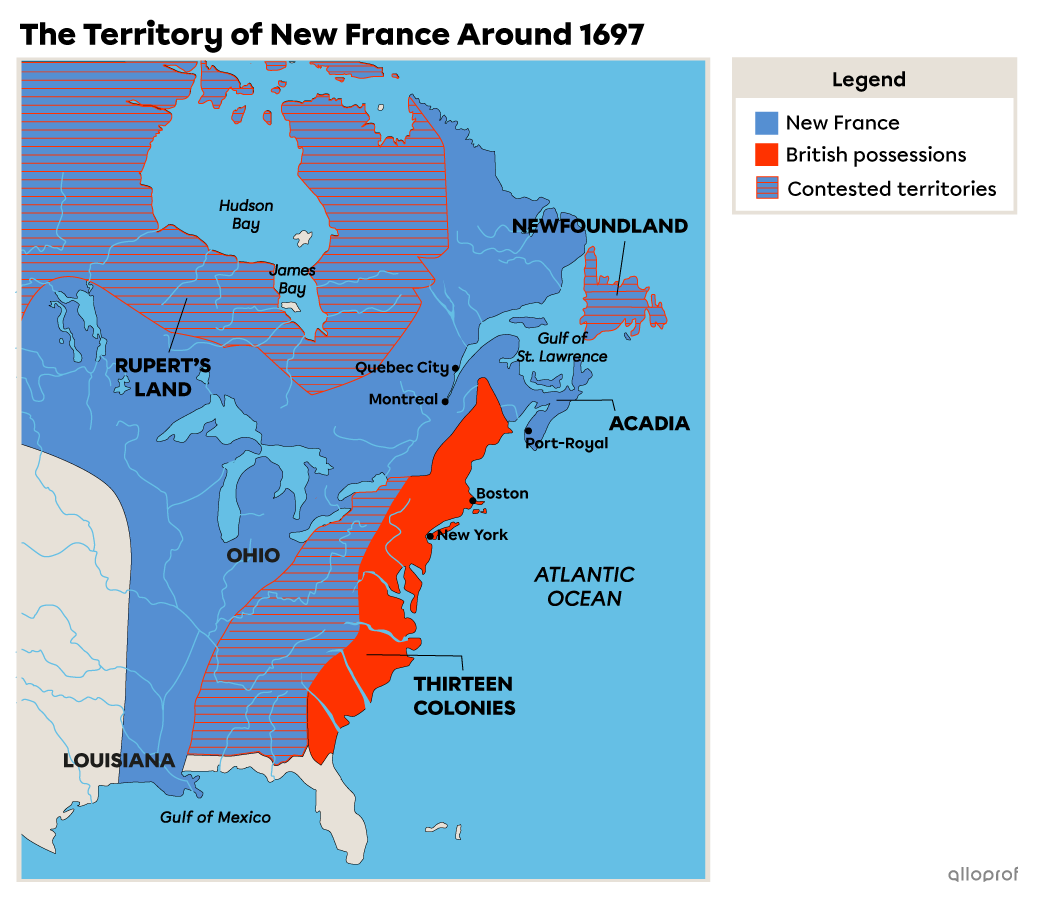 100%
100%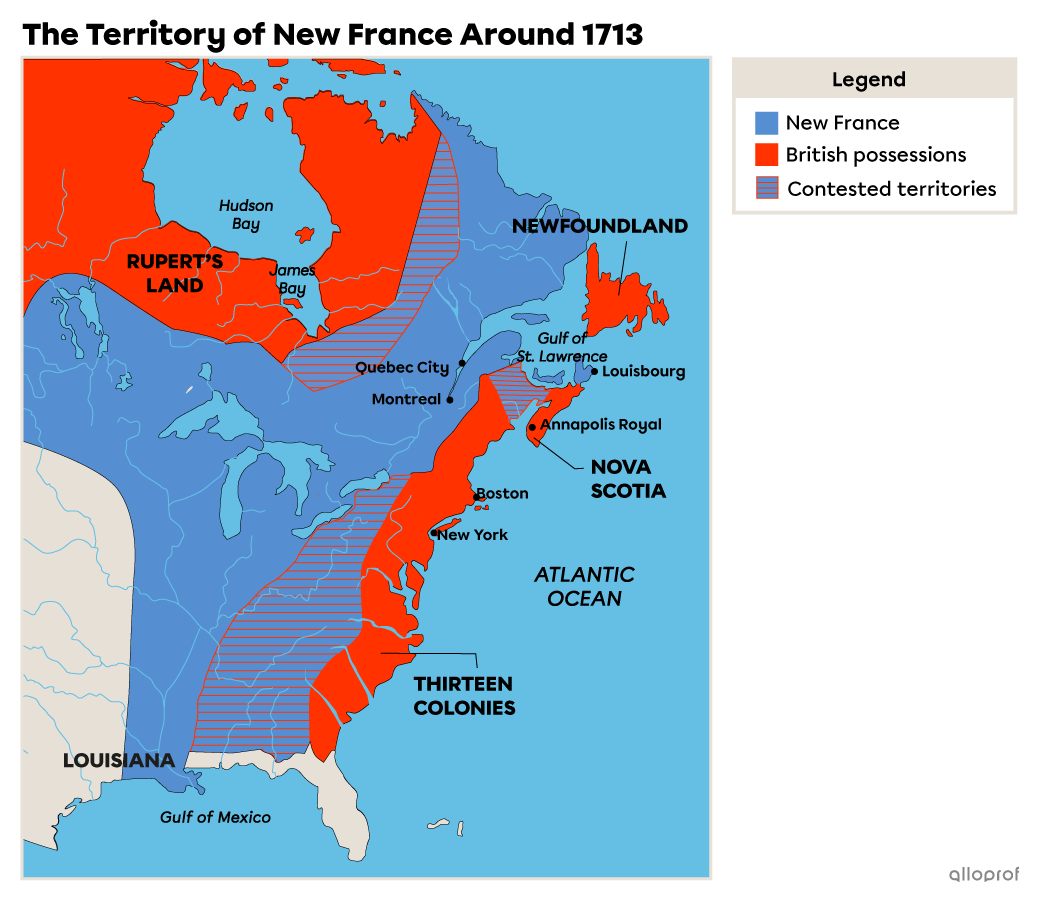 100%
100%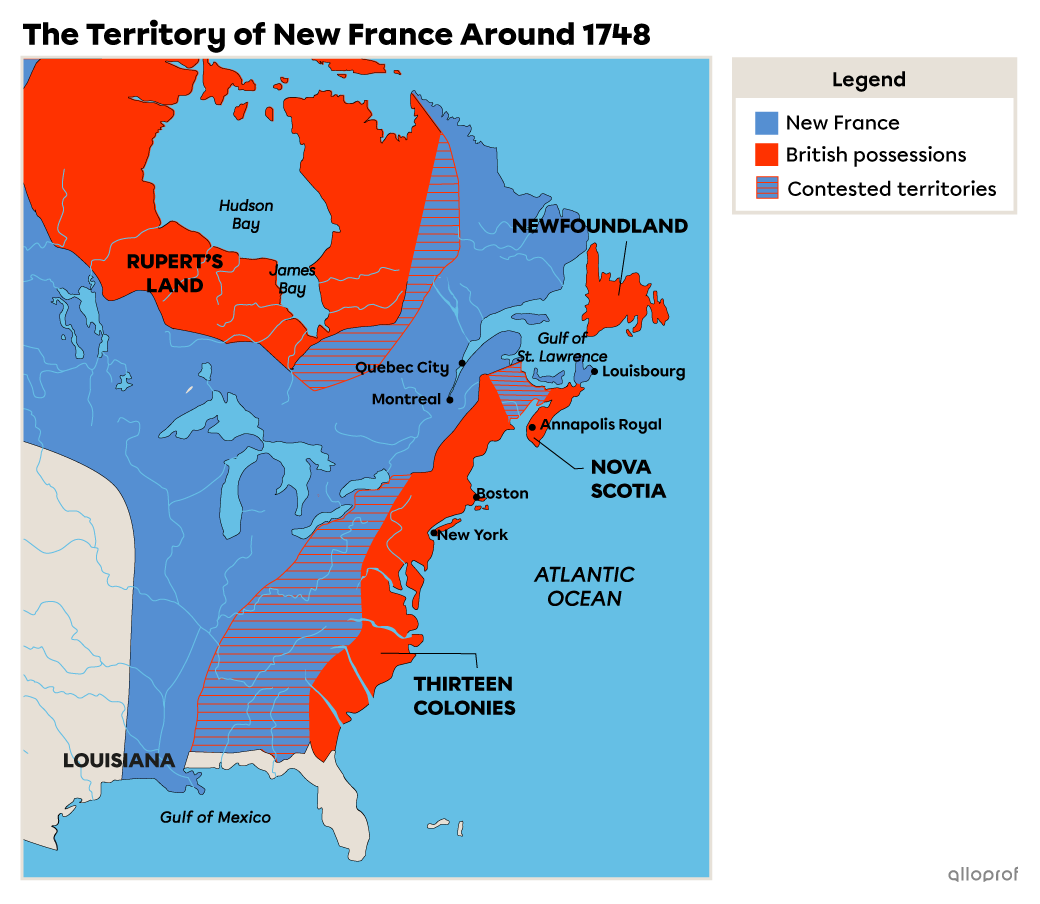
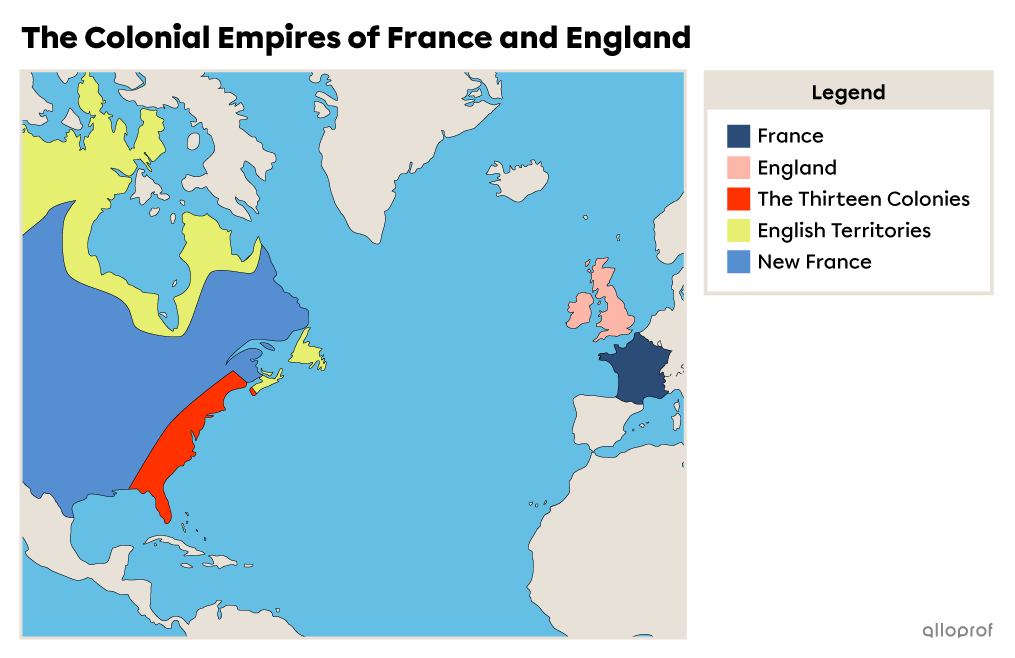
France and England were both hungry for power and wealth in the 17th century, with large colonies around the world, particularly in America. These countries were said to have colonial empires.

France and England both wanted to control the fur trade and the fishing grounds of North America, notably clashing over the Hudson Bay and Newfoundland territories. The lucrative trades also caused rivalries between New France and the Thirteen Colonies.
The Thirteen Colonies, which were rapidly expanding in demographic and economic terms, wanted to extend their territory to the west, to settle on the fertile lands of Ohio. However, New France, which also occupied this territory, was a major hindrance to this expansion.
In the mid-1680s, tensions rose considerably between New France and the Thirteen Colonies. However, the colonies could only go to war if their mother countries (France and England) first declared war on each other in Europe. At the end of the decade, the 2 countries went to war, triggering the beginning of intercolonial wars and conflicts in North America.
A mother country is a state that owns and administers its colonies, which involves exploiting territories outside its own country.
From 1689 to 1748, 3 armed conflicts broke out in Europe:
These 3 wars had few lasting impacts in North America. Only the signing of the Treaty of Utrecht, which brought an end to the War of Spanish Succession, had any territorial consequences.
Between 1689 and 1697, the War of the League of Augsburg was fought in Europe because England and other European countries wanted to rein in the conquests of the French king, Louis XIV, on the European continent. They created an alliance called the League of Augsburg and declared war on France. The conflict spread to North America, where New France and the Thirteen Colonies clashed.
New France attacked some villages of the Thirteen Colonies and tried to capture the trading posts around Hudson Bay and on the coasts of Newfoundland. The Thirteen Colonies laid siege to Quebec. They were supported by the Iroquois, who broke the peace treaty signed with the French in 1667. Despite this, the English failed to take the city.
A city is under siege when an opposing armed force completely surrounds it with the aim of cutting it off from the rest of the world and attacking it. This is known as laying siege to a city.
This war ended with the signing of the Ryswick Treaty with no territorial changes as a result of this conflict.
From 1707, England joined with Scotland to form Great Britain, so the habitants were then called the British.
In 1701, a new war broke out between France and England. It began when Charles II, King of Spain, bequeathed his throne to the grandson of Louis XIV, King of France. England feared the alliance that would be created between the 2 powerful kingdoms of France and Spain, and decided to declare war on them.
In America, this rivalry triggered battles for control of Acadia and Newfoundland. In 1710, the British seized Port-Royal, in Acadia, and occupied the coasts of Newfoundland. They also attempted to take Quebec City and Montreal, but failed.
The war ended in defeat for France, formalized with the signing of the Treaty of Utrecht.
The Treaty of Utrecht of 1713 resulted in New France losing territory. Great Britain took Acadia, the land around Hudson Bay, as well as the coasts of Newfoundland. France kept Isle Royale (Cape Breton Island) and Isle Saint-Jean (Prince Edward Island).
These new British territories represented a substantial military and economic loss for France. As well as being rich in furs and fish, these territories were strategic positions for setting up British military forces. After this treaty, both France and Great Britain strengthened their defences, building forts and fortifying cities.
From 1744 to 1748, the War of the Austrian Succession raged in Europe, again involving France and Great Britain. Austrian Emperor Charles VI named his daughter as successor to his throne. Several European kingdoms contested this succession and, on the death of Charles VI, a new war broke out.
In America, France tried unsuccessfully to retake Acadia from the British. For their part, the British succeeded in capturing the important French town of Louisbourg, located on Île Royale.
At the end of the conflict, the signing of the Treaty of Aix-la-Chapelle obliged both sides to return the conquered territories. Louisbourg was returned to French control, and New France suffered no territorial losses.
In 1754, a new war began between New France and the Thirteen Colonies, this time in North America: this was the start of the War of the Conquest. The conflict rapidly spread through the colonial empires outside North America. The Seven Years’ War between the two mother countries, France and Great Britain, began in 1756. The fight between the two big colonial empires became global, affecting Europe, the Caribbean, Africa and Asia.
The signing of the Treaty of Paris in 1763 marked France’s defeat. France had to cede almost all its possessions in North America, and New France became a British colony.