Subjects
Grades
To learn how to tell time, it is important to understand the role of the hands and the numbers on a clock. For a reminder, consult The Clock concept sheet.
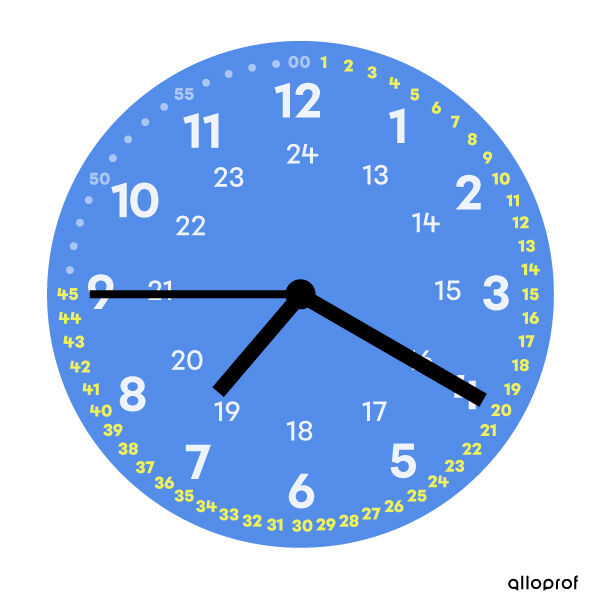
To tell time, start by looking at the number shown by the little hand.
The hour changes when the little hand reaches the next number.
It is 7 o’clock until the little hand points directly at the 8. If the hand is between 7 and 8, it is still 7 o’clock.
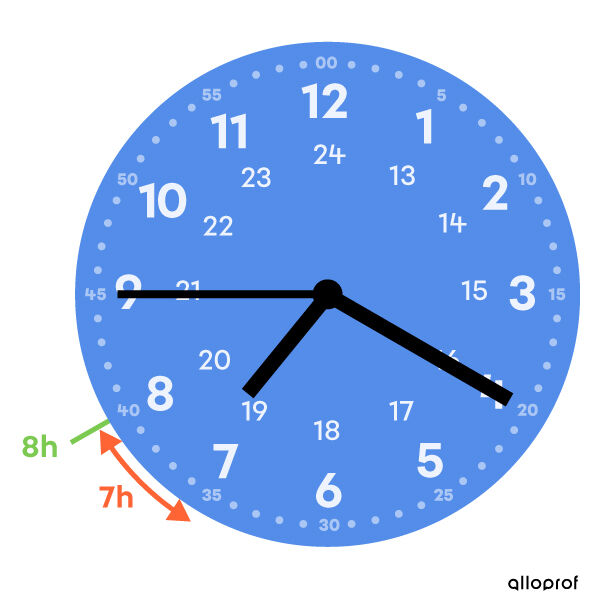
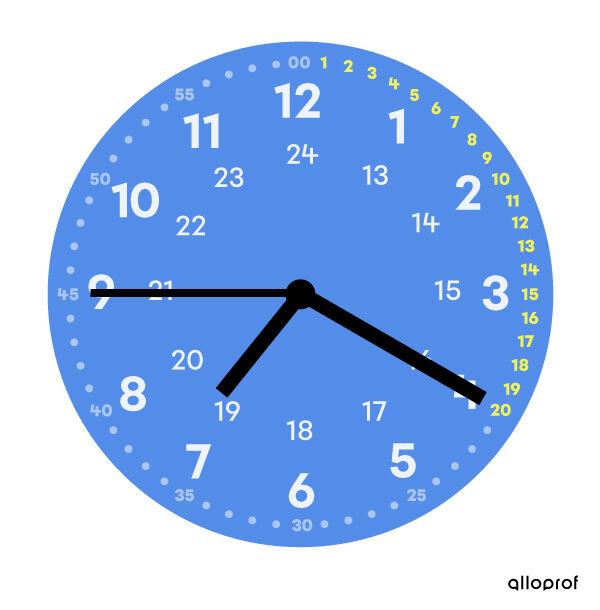
After determining the hour, look at the big hand (the minute hand). This hand points towards a dash or dot that shows the number of minutes that have passed since the start of the hour. Start by counting from the dash or dot found just to the right of the number 12.
The big hand of this clock points to the 20th minute mark of the hour. Therefore, it is 7:20.
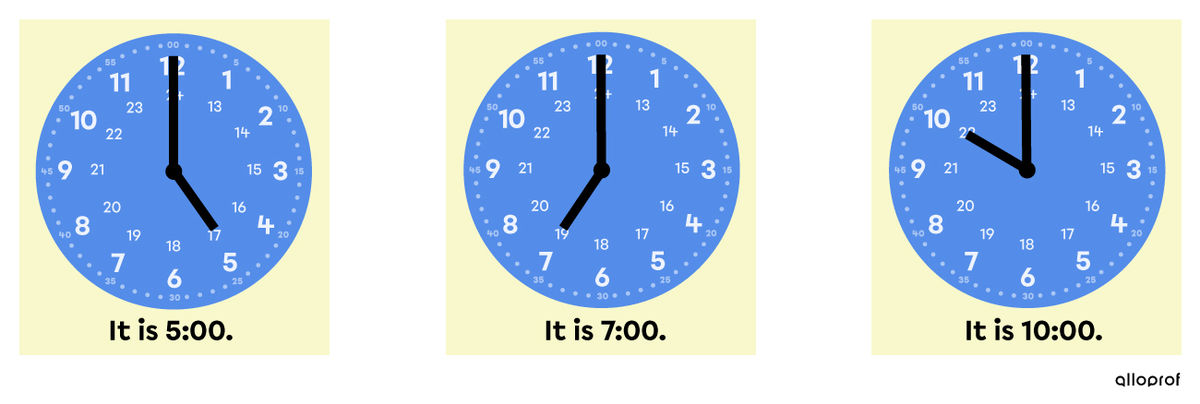
When the big hand points to 12, it is exactly the hour indicated by the little hand.
Examples:
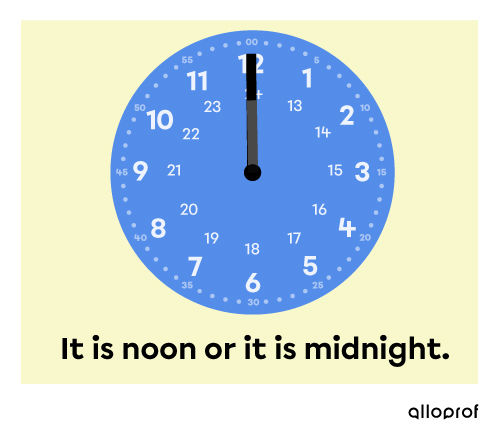
When the little hands and the big hands are both on 12, it is either noon or midnight.
The last step is to look at the second hand (the thinnest hand). It points to a dash or a dot that shows how many seconds have passed since the start of the minute.
Some clocks do not have a second hand, so it is not possible to tell the seconds.
The second hand has moved 45 seconds since the start of the minute. It is 7:20 and 45 seconds.
Time can be written in different ways:
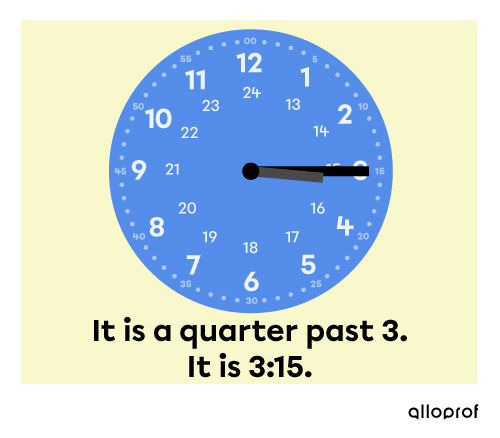
When the big minute hand has moved 15 minutes, a quarter of an hour (or one out of four parts of an hour) has passed.
Example:
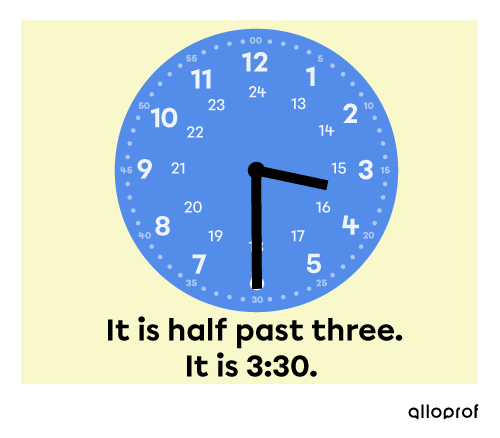
When the big minute hand has moved 30 minutes, a half hour has passed.
Example:
Moments in the video :