Subjects
Grades
 100%
100%
 100%
100%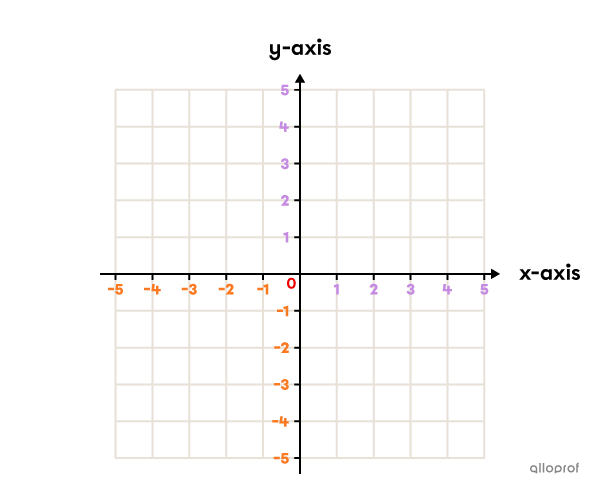 100%
100%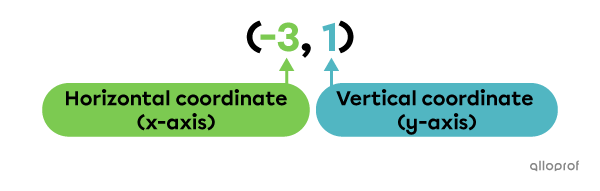
The Cartesian plane is a reference system.
Example:
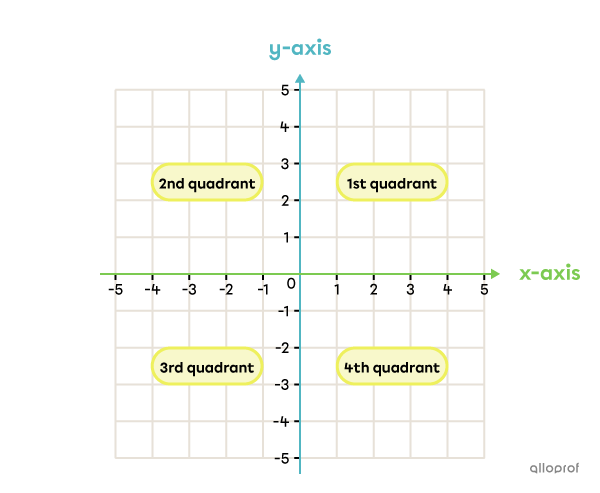
The Cartesian plane is divided into 4 quadrants separated by the x-axis (horizontal axis) and the y-axis (vertical axis).

Each axis is graduated with positive integers and negative integers. The centre point of the plane is 0.
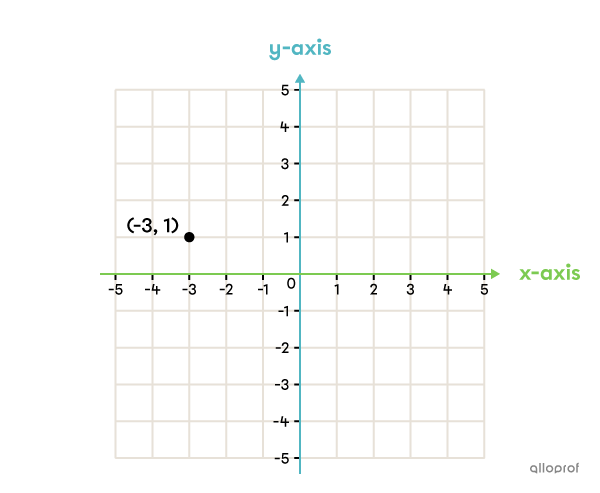
Coordinates are numbers that specify the horizontal or vertical position of a point on the Cartesian plane.
The horizontal coordinate represents the position of a point on the x-axis (horizontal axis).
The vertical coordinate represents its position on the y-axis (vertical axis).
The horizontal coordinate of the point is -3.
The vertical coordinate of the point is 1.
While the one-quadrant Cartesian plane has only positive coordinates, the Cartesian plane with 4 quadrants has both positive and negative coordinates.
Each quadrant has different positive and/or negative coordinates.
Examples :
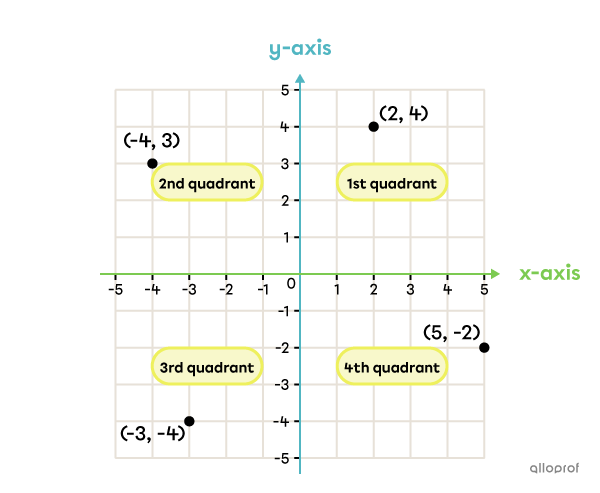
An ordered pair is used to find the exact position of a point on a Cartesian plane. Write the horizontal coordinate followed by the vertical coordinate between brackets. Separate the two coordinates by a comma.
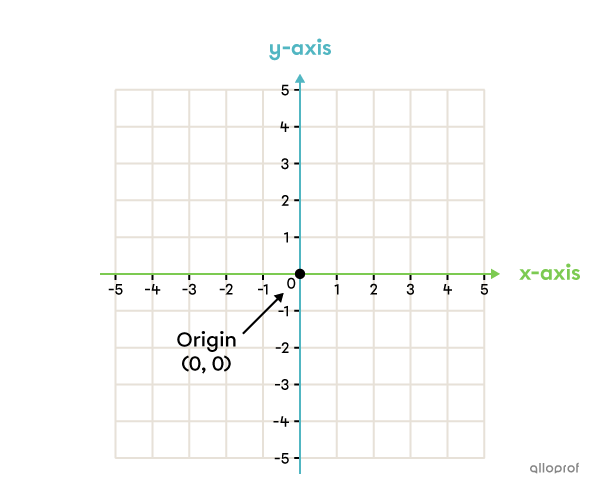
The origin is the meeting point (the intersection) of the x-axis (horizontal axis) and the y-axis (vertical axis). It is represented by the coordinates (0, 0).
Example:
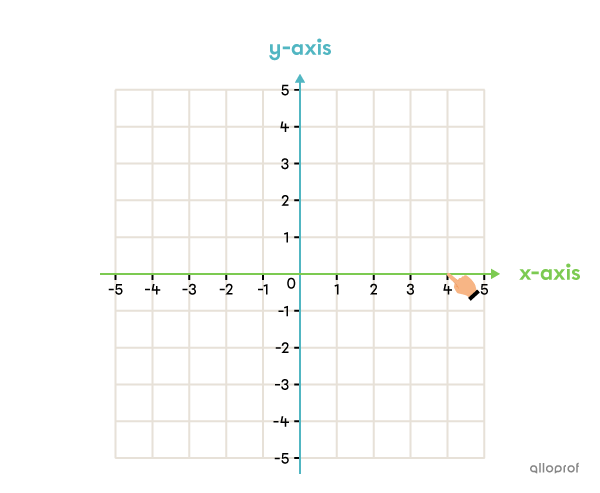
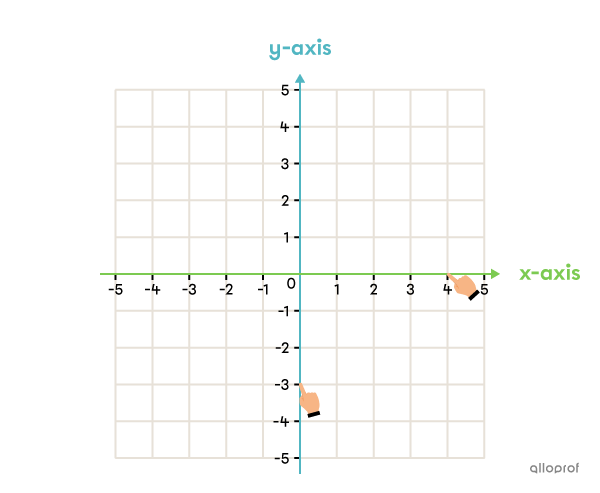
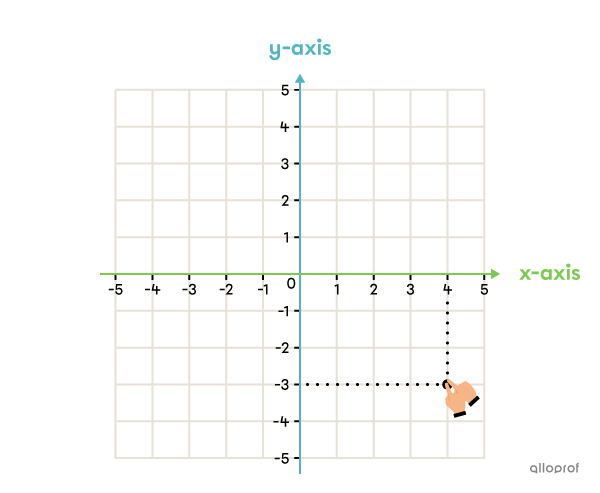
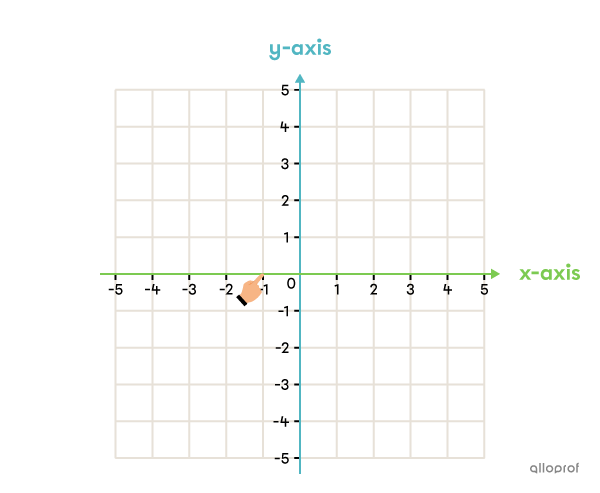
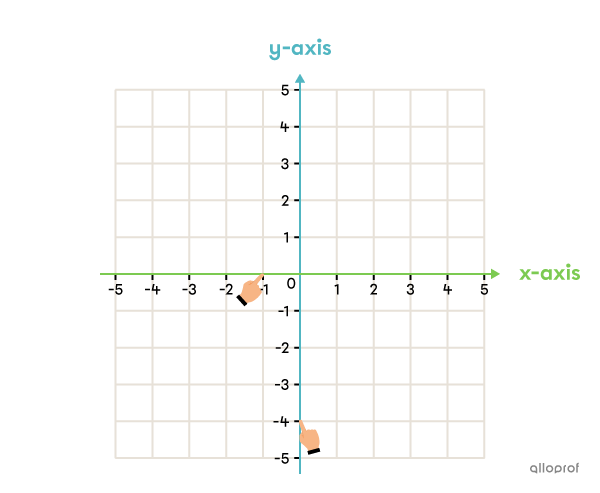
To place a point on the Cartesian plane using its coordinates, follow these steps:
Place the point with coordinates (4, -3) on the Cartesian plane.
|  |
|  |
|  |
Place the point with coordinates (-1, -4) on the Cartesian plane.
|  |
|  |
| 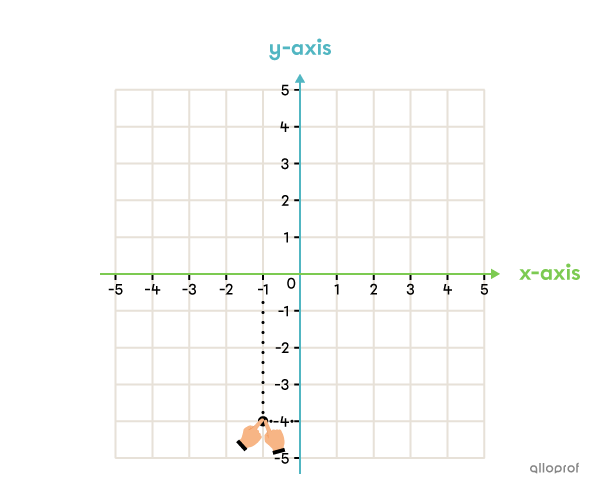 |
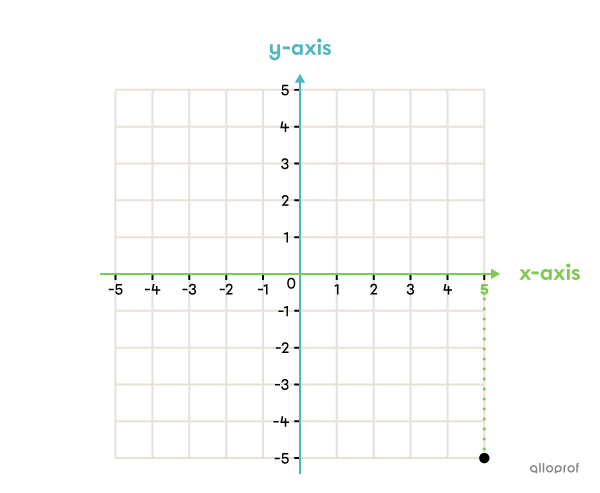
To find the position of a point on the Cartesian plane, follow these steps:
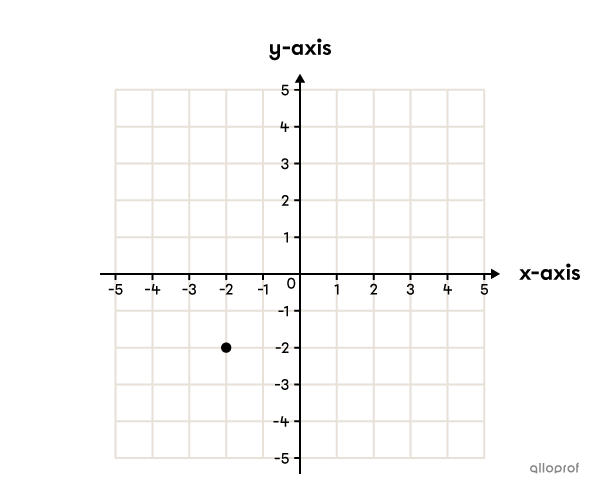
Write the position of the point on the following Cartesian plane.
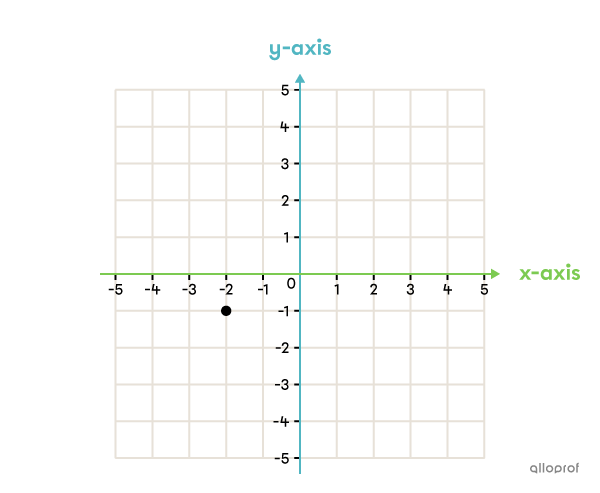
| 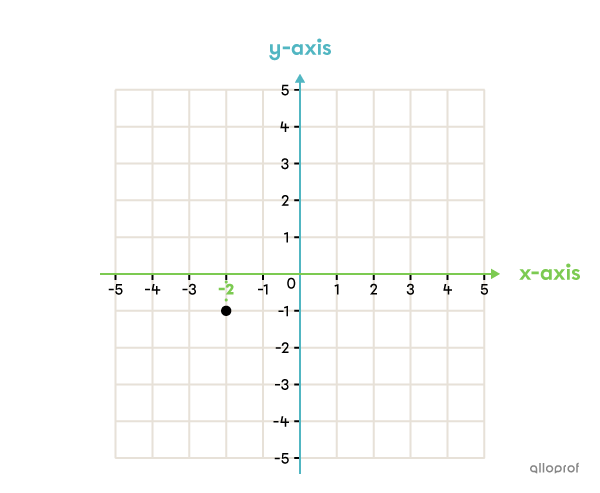 |
| 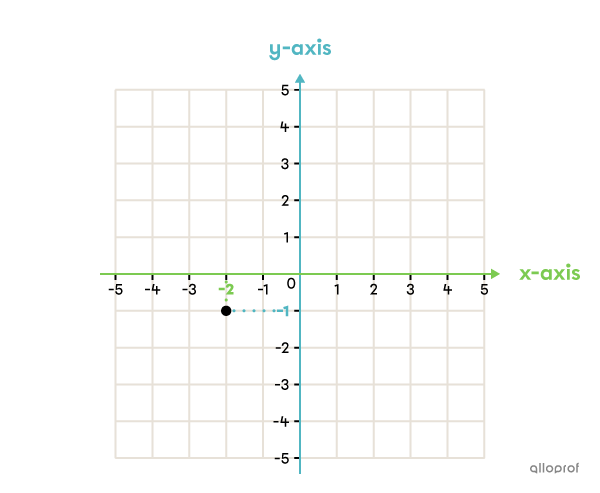 |
| (-2, -1) |
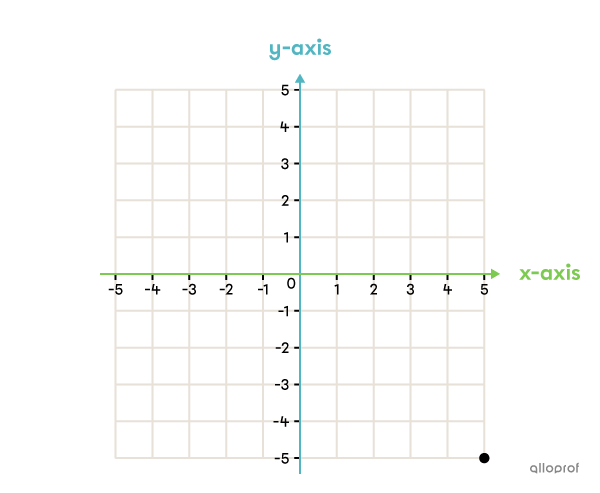
Write the position of the point on the following Cartesian plane.
|  |
| 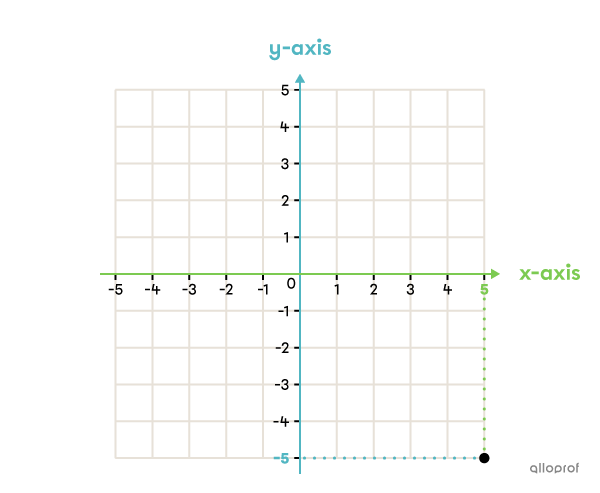 |
| (5, -5)
|