Subjects
Grades
 100%
100%
 100%
100%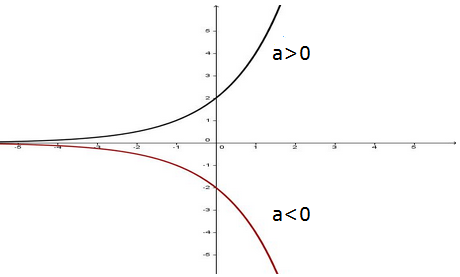 100%
100%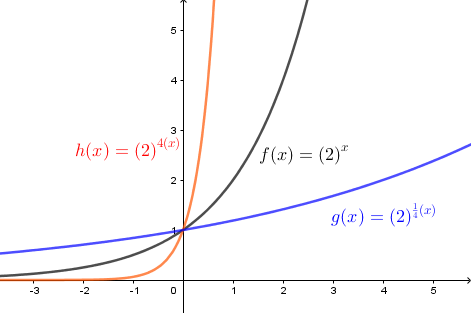 100%
100%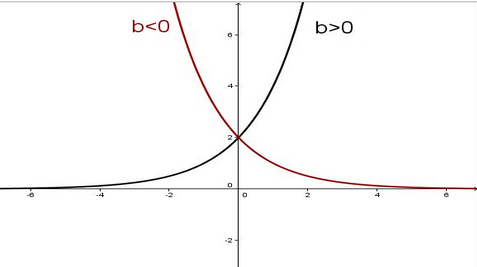 100%
100%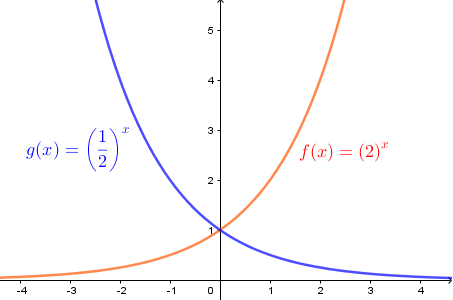 100%
100%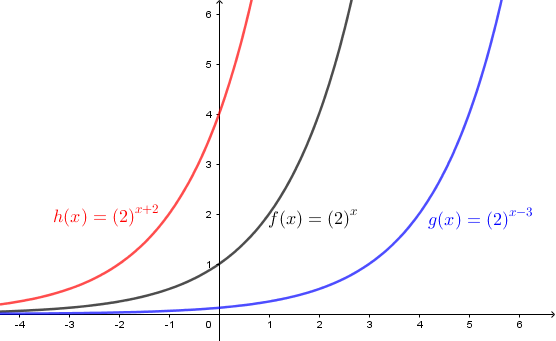 100%
100%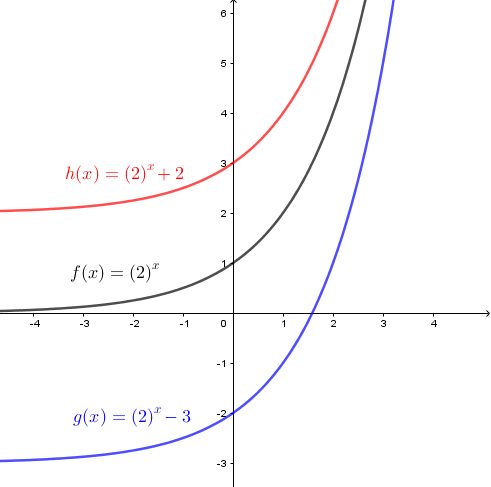
|
|
|a>0| |
|a<0| |
|---|---|---|
|
|c>1| |
 |
 |
|
|0<c<1| |
 |
 |
Adding the parameters |a,| |b,| |h,| and |k| to the basic function |f(x)=(c)^x| results in the standard form (or the transformed form) of the exponential function.
The standard form of an exponential function is: ||f(x)=a(c)^{b(x–h)}+k|| where |a,| |b,| |h,| and |k| are real numbers that act as parameters.
Note: The parameters |a,| |b,| and |c| must be non-zero. In addition, the base |c| must be greater than |0| and not |1|.
In the following interactive animation, experiment with the values of the parameters |a|, |b|, |h|, |k,| as well as the base |c| of the exponential function. Observe the changes which take place on the transformed curve (in black) compared to the base function with |c=2| (in blue). Use this opportunity to observe how changing the parameters affects the function’s properties. Afterwards, read the concept sheet to learn more about each of the parameters.
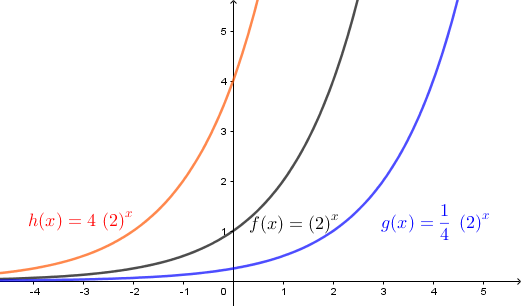
The exponential function is stretched vertically relative to the base function. The larger the absolute value of the parameter |a|, the closer the curve of the exponential function is to the |y|-axis.
The exponential function undergoes a vertical contraction relative to the base function. The smaller (closer to |0|) the absolute value of the parameter |a|, the farther the curve of the exponential function is from the |y|-axis.

The curve of the exponential function turns upwards, therefore it is increasing.
The curve of the exponential function turns downwards, therefore it is decreasing.
The exponential function undergoes a horizontal contraction relative to the base function. The larger the absolute value of the parameter |b|, the farther away the graph of the exponential function is from the |x|-axis.
The exponential function is stretched horizontally relative to the base function. The smaller (closer to |0|) the absolute value of the parameter |b|, the closer the graph of the exponential function is to the |x|-axis.
The curve of the exponential function increases from left to right.
The curve of the exponential function decreases from left to right.
The parameter |c| determines the variation of the exponential function.
The exponential function increases from left to right.
The exponential function decreases from left to right.
The curve of the exponential function shifts horizontally to the right.
The curve of the exponential function shifts horizontally to the left.
To properly identify the value of the parameter |h|, it is important to remember the definition of the standard form of an equation. For example, |h(x)=2^{x+2}| contains the parameter |h,| whose value is |h=-2.|
The curve of the exponential function shifts vertically upwards.
The curve of the exponential function shifts vertically downward.
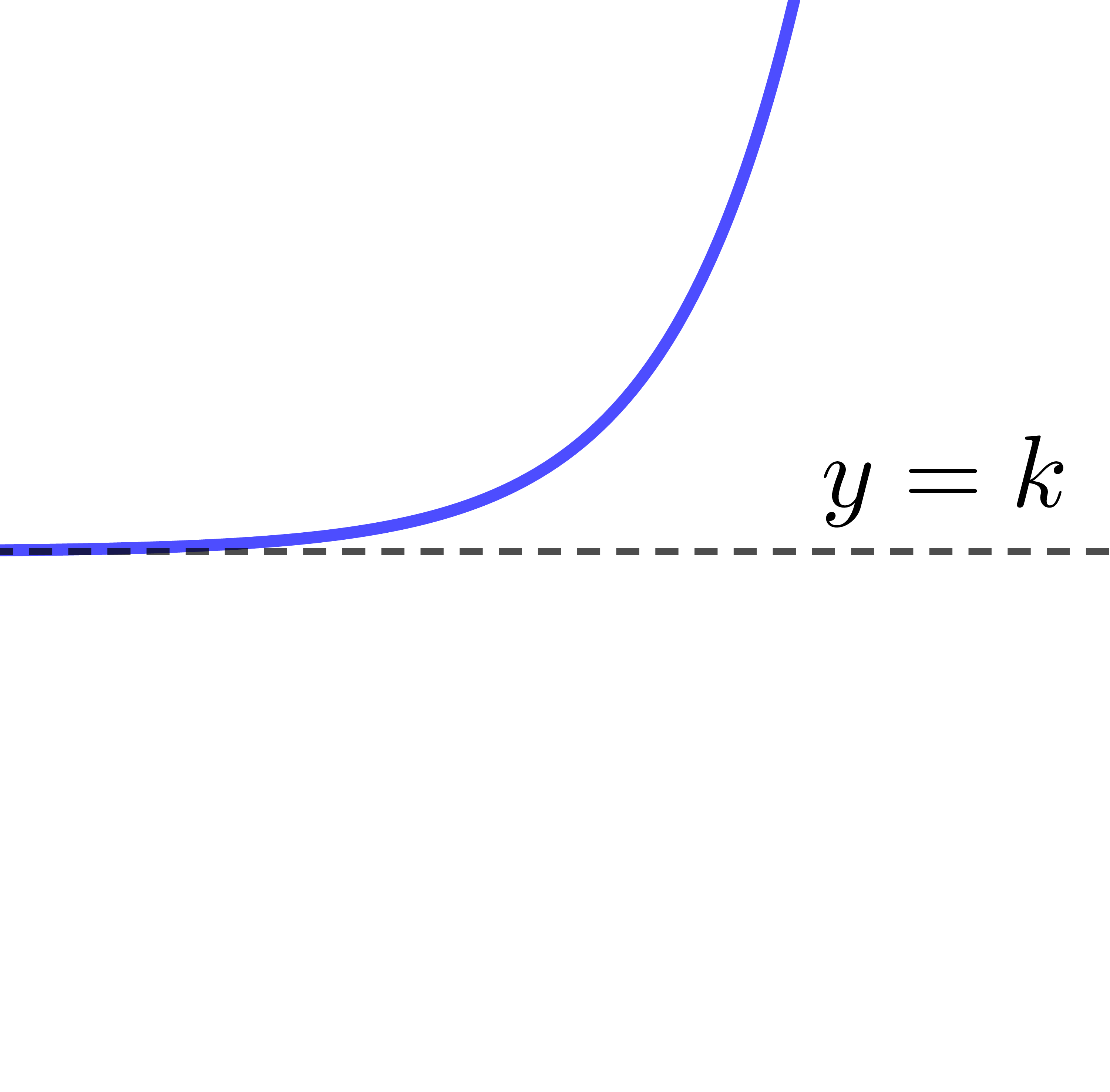
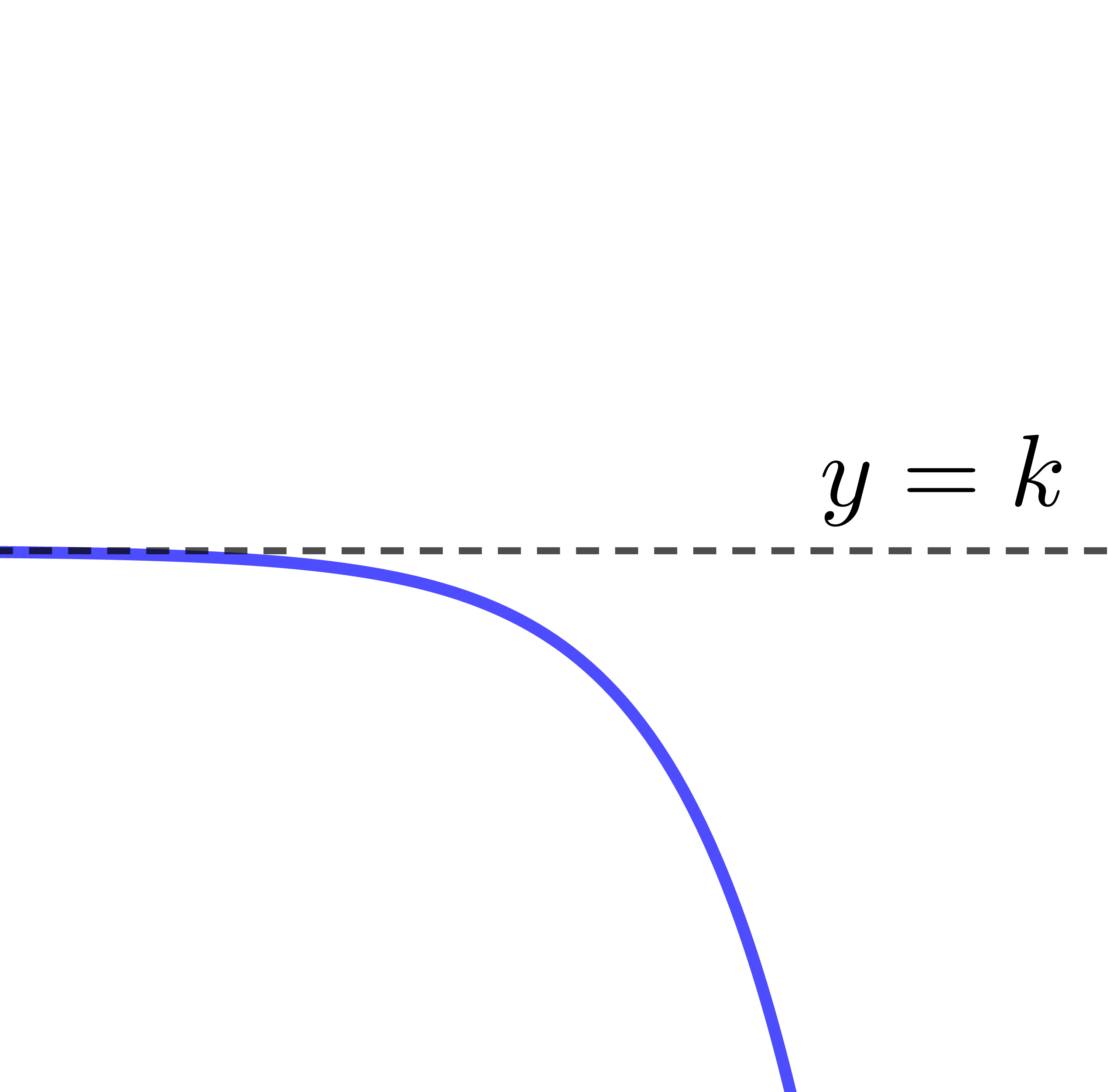
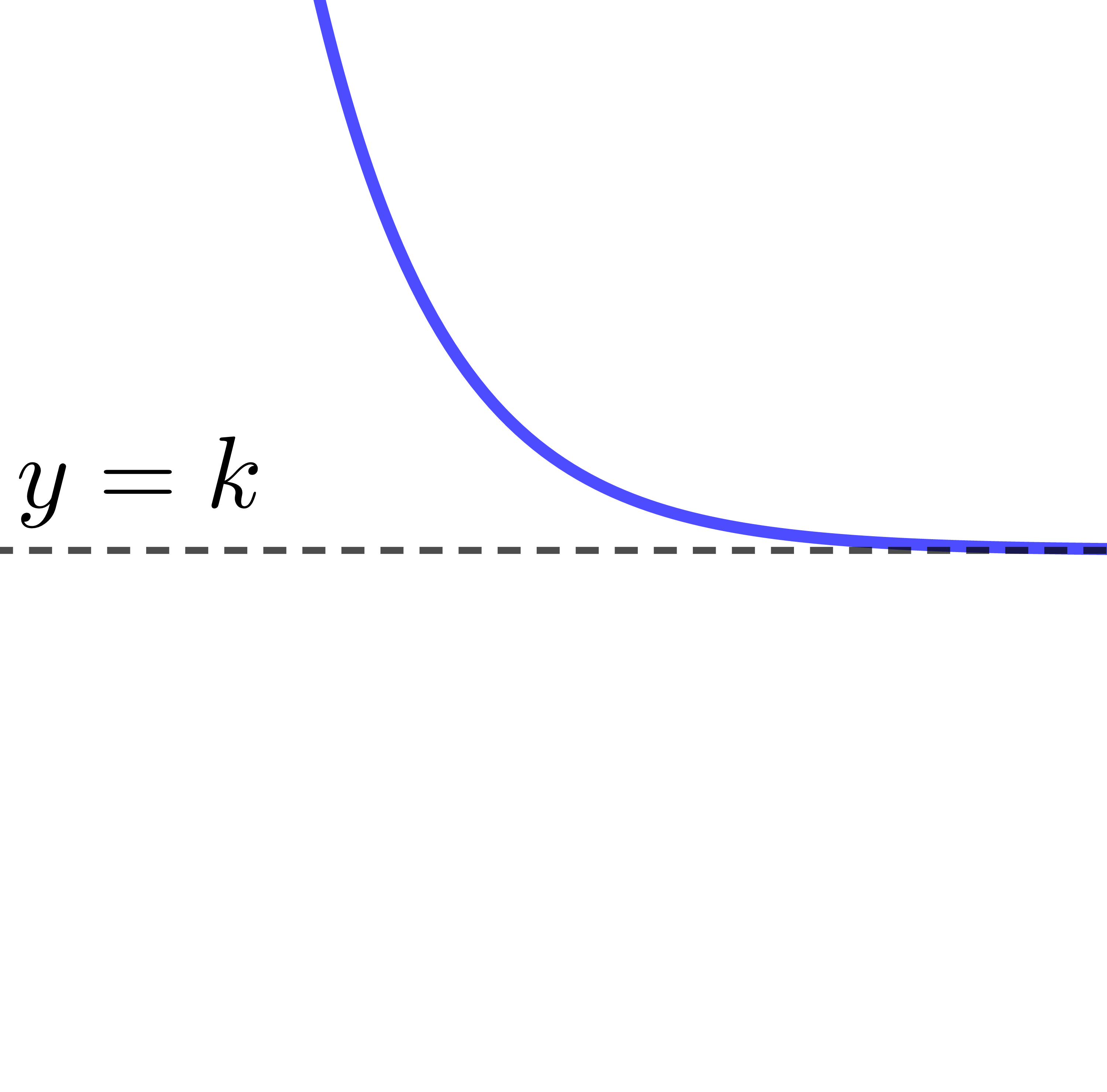
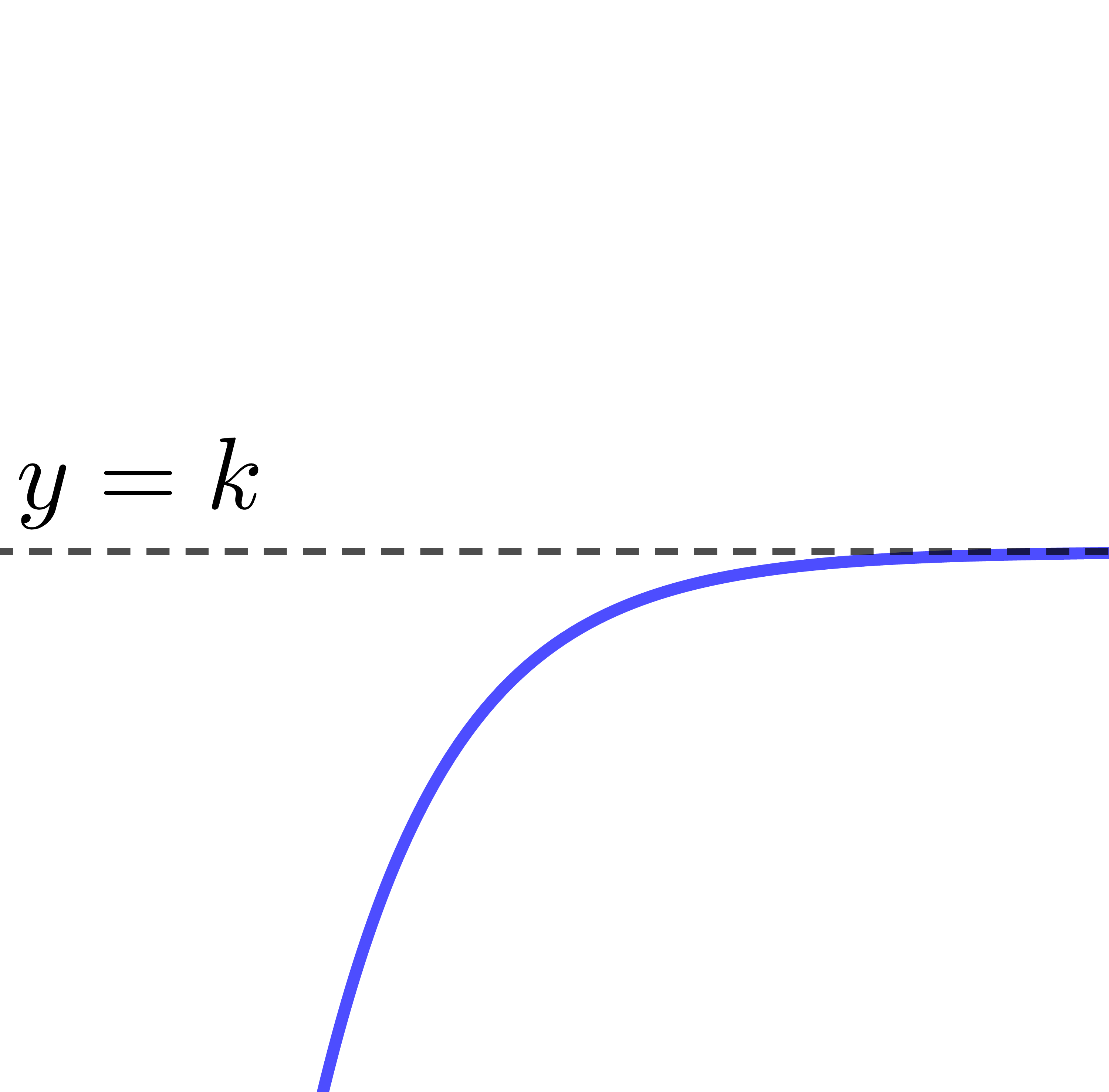
The parameter |k| provides the location of the asymptote of the exponential function.
The equation of the asymptote is |y=k|.
|
|a>0| |
|a<0| |
|
|---|---|---|
|
|b>0| |
|
|
|
|b<0| |
|
|
|
|
|a>0| |
|a<0| |
|---|---|---|
|
|b>0| |
|
|
|
|b<0| |
|
|
As the summary table above shows, certain combinations of values of the parameters give the same result. For example, |c>1|, |a>0|, and |b>0| is equivalent to |0<c<1|, |a>0|, and |b<0|. For this reason, the equation of an exponential function in standard form is often simplified by omitting the parameters |b| and |h|. ||\large{f(x)=a(c)^{b(x-h)}+k \ \ \ \Rightarrow \ \ \ f(x)=a(c)^x+k}||
For the simpler way to write the equation of an exponential function, the summary table would be the following.
|
|
|a>0| |
|a<0| |
|---|---|---|
|
|c>1| |
|
|
|
|0<c<1| |
|
|