Subjects
Grades
 100%
100%
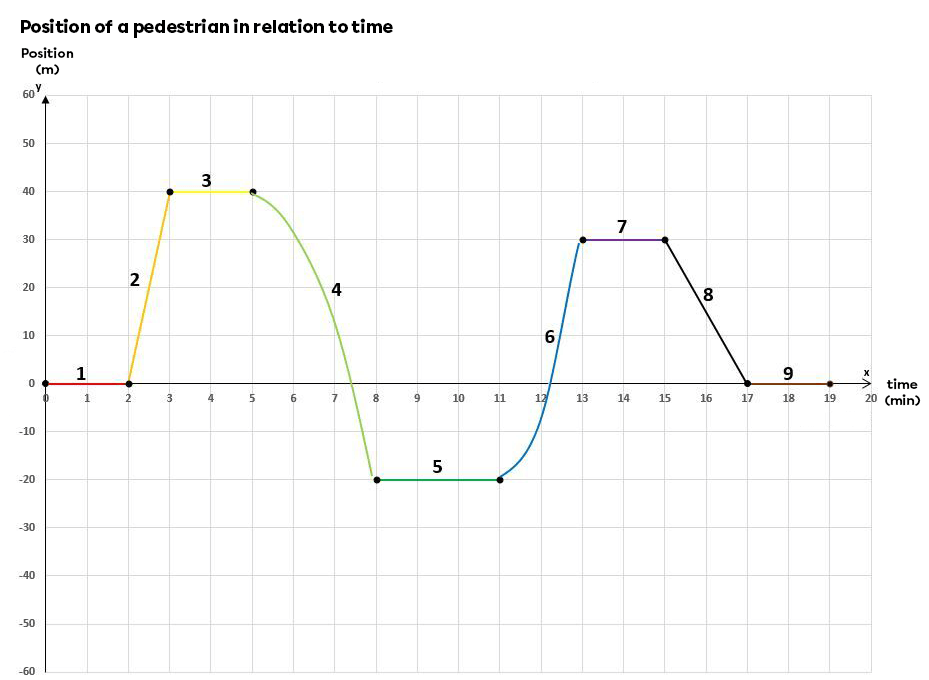
The position of a moving body represents its relative location to a reference system.
We usually place the origin as the starting point of a moving body's motion and then determine its relative position from this point.
From a graphical point of view, three types of relationships can be obtained:
|
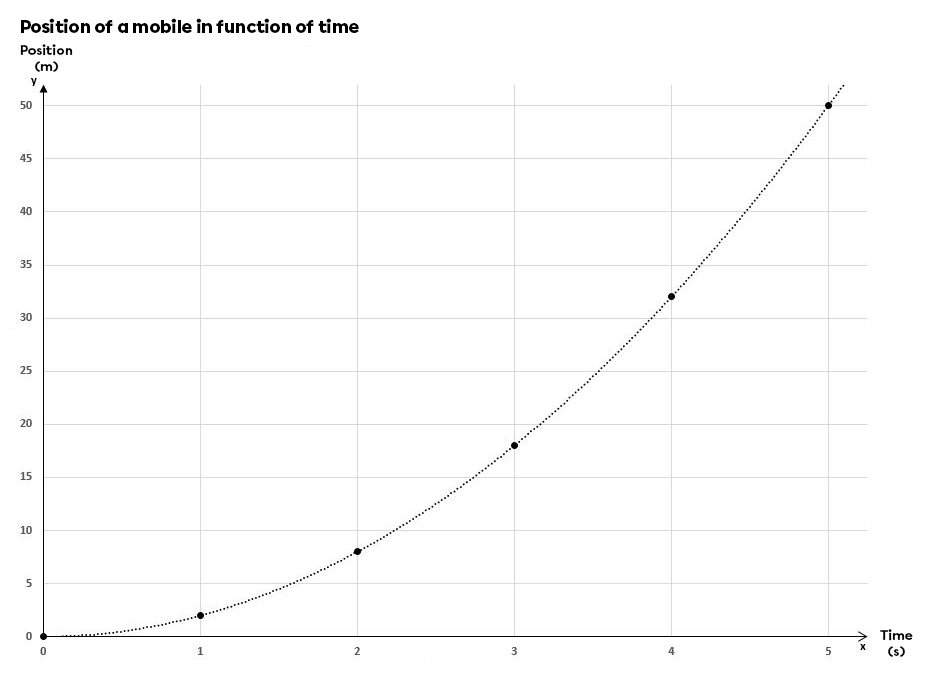
If the Position vs. Time Graph gives a quadratic function, the object moves with constant acceleration: its velocity is increasing steadily. This graph therefore represents a Uniformly Accelerated Rectilinear Motion (UARM).
|
 |
|
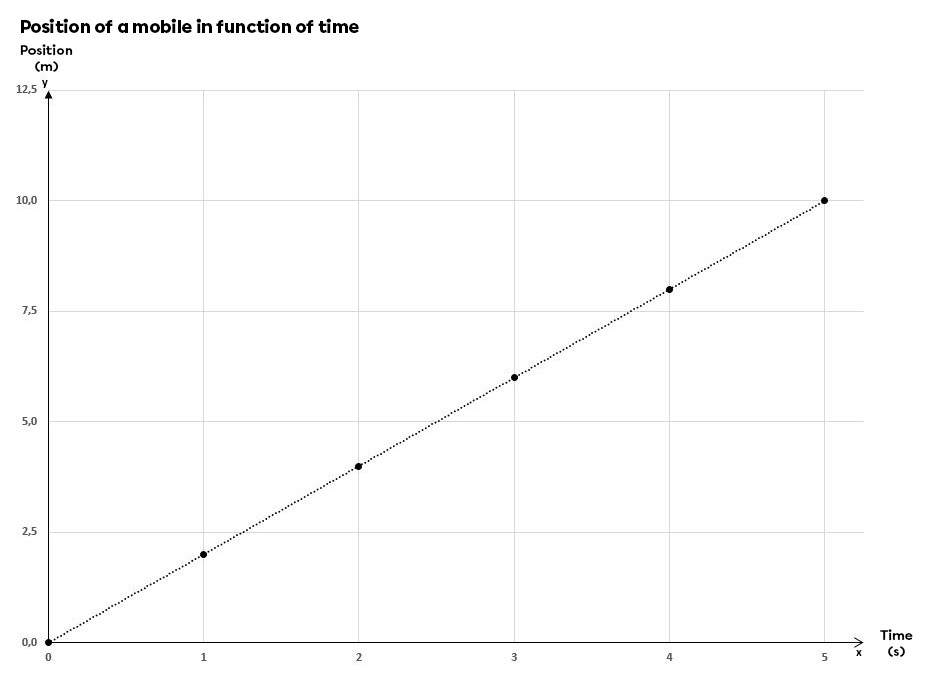
If the Position vs. Time Graph gives a linear function, the object moves with constant velocity, without accelerating. This graph represents a Uniform Rectilinear Motion (URM).
|
 |
|
The mobile is stationary if the Position vs. Time Graph gives a zero slope function.
|
 |
When studying the motion of an object, we use a Position vs. Time Graph to identify the type of motion performed and to locate the object's position at any given time.
The Position vs. Time Graph tells us where an object is located at any given time.

From the above example, the following pieces of information can be deducted.