Subjects
Grades
 100%
100%
 100%
100%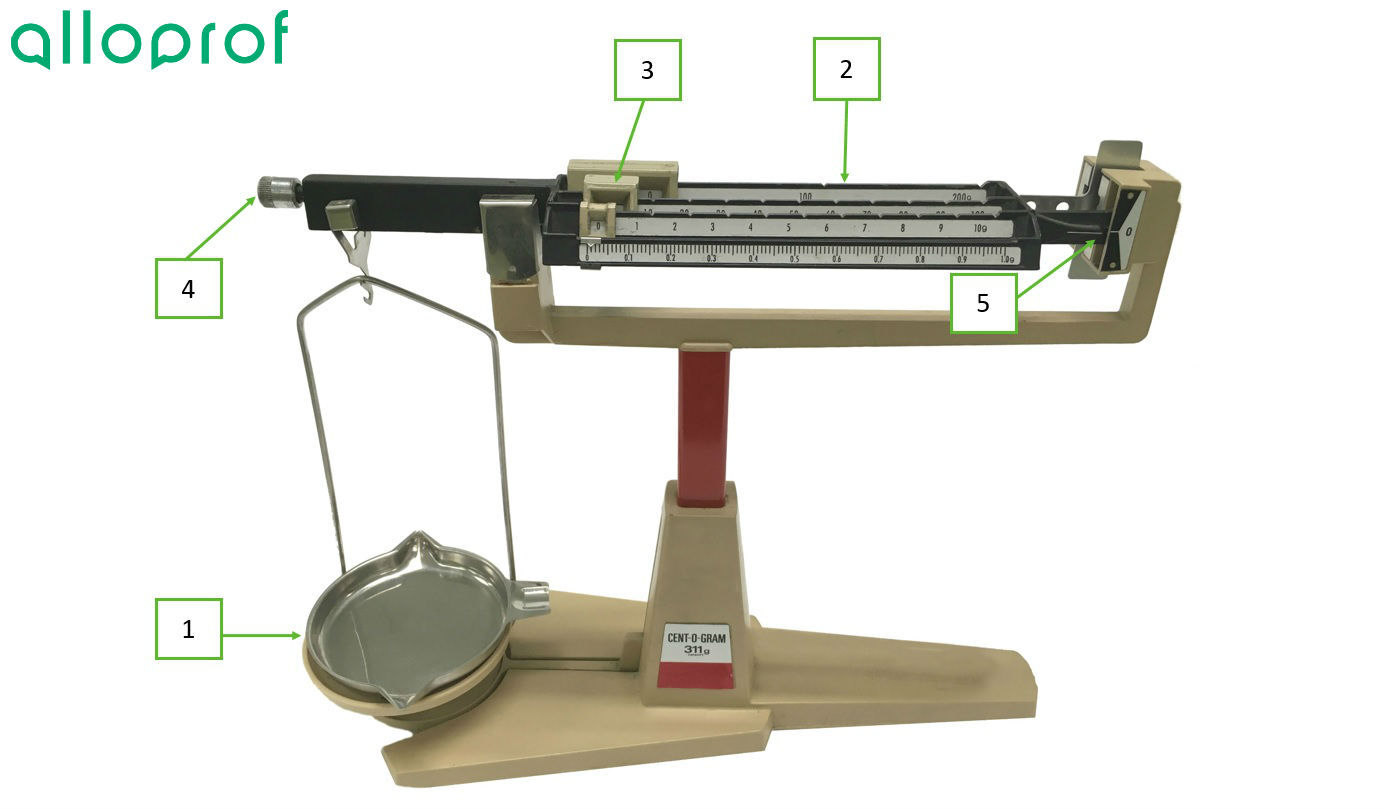 100%
100%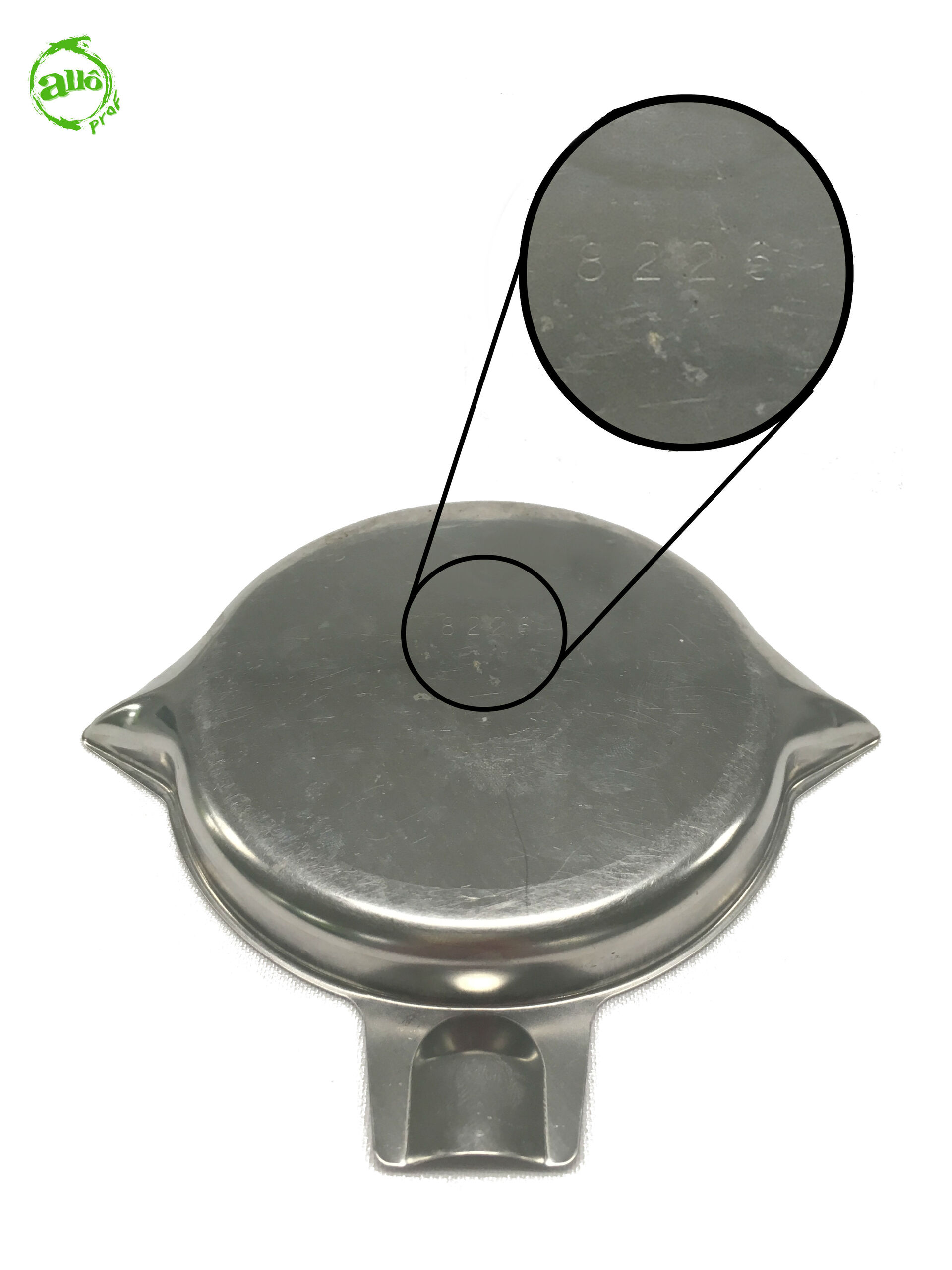 100%
100%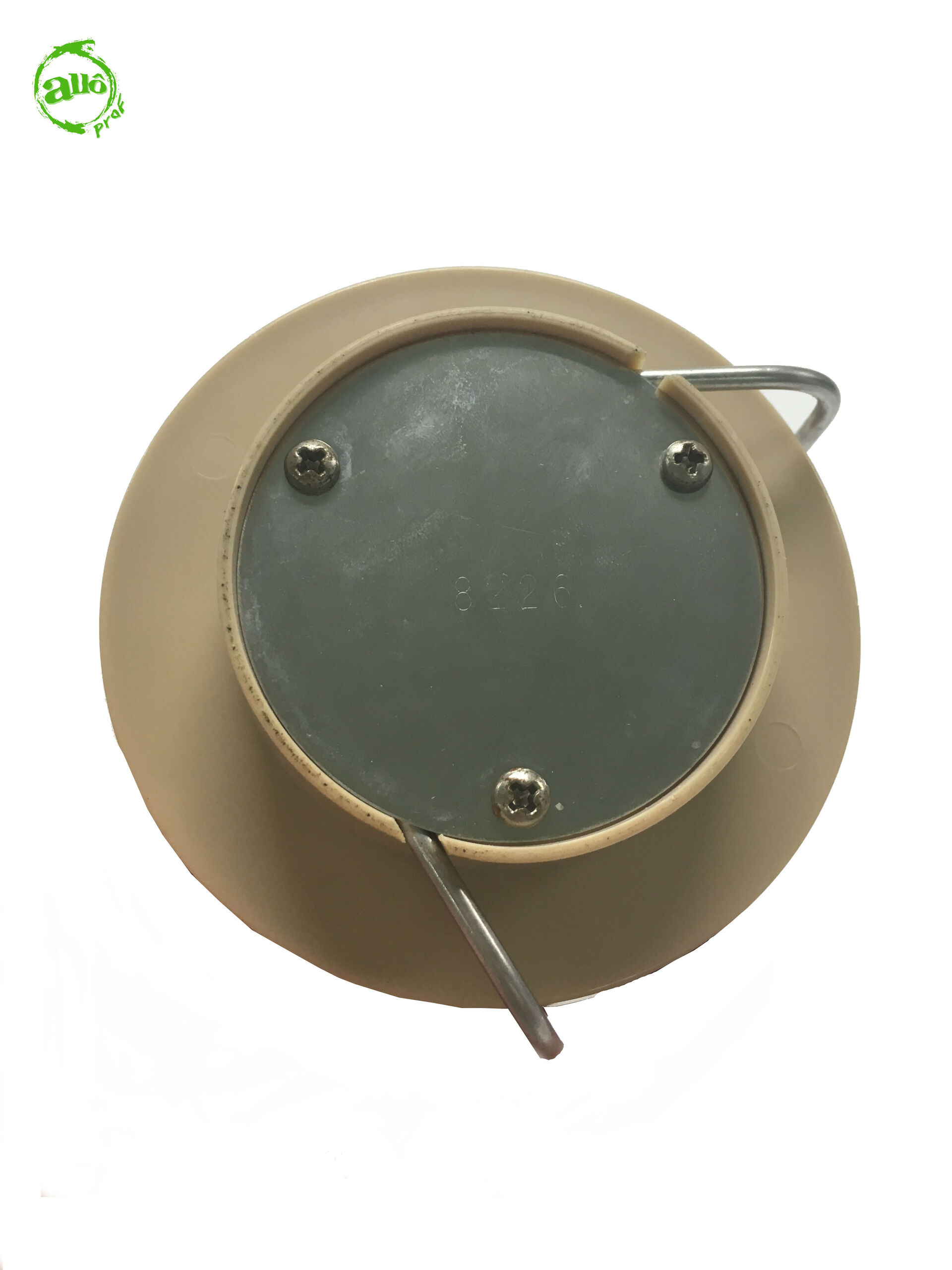 100%
100%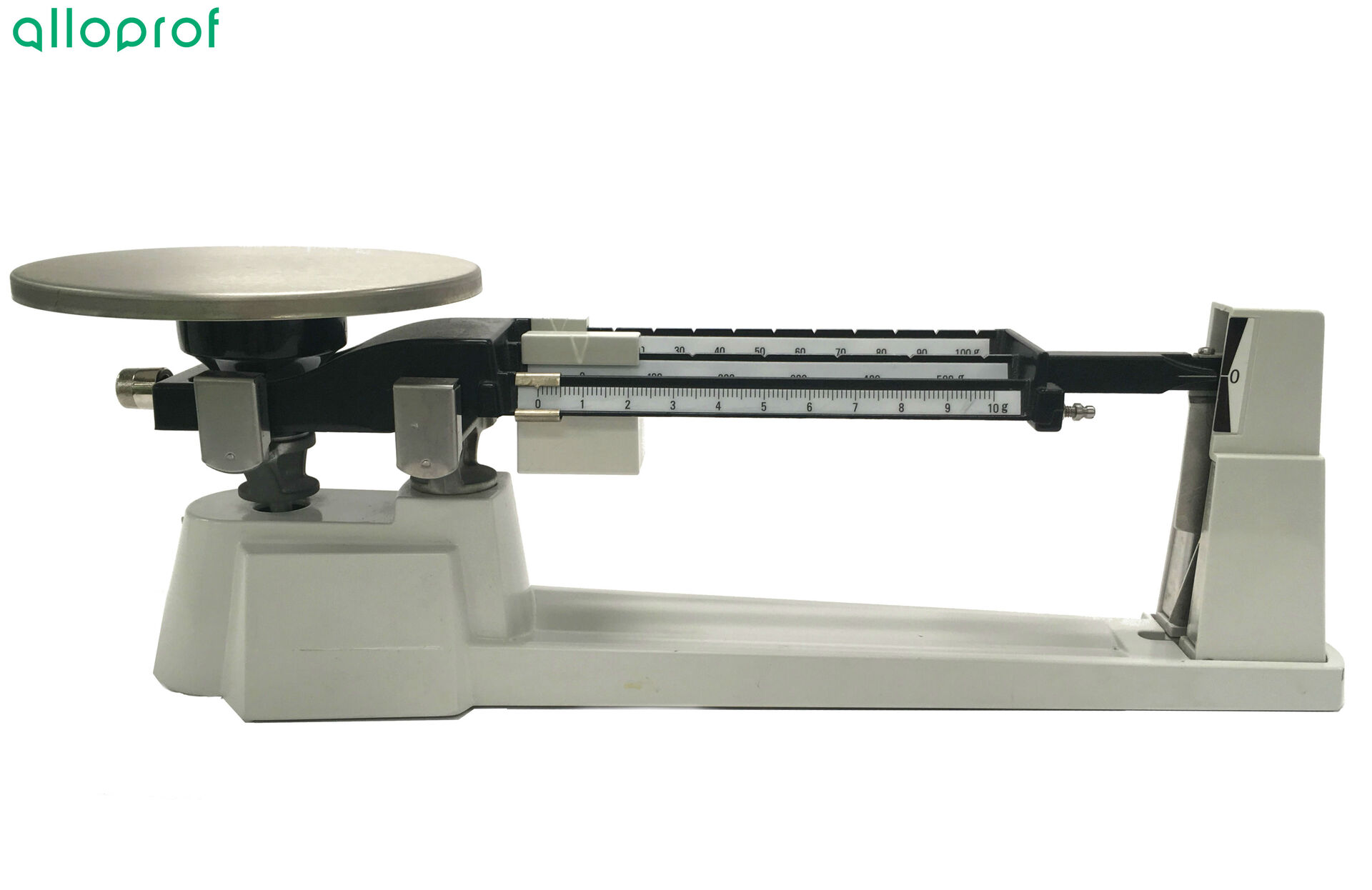 100%
100%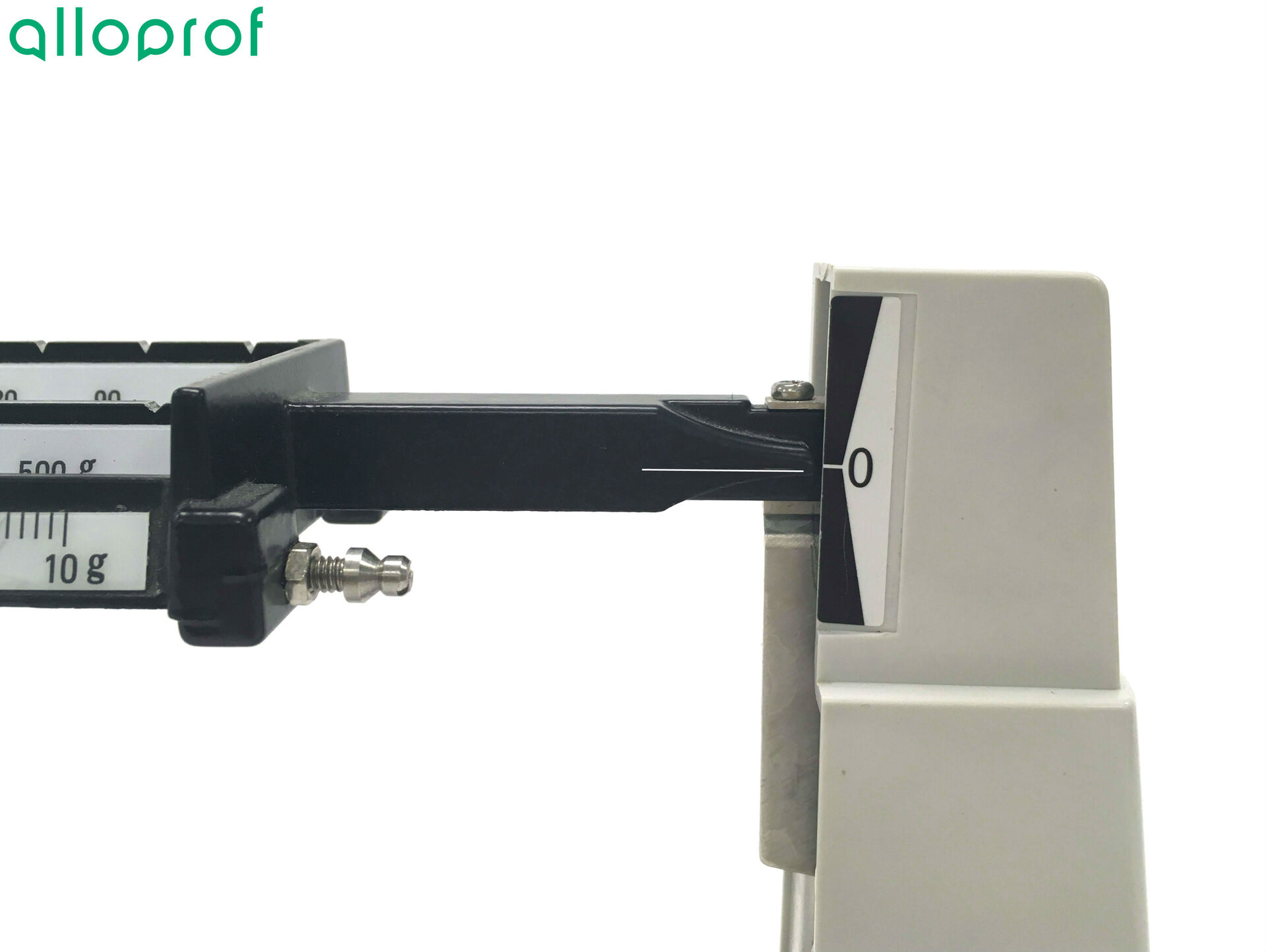 100%
100%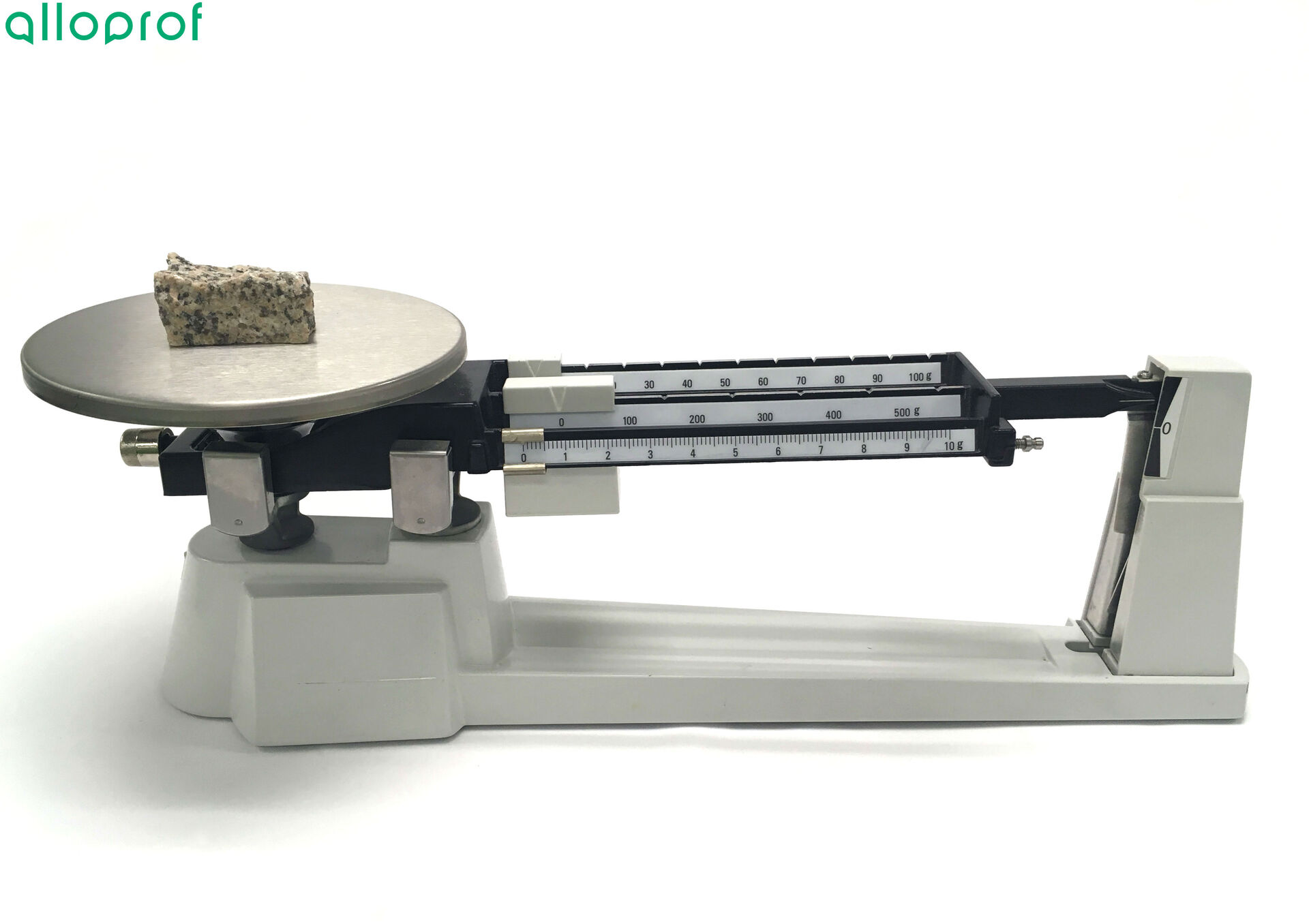 100%
100%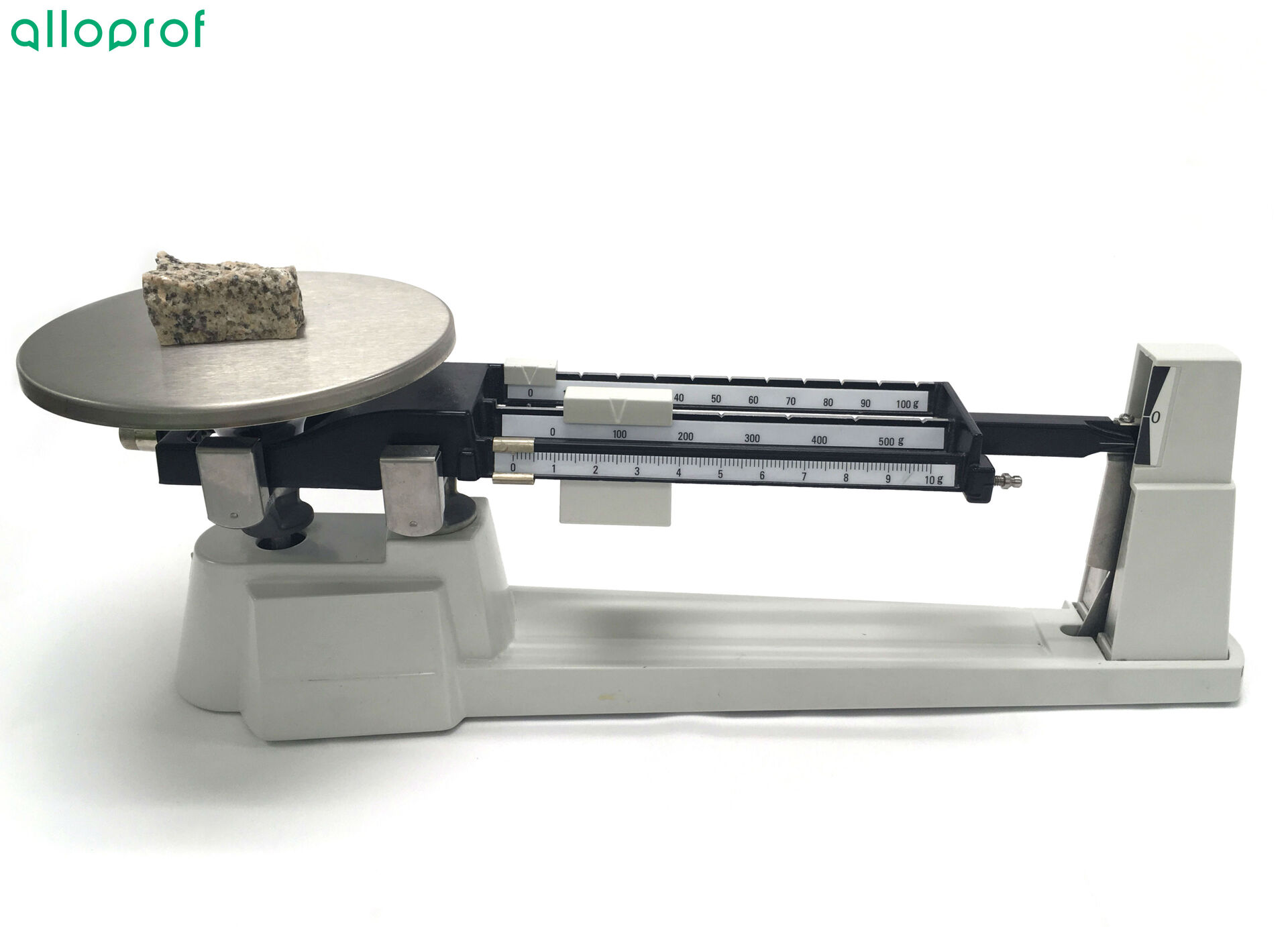 100%
100%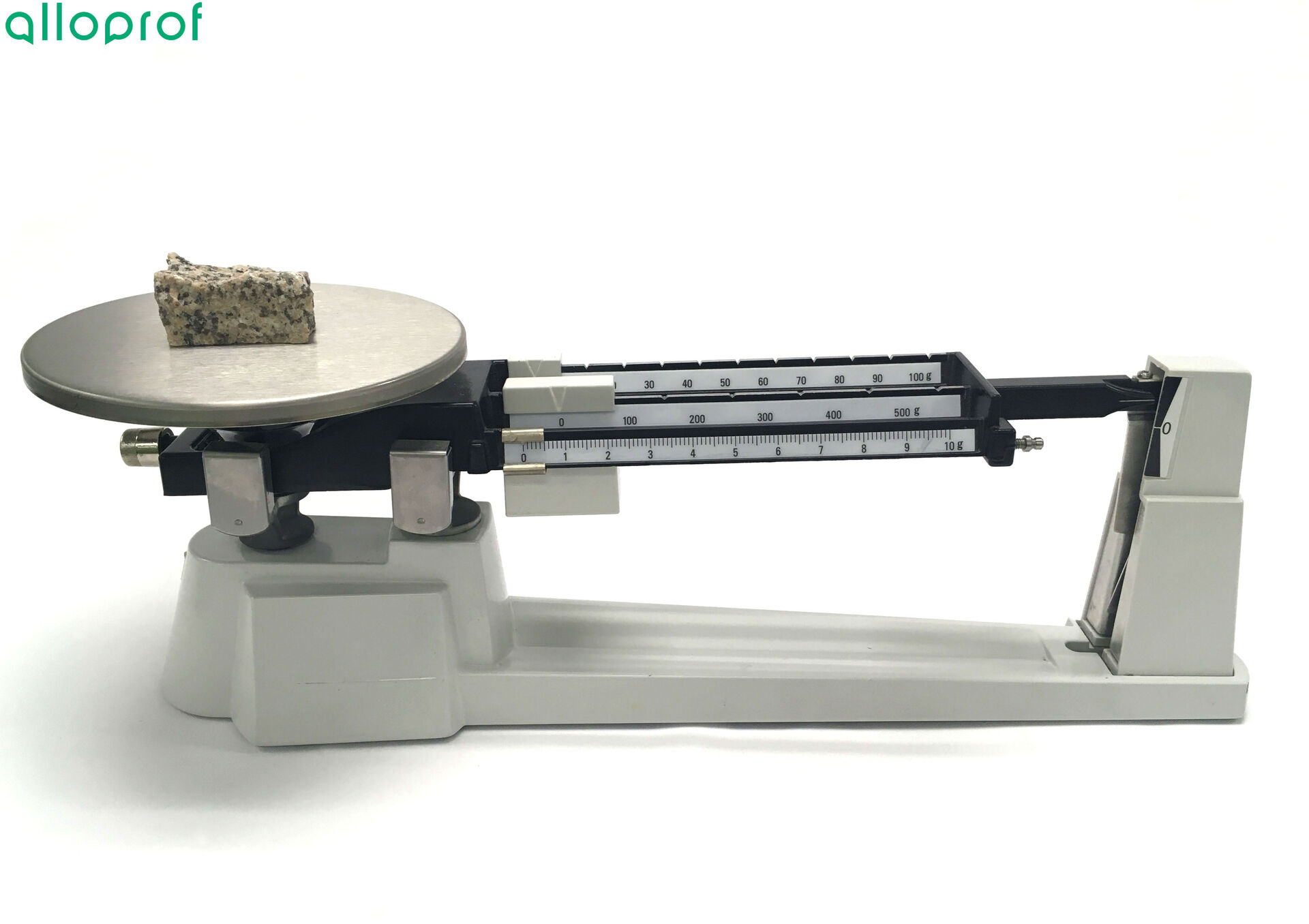 100%
100%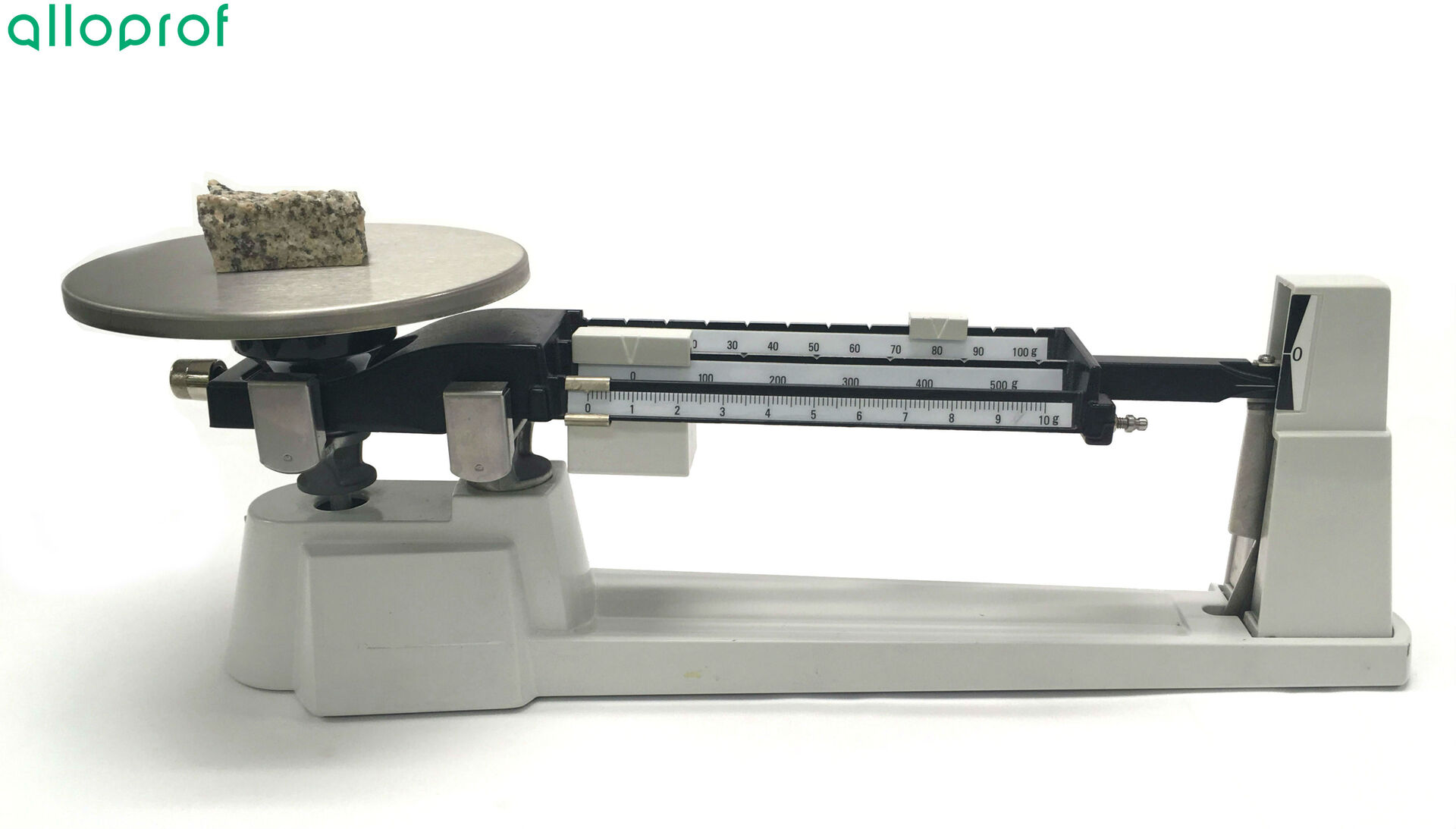 100%
100%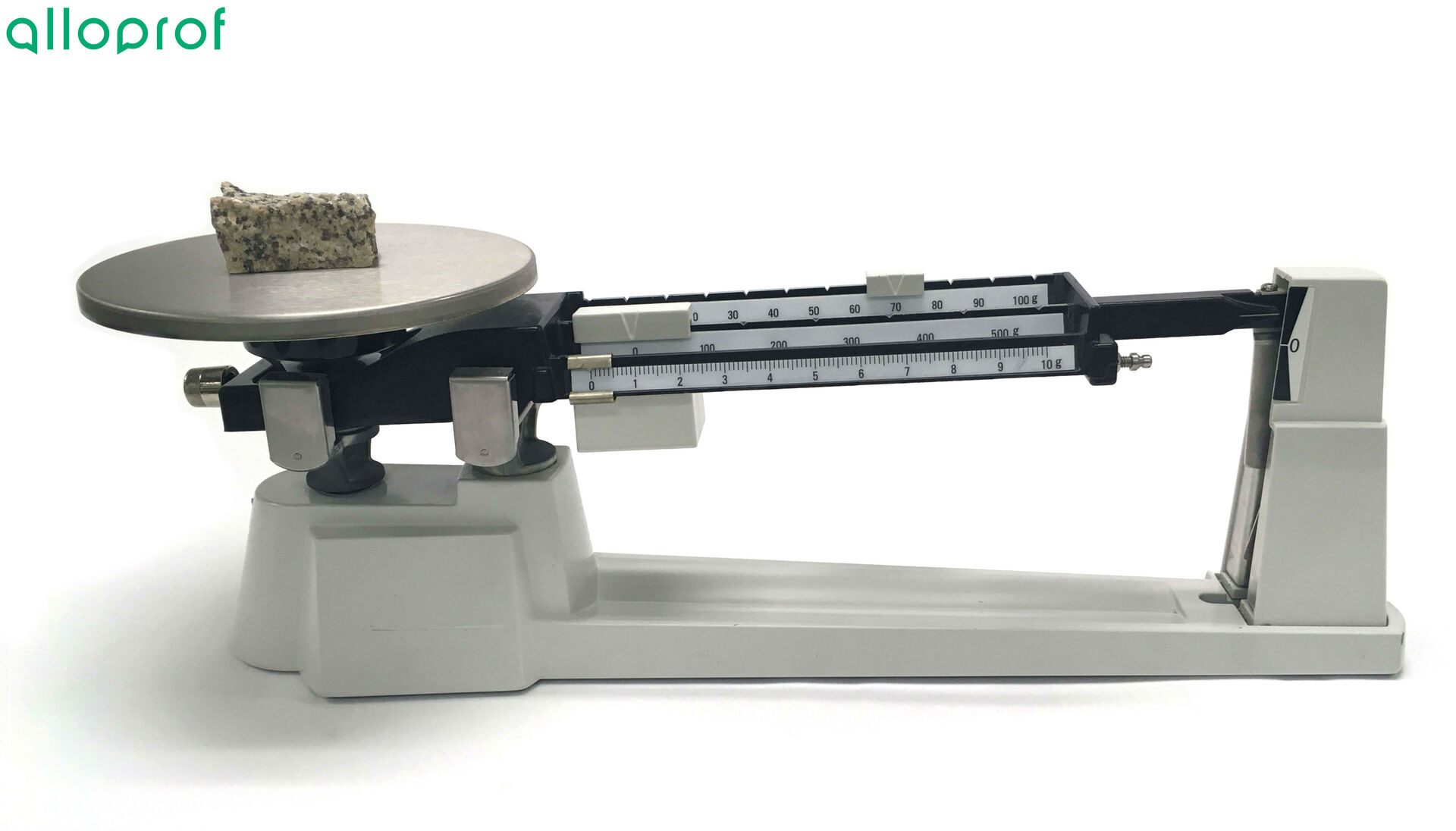 100%
100%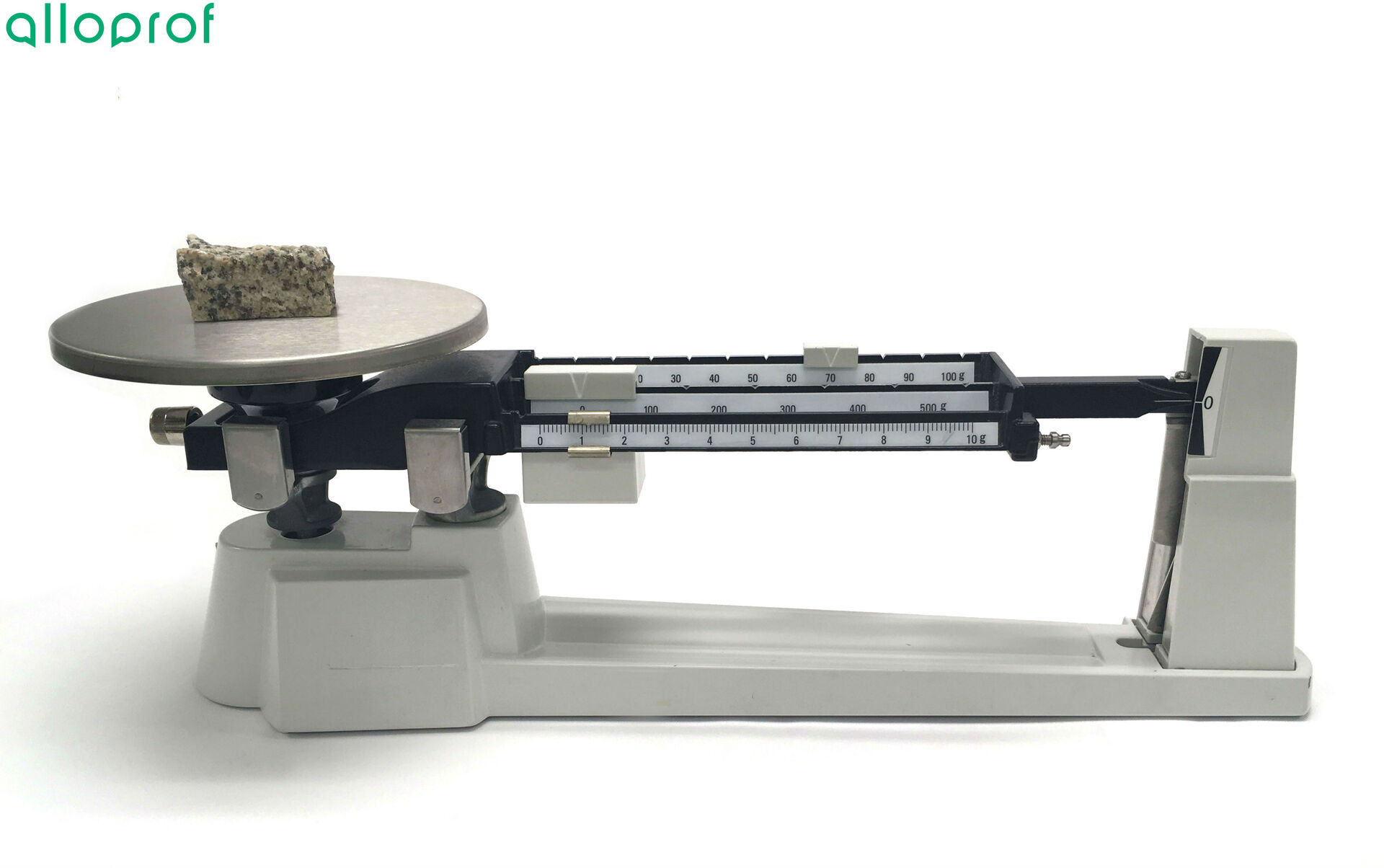 100%
100%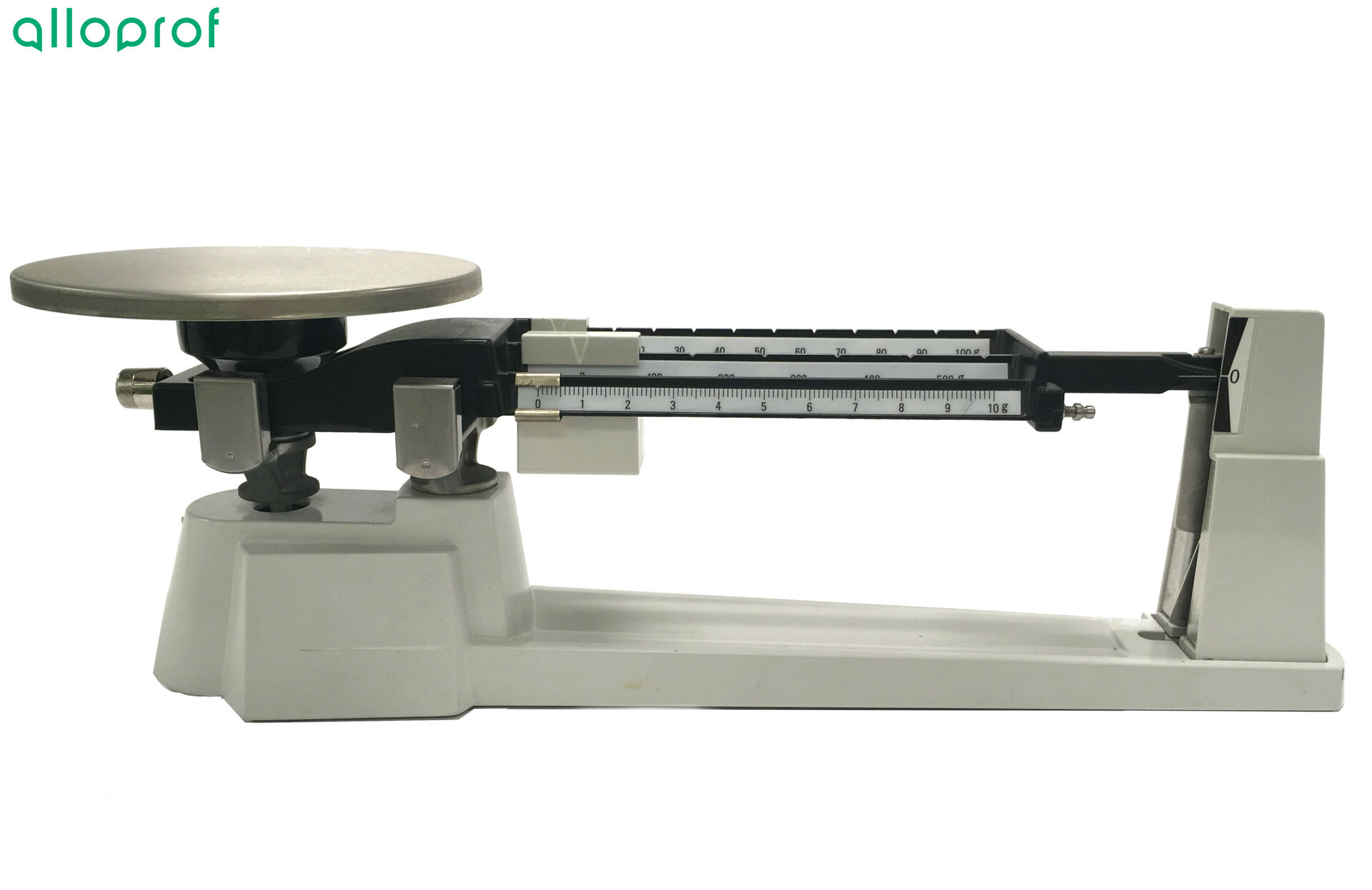 100%
100%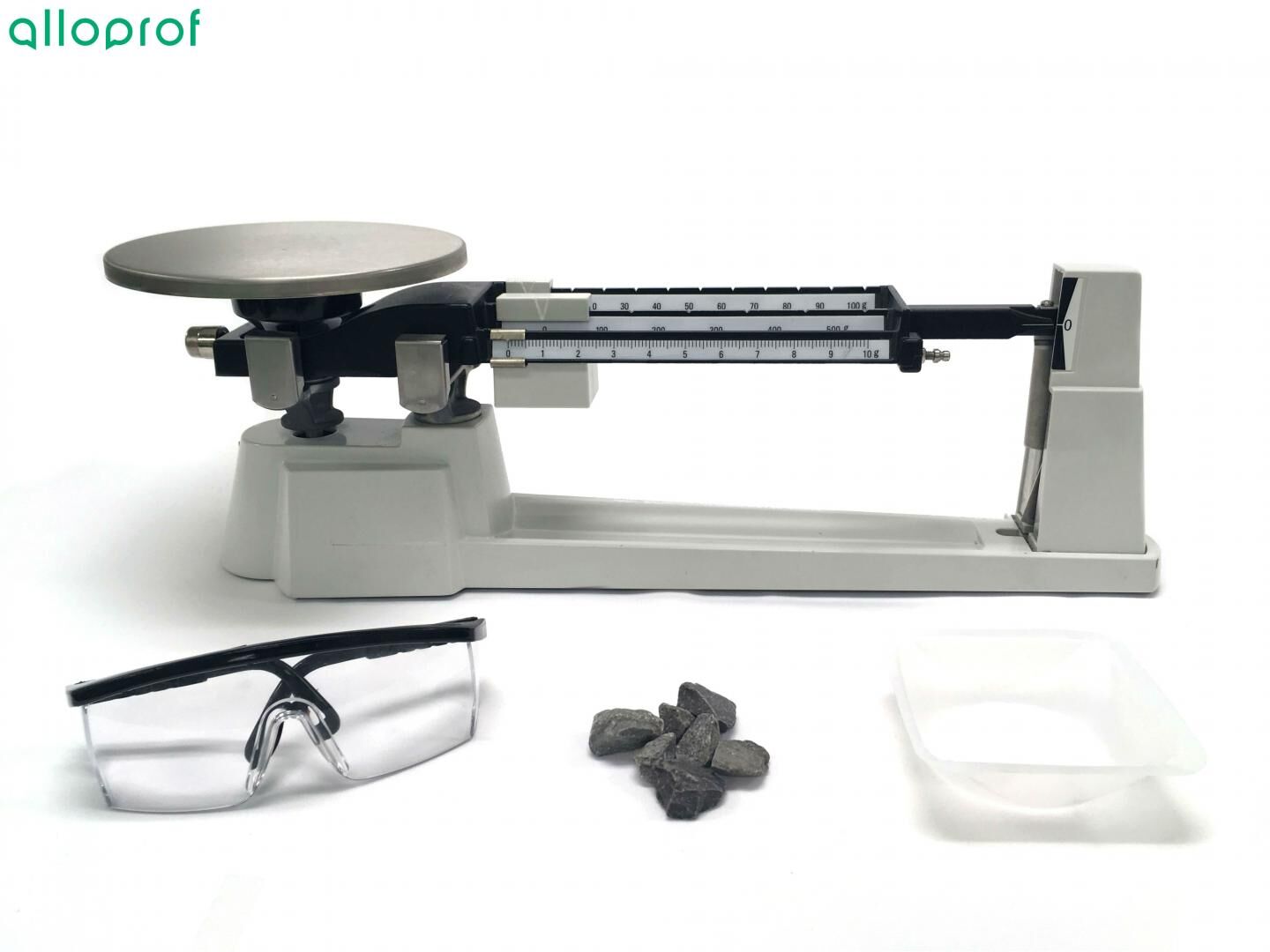 100%
100%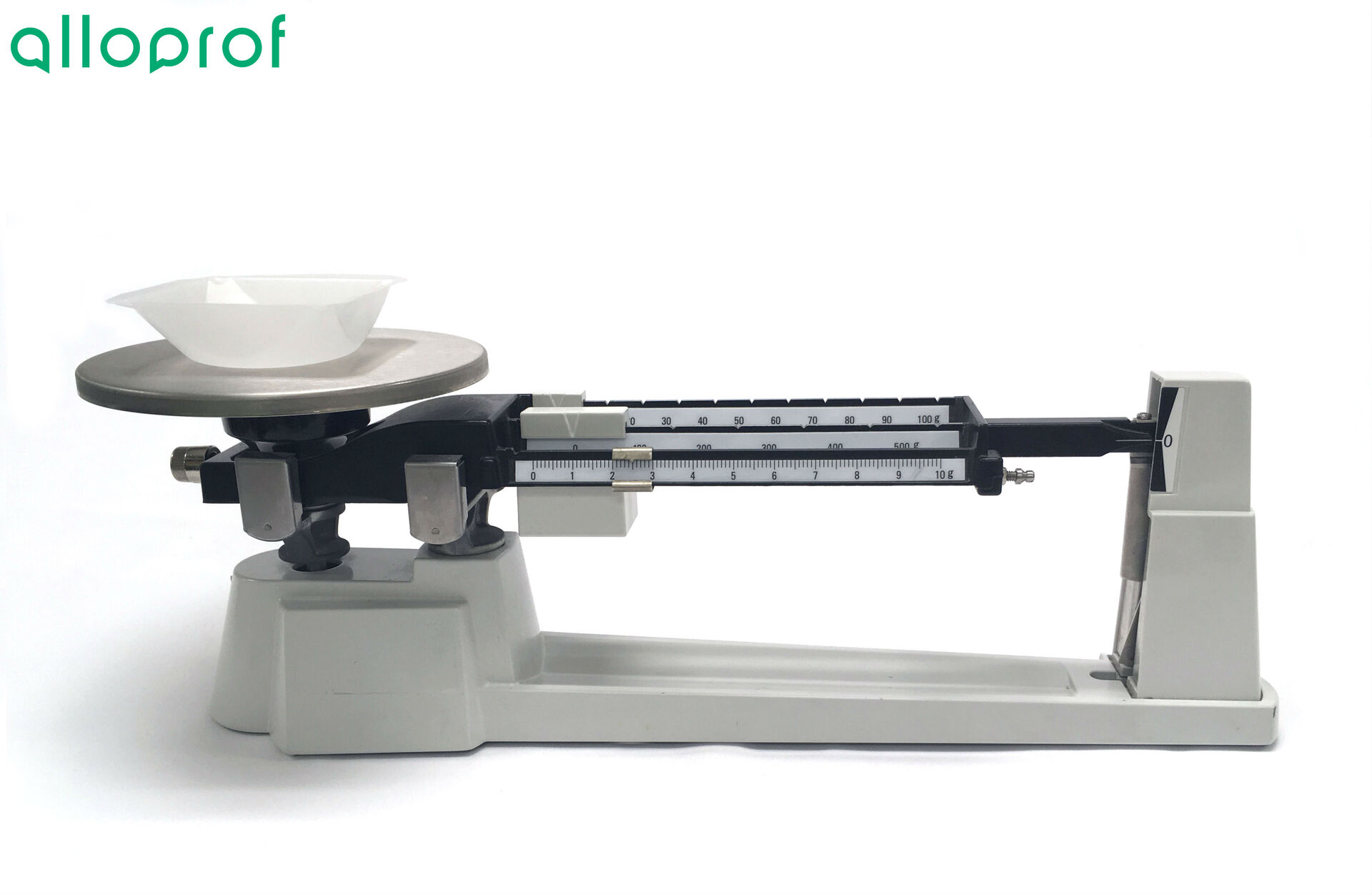 100%
100%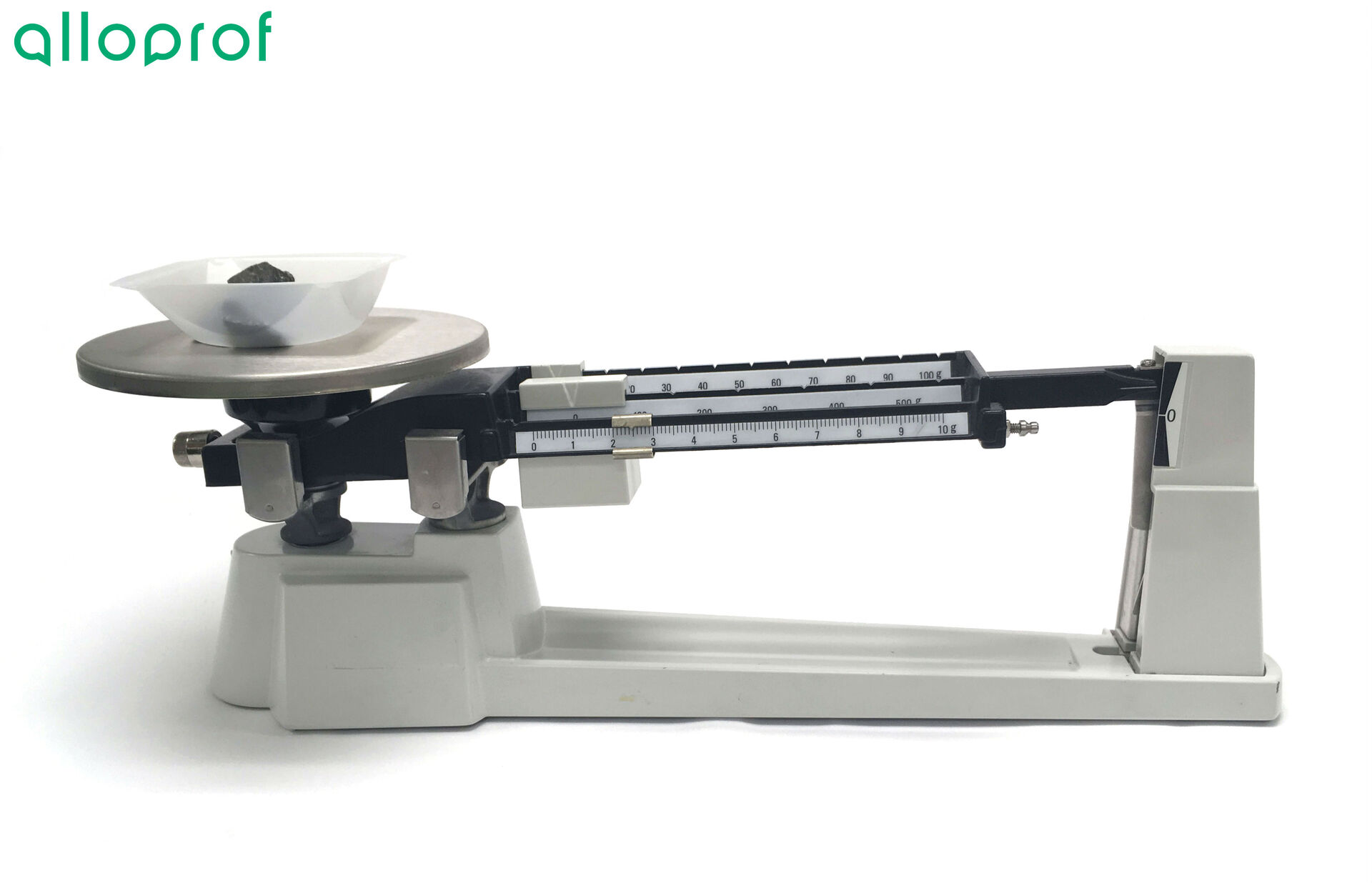 100%
100%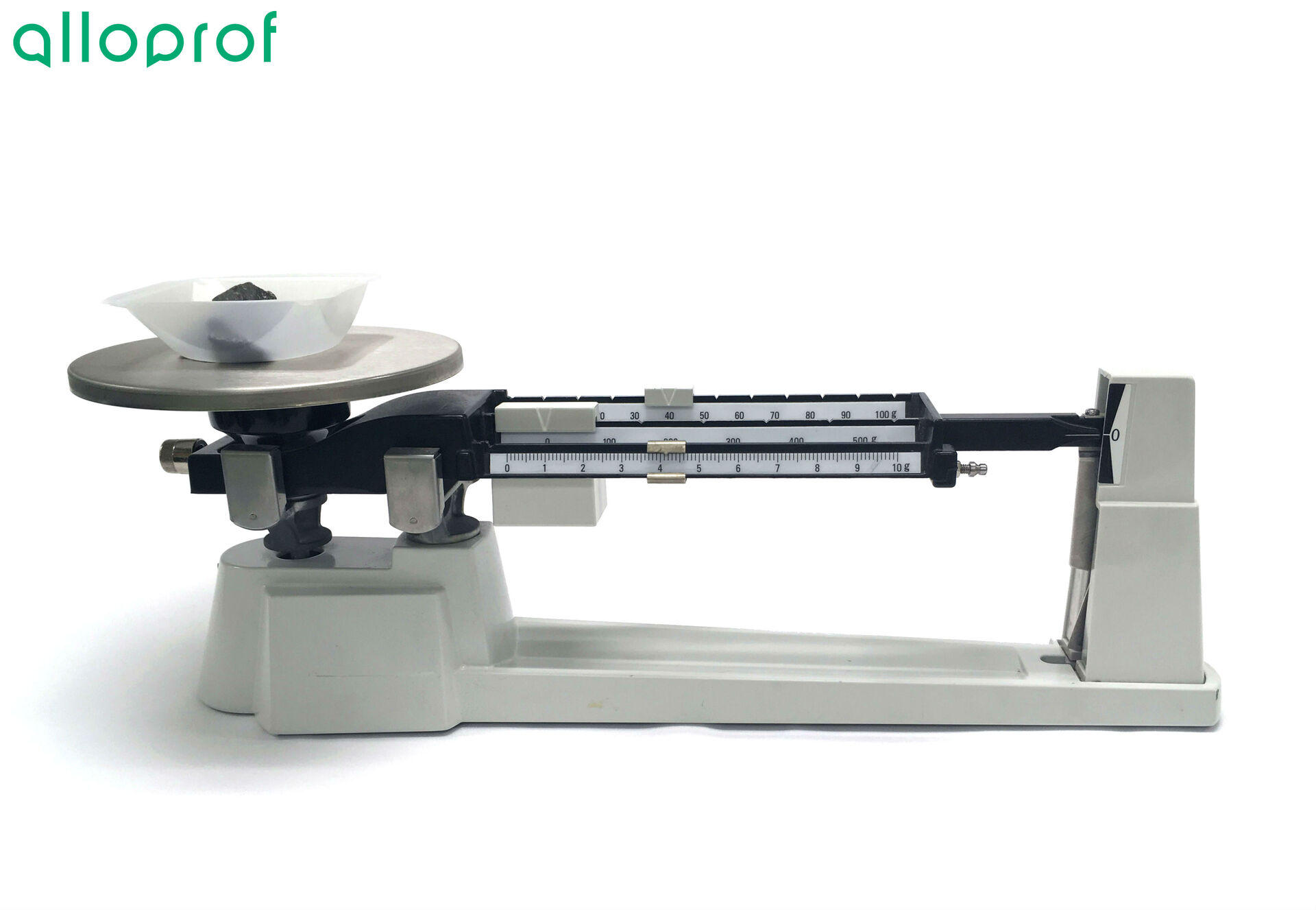 100%
100%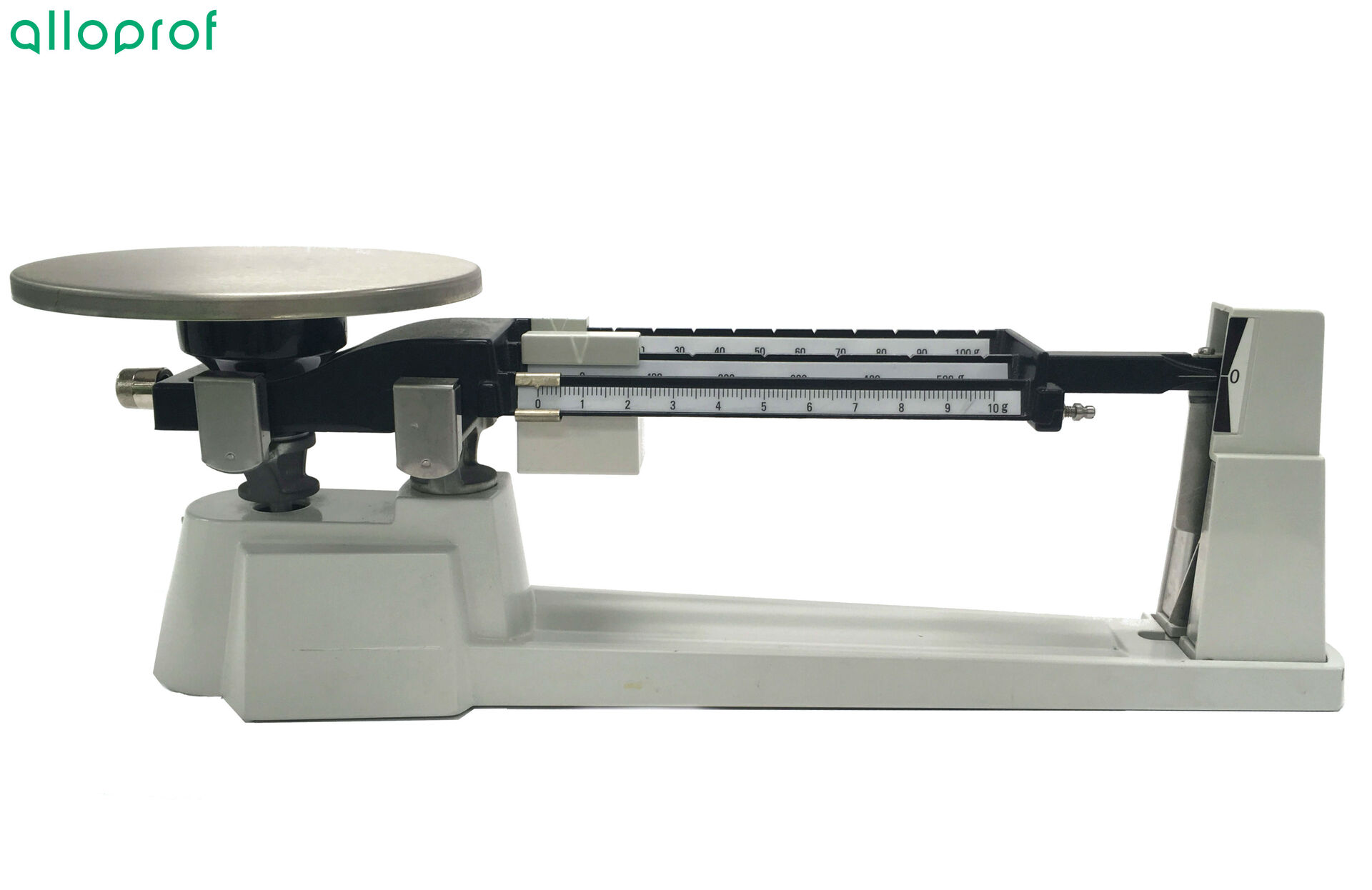
The calculated mass represents the mass of the solid. This value cannot be used to certainly identify which solid has been weighed. However, the mass can be used with the volume to find the density of the object.
The results can be presented in table format.
Mass of the Solid Object
| | Solid object |
| |m_{basket}| | |\text {2.5 g}| |
| |{m}_ {{basket + solid}}| | |\text {44.15 g}| |
| |{m}_ {{solid}}| | |\text {41.65 g}| |
This worksheet explains how to determine the mass of a substance.
The mass is the quantity of matter contained in an object or a substance. When we want to measure it, we need to do so as accurately as possible. To achieve this, we use the appropriate measurement techniques depending on the matter state.
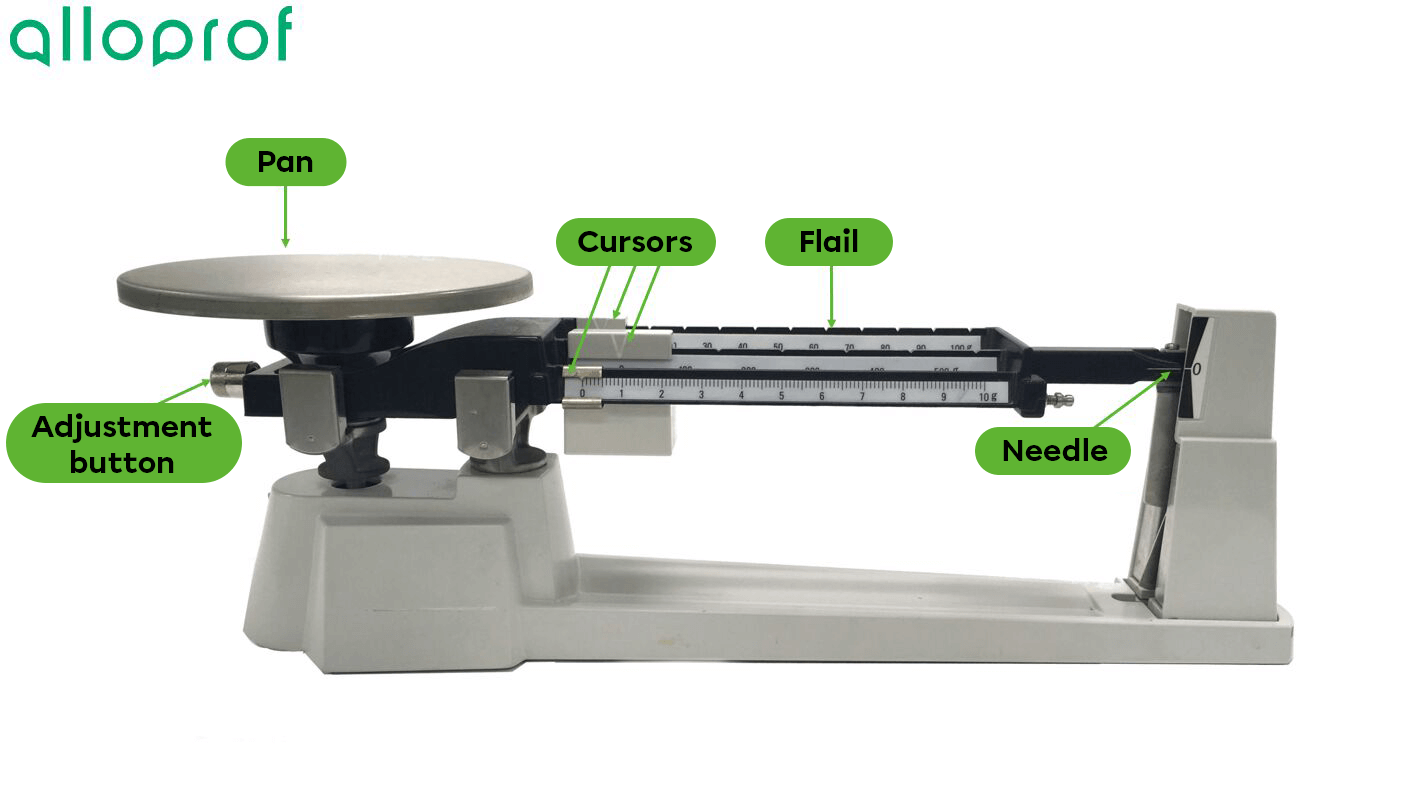
Here are the different parts of a beam balance.

There is another model of beam balance in which the pan is suspended from a hook. When this type of scale is used, it is important that the support is placed properly in the hook to prevent the pan from touching the base of the balance.
Also, these balances are industrially calibrated, which means that a pan is designed for one and only one balance. It is therefore important to check that the pan number (located under the pan) is the same as the balance number.
The preferred method for measuring mass is the same regardless of the state of matter of the object to be weighed.
1. Set the balance cursors to zero. Make sure the pan is clean.
Make sure that the cursors are correctly positioned in the notches on the beams.
In addition, the balance should not be placed on a table that is not level and should not come into contact with other objects such as the counter or glassware.
2. Check that the needle is pointing to zero. If the pointer is not aligned with the zero point, calibrate the balance using the adjustment button.
3. Place the object to be weighed on the pan of the balance.
4. Move the largest scale cursor until the needle is lower than the zero point.
5. At this point, move the cursor one notch to the left so that the needle is above the zero point.
Balances are very sensitive to movement. If a person moves near a balance, it can be difficult to find the precise mass of an object. It is therefore very important to work calmly in the laboratory.
8. Add the mass of the cursors to find the mass of the object. Note the mass.
9. Reset the balance cursors to zero.
1. Weigh the basket using the balance. Note the mass.
2. Place the solid to be weighed in the basket on the weighing pan.
3. Weigh the basket and the solid. Note the mass.
4. Calculate the mass of the solid to be weighed.
5. Reset the balance cursors to zero.
6. Clean and store equipment.
To determine the mass of a solid, you need to calculate the difference between the total mass of the solid in the basket (step 3) and the mass of the empty basket (step 1).
|{m}_ {{solid}}={m}_ {{basket + solid}}-{m}_ {{basket}}|
|{m}_ {{solid}}| represents the mass of the solid |(\text {g})|
|{m}_ {{basket + solid}}| represents the mass of the basket and the solid |(\text {g})|
|{m}_ {{basket}}| represents the mass of the basket |(\text {g})|
The calculated mass represents the mass of the solid. This value cannot be used to certainly identify which solid has been weighed. However, the mass can be used with the volume to find the density of the object.
The results can be presented in table format.
Mass of the Solid Object
| | Solid object |
| |m_{basket}| | |\text {2.5 g}| |
| |{m}_ {{basket + solid}}| | |\text {44.15 g}| |
| |{m}_ {{solid}}| | |\text {41.65 g}| |