Subjects
Grades
 100%
100%
 100%
100%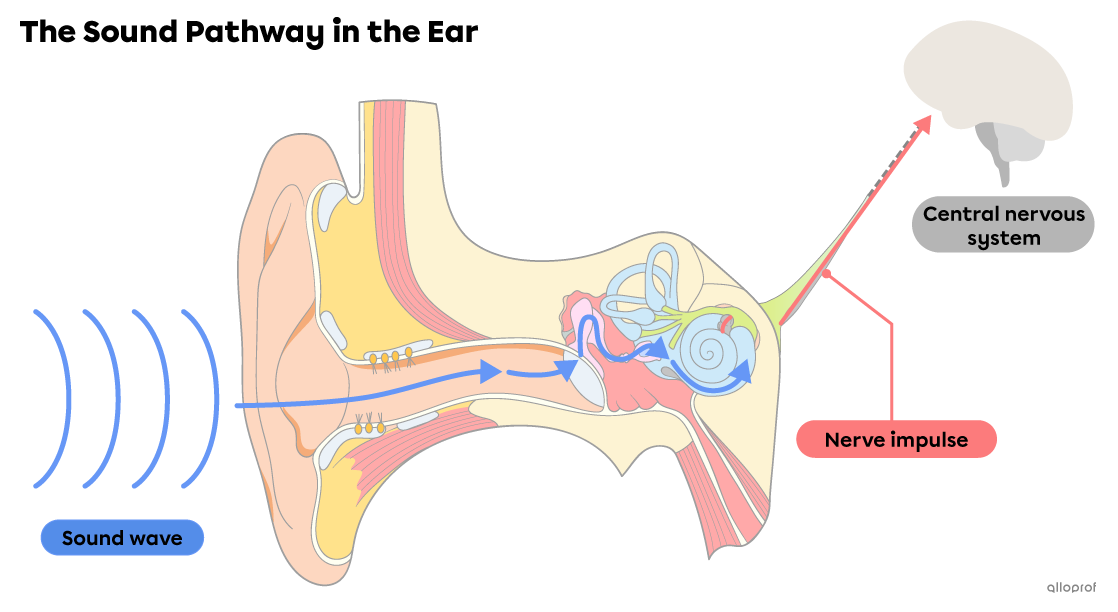 100%
100%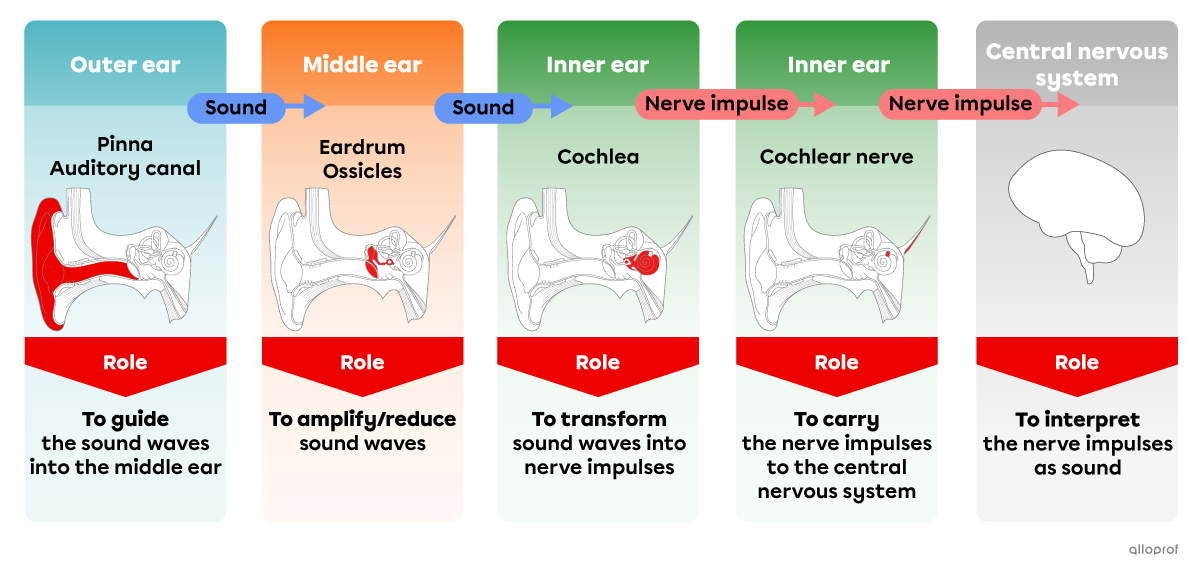 100%
100%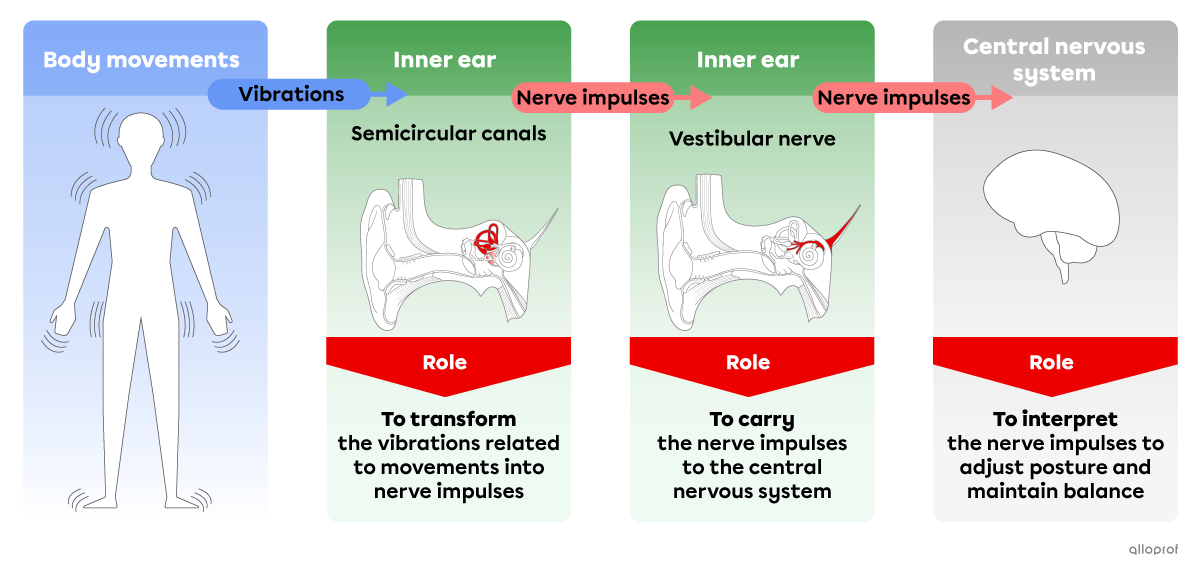
The ear is a complex system composed of multiple structures. These structures work together to pick up sound waves and transform them into nerve impulses that can be analyzed by the central nervous system. This is what lets us hear sounds.
In addition to being the organ responsible for hearing, the ear helps maintain balance.

Moments in the video :
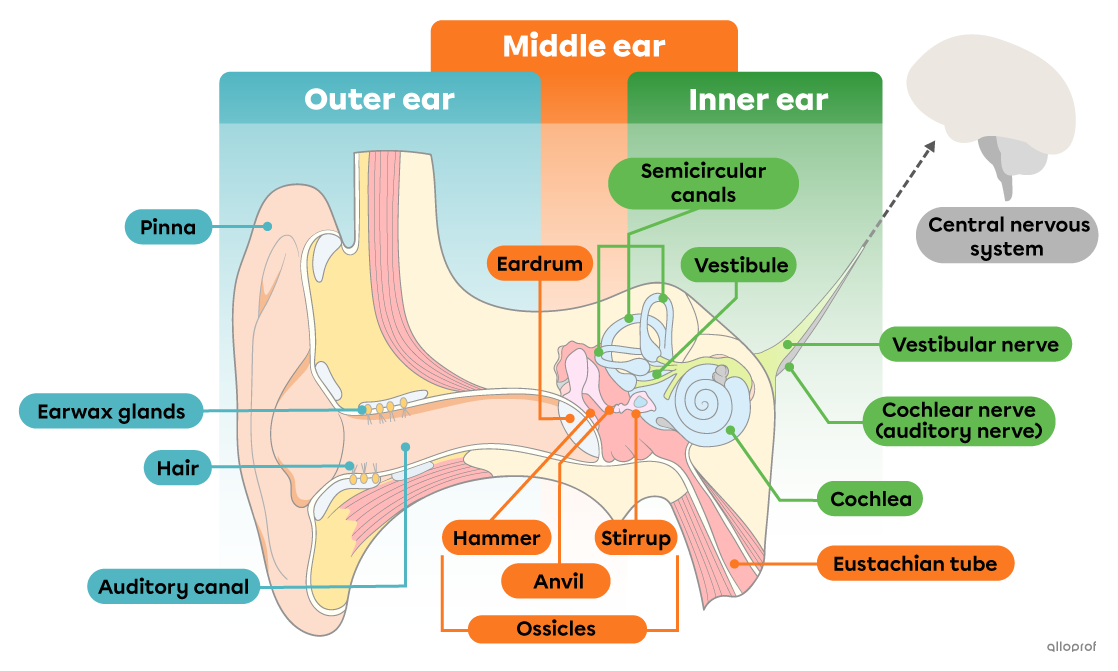
The ear is divided into three parts: the outer ear, the middle ear and the inner ear.

The structures of the ear
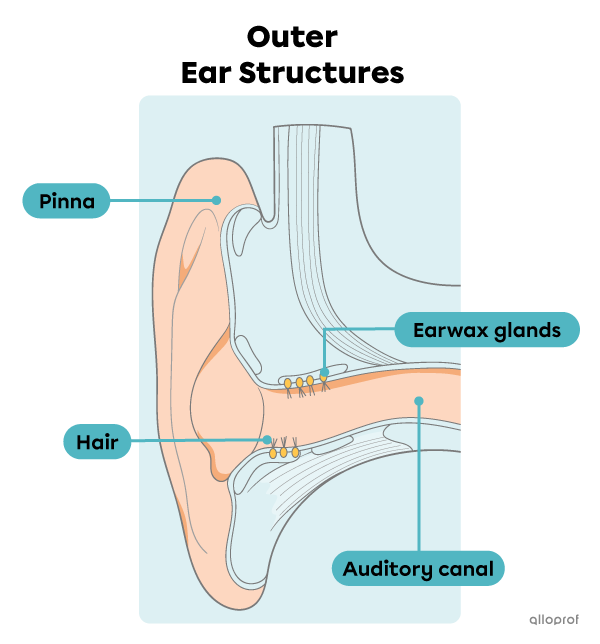
The outer ear includes the pinna, auditory canal, earwax glands and hair. Overall, the role of the outer ear is to direct the sound waves to the middle ear.
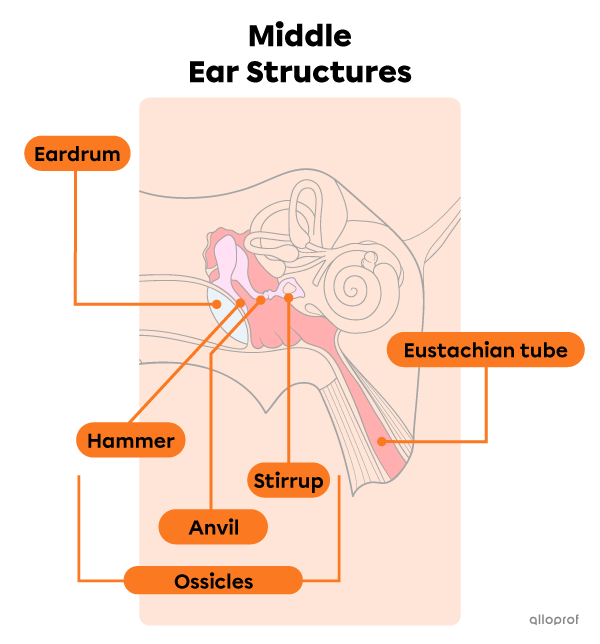
The main structures of the middle ear are the eardrum, ossicles (malleus, incus and stapes, also known as hammer, anvil and stirrup) and Eustachian tube. Overall, the role of the middle ear is to reduce or amplify the sound wave.
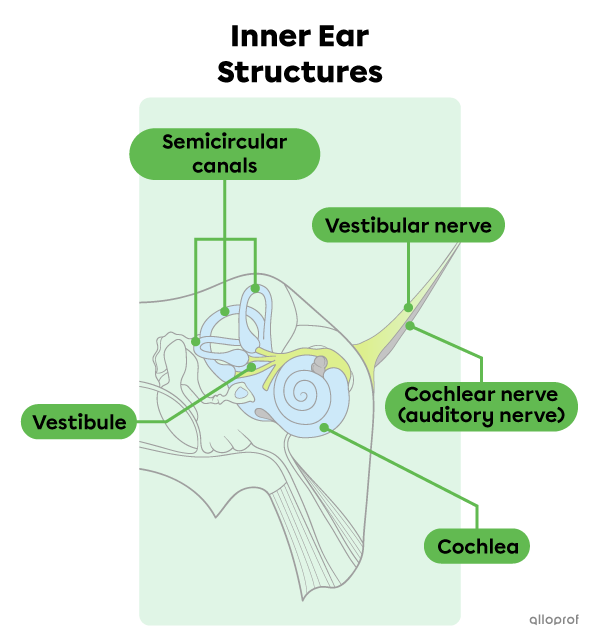
Due to its complex shape, the inner ear is sometimes called the labyrinth of the ear. It includes the cochlea, semicircular canals, vestibule, cochlear nerve and vestibular nerve. The role of the inner ear is to transform the sound wave into nerve impulses that the central nervous system can interpret. It also has a role in helping to maintain the body’s balance.
When a sound wave is generated, the air begins to vibrate. This vibration reaches the pinna of the ear which directs the sound into the auditory canal. This is how the sound travels from the outer ear to the middle ear.
The outer ear also contains glands that secrete a waxy substance called cerumen or earwax. The cerumen, along with the hair, helps filter out dust and other foreign objects that can get into the ear.
Once in the auditory canal, the sound wave vibrates a membrane: the eardrum. As this membrane vibrates, it transmits the sound wave to the middle ear. When the eardrum vibrates, the three ossicles, the malleus (hammer), followed by the incus (anvil) and the stapes (stirrup), move in succession. The movement of the stirrup transmits the sound wave to the inner ear, compressing the fluid in the vestibule and cochlea.
The cochlea is a hollow organ shaped like a snail shell. This organ is filled with fluid and its inner wall is lined with ciliated cells. As the name suggests, ciliated cells have cilia on their surface. These cilia are immersed in the fluid in the cochlea. The vibrations of the fluid cause the cilia to move. This movement is transmitted to the cell membrane, which generates a signal in the form of nerve impulses. The nerve impulse is carried by the cochlear nerve, also called the auditory nerve, to the central nervous system which interprets it as sound.
The following image summarizes the roles of the major ear structures involved in hearing.
Summary of the roles of the main ear structures involved in hearing
The eyes and the ears are involved in maintaining the body’s balance. Within the inner ear, the vestibule, semicircular canals and vestibular nerve perform this role.
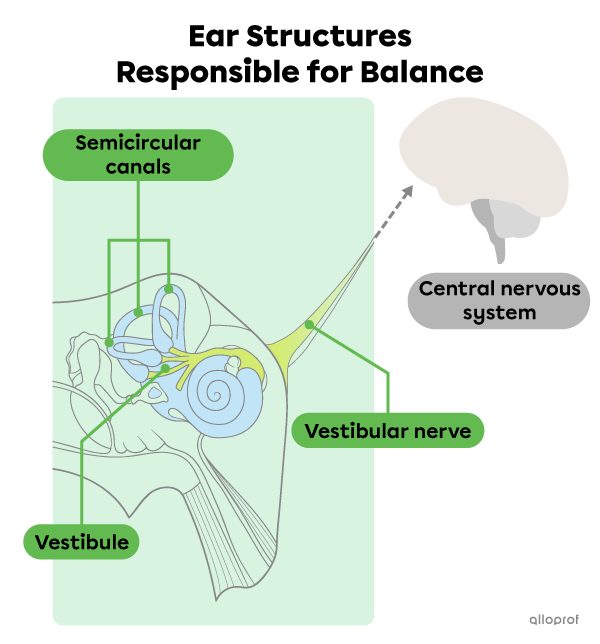
The semicircular canals are three canals oriented along three axes: up and down, left and right and forwards and backwards. This configuration allows the body to orient itself in three directions. When the body moves, it causes the vibration of the fluids inside the semicircular canals and the vestibule. As a result, the cilia of the ciliated cells that make up these organs vibrate, sending a nerve impulse via the vestibular nerve. The central nervous system then interprets this information along with the information sent by the eyes and the rest of the body to maintain balance.
To maintain balance, the central nervous system integrates information from the eyes, ears and receptors in the muscles of the body. Sometimes this information may be contradictory, for example, after riding a roller coaster. When this happens, the brain becomes confused, which can lead to nausea or dizziness.
The following image summarizes the role of the major structures of the ear in maintaining balance.
Summary of the roles of the ear structures involved in maintaining balance