Subjects
Grades
 100%
100%
 100%
100%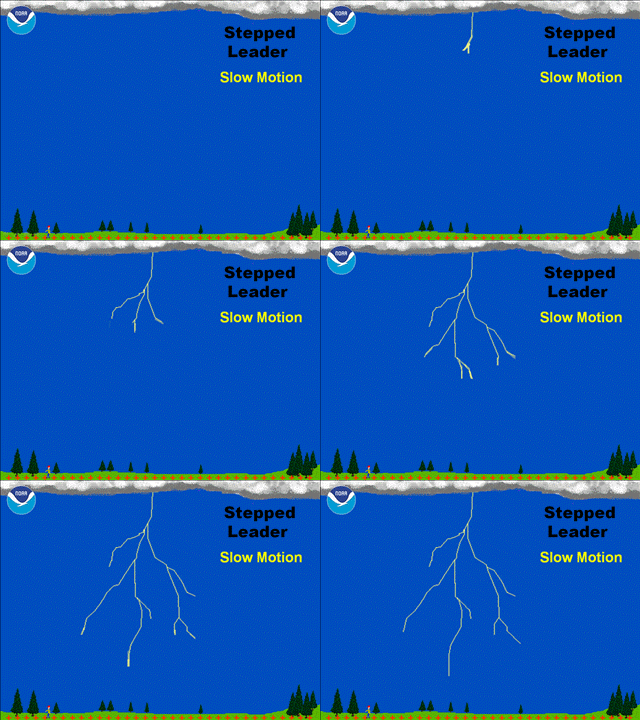 100%
100%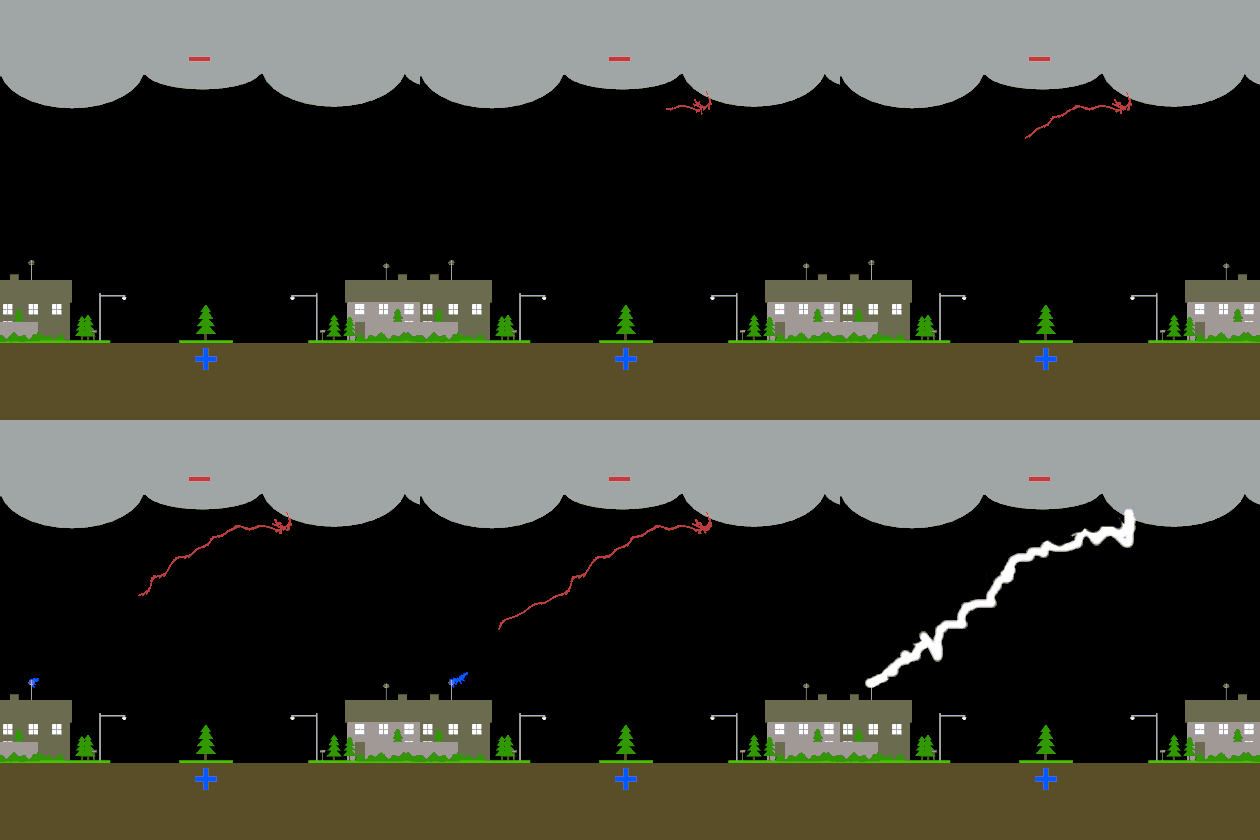 100%
100%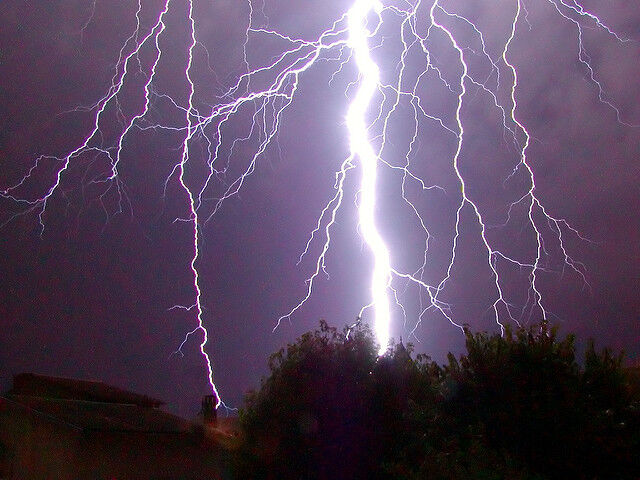 100%
100%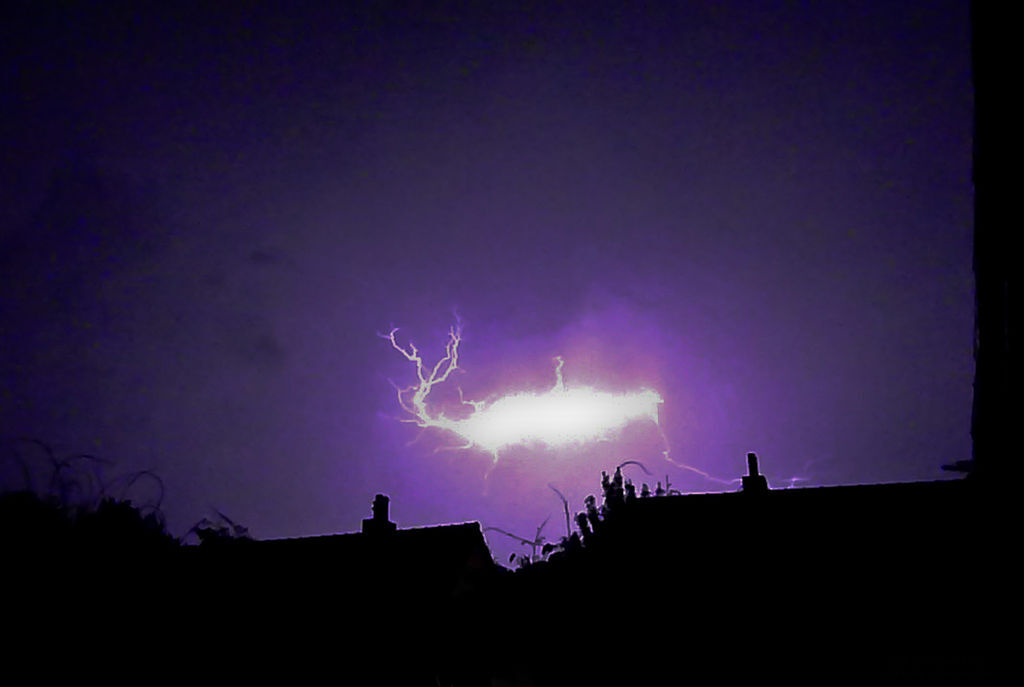 100%
100%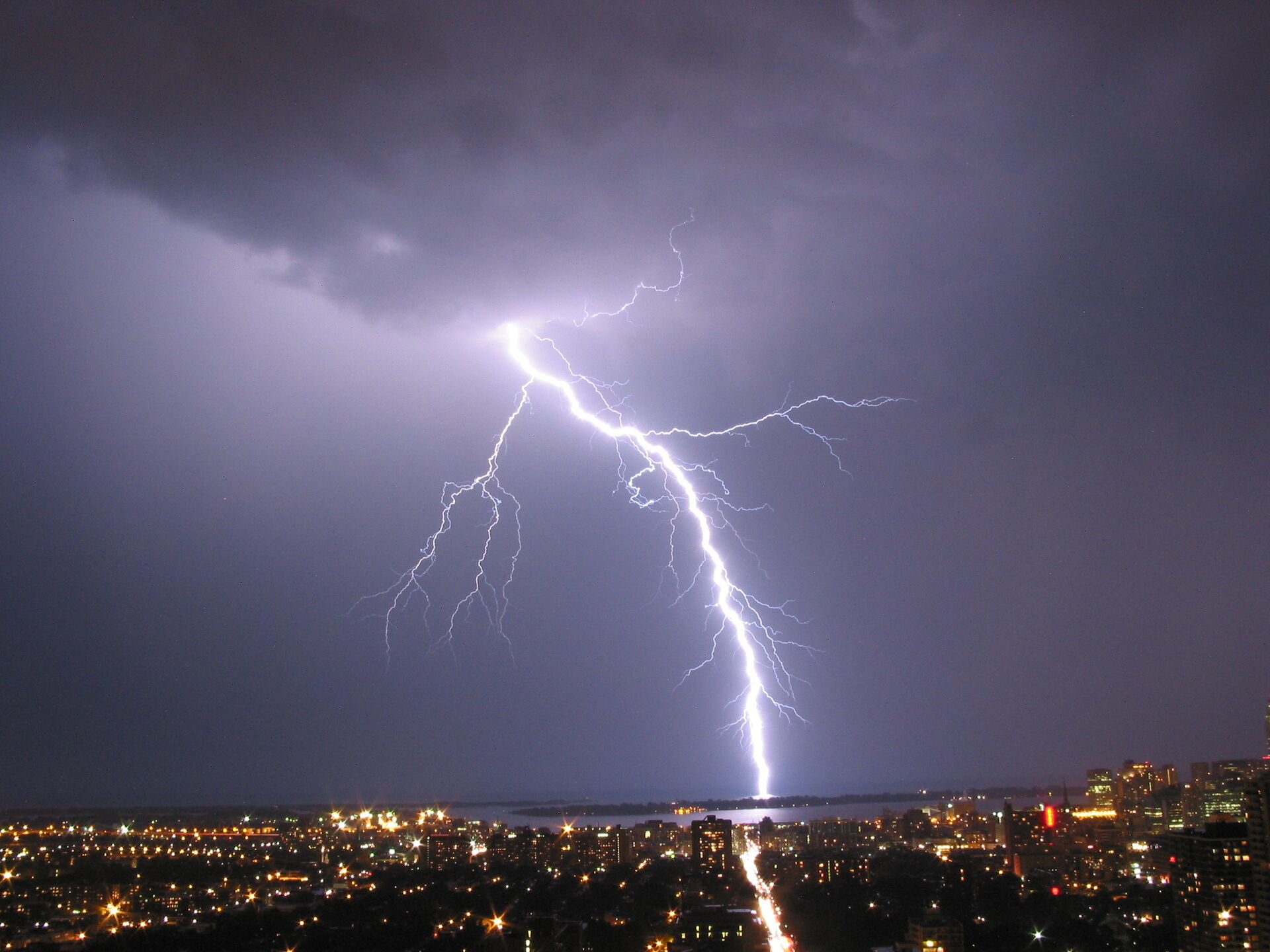 100%
100%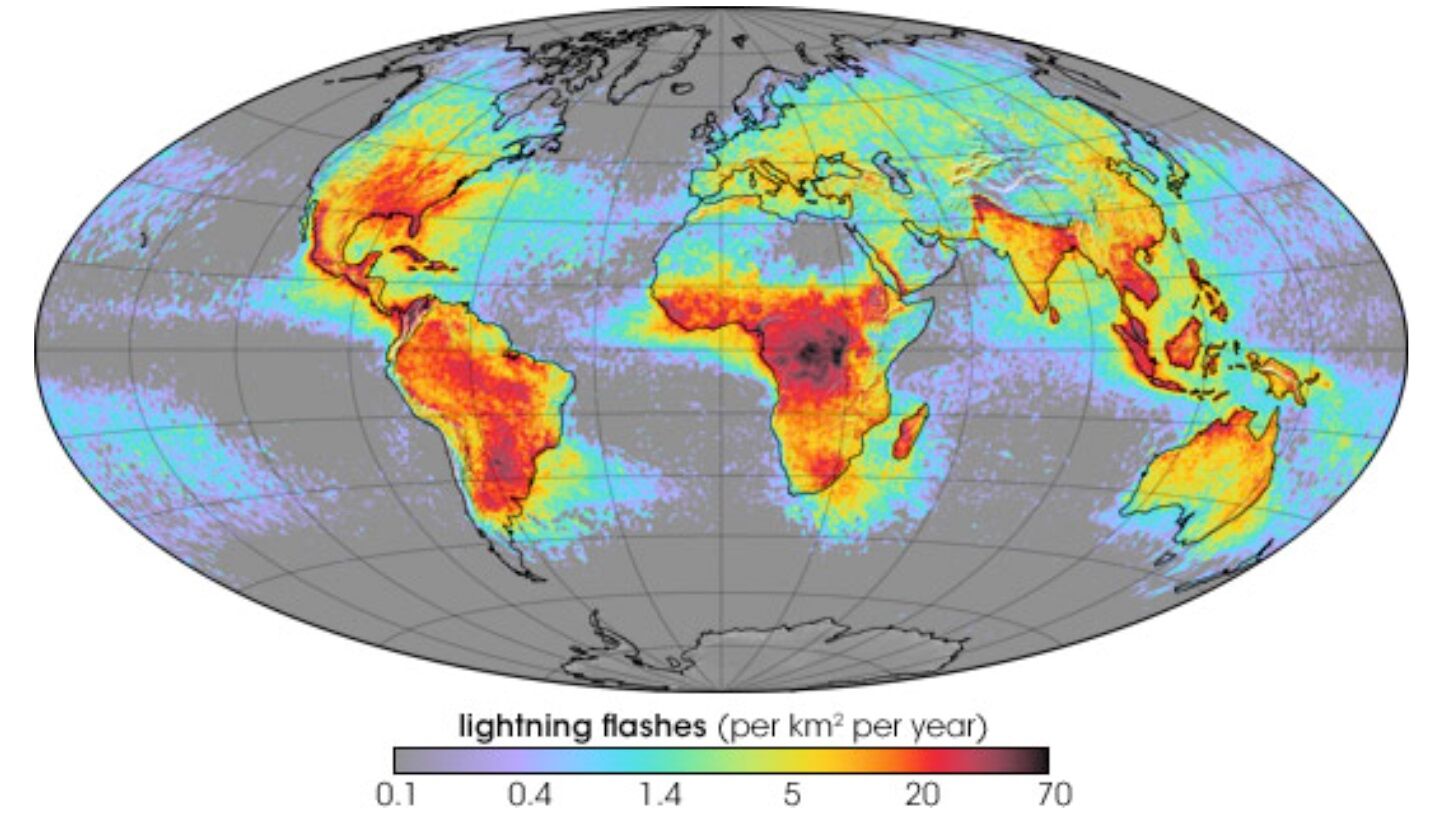
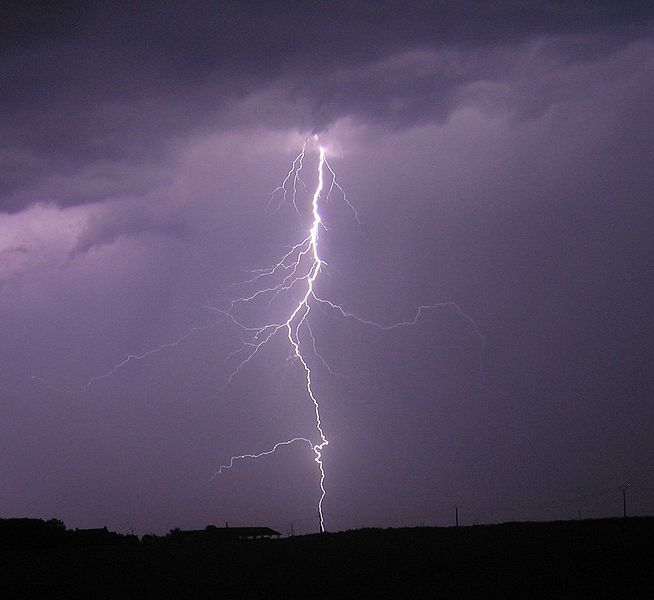
Lightning is a natural phenomenon of electrostatic discharge. It can occur either inside a storm cloud, between two storm clouds (80% of lightning flashes) or between a storm cloud and the ground or an object (20% of lightning flashes).
Cumulonimbus are the clouds responsible for thunderstorms. Cumulonimbus form in unstable air. Since these clouds are highly developed vertically (up to 10 km high), there is a large temperature difference between the base and the top of a cumulonimbus cloud.This temperature difference generates violent air currents.
The currents bring the warm, moist air to the top of the cloud. The air cools and condenses to form ice fragments, hailstones and rain droplets.
The lighter particles rise higher towards the top of the cloud, trapping the larger particles that remain at the base of the cloud. This friction creates a separation of electric charges. Therefore, the base of the cloud becomes charged with negative particles, and the top of the cloud becomes charged with positive particles.
Since opposite charges attract each other, the ground beneath the storm cloud becomes positively charged. When the accumulated charges become too significant, an electric discharge, or lightning, occurs.
Short circuits, forest fires, and the death of farm animals are only some of the dangers posed by lightning. In fact, when lightning strikes a house and connects with a power line, it can burn out all the electrical devices inside. Furthermore, the intense heat from a lightning flash can ignite a house.
If a person is hit by lightning, they will experience serious burns and electrical concussion, which can be deadly. The force of the shock wave from the lightning can throw individuals several meters into the air.
Lightning tends to strike high-altitude areas and very tall or isolated objects.
Therefore, you should stay away from isolated trees, summits or edges during a thunderstorm. Also, if someone is on a lake in the summer and a storm is approaching, they should quickly leave the lake, as that person generally represents the highest point on the entire surface of the lake.
To protect yourself from lightning, it is best to take shelter inside a building or a car.
The lightning conductor is a device composed of a metal rod placed high up and connected to earth by several conductive metal elements.
If lightning strikes the metal rod, the current intensity is conducted to the ground without causing fires or damage to building structures. Benjamin Franklin invented the lightning conductor in 1752.

Thunder is a sound produced by air that has been heated very quickly by lightning during a storm.
Since the temperature of lightning is extremely high, the surrounding air undergoes rapid heating followed by violent expansion. This forms a shock wave accompanied by an acoustic vibration. Thunder manifests as a sharp clap or a muffled rumble, the intensity of which varies depending on the person's proximity to where the lightning strikes.
Because light travels faster than sound, the lightning flash is observed first, and the thunder is heard afterward. To get a good estimate of the distance separating a person from where the lightning struck, simply count the seconds between seeing the lightning and hearing the thunder, and multiply that number by 300 meters.
If six seconds separate the lightning flash from the thunder, the storm is located 1800 m away from our location.
Heat lightning is actually lightning that occurs during a very distant storm.
Although the lightning is seen, the corresponding thunder is not perceptible due to the storm's great distance.
Ball lightning is a luminous phenomenon of electrical origin, thought to be similar in nature to regular lightning, and it reportedly appears after a clap of thunder. According to observers, this phenomenon takes the form of a globe of colored light, ranging from a few centimeters to a few decimeters in diameter, with indistinct outlines. The phenomenon most often ends with an explosion accompanied by a noise resembling a cannon. The globe is said to grow larger and then burst, emitting zigzagging lightning bolts in all directions and causing significant damage. Scientists are unsure whether this globe is made of air in a plasma state. In fact, it is a very rare phenomenon that is not yet well understood or explained by scientists.
The heat released by lightning is considerable and excites the molecules in the air. When the air molecules release this excess energy, they do so in the form of light. The color of this released light depends on which molecule has been excited and to what degree. If there is rain in the air, the lightning flash will be red. If there is hail, the flash will be blue. A yellow flash means that there is a significant amount of dust in the atmosphere, and a white flash means that the air is very dry.
When the cloud is charged enough to produce a giant spark, we first observe a very small discharge at the base of the cloud called a stepped leader or precursor. This leader follows the path of least resistance towards the ground. It zigzags in jumps of a few dozen meters, lasting a few microseconds. The path it takes becomes an ionized channel as it passes. The leader arriving near the ground causes an accumulation of negative charges, and the ground, in response to the leader's proximity, then becomes positively charged. The presence of sharp objects on the ground increases the electric field. This is called the corona discharge or point effect. The objects on the ground then emit small sparks of plasma (upward streamer) to meet the downward leader. When a spark from the ground connects with the downward leader, a very strong electric current flows up the ionized channel. The lightning rises from the ground towards the cloud; this is called a return stroke. This electric arc is the most energetic and destructive part of the lightning. At the same time, the electrons in the cloud are attracted towards the ground in the form of a blinding flash. This entire phenomenon is called a lightning strike.
Lightning figures
This discharge travels at nearly 40 000 km/s and creates a potential difference that can reach 100 million volts and a current of 30 000 Amperes. The length of a lightning flash can range from 50 meters to 25 kilometers. The thickness of the lightning channel is about 3 cm. The temperature near a lightning bolt can reach 30 000 °C. At this temperature, it is easy to understand that lightning can easily melt the metallic parts of affected materials and even cause surface metallic elements to explode or vaporize. The total duration of a lightning flash is on the order of a quarter of a second.
The following map shows the areas most affected by lightning.
This map shows the average annual number of lightning flashes per square kilometre |(\text{km}^2),| based on data collected by NASA satellites between 1995 and 2002.