Subjects
Grades
A material degrades when an external agent alters its properties. Degradation agents vary according to the type of material.
Certain processes and treatments can slow down or prevent material degradation.
Infestation by insects, fungi, or microorganisms can accelerate wood decomposition.
Contact with water or high humidity can cause wood to swell and create conditions favourable to infestation.
Ultraviolet (UV) rays make wood more brittle by degrading some of the fibers responsible for its hardness.
Applying paint, varnish, or stain protects the surface of the wood from UV rays and humidity.
Impregnating wood with an arsenic, zinc, or copper salt solution protects it from insects and fungi. Wood can be impregnated by soaking it in a solution or using a pressurized process done in an autoclave.
Heat treatment is the process of heating wood to a high temperature without adding chemicals. This process protects the wood against moisture, fungi, and insects.
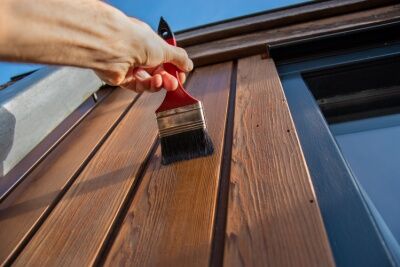
Stained Wood
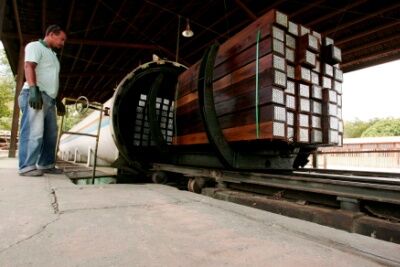
Autoclave-Treated Wood
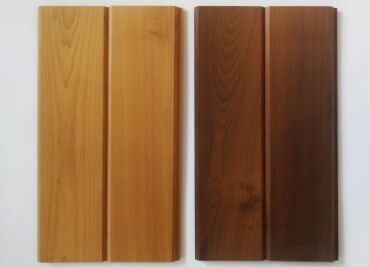
Heat-Treated Wood
Oxidation is the main degradation agent for metals and alloys. It is a chemical reaction where metals are oxidized when exposed to oxygen or another substance with similar chemical properties.
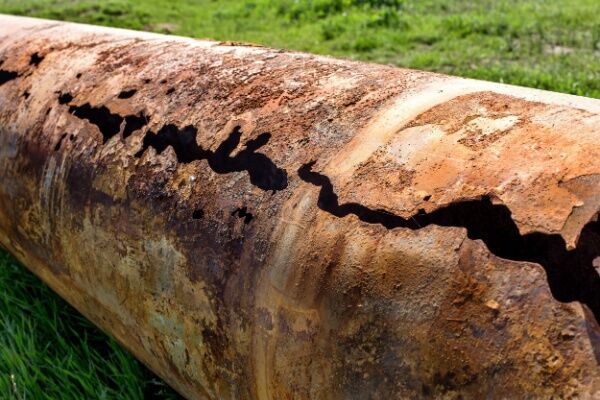
Galvanization is the process of coating metal with a thin layer of zinc, creating a physical barrier that prevents oxidizing substances from coming into contact with the metal. The oxidizing agent reacts with the zinc layer before corroding the metal, because it is more reactive than iron.
The application of a coating such as paint, varnish, or grease protects metal from possible oxidizing agents in the environment.
The addition of certain metals, such as chromium and nickel, makes it possible to form alloys that are less susceptible to corrosion.
Heat treatment of metals and alloys modifies their properties to make them more suitable for use. Learn more on the following page.
Exposure to strong acids and bases can alter the chemical structure of ceramics, making them more brittle and fragile.
A rapid and significant change in temperature, also known as thermal shock, may cause ceramics to crack or break.
Applying a coating, such as a sealant, helps prevent acids and bases from coming into contact with the ceramic.
The application of a glaze hardens the ceramic surface, making it waterproof.
Exposure to ultraviolet (UV) rays, oxidation, and the penetration of certain liquids may cause the plastic’s long polymer chains to break. Certain changes on the exposed surface are evidence of degradation, such as a change in colour and a powdery texture.
Exposure to high temperatures and freeze-thaw cycles may cause plastic to crack or become brittle.
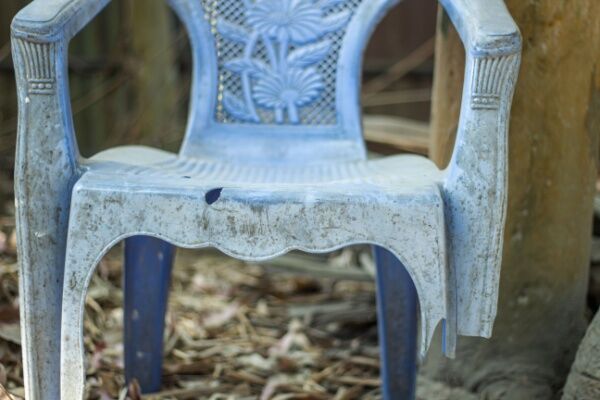
Sunlight and oxidation degrade an outdoor chair over time. The plastic is weakened and discoloured, and a powdery texture forms on the surface.
Adding antioxidants may increase a plastic’s resistance to oxidation.
Pigments absorb or reflect UV rays, preventing the bonds of the plastic’s long polymer chains from breaking.
Applying a waterproof coating prevents liquids from penetrating the plastic's pores.