Subjects
Grades
 100%
100%
 100%
100% 100%
100% 100%
100%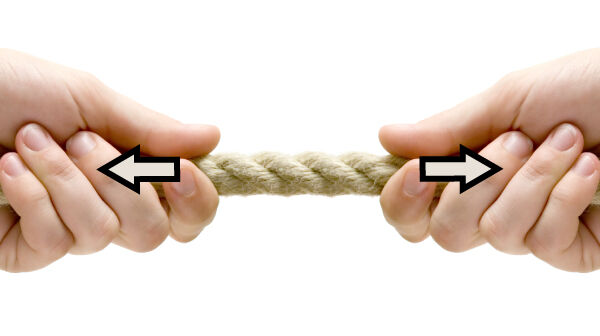 100%
100%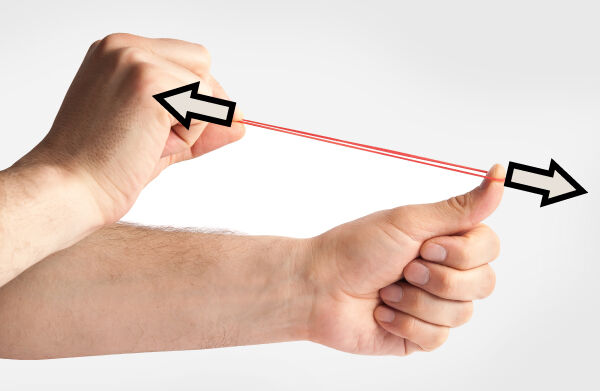 100%
100% 100%
100%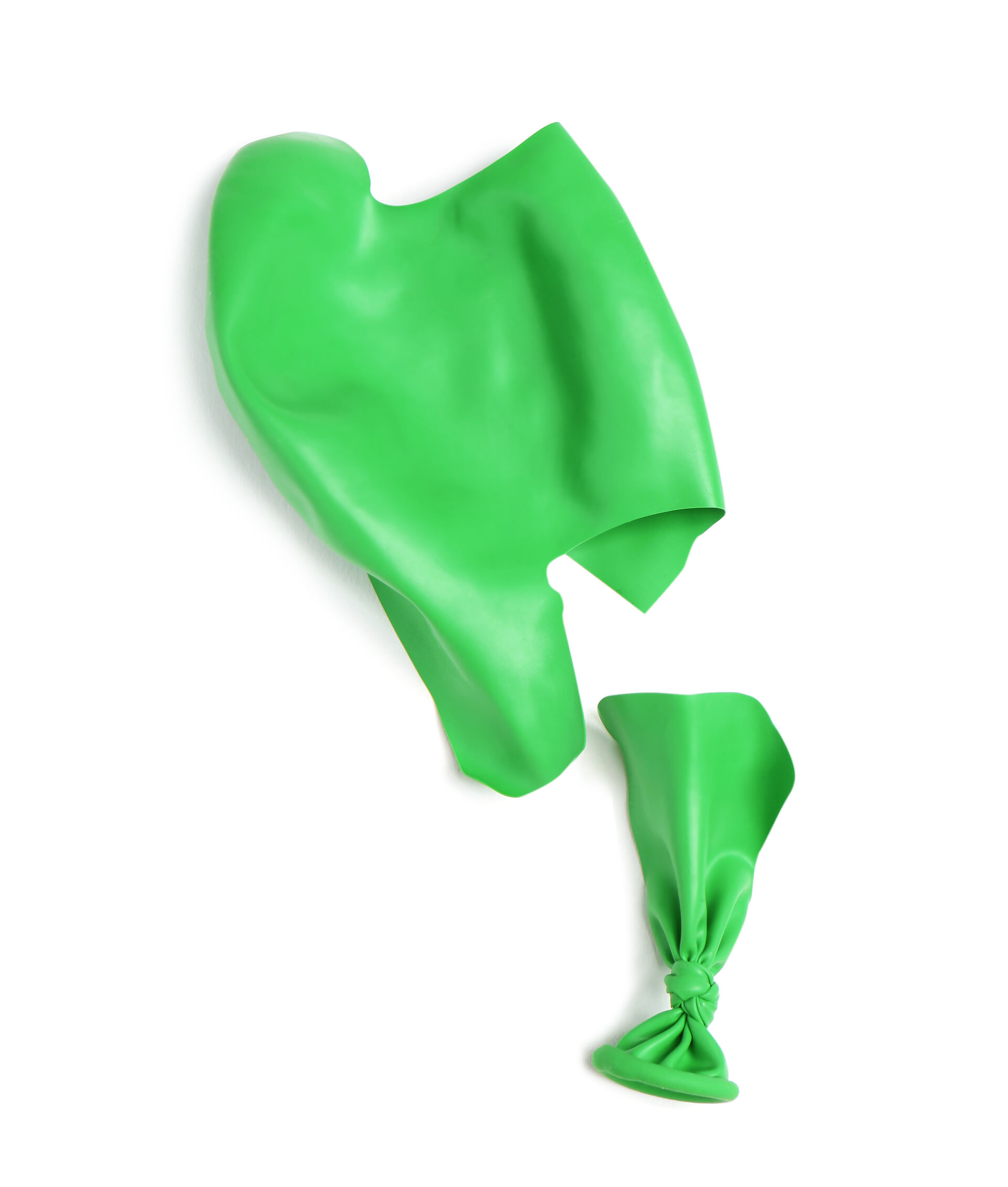
A force is an action which can set a body in motion, modify its motion, or deform it.
Modifying the resting state of a body means setting it in motion.
To launch a paper plane in the air, a force must be applied to it.

Applying force to the paper plane to set it in motion
Modifying the motion of a body means slowing it down, accelerating it, or modifying its trajectory.
To change the speed and trajectory of a puck, you have to act on it by applying a force with the stick.
Applying force to the puck to modify its trajectory
To deform an object means to modify its shape.
A ball of dough is crushed by applying a force of compression.
Compression force applied on a ball of dough
If several forces are exerted simultaneously on a material, it can tend to deform in different ways. The effect of these forces on the material is called a constraint.
Moments in the video :
There are different constraints depending on the number and orientation of the forces exerted.
|
Application of forces |
Symbol |
|---|---|
|
Two forces applied towards each other |
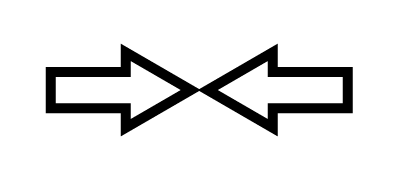 |
|
Effect |
|
|
Tendency to crush materials |
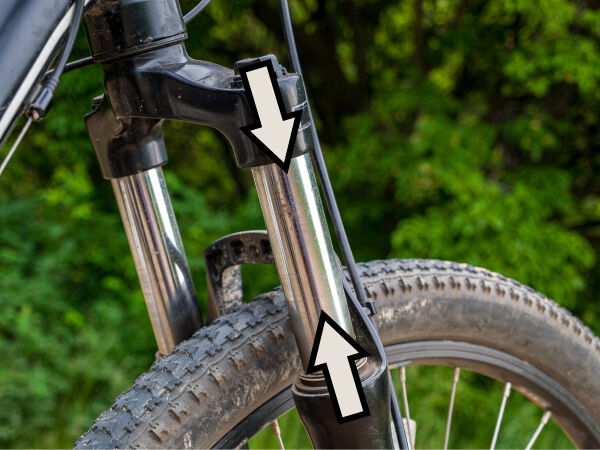
Compression constraint on a mountain bike suspension
|
Application of forces |
Symbol |
|---|---|
|
Two forces applied in opposite directions |
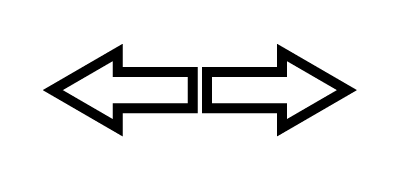 |
|
Effect |
|
|
Tendency to stretch materials |

Tension constraint on a climbing rope
|
Application of forces |
Symbol |
|---|---|
|
One or two parallel forces in opposite directions applied to an object so that it rotates around an axis |
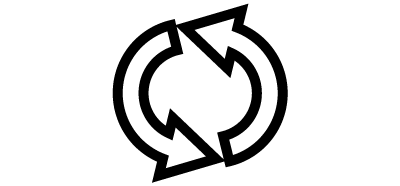 |
|
Effect |
|
|
Tendency to twist materials |
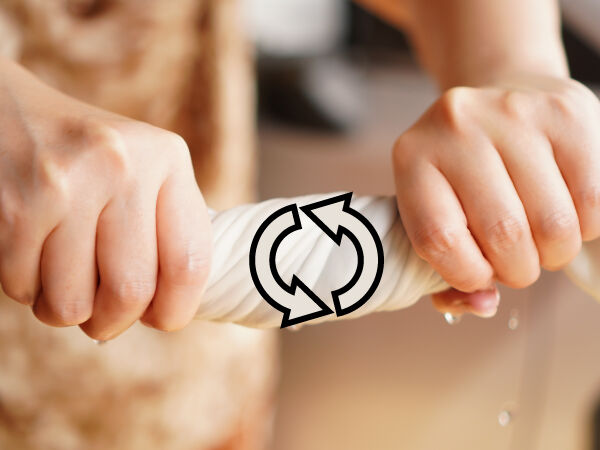
Torsion constraint on a dishcloth
| Application of forces | Symbol |
|---|---|
| One or more parallel forces in opposite directions, applied at different places on an object | 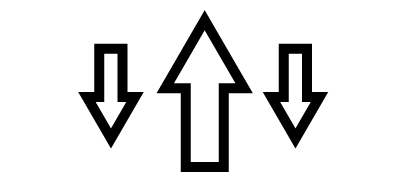 |
| Effect | |
| Tendency to fold or bend materials |
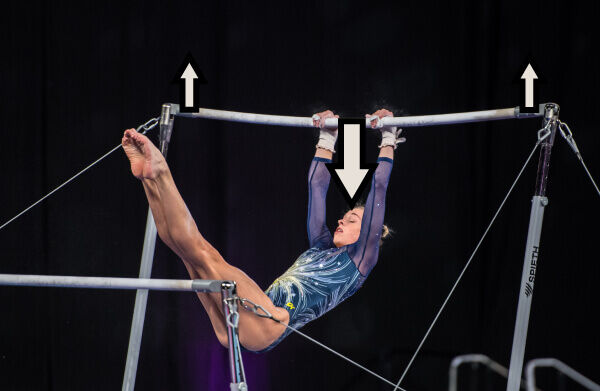
Bending constraint on a gymnastic bar
|
Application of forces |
Symbol |
|---|---|
|
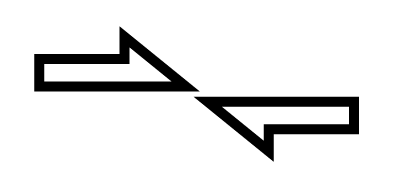
Two parallel and opposing forces applied slightly apart from each other |
 |
|
Effect |
|
|
Tendency to tear or split materials |
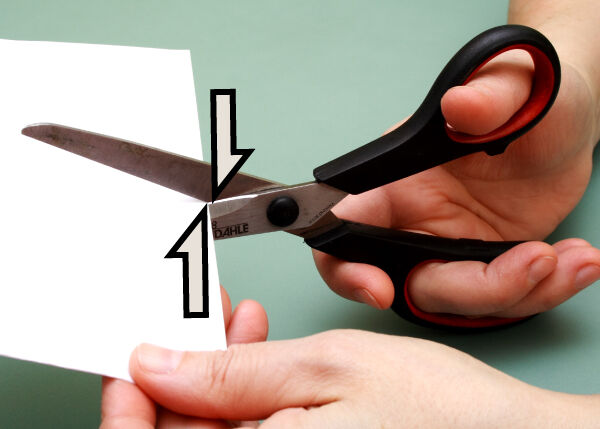
Shearing constraint on a sheet of paper
Moments in the video :
Depending on the nature of the material and on the magnitude of the force applied, the deformation may be invisible or apparent.
If a tension constraint is applied to a non-elastic rope, the rope retains its shape and does not stretch. The deformation is not apparent.
Rope that does not deform
If a tension constraint is applied to a rubber band, it deforms while stretching. The deformation is apparent.
Apparent deformation on a rubber band
Constraints can cause two types of deformation, temporary deformation and permanent deformation.
|
Type of deformation |
Description |
Example |
|---|---|---|
|
Temporary (or elastic) deformation |
The material is deformed when the constraint is applied; it then returns to its original shape when the constraint ceases to be applied. |
A trampoline that deforms when subjected to the weight of a person  Pavel1964, Shutterstock.com |
|
Permanent (or plastic) deformation |
The material deforms when the constraint is applied, but does not recover its original shape when the constraint ceases to be applied. It retains its new form. |
Plasticine that deforms when crushed 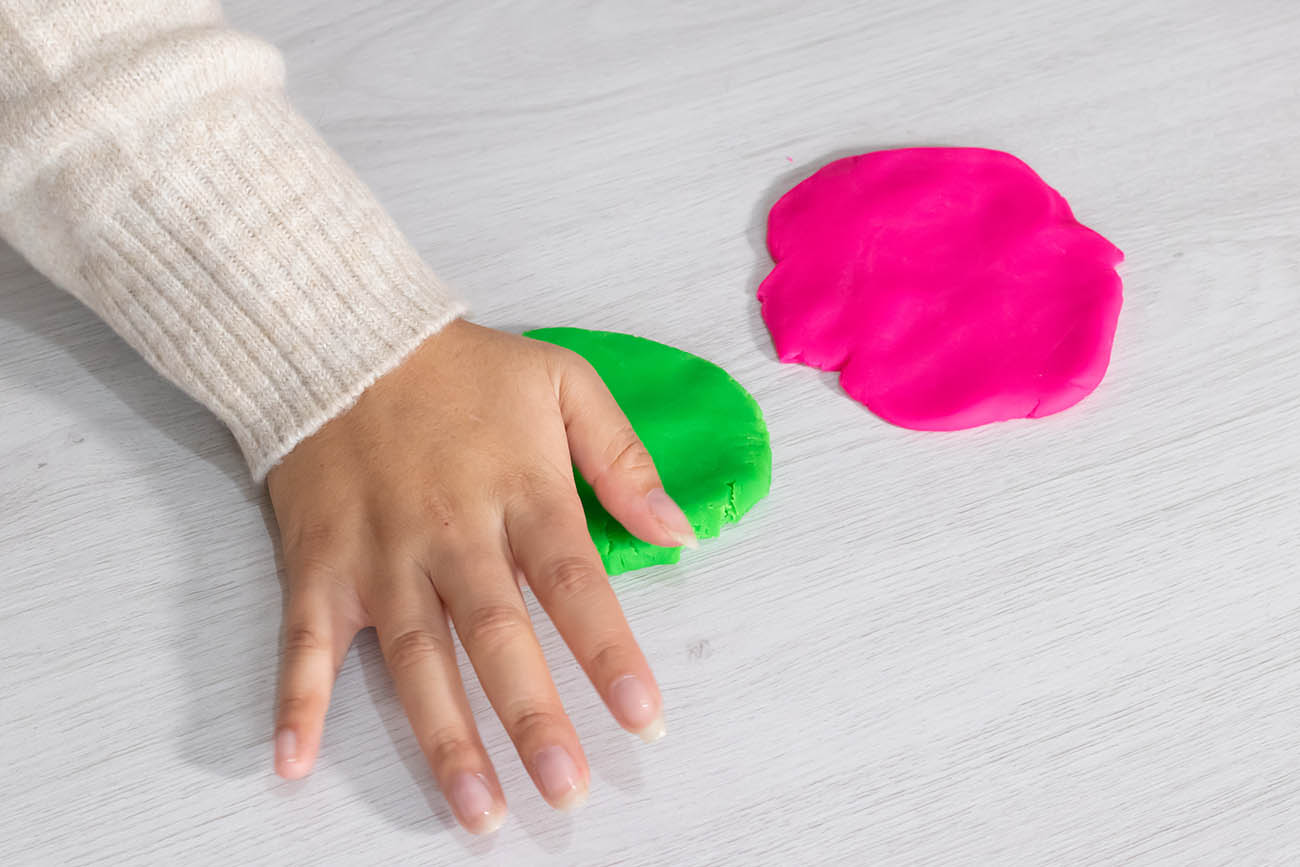 DanitzaPulgarM, Shutterstock.com |
Materials have a strength threshold, that is, a maximum force that they can withstand. If the constraint exceeds the strength threshold of the material, the material breaks. This effect is called a fracture.
When inflating a balloon, the rubber undergoes a tension constraint and deforms. If the constraint exceeds the strength threshold of the material, the balloon bursts. This is what is known as a fracture.
Deformation of a rubber balloon
Fracture of a rubber balloon