Subjects
Grades
 100%
100%
 100%
100% 100%
100%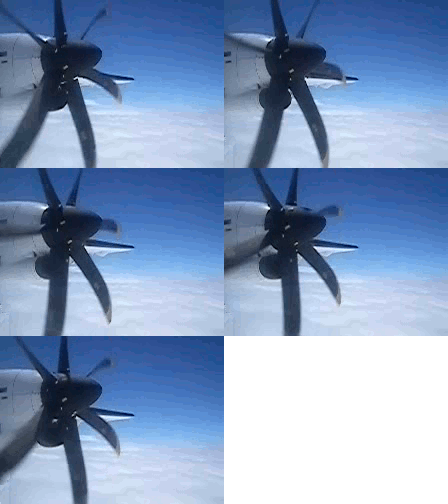 100%
100%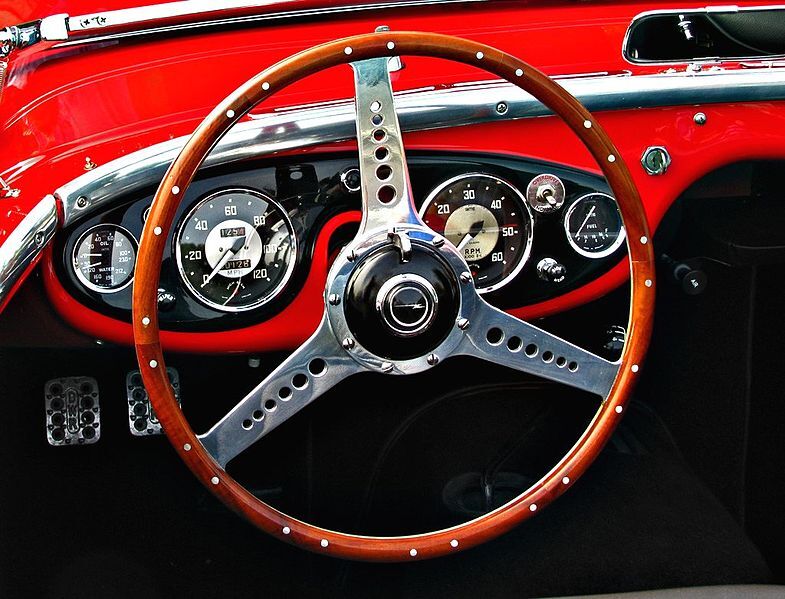 100%
100%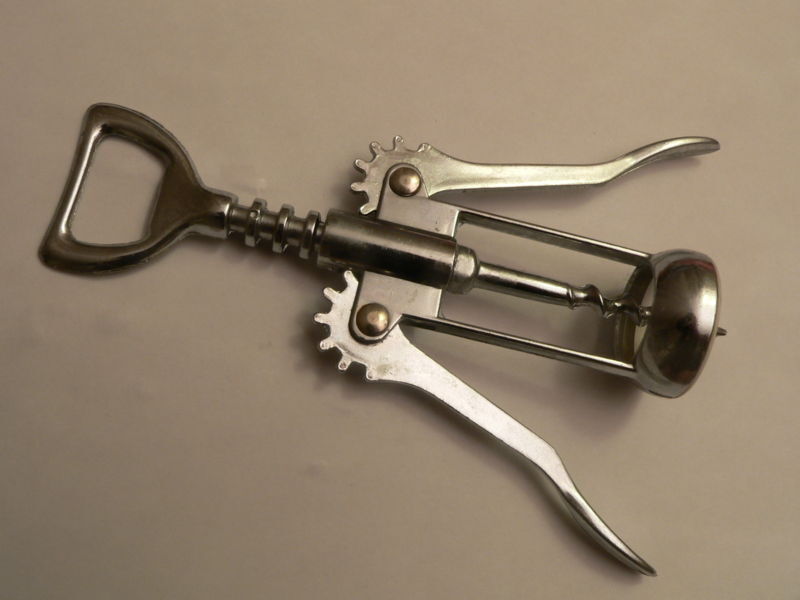
A motion is the displacement or position change of a body relative to a reference point (often another body is used as a reference point).
The forces exerted on a body can cause it to deform. However, if the object is resistant to deformation, then the forces can affect its motion in various ways. If the object is stationary, the forces will make it move. If the object is already in motion, the forces can modify the direction of motion or even the speed (by speeding up or slowing down the motion).
Motion is essential in technology as it permits the movement of certain parts of an object in a precise way to achieve the effect wanted. The moving parts of technical objects can move according to three types of regular motion.
In technical drawing, standardized symbols are used to indicate the main types of motion found in an object.

Moments in the video :
Rectilinear translational motion is performed by a part or object that moves in a straight line.
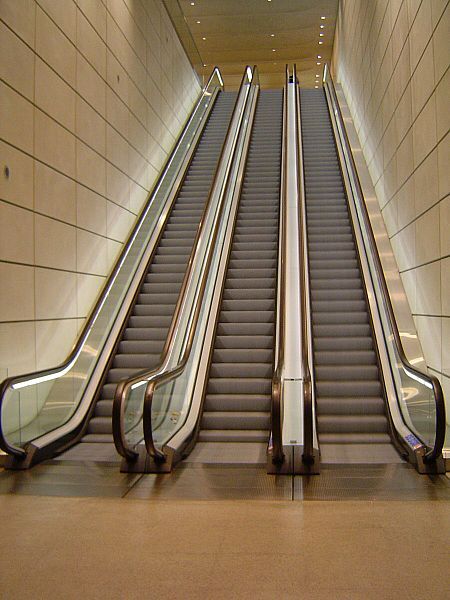
A multitude of examples illustrate translational motion. The motion of a train on rails, the steps of an escalator that allow us to go up one floor, or the slice of bread that goes up and down in a toaster are only a few examples. The translational motion can, therefore, follow several orientations, either horizontal, vertical, or oblique.
When the translational motion is done in only one direction, it is said to be unidirectional. For example, the metro that arrives at a station follows a specific direction, as does the nail that is driven into a board with a hammer. However, there are times when the straight line motion can go in two directions as in a back and forth motion. It is then said to be bidirectional, or alternative. The opening and closing of a drawer is a horizontal bidirectional motion while the motion of an elevator is a vertical bidirectional motion.
Rotational motion is performed by a part or an object that moves in a circular path around an axis.
Several technical objects have parts that perform a rotational motion. For example, the wheels of a bicycle and the blades of a wind turbine make a complete rotation on themselves, around their axis of rotation. However, moving parts do not always make a full rotation. The trajectory of a swing or the opening and closing mechanism of a door follow a circular path, but it is only a partial rotation as it only covers part of the total trajectory.
Like translational motion, rotational motion can be unidirectional or bidirectional. Thus, the motion of a clock's hands and of a helicopter's rotor always turn in the same direction. Their rotation is, therefore, unidirectional. Conversely, the volume control knob on a radio or the rotation of a door handle can be done in both directions; they are, therefore, bidirectional rotations.
Helical motion is performed by a part or object that moves along a fixed axis, rotating around that axis.
In some objects, when rotational and translational motions are combined, they are referred to as helical motions. For example, when driving a screw into wood, a force is applied to the screw which causes it to rotate. As the screw rotates, its helical threads force the screw to move in a translational motion, as they allow it to be driven into the wood. The two motions are, therefore, combined simultaneously.
The corkscrew’s screw performs a helical motion
Standard symbols are symbols used to indicate certain characteristics of an object in a technical drawing. The different types of motion are shown using arrows indicating the motion orientation and direction.
|
Types of motion |
Direction |
Standard symbols |
Examples |
|
Rectilinear translation |
Unidirectional |
 |
Motion of a ski lift |
|
Bidirectional |
 |
Motion of a patio door |
|
|
Rotation |
Unidirectional |
 |
Motion of a merry-go-round |
|
Bidirectional |
 |
Motion of a pendulum |
|
|
Helical |
Bidirectional |
 |
Motion of a manual drill |
Linking and guiding components strongly affect the types of motion possible in technical objects. Furthermore, within a system, the same type of motion can be transmitted from one part to another. A transformation in the type of motion can also take place by means of various existing mechanisms.
