Subjects
Grades
This concept sheet explains what personal data is, how it’s collected, and why.
Your information belongs to you! We give you tools to learn how to protect it.
 100%
100%
 100%
100%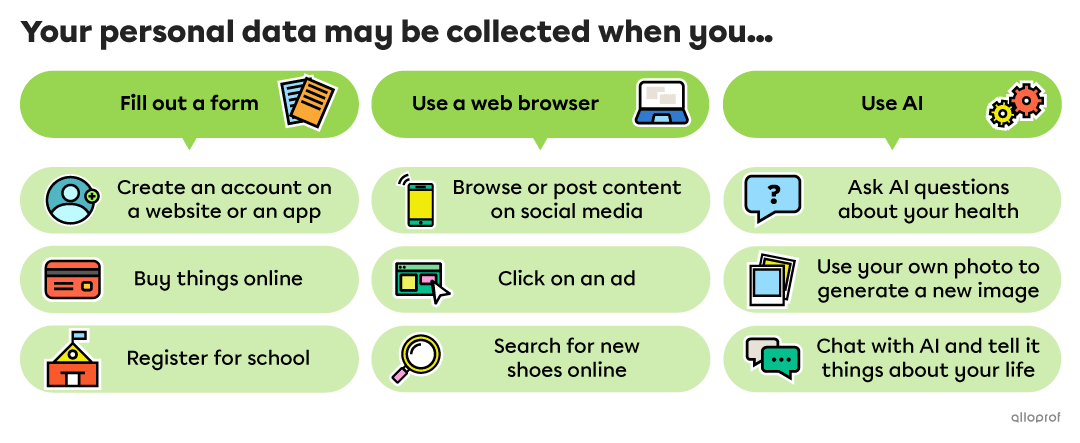 100%
100%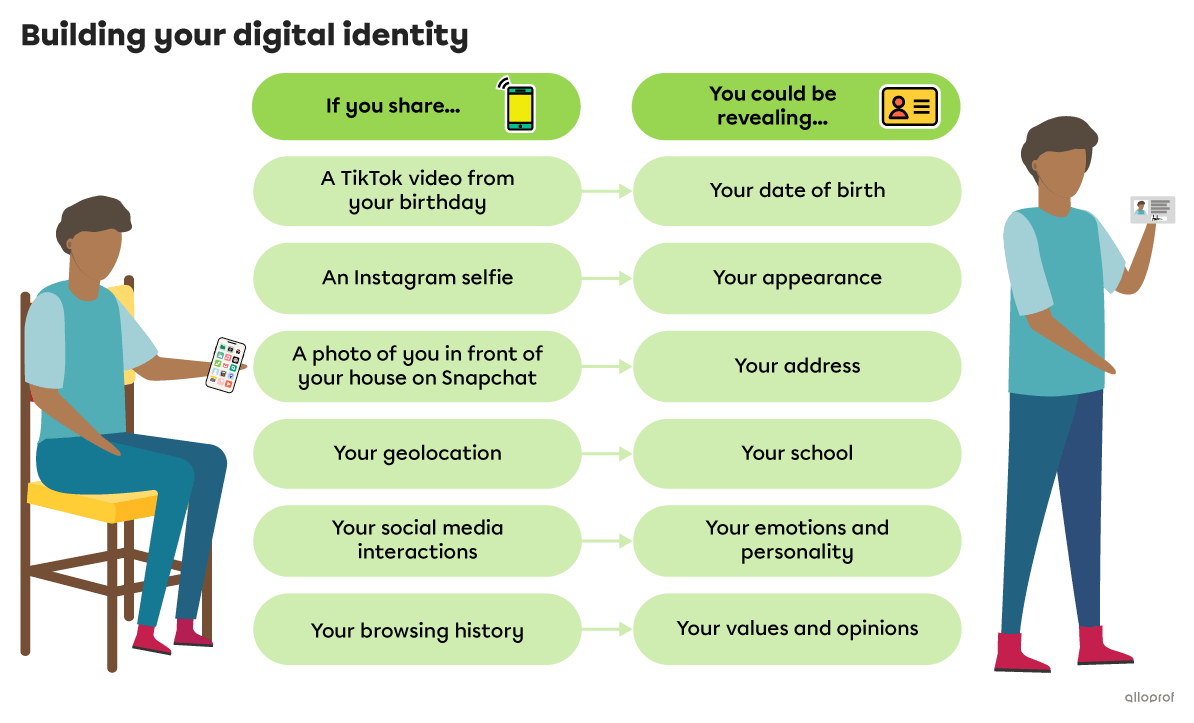 100%
100%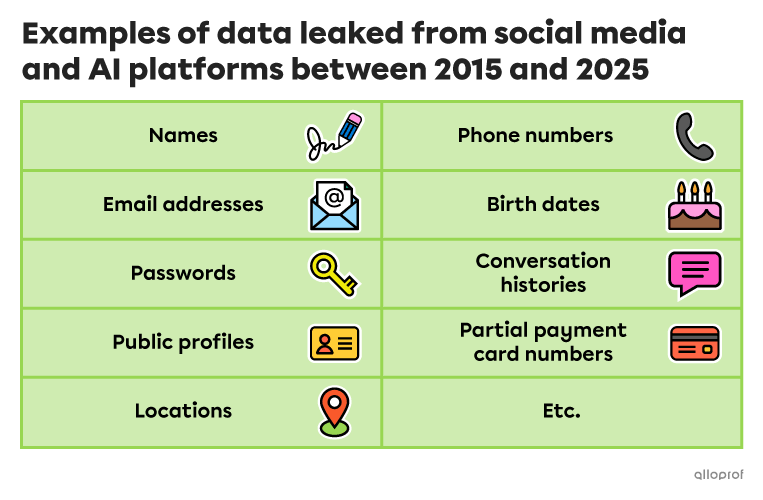 100%
100%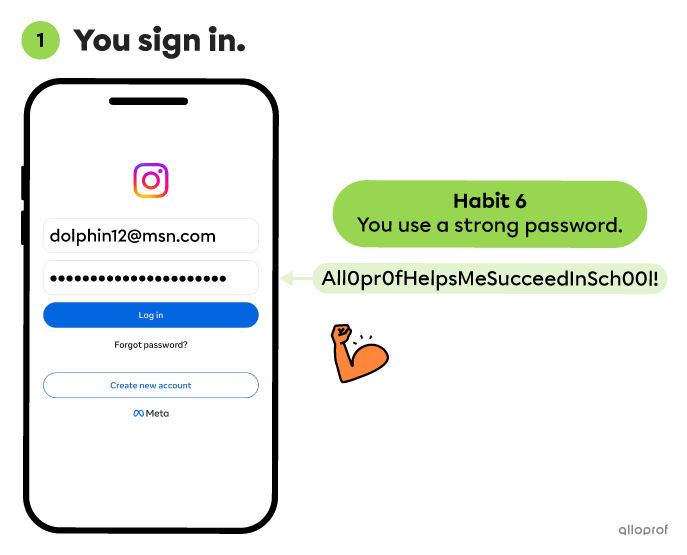 100%
100%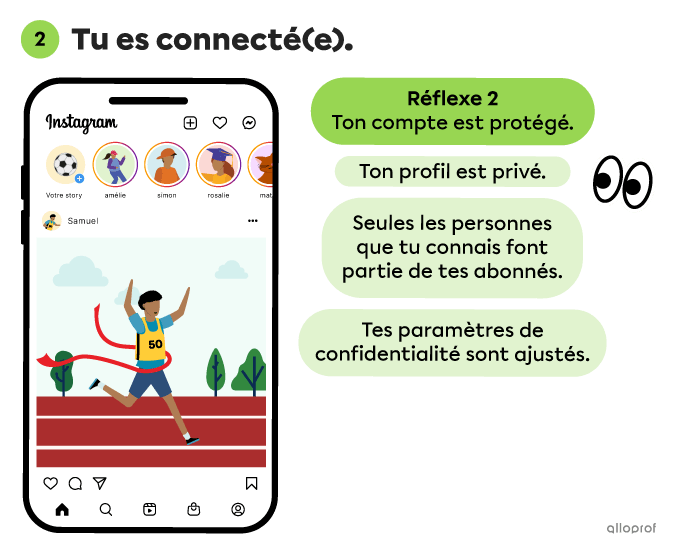 100%
100%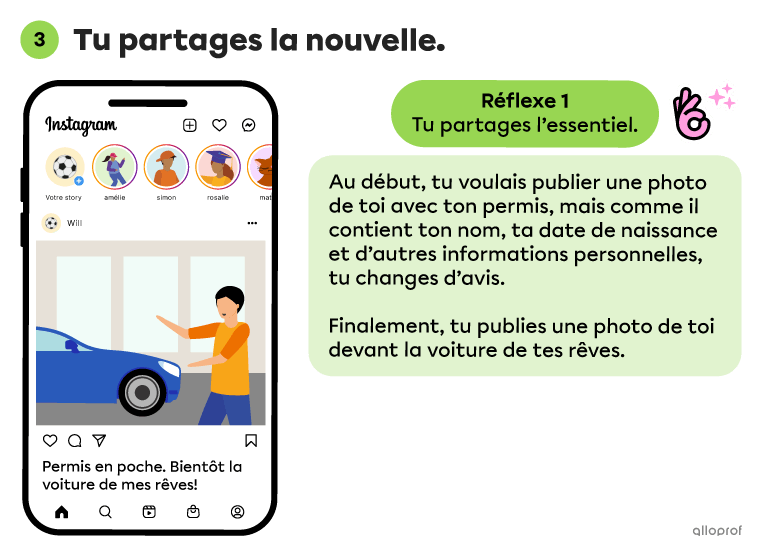 100%
100%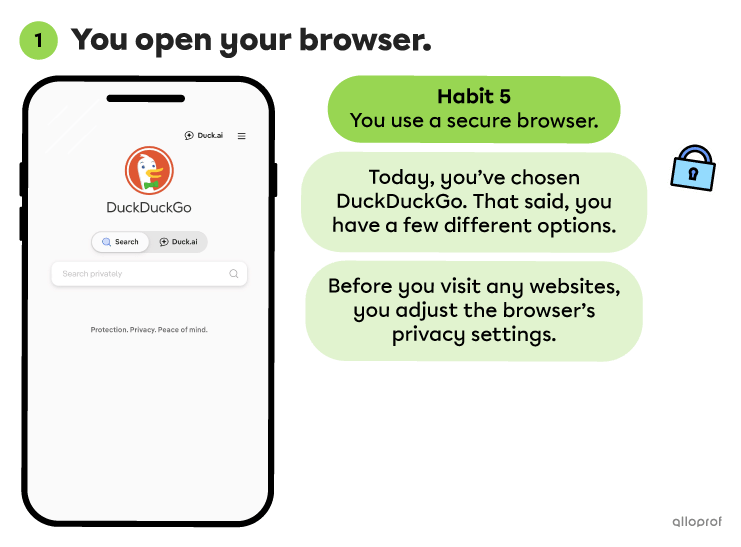 100%
100%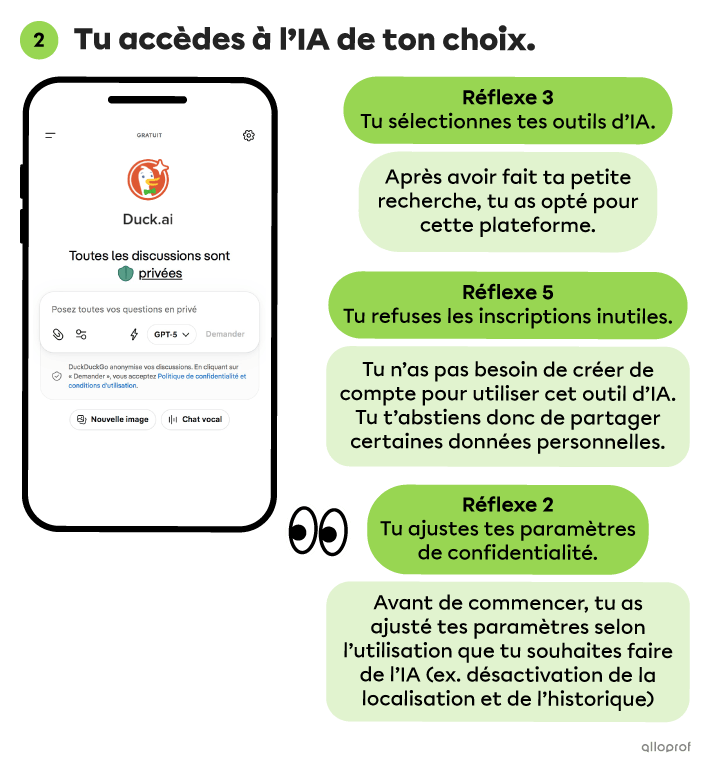 100%
100%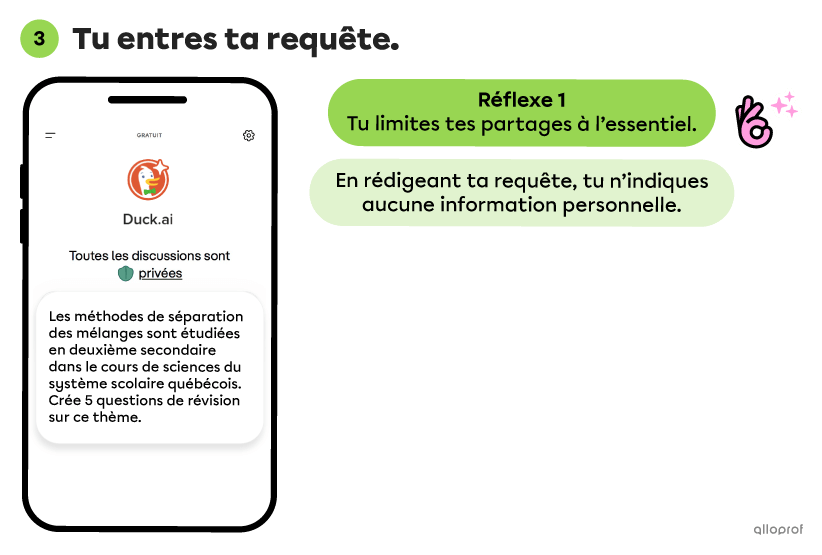

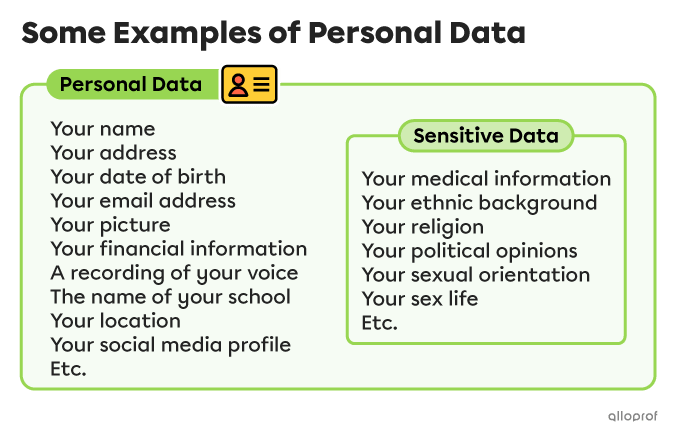
You probably share personal data every day. For example, when you shop online, you may be asked for your name, address, and bank details. When you’re on social media, you might share photos of yourself, your list of friends, or your location.
You might also be sharing data without realizing it. When you use the internet, cookies collect information like your location, IP address, and browser history.
Here are some other examples of times when your personal data may be collected.
It may not seem like much, but when you put all that information together, it can create a fairly comprehensive picture of who you are. This is what we call your digital identity.
There are a few reasons why a business or other organization will collect your personal data.
When companies collect your data, they don’t necessarily have bad intentions. In fact, you probably find it very helpful when you’re looking for somewhere to eat and an app suggests a restaurant near you.
The problem is when one or more malicious individuals use your data. It all starts with data breaches.
Moments in the video :
A data breach or data leak is an incident in which an unauthorized party gains access to personal information.
A data breach occurs when a cybersecurity flaw is exploited by someone with bad intentions. This flaw may be due to human error, a computer vulnerability, or some other cause.
Unfortunately, data breaches are commonplace. In Quebec alone, 514 privacy incidents were reported between April 2024 and March 2025 (Commission d’accès à l’information, 2024–2025)[1]. Worldwide, more than 22 000 privacy incidents were officially reported in 2025, and it is estimated that the actual number of incidents is much higher (Verizon DBIR, 2025)[2].
Social media[3] and AI[4] are not immune to this type of incident.
For more information on the platforms involved, see the references at the bottom of this page.
Once your personal data is in the hands of malicious individuals, it opens the door to privacy violations, which in many cases can damage your reputation, your finances, and your mental health.
Privacy violations can take many forms. Here are some examples.
“I’ve nothing to hide.” You’ve probably heard this phrase 100 times, and you may have even said it yourself. Personal data and online security may not seem like a big deal.
It can be hard to understand the risks. Why?
The rise of influencers and content creators has made it increasingly common to share a lot of information online without worrying about what’s personal or not. It can be hard to resist the temptation to share things when acting on impulse feels so much more satisfying in the moment. Remember that the goal isn’t to stop sharing altogether, but learning to share differently.
In the next section, we’ll give you the tools you need to protect your data!
When what you share falls into the hands of the wrong people, everything can go wrong, and what started as something fun or convenient can get out of control.
First, assume that everything on the internet is forever and that everyone will be able to see it one day or another. That goes for AI, social media, your phone’s apps and the internet in general.
Your data belong to you: Protect them!
Remember that the goal isn’t to stop sharing things online, but to rethink the way you share.
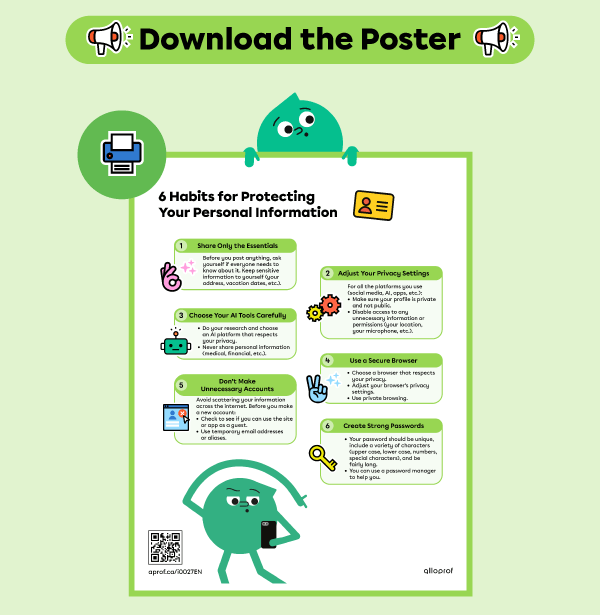
We share tips to help you develop good online privacy habits.
Moments in the video :
You’re thrilled to have passed your driver’s license exam, and you just received it in the mail. You want to share the news with your friends on Instagram. Here’s an example of how to do it the right way.
You’re at home, studying for an exam with the help of generative artificial intelligence (GenAI). Here’s how to apply your good privacy habits.
Alloprof is committed to the privacy and security of all its users. In all its interactions with your data, Alloprof complies with Bill 25, a law that came into effect in 2022 to protect the privacy of Quebecers.
To the extent possible, the data we collect on the site is anonymized and even encrypted when necessary.
Commission d’accès à l’information du Québec (CAI). (2025). Rappel annuel d’activités et de gestion 2024-2025. https://www.cai.gouv.qc.ca/uploads/pdfs/CAI_RAAG-2024-2025.pdf
Verizon Business. (2025). 2025 Verizon Data Breach Investigations Report. https://www.verizon.com/business/resources/reports/dbir/
Examples of social media platforms that have suffered data breaches:
Privacy Rights Clearinghouse. (2026). Data Breaches Chronology.
https://privacyrights.org/data-breaches
Information is beautiful. (2025). World’s Biggets Data Breaches and Hacks.
https://informationisbeautiful.net/visualizations/worlds-biggest-data-breaches-hacks/
Wikipedia. (2026). List of data breaches.
https://en.wikipedia.org/wiki/List_of_data_breaches
Upgard. (2025). The 83 Biggest Data Breaches of All Time.
https://www.upguard.com/blog/biggest-data-breaches
Examples of AI platforms that have suffered data breaches:
Independent. (2025). ChatGPT user’s personal details exposed in data breach, OpenAI reveals.
https://www.independent.co.uk/tech/chatgpt-data-breach-openai-hack-b2874393.html
Bitdefender. (2024). Unknown People Fraudulently Accessed Spaces from AI Company ‘Hugging Face’.
https://www.bitdefender.com/en-gb/blog/hotforsecurity/unknown-people-fraudulently-accessed-spaces-from-ai-company-hugging-face
Cloaked. (2026). Were Your Secrets at Risk in the Google AI Data Breach? Here’s What You Need to Know.
https://www.cloaked.com/post/were-your-secrets-at-risk-in-the-google-ai-data-breach-heres-what-you-need-to-know
Canadian Centre for Child Protection. (2026). Online Harms: Sextortion. Cybertip, Canada’s national tipline for reporting the online sexual exploitation of children.
https://www.cyberaide.ca/fr/dangers-internet/sextorsion/?utm_campaign=sl&utm_term=/app/fr/internet_safety-sextortion
Equifax Canada. (2025). One in Three Canadians Targeted by Scam Texts in Just Three Months, Equifax Canada Survey Finds.
https://www.equifax.ca/about-equifax/newsroom/-/intlpress/one-in-three-canadians-targeted-by-scam-texts-in-just-three-months-equifax-canada-survey-finds
Government of Canada. (2025). Don’t get hooked: understanding phishing and how to stay safe.
https://www.getcybersafe.gc.ca/en/blogs/dont-get-hooked-understanding-phishing-stay-safe
Express Employment Professionals. (2023). Data-Driven Workforce Trends for 2023. Harris Poll 2023. https://www.expresspros.com/jobinsights-canada
Cited by CIC News. (2023). Canadian employers are using social media to screen job candidates. https://www.cicnews.com/2023/04/canadian-employers-are-using-social-media-to-screen-job-candidates-0434137.html
Statistics Canada. (2025). Police-reported cybercrime, by cyber-related violation, Canada (selected police services).
https://www150.statcan.gc.ca/t1/tbl1/fr/cv.action?pid=3510000101&request_locale=en