Subjects
Grades
 100%
100%
 100%
100%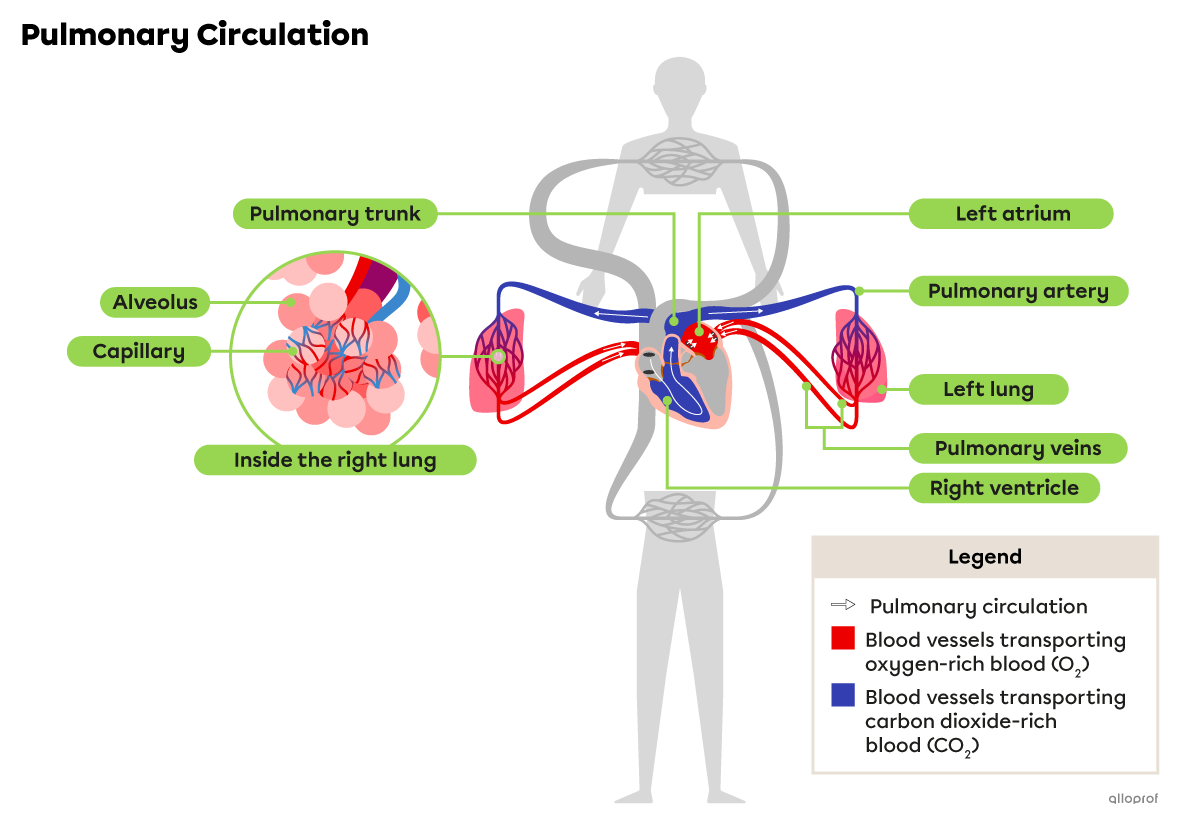 100%
100%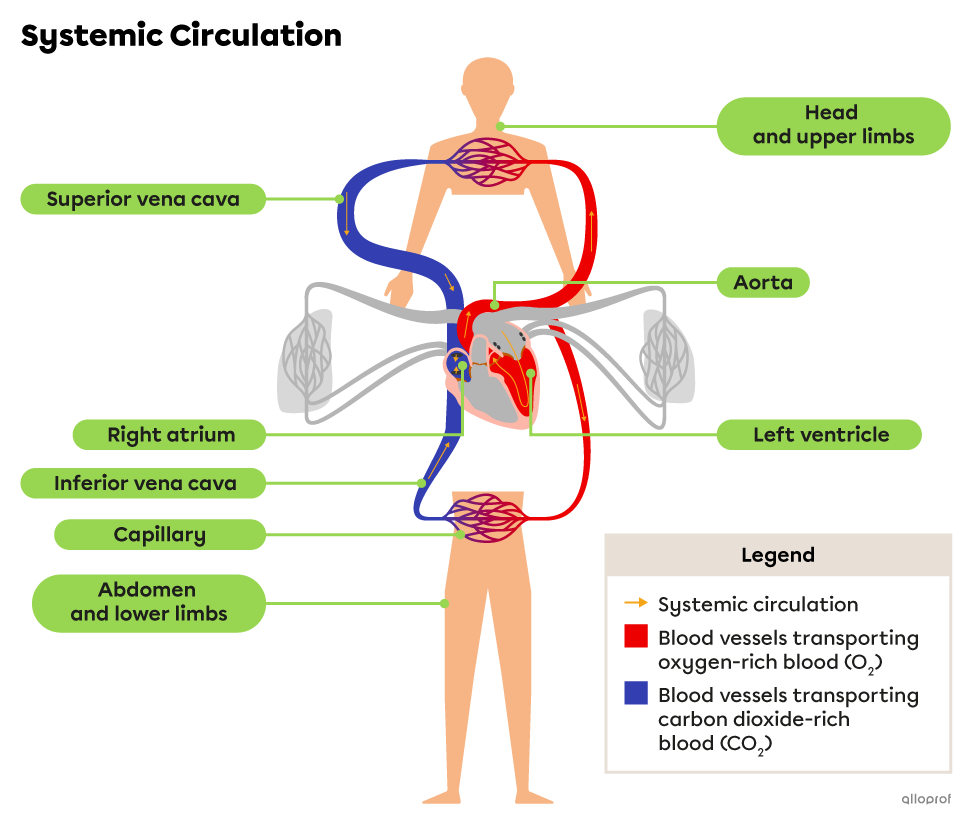
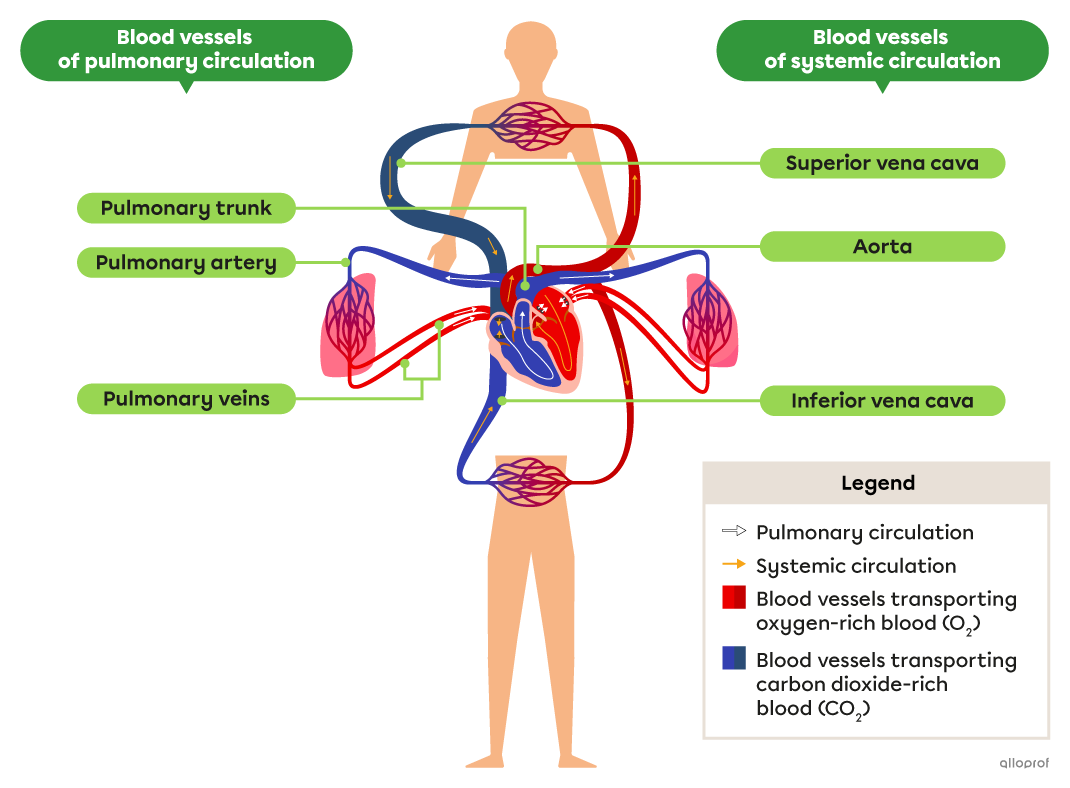
Blood flows through the circulatory system using two routes: pulmonary circulation and systemic circulation. The shared organ of these two circulation routes is the heart.
The following image shows an overview of pulmonary circulation and systemic circulation.

Pulmonary and systemic circulations
Pulmonary circulation, sometimes called lesser circulation, contributes to the exchange of gases between the air and the blood. This shorter loop carries deoxygenated, or carbon dioxide-rich |(\text{CO}_2),| blood from the heart to the lungs and oxygenated, or oxygen-rich |(\text{O}_2),| blood from the lungs to the heart.
Pulmonary circulation begins in the right atrium and proceeds as follows:
Deoxygenated blood rich in |\text{CO}_2| passes from the right atrium to the right ventricle.
The right ventricle contracts and the blood is pushed into the pulmonary trunk and then the pulmonary arteries.
The blood travels to the lungs.
Through diffusion, |\text{CO}_2| passes from the bloodstream to the lungs and |text{O}_2| passes from the lungs to the bloodstream through the walls of the capillaries that surround the alveoli.
The blood rich in oxygen |\text{O}_2| enters the pulmonary veins.
The oxygenated blood flows into the left atrium.
This is the end of pulmonary circulation and the beginning of systemic circulation.
Systemic circulation, sometimes called greater circulation, contributes to the exchange of gases between blood and tissues. This longer loop carries oxygenated, or oxygen-rich |(\text{O}_2),| blood from the heart to the organs and deoxygenated, or carbon dioxide-rich |(\text{CO}_2),| blood from the organs to the heart.
Systemic circulation begins in the left atrium and proceeds as follows:
Blood rich in |\text{O}_2| passes from the left atrium to the left ventricle.
The left ventricle contracts and the blood is pushed into the aorta.
The blood travels to the head, upper and lower limbs and abdomen.
Through diffusion, |\text{O}_2| passes from the bloodstream to the tissues and |text{O}_2| passes from the tissues to the bloodstream through the walls of the capillaries that surround the organs.
Deoxygenated blood rich in carbon dioxide |\text{CO}_2| enters the superior and inferior venae cavae.
The blood flows into the right atrium.
This is the end of systemic circulation and the beginning of pulmonary circulation.