Subjects
Grades
 100%
100%
 100%
100%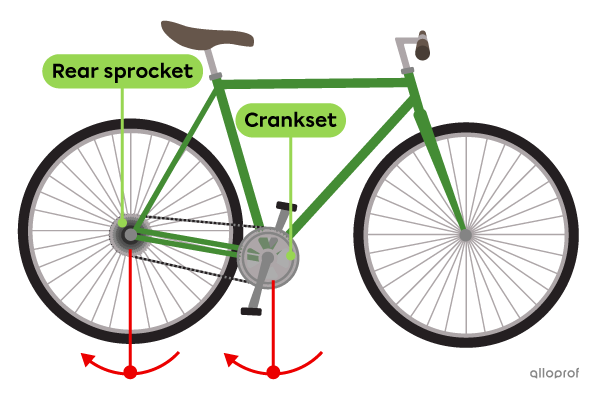 100%
100%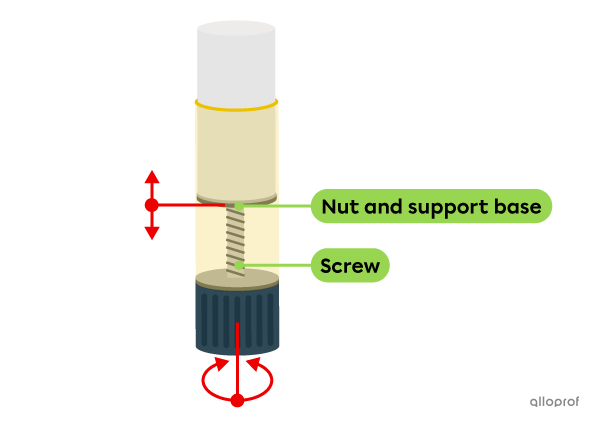
A reversible system is a system where the driver component can become the driven component and vice versa.
A system is said to be reversible when its different components can perform different functions. A driver component (or driving unit) can become a driven component (or receiving unit) and vice versa.
The reversibility of a system is not related to the direction of rotation of its components.
A system where the direction of rotation can be changed is not necessarily reversible.
The following are the reversible systems studied at the Secondary level.
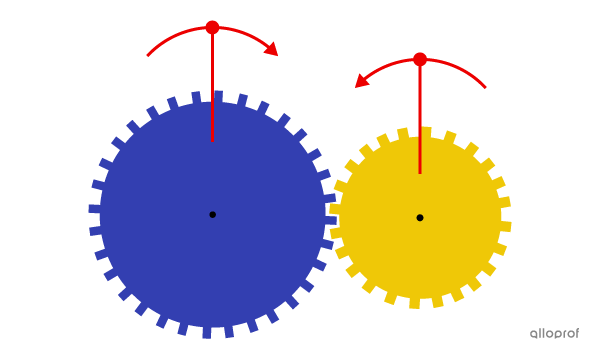
This gear train is reversible because both wheel gears can act as the driver or driven component.
Therefore, the rotational motion of the blue wheel gear can drive the rotational motion of the yellow wheel gear.
Alternatively, the rotational motion of the yellow wheel gear can drive the rotational motion of the blue wheel gear.

A gear train system
A bicycle transmission uses a chain and sprocket system. The pedal gear is called the crankset and the rear wheel gear is called the rear sprocket. The system is reversible because both the crankset and the rear sprocket can act as the driver or driven component.
Therefore, the rotational motion of the crankset can drive the rotational motion of the rear sprocket using the chain as an intermediate component.
Alternatively, the rotational motion of the rear sprocket can drive the rotational motion of the crankset using the chain as an intermediate component.
A chain and sprocket system in a bicycle
To determine if a system is reversible, the following questions should be answered.
Can the driver component become the driven component?
Can the driven component become the driver component?
If the answers are yes, the system is reversible.
If the answers are no, the system is irreversible.
An irreversible system, also called a nonreversible system, is a system that can only be activated by one component, called the driver component (or driving unit).
In an irreversible system, the driver role can be assumed by only one component.
If a force is applied to the usually driven component, the component that is usually driving will not move. In most cases, the system will lock in place.
The following are the irreversible systems studied at the Secondary level.
A glue stick uses a screw gear system (type I). It is an irreversible system because only the screw can be the driver component, while the nut, attached to the glue support base, is always the driven component.
Therefore, the rotational motion of the screw drives the translational motion of the nut.
However, pushing on the glue and the support base does not drive the rotational motion of the screw. No motion occurs because the system is locked.
A screw gear system in a glue stick
To determine if a system is irreversible, the following questions should be answered.
Can the driver component become the driven component?
Can the driven component become the driver component?
If the answers are yes, the system is reversible.
If the answers are no, the system is irreversible.