Basic and Complex Mechanical Functions

Concept sheet | Science and Technology

Each component of a technological system has a specific mechanical function to ensure that it functions properly.

Definitions
  • A component is a part of a technological system.

  • A technological system is an organized set of interconnected components that influence one another to accomplish an overall function.

  • The mechanical function is the role fulfilled by a component or a mechanism in a technological system.

Examples

Here are two examples referring to a door with hinges and screws.

A person installs a door using hinges and screws.

Installing a door with hinges

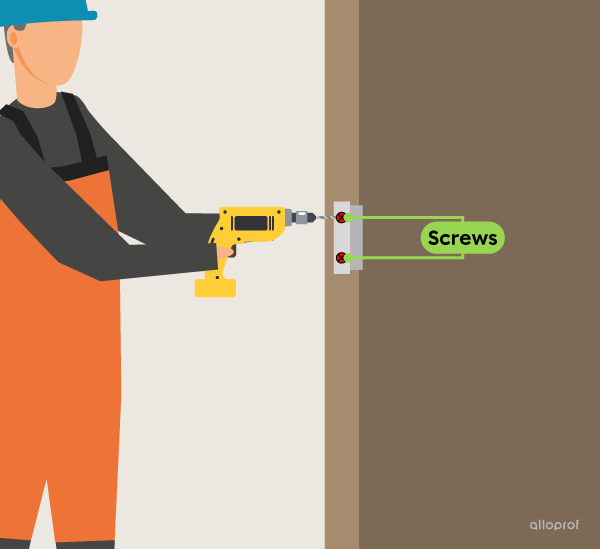
  1. The screws on a door hinge hold the door within its frame. The screws are the components that serve the mechanical function of linking in the door’s technological system. They are called linking components.

The screws are the door’s linking components.

Screws

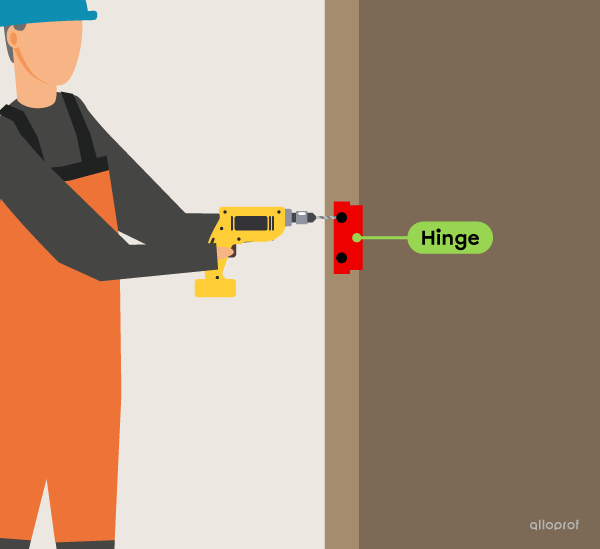
  1. The hinge guides the rotational motion of the door. The mechanical function of the hinge is guiding control, so it is called a guiding component.

The hinge is the door’s guiding component.

Hinge

Basic Mechanical Functions

Definition

A basic mechanical function is the role fulfilled by a component in a technological system.

Be careful!

A component can perform more than one basic mechanical function.

For example, the rivet in a pair of scissors performs a linking function and a guiding function.

The rivet links the two blades and guides their rotation.

A rivet in a pair of scissors

Adapted from MARIIA_MALYSHEVA, Shutterstock.com

Linking

Definition

Linking is the function provided by a component that holds different parts of a technical object or technological system together.

A component that provides the linking function is called a linking component. When the link between parts is direct, there is no linking component.

Example

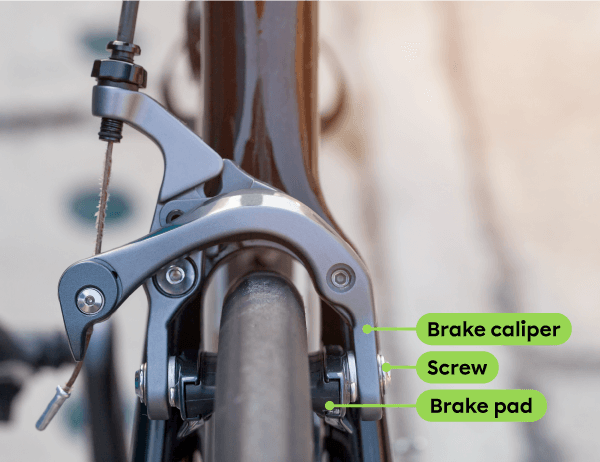
A screw connects a bicycle’s brake pads to the brake caliper. The screw is the linking component.

The screws that attach the wheel to the bicycle are another example of linking.

Links in a bicycle

Adapted from SIN1980, Shutterstock.com

Guiding Control

Definition

Guiding control is the function provided by a component that directs and controls the motion of one or more other components.

The component that fulfills the guiding control function is called the guiding component.

Example

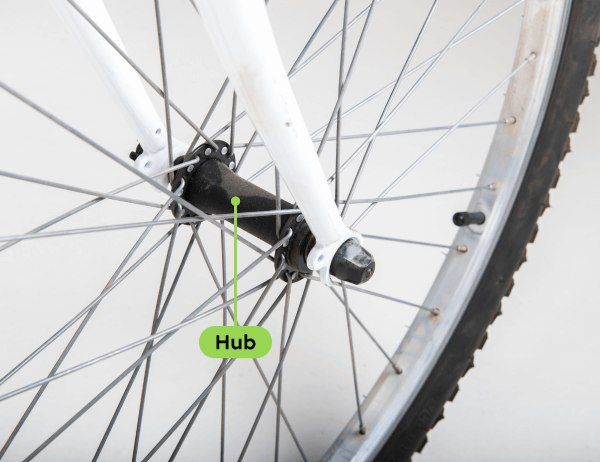
The hub guides the wheel in a rotational motion. The hub is the wheel’s guiding component.

The hub guides the bicycle wheel.

Guiding control in a bicycle

Adapted from vali.lung, Shutterstock.com

Sealing (Secondary 3-4)

Definition

Sealing prevents a fluid from flowing out of its container.

The component that ensures the sealing function is called the sealing component.

Example

A valve prevents air from escaping from a bicycle tire. The valve is the sealing component.

By preventing air from escaping from a bicycle tire, the valve serves a sealing function.

Sealing in a bicycle

Adapted from Pedal to the stock, Shutterstock.com

Lubrication (Secondary 3-4)

Definition

Lubrication reduces friction between two components.

The component ensuring the lubrication function is called the lubricating component.

Example

Applying oil to a bicycle chain reduces the friction between the components of the chain and sprocket system. Oil is the lubricating component.

Applying oil to a bicycle chain ensures a lubricating function.

Lubricating a bicycle chain

Adapted from Ivan Kovbasniuk, Shutterstock.com

Complex Mechanical Functions (Secondary 3-4)

Definitions
  • A complex mechanical function is the role fulfilled by a single component or a mechanism inside a technological system.

  • A mechanism, often called a system, is a set of components that transmits or transforms motion in a technological system.

Complex Mechanical Functions Performed by Systems

In a technological system, there are two groups of complex mechanical functions: motion transmission, with or without a speed change, and motion transformation.

Motion Transmission Function

Definition

When there is motion transmission, the type of motion between the driver and driven components of a system is the same.

Usually during motion transmission, a rotating driver component causes the driven component to rotate as well. The rectilinear translational motion of the driver component may also cause the rectilinear translational motion of the driven component.

Example

In a bicycle, when the crankset rotates, it drives the rear sprocket to rotate too. It is a chain and sprocket motion transmission system.

The chain and sprocket system transmits motion between the pedals and the freewheel (rear).

Motion transmission in a bicycle

Speed Change During Motion Transmission

Definition

A speed change is a variation between the rotational speed of the driver component and the rotational speed of the driven component in a system.

Example

In a bicycle, the chain and sprocket system can transmit a rotational motion with a speed change.

The speed change allows the rider to rotate the bicycle’s rear wheel with varying degrees of difficulty. The number of teeth in the wheel gears determines the gear ratio.

The chain and sprocket system transmits motion with a speed change between the crankset and the rear sprocket.

Speed change in a bicycle

Motion Transformation Function

Definition

When there is motion transformation, the type of motion between the driver component and driven component of a system changes.

During motion transformation in a system, the rotational motion of the driver component can cause the rectilinear translational motion of the driven component. The opposite is also possible. The rectilinear translational motion of the driver component can cause the rotational motion of the driven component.

Example

In an adjustable wrench, when the worm rotates, it drives the rectilinear translation of the mobile jaw. It is a worm and rack motion transformation system.

An adjustable wrench has a worm and rack motion transformation system.

Adjustable wrench

Complex Mechanical Functions Performed by Components

There are three different complex mechanical functions fulfilled by components in a technological system.

A technological system always has a driver and a driven component. There may also be zero, one or multiple intermediate components.

Driver Component Function

Definition

The driver component, also called the driving unit, transmits the motion generated by an external force to another component in order to enable the operation of the technological system.

Example

The pedals act as the driver component. They transmit the motion generated by the driving torque from the cyclist’s legs to the rear wheel.

The pedals are the driver component. They receive the force from the cyclist’s legs and set the bicycle in motion.

The driver component in bicycle motion

Intermediate Component Function

Definition

The intermediate component is located between the driver and driven components and sets the driven component in motion.

Intermediate components are not required in all technological systems. Usually, they are present when the driver and driven components are far from each other.

Example

A chain and sprocket system acts as an intermediate component. It transmits the motion from the pedals (driver component) to the rear wheel (driven component).

The chain and wheel gear system is the intermediate component, because it transmits motion from the pedals to the rear wheel.

The intermediate component in bicycle motion

​Driven Component Function

Definition

After a series of transmissions or transformations of the motion from the driver and/or intermediate component(s), the driven component, also called the receiving unit, receives the final motion.

Generally, the motion of the driven component is closely related to the overall function of its technological system.

Example

The driving torque exerted by feet pushing on the pedals (driver component) causes the crankset to rotate. This rotation is transmitted to the rear wheel (driven component) by a chain and sprocket system (intermediate component).

The rear wheel is the driven component. It is set in motion by the force exerted on the pedals.

The driven component in bicycle motion