Subjects
Grades
Static electricity describes the phenomena caused by electric charges at rest.
Charging an object, sometimes called electrization, is the action of changing its electrical charge from neutral to positive or negative.
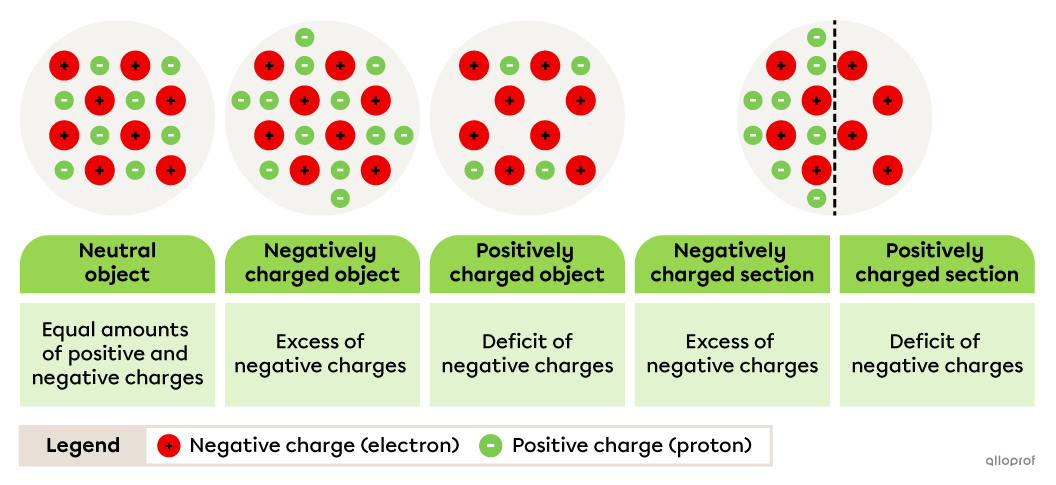
Most objects are electrically neutral, meaning that the atoms that make up the object contain as many negative electrical charges (electrons) as positive electrical charges (protons). When an object loses this neutrality, it becomes electrically charged. The object can be negatively charged or positively charged.
A negatively charged object has an excess of negative charges.
A positively charged object has a deficit of negative charges.
Different sections of an object can be charged differently. For example, one segment of an object may be negatively charged, while another portion may be positively charged.
The electrical charge of an object
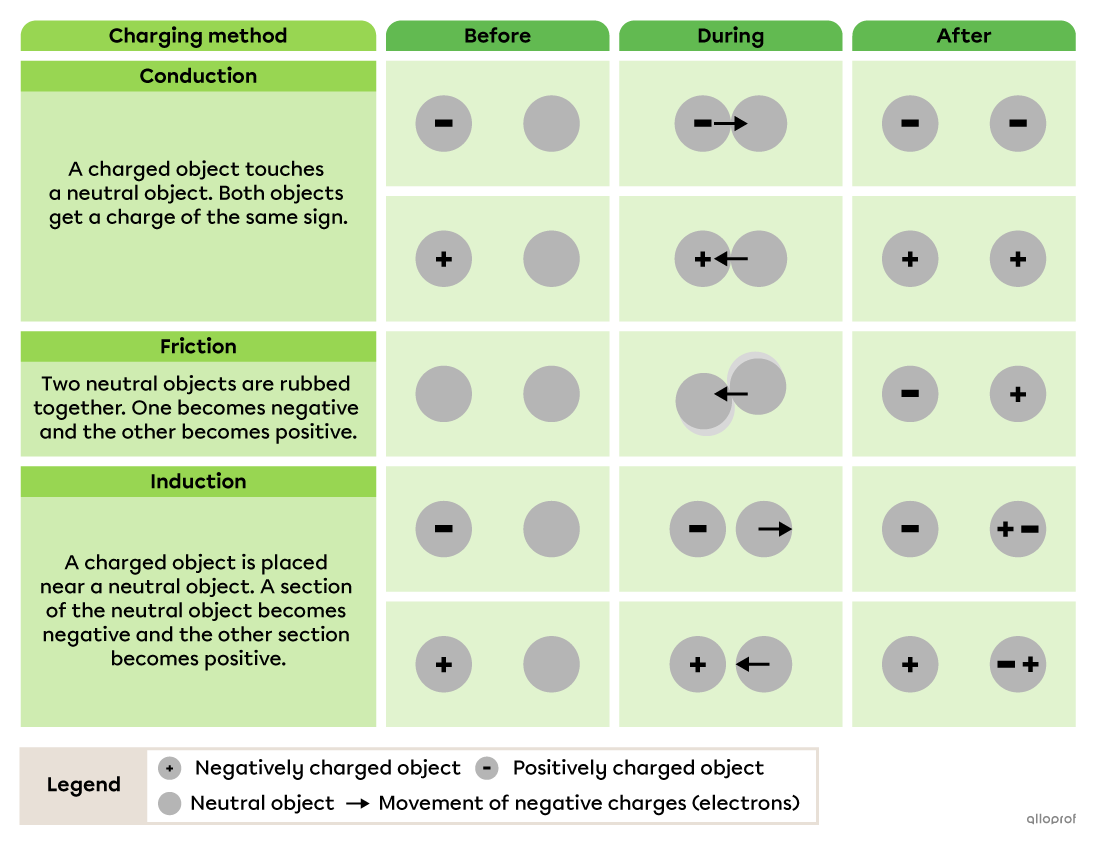
There are three charging methods: conduction, friction and induction.
Methods of charging an object
In electrostatic phenomena, only the negative charges (electrons) move. Positive charges (protons) never move.
Charging by conduction allows a neutral object to be charged from another object that is already charged. When the two objects touch, negative charges move from one object to the other until they are distributed evenly between the two objects.
Conduction results in two objects that are charged with the same sign.
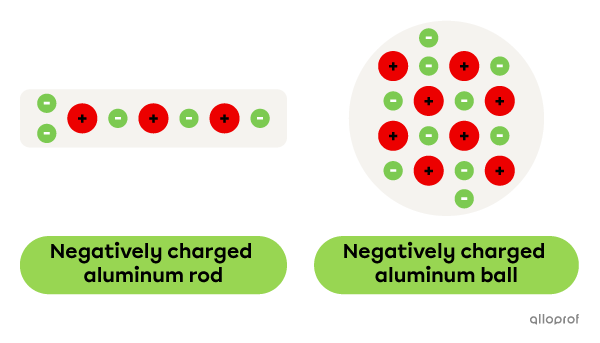
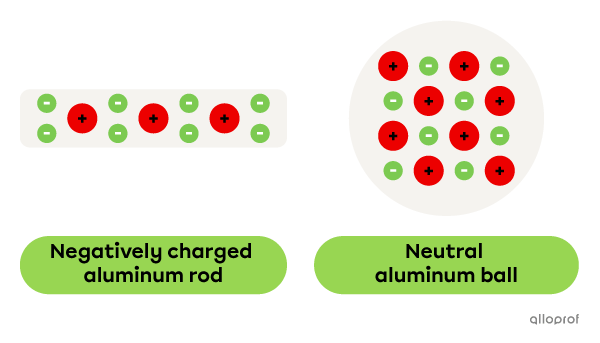
In the laboratory, an aluminum rod and an aluminum ball are used. The rod is negatively charged and the ball is neutral.
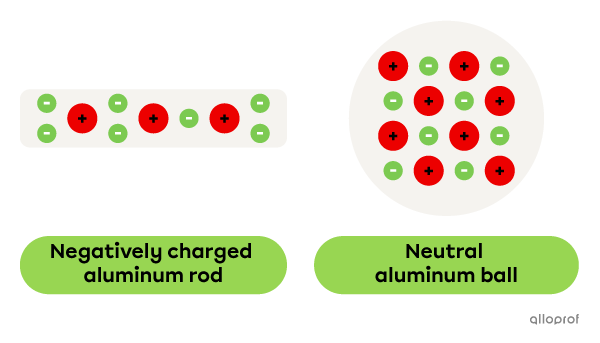
At the moment of contact, the excess negative charges in the rod seek to distribute themselves evenly in each object, because the negative charges repel each other. Some of the excess negative charges move from the rod to the ball.
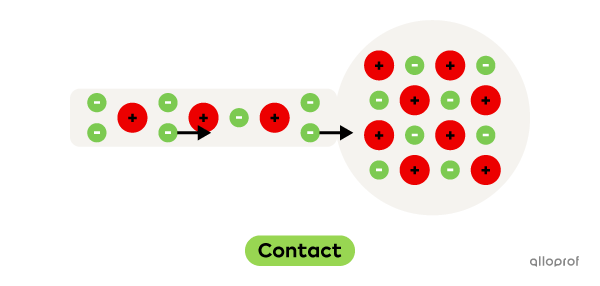
Now, both the rod and the ball are negatively charged.
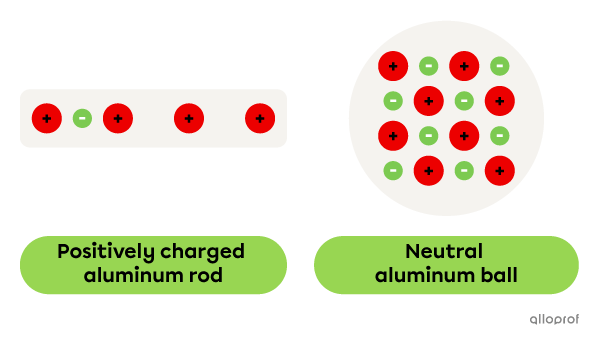
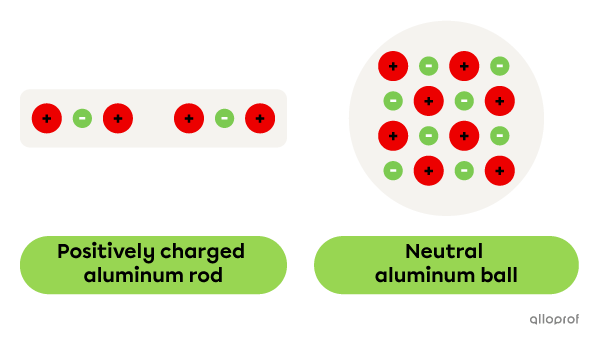
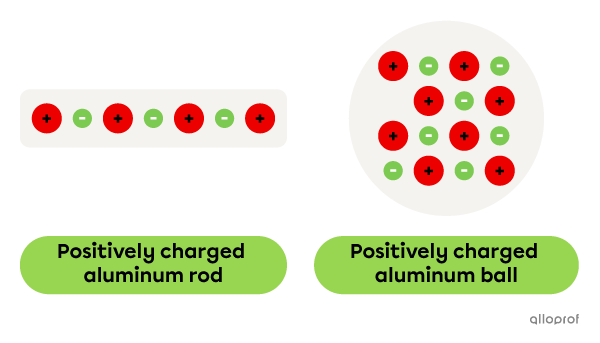
In the laboratory, an aluminum rod and an aluminum ball are used. The rod is positively charged and the ball is neutral.
Upon contact, the negative charges on the ball are attracted to both the positive charges on the ball and the positive charges on the rod. Some of the negative charges move from the ball to the rod, so that they are evenly distributed between the two objects.
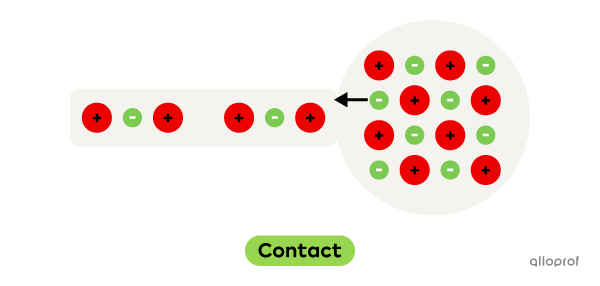
Both the rod and ball are now positively charged.
Charging by friction allows two neutral objects made of different materials to be electrically charged by rubbing them together. During friction, one of the objects tends to pull negative charges from the other object.
Friction results in two objects with opposite charges, one negatively charged and one positively charged.
The triboelectric series, sometimes called the electrostatic series, is a list that places materials in order according to their tendency to receive or give up negative electrical charges (electrons). By comparing the position of two materials on this list, it can be determined which object becomes negatively charged and which object becomes positively charged.
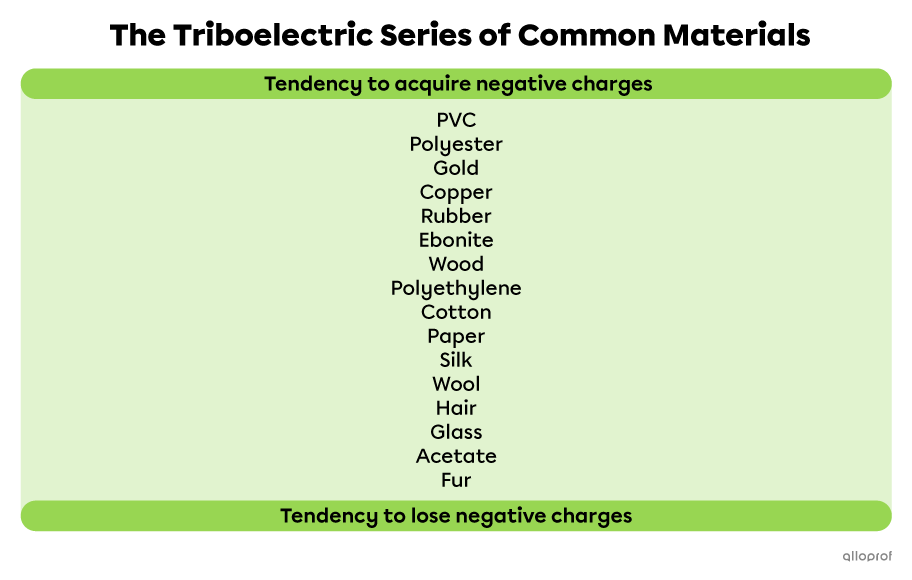
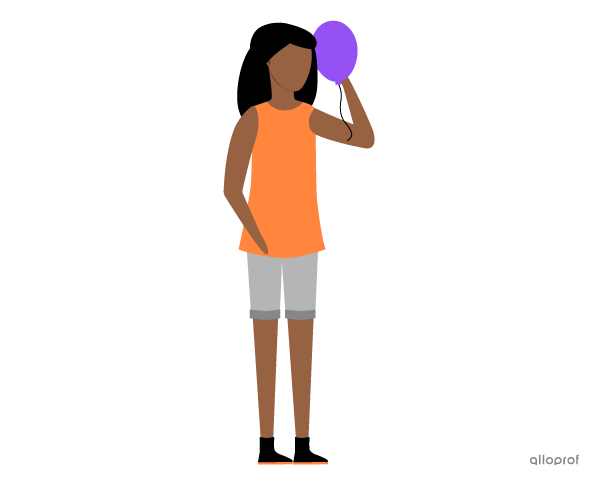
A person rubs a rubber balloon on their hair. Referring to the The Triboelectric Series of Common Materials, determine which type of charge is obtained by the balloon and which type of charge is obtained by the hair.
Charging by induction allows a section of a neutral object to be temporarily charged by placing it in close proximity to a charged object without direct contact.
Induction results in a temporarily charged object with a negatively charged section and a positively charged section. Generally, once the charged object is moved away from the neutral object, the latter returns to its original state.
In the laboratory, an aluminum rod and an aluminum ball are used. The rod is negatively charged and the ball is neutral.
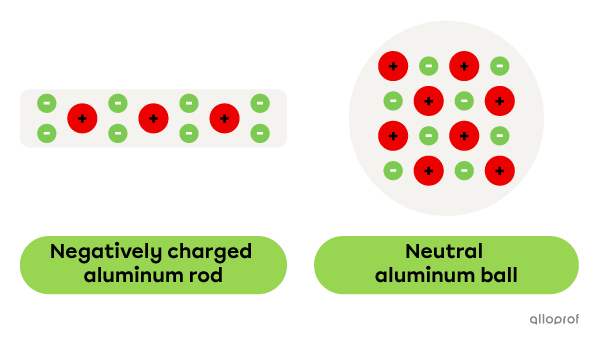
As the rod comes close to the ball, the negative charges in the ball are repelled by the excess of the negative charges of the rod.
The section of the ball that is closest to the rod becomes positively charged. The section of the ball that is furthest from the rod becomes negatively charged.
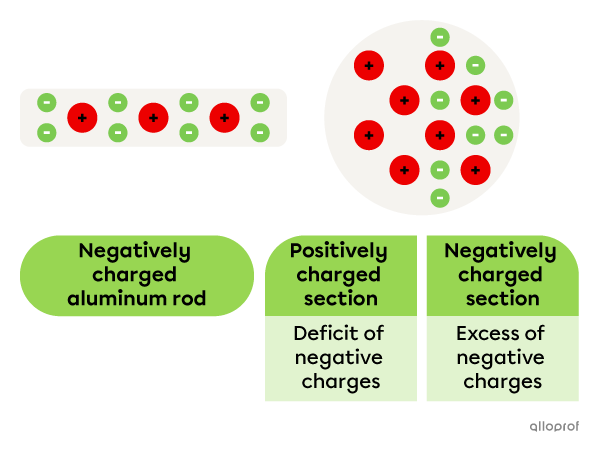
When the two objects are moved apart, the negative charges in the ball are no longer repelled by the negatively charged rod. The negative charges in the ball are then redistributed evenly. All parts of the ball become neutral again.
In the laboratory, an aluminum rod and an aluminum ball are used. The rod is positively charged and the ball is neutral.
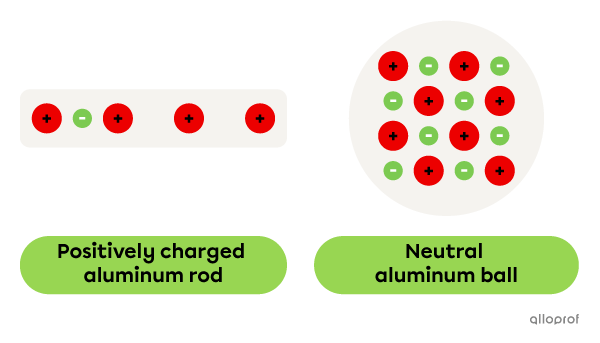
As the rod comes close to the ball, the negative charges in the ball are attracted by the positive charges of the rod.
The section of the ball that is closest to the rod becomes negatively charged. The section of the ball that is furthest from the rod becomes positively charged.
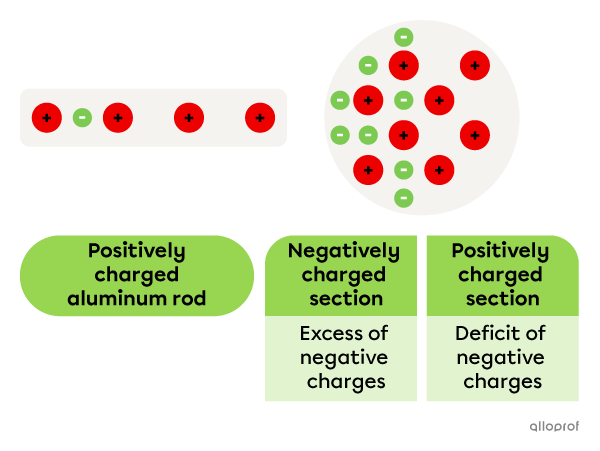
When the two objects are moved apart, the negative charges in the ball are no longer attracted to the positively charged rod. The negative charges in the ball are then redistributed evenly. All parts of the ball become neutral again.