Around the World – Vocabulary

Fiche | Anglais

Vocabulary words on the theme around the world.

Continents & Oceans Vocabulary

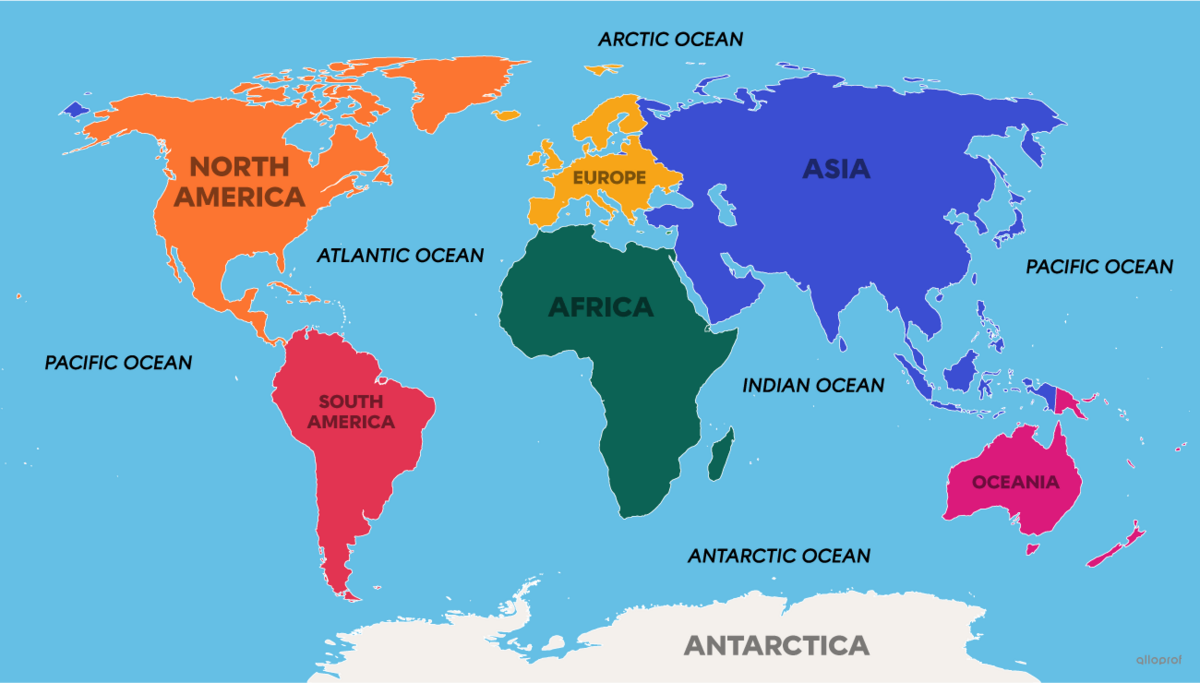
World map with labeled continents and oceans.

For more information visit the geography Continents page.

Click to listen to the Continents & Oceans vocabulary.

Geography Vocabulary

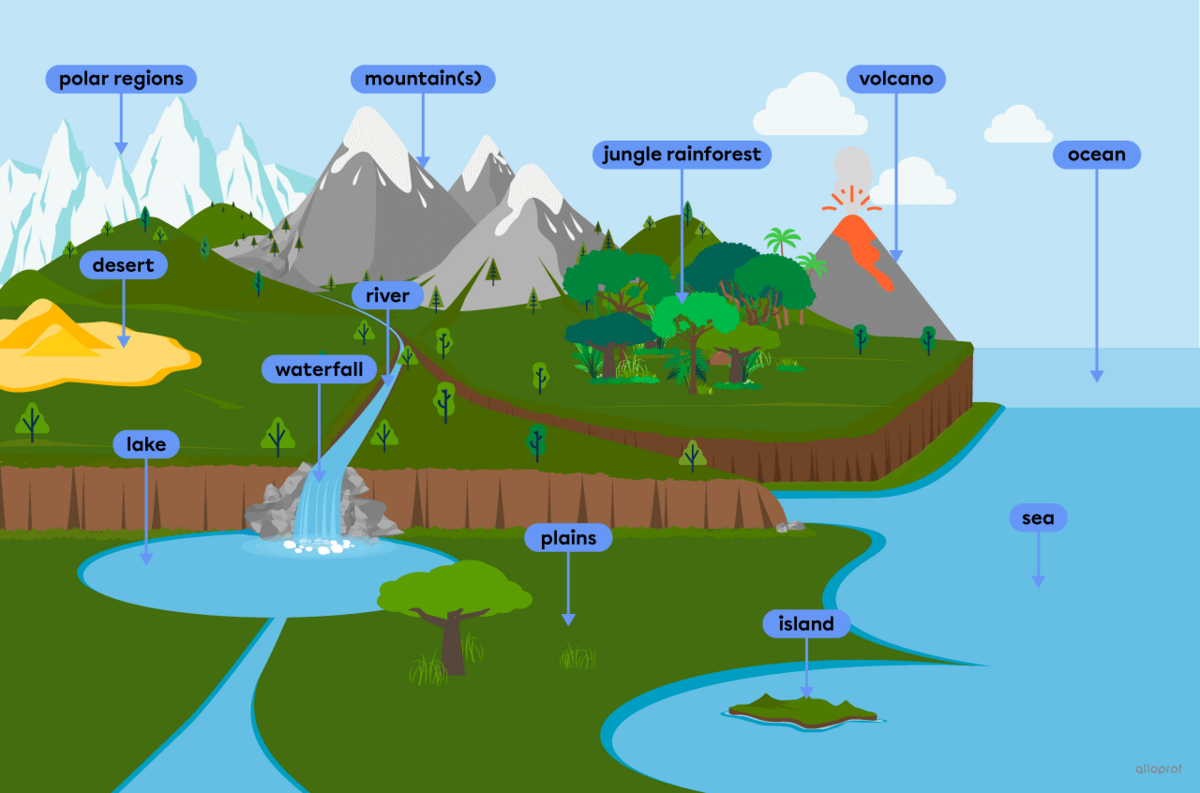
A map showing geographical features like mountains, a lake, a jungle and a desert.

Click to listen to the Geography vocabulary.

Famous Landmarks Vocabulary

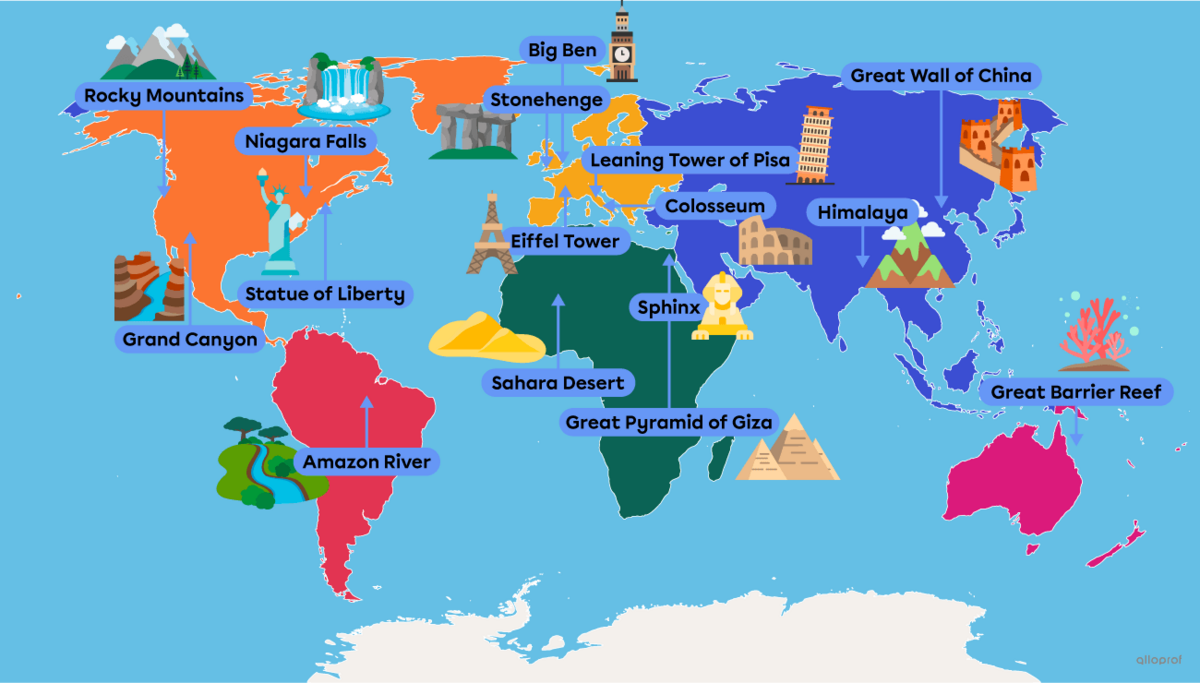
A world map with with labeled landmarks such as the Great Pyramid of Giza, The Amazon River and the Leaning Tower of Pisa.

Click to listen to the Famous Landmarks vocabulary.

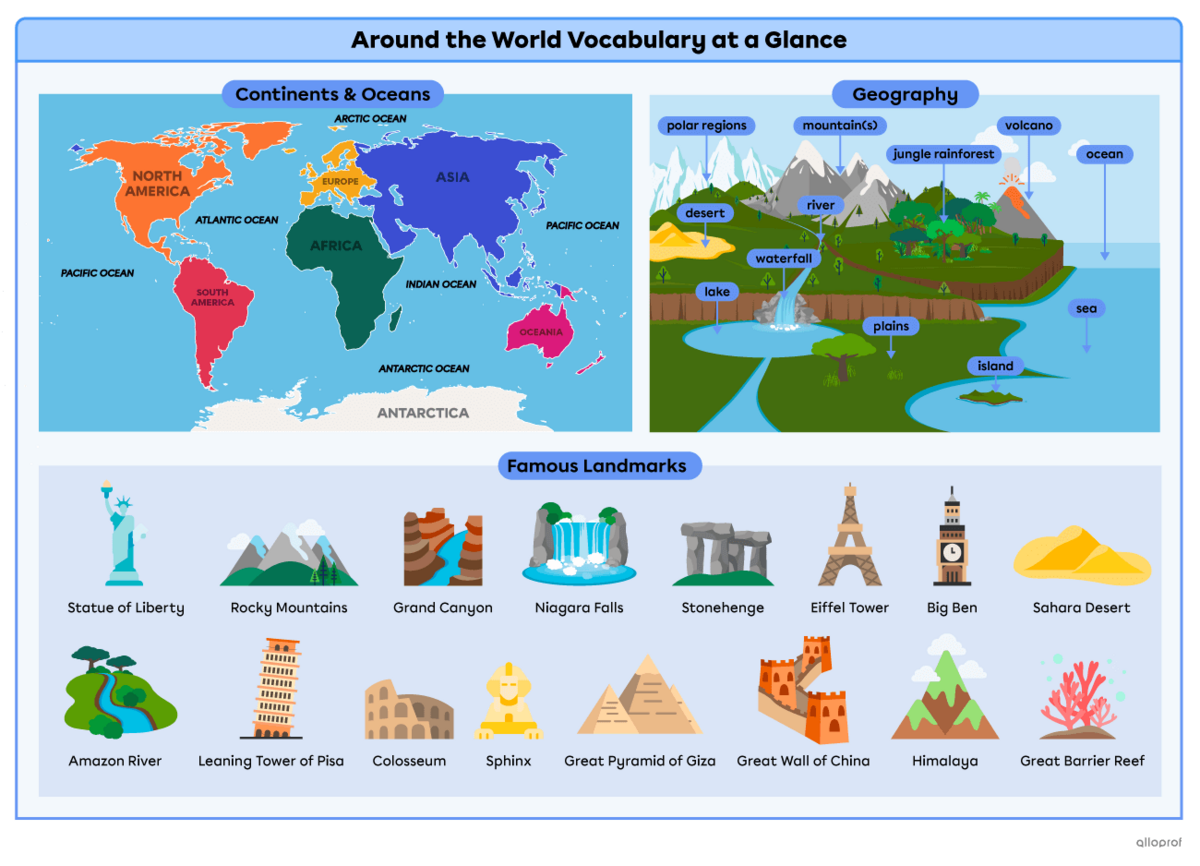
Around the World Vocabulary at a Glance

Summary of the vocabulary words in 3 categories: Continents & oceans, geography and famous landmarks.

Around the World Vocabulary Exercise

Coming soon.

Advanced Around the World Vocabulary

Geography Advanced Vocabulary

  • hill
    Naturally raised area of land, smaller and less steep than a mountain.
  • valley
    Area of land found between hills or mountains.
  • mountain range
    Connected line or group of mountains and hills.
  • plateau
    Large area of mostly flat land that is higher than its surroundings.
  • peninsula
    Piece of land that is surrounded by water on three sides.
  • canyon
    deep, narrow valley with very steep sides often with water flowing through it.
  • glacier
    Large slow moving mass of ice and compressed snow.
  • coast
    Area of land right next to an ocean or sea, the edge of the land.
  • shore
    Land along the edge of a body of water, like an ocean, sea, lake or river.
  • cliff
    Very steep or vertical rock face of a hill, mountain or coast.
  • bay
    Inlet of water where the land curves inward. Smaller than a gulf.
  • gulf
    A large and deep area of sea or ocean that extends far into the land. Larger than a bay.
  • strait
    Narrow natural channel of water that connects two larger bodies of water.
  • canal
    Man-made waterway built to allow boats to travel inland or to connect two bodies of water.
  • pond
    Small body of still (non-flowing) water, smaller than a lake.
  • rapid
    Section of a river where the current is fast-flowing and turbulent.
  • stream
    Small, narrow river.
  • geyser
    Natural hot spring that periodically shoots a column of hot water and steam high into the air.
  • tundra
    Treeless region found in very cold areas, such as near the Arctic Circle or on high mountains.
  • savanna
    Large, grassy plain found in hot, dry or tropical regions with few trees.
  • taiga
    Cold forest region mostly made of conifers. Also known as “boreal forest.”
  • grassland
    Area of land where the main type of plant growth is grass, with very few or no trees.
  • swamp
    Wetland that is mostly covered by shallow water and is dominated by trees and woody plants.
  • border
    Official line that separates two countries, states, provinces or other geographical areas.

Famous Landmarks Advanced Vocabulary

  • Empire State Building
    Famous, tall and historic skyscraper located in New York City.
  • CN Tower
    Communications and observation tower located in Toronto, Ontario.
  • Golden Gate Bridge
    Famous suspension bridge located in San Francisco, California.
  • Tower Bridge
    Historic bridge in London, England, known for its two large towers and its ability to lift open in the middle to let tall ships pass underneath.
  • Sydney Opera House
    One of the world's most famous and distinctive performing arts centres, known for its unique, white, shell-shaped roof design.
  • Burj Khalifa
    The tallest man-made structure and building in the world.
  • Sagrada Familia
    A massive church designed to look like a stone forest. Construction began in 1882 and is still ongoing (expected to finish around 2026).
  • Metropolitan Museum of Art
    One of the largest and most famous art museums in the world, located in New York City. Commonly called “the MET.”
  • Louvre Museum
    Largest and most-visited art museum in the world, in Paris, France.
  • Taj Mahal
    World-famous, magnificent white marble mausoleum located in Agra, India.
  • Acropolis
    Ancient, historic citadel located on a high, rocky hill that overlooks the city of Athens, Greece.
  • Angkor Vat
    A massive temple complex in Cambodia, known as the world's largest religious structure.
  • Machu Picchu
    Ancient, intact citadel built by the Inca civilization in the Andes Mountains of Peru.
  • Forbidden City
    A huge, historic palace complex located in the centre of Beijing, China.
  • Mount Rushmore
    Mountain sculpture memorial of 4 U.S. presidents (Washington, Jefferson, Roosevelt & Lincoln) in South Dakota.
  • Easter Island
    Remote island in the South Pacific Ocean famous for its ancient, giant stone statues called Moai.
  • Mount Everest
    Highest mountain peak in the world, located in the Himalayas mountain range.
  • Mount Fuji
    Japan’s tallest mountain, an active volcano with a nearly perfect cone shape.
  • Andes
    The longest mountain range in the world, stretching along the entire western side of South America.
  • Alps
    Large mountain range in Europe, famous for their high, snowy peaks.
  • Nile River
    The longest river in the world and the main river of Northeast Africa.
  • Mississippi River
    Long river system that flows from the northern U.S. to the Gulf of Mexico.
  • Yangtze River
    The longest river in China and all of Asia, and the third-longest river in the world.
  • Ganges River
    India's "Holy River" and major water source.
  • Seine River
    River that flows directly through the heart of Paris, France.
  • Thames
    Historic river that flows directly through the centre of London, England.
  • Great Lakes
    The five largest lakes in North America. They hold about 20% of the world's fresh surface water.
  • Dead Sea
    A very salty lake bordering Israel and Jordan.
  • The Caribbean
    Region of tropical islands south of the USA and east of Central America.

Exercise – Advanced Around the World Vocabulary

Coming soon.