Matières
Niveaux
 100%
100%
 100%
100%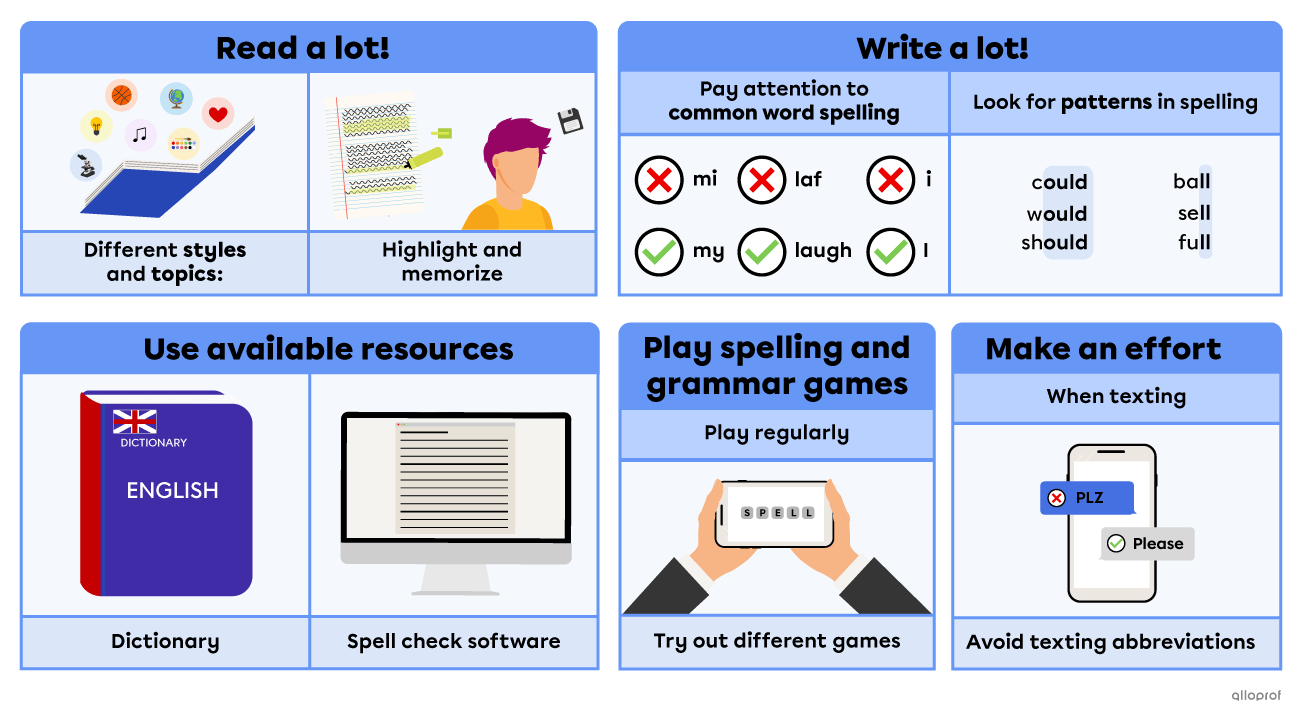 100%
100%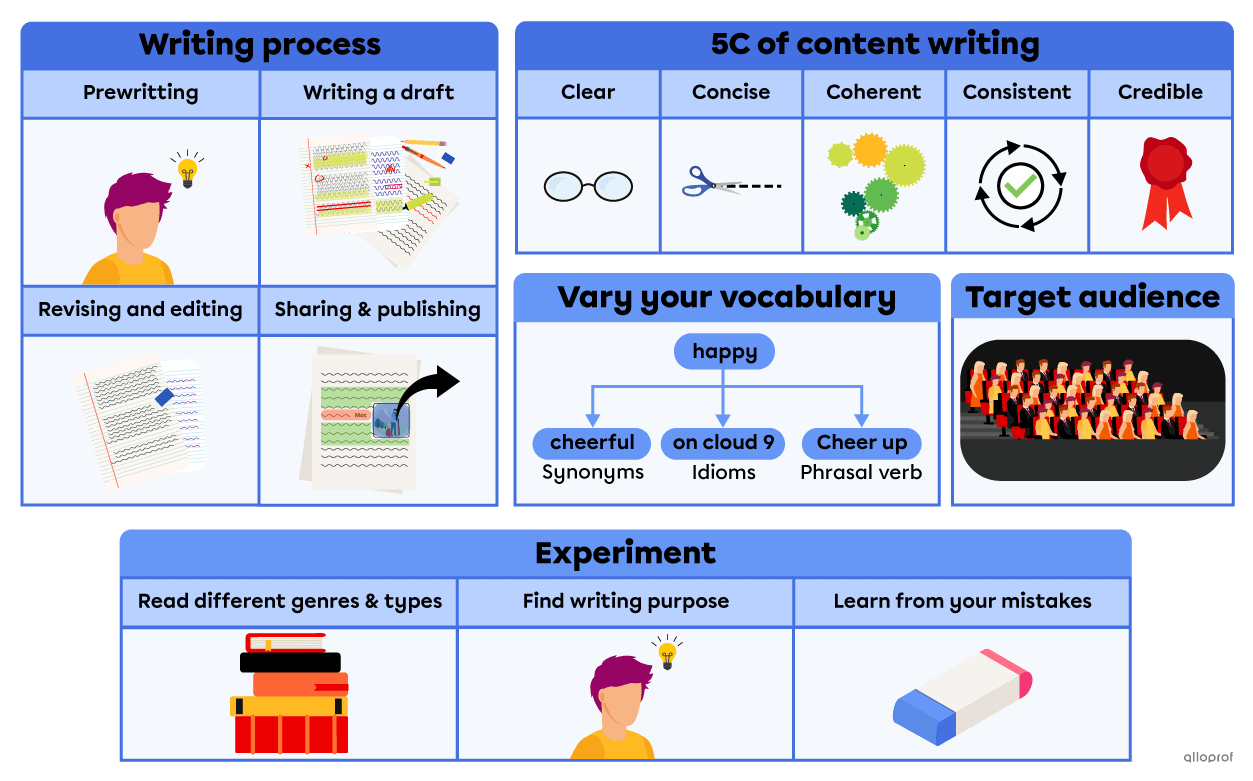
Improving writing skills requires time and practice. Below are tips to help you:
Here are 5 tips to help improve your writing skills:
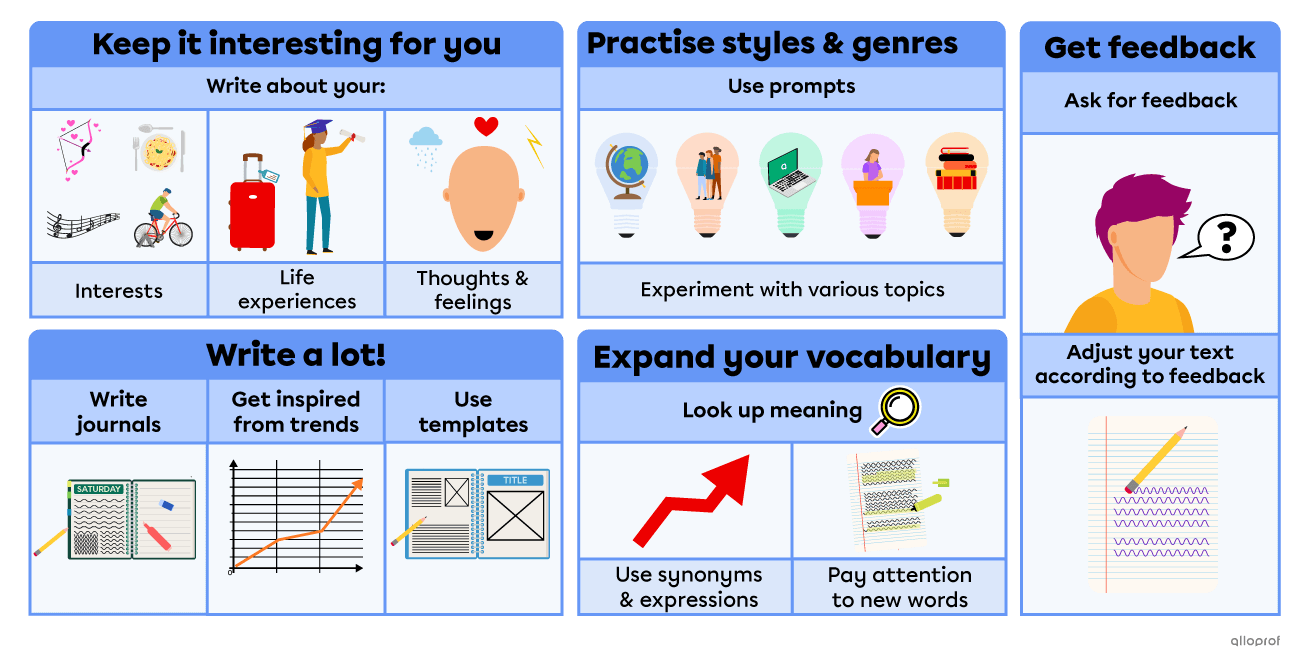
Write often
Make it a daily habit:
Write in journals.
Use writing templates.
Inspire yourself with daily trends.
Make it interesting for you
Choose topics you like, write about:
your interests
personal life experiences or anecdotes
thoughts and feelings
Practice different styles & genres
Get out of your comfort zone.
Vary & experiment with different writing topics
Stimulate your imagination with various prompts: images, videos, texts, songs, objects, etc.
Expand and strengthen your vocabulary
Try to use new words.
Read often and pay attention to words you don’t know.
Look up the meaning of words you don’t know.
Use synonyms and expressions.
Ask for feedback
Share what you wrote with others.
Ask about what could be improved.
Adjust your text according to feedback.

Here are 5 tips to help improve your spelling:
Write often
Practice is key!
Pay attention to common word spellings.
Look for patterns in spellings: common word endings, double consonants, etc.
Read often
Expose yourself to new vocabulary.
Read different text styles and topics.
Highlight and memorize the spelling of words you don’t know.
Use your resources
They were created for that purpose.
Use a dictionary.
Download a grammar corrector/software programs on your devices.
Pay attention to the suggestions the app is providing.
Always make an effort
Make it a habit to spell correctly.
Use correct spelling even when writing informal texts.
Avoid texting abbreviations.
Play spelling and grammar games
Strengthening your grammar skills can be fun.
Play regularly to improve your spelling.
Try different difficulty levels.
Try different games.
Here are 5 tips to improve the content of your texts :
Follow the writing process:
There are 4 steps to follow:
Step 1: Prewriting
Step 2: Writing a draft
Step 3: Revising and editing
Step 4: Sharing and publishing
Follow the 5 c’s of content writing
Make sure your text is:
Clear: choose active over passive voice.
Concise: remove unnecessary words.
Coherent: connect your ideas.
Consistent: Stick to the topic.
Credible: Keep your text believable (narrative) or trustworthy (informational, argumentative)
Vary your Vocabulary
Avoid overused words and repetitions:
Find synonyms.
Use expressions: idioms, phrasal verbs, figures of speech.
Be careful with your word choice: avoid slang.
Keep your target audience in mind
Write for your readers.
Adapt your text to the audience.
Use the appropriate tone.
Keep experimenting
Find your own voice:
Read different genres and text types.
Find your writing purpose or intention before starting each text.
Learn from your mistakes.