Matières
Niveaux
 100%
100%
 100%
100%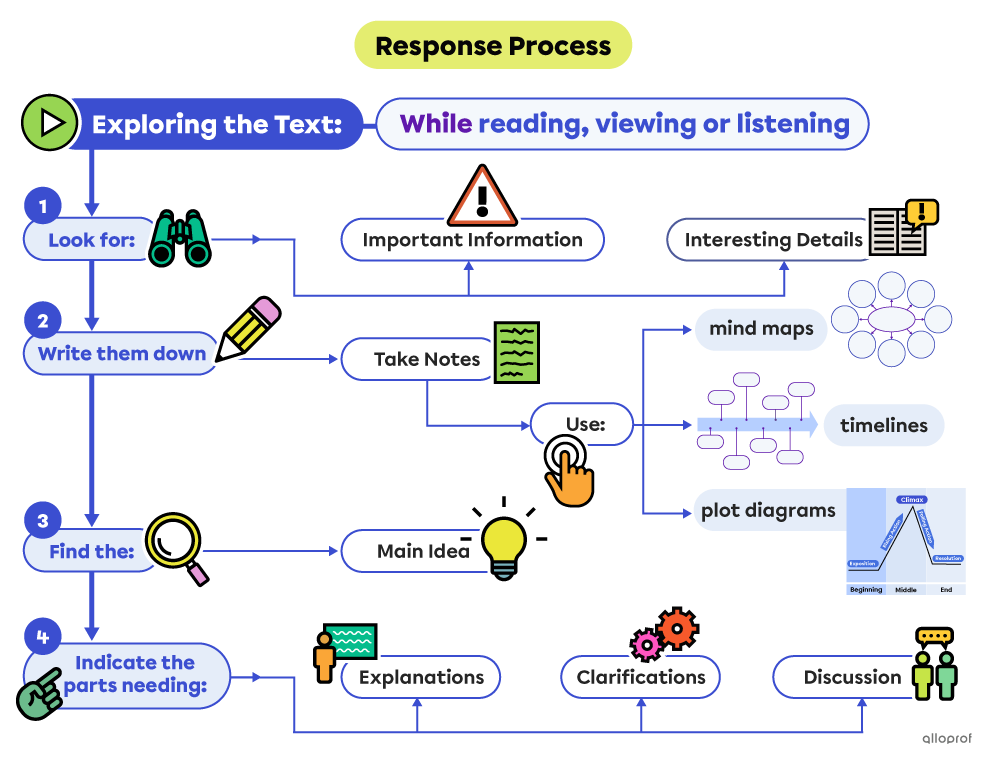 100%
100%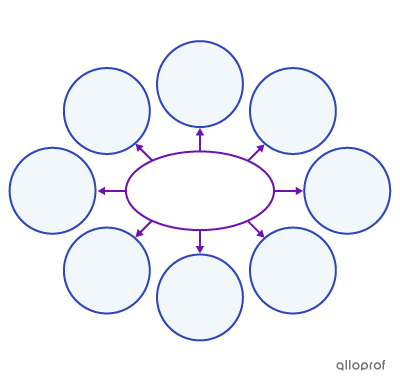 100%
100% 100%
100%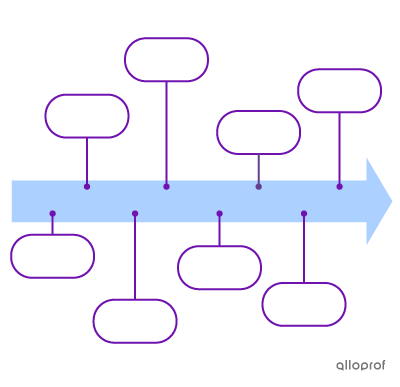 100%
100%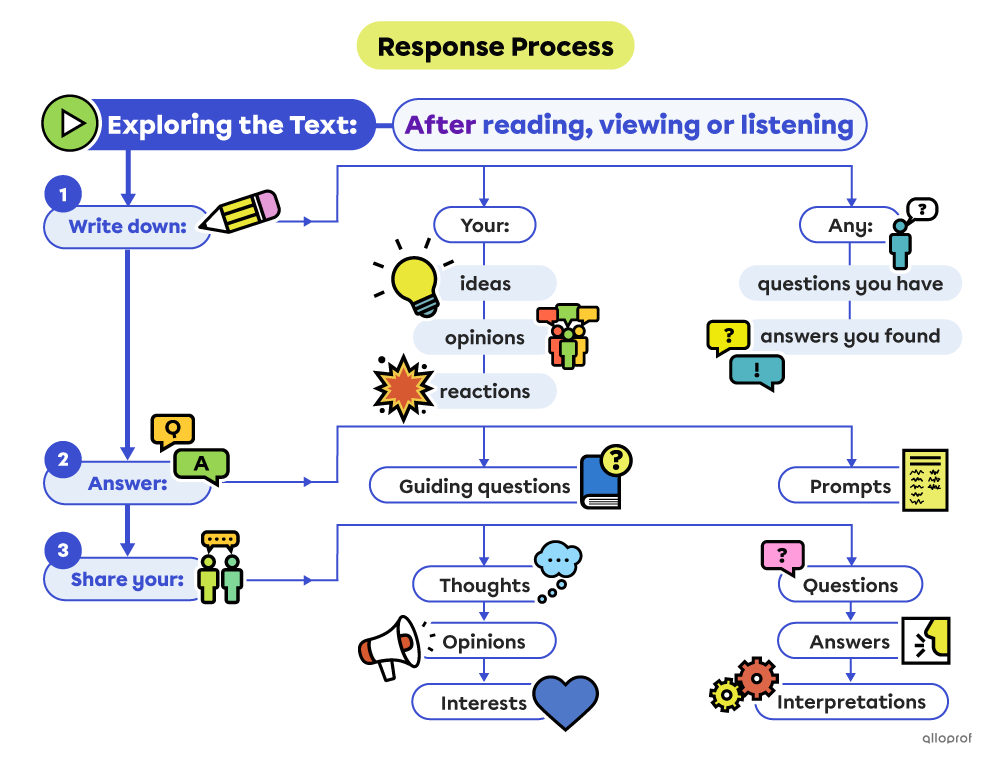 100%
100%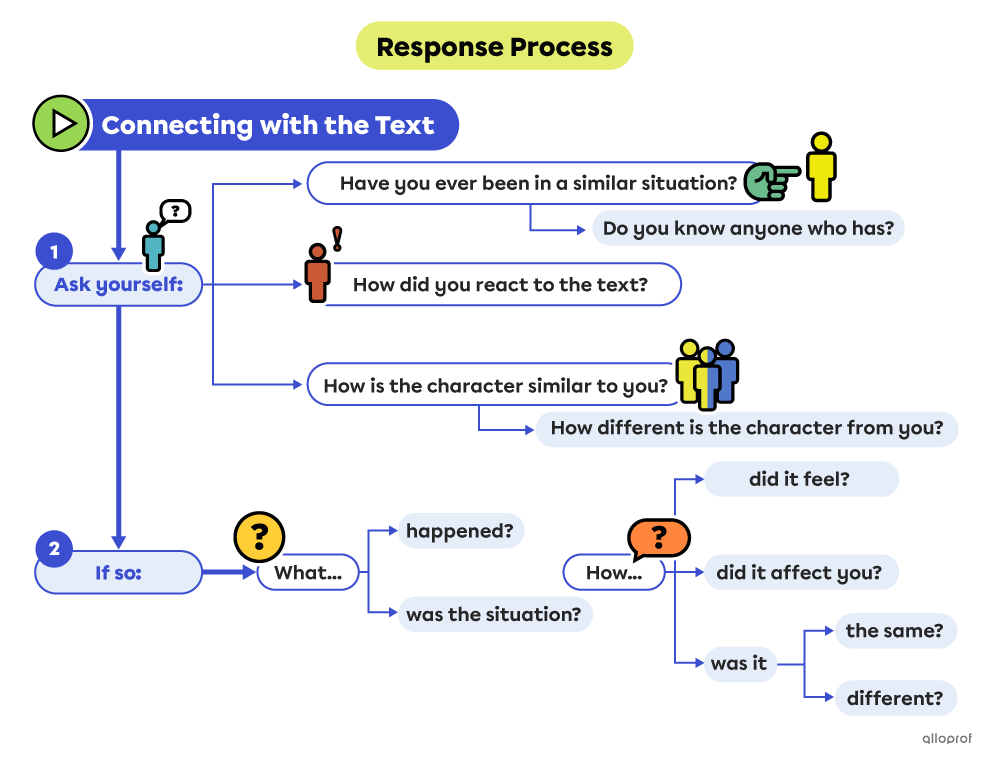 100%
100%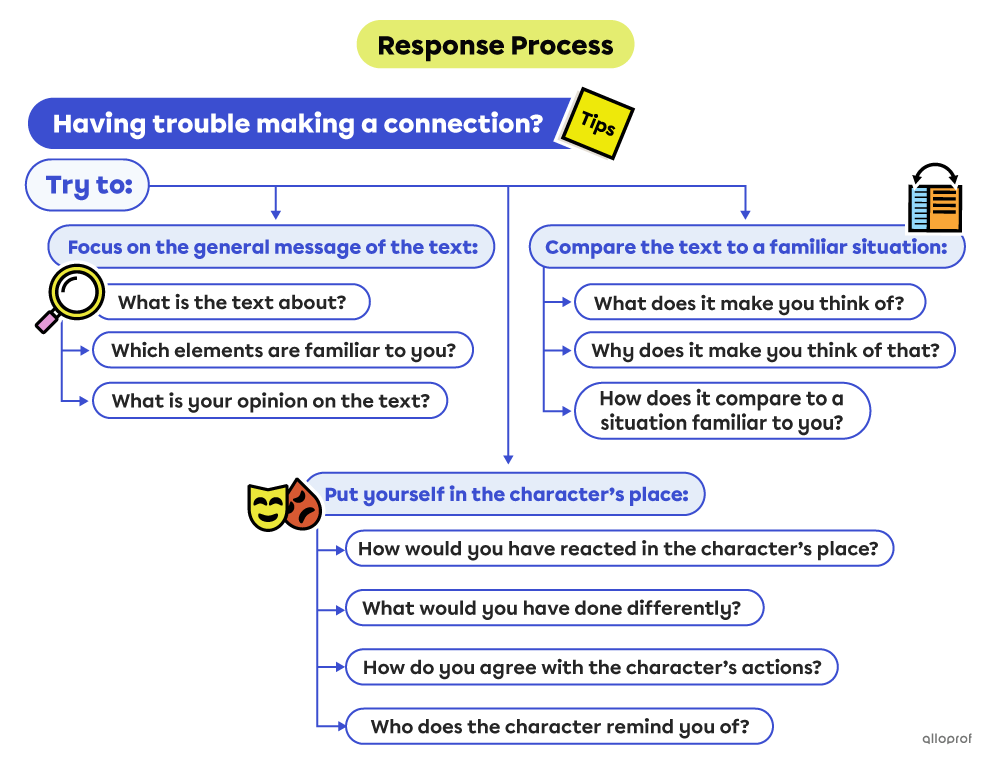 100%
100%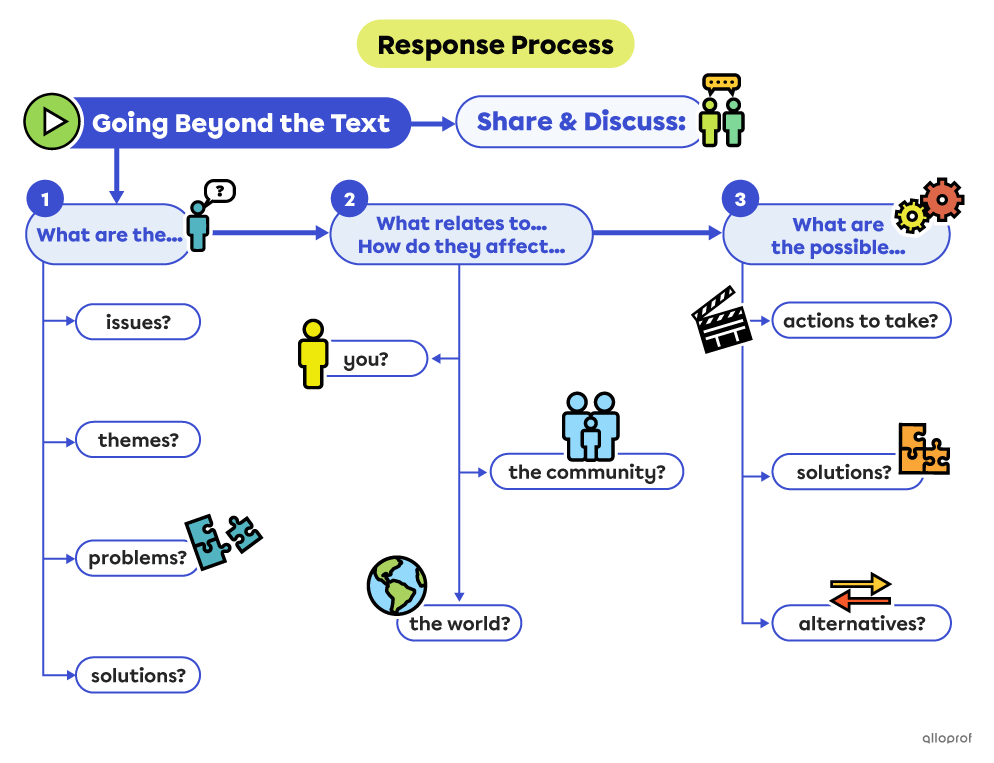
| Useful Strategies: |
| Scanning for keywords, familiar/unfamiliar vocabulary |
| Skimming to find the topic |
| Using prior knowledge on the topic |
| Predicting the topic based on text elements |
| Setting a reading goal (Looking for information? Looking for the main idea? Reading for enjoyment?...) |
| Deciding which appropriate resources to use |
| Useful Strategies: |
| Identify important elements |
| Verify if predictions are accurate |
| Write down important details |
| Identify tricky parts |
| Visualize people, places and events |
| Look up keywords |
| Organize the information |
| Make sure you: |
| Answered the guiding questions or responded to the prompts |
| Asked all the questions needed |
| Shared all the information you found |
| Supported your interpretation and comprehension with elements from the text |
The response process is a series of steps and actions to take for a deeper understanding of a text. Making a personal connection to the text is the core of the response process.
Students can use the process as:
Readers — the process is often called a reading response or a reader’s response.
Listeners — the text is presented in audio form.
Viewers — the text is presented in video form.
There are 3 steps to the response process:
Exploring the Text
Connecting to the Text
Going Beyond the Text
The steps, strategies and resources in the response process are not used in every text. Different text types will contain their own specific structures and features. Deciding which ones are appropriate to use is also part of the process.
Exploring the text takes place before, while and after reading, listening or viewing the text.
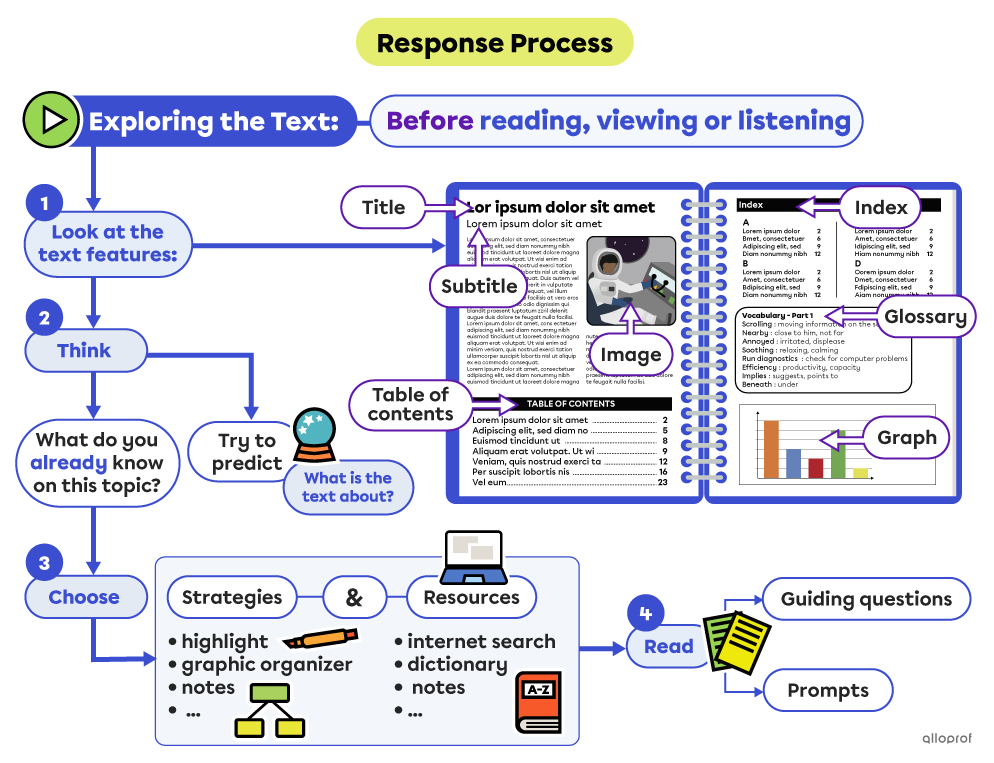
Strategies to become more familiar with the text:
Look at the text features
Think of what you already know
Predict what the text is about
Choose the appropriate strategies & resources
Read the guiding questions and prompts (to direct the reader’s focus)

Click here for the downloadable version.
| Useful Strategies: |
| Scanning for keywords, familiar/unfamiliar vocabulary |
| Skimming to find the topic |
| Using prior knowledge on the topic |
| Predicting the topic based on text elements |
| Setting a reading goal (Looking for information? Looking for the main idea? Reading for enjoyment?...) |
| Deciding which appropriate resources to use |
Look for & write down:
important information
interesting details
the main idea
Indicate which parts of the text:
need explanation and clarification
should be discussed
Click here for downloadable version.
| Useful Strategies: |
| Identify important elements |
| Verify if predictions are accurate |
| Write down important details |
| Identify tricky parts |
| Visualize people, places and events |
| Look up keywords |
| Organize the information |
Visual Organizer Examples
Mind Maps
The mind map is a visual diagram used to organize information. A good method to illustrate connections and relationships between ideas and story elements.
The plot diagram is a visual representation of plot points in a story.
Timelines
The timeline is a chronological organization of story elements.
Write down:
your ideas & opinions
your reactions
the questions you have
the answers you found
Share your:
thoughts & opinions
questions & answers
interests
interpretations
Answer:
guiding questions
Expand on:
prompts
Click here for the downloadable version.
| Make sure you: |
| Answered the guiding questions or responded to the prompts |
| Asked all the questions needed |
| Shared all the information you found |
| Supported your interpretation and comprehension with elements from the text |
Here are some examples of sentence starters to use when exploring the text:
I think that…
I noticed that…
It’s interesting that…
I find … very interesting.
The text says…
The author says…
I learned that…
I liked…
To see an example of Step 1: Exploring the Text, watch the following Crash Course on the short story Tales of the Moon Base.

Establishing a connection with the text is at the heart of the response process.
The connections can be:
your own experience
the experience of someone you know
similarities or differences between you and a character
situations you are reminded of while reading, listening or viewing the text
your reactions to the text
an interesting element of the text
Click here for the downloadable version.
| Remember to discuss the connections by sharing your: |
| opinions |
| experiences |
| reactions |
| interests |
| feelings |
| concerns |
| Make sure you: |
| used strategies |
| used resources |
| shared your connections in your discussion |
| referred to the text to explain the connections |
If you are having trouble connecting with the text, use the following tips:
Click here for the downloadable version.
Here are some examples of sentence starters to use when connecting with the text:
I also did…
I have/had the same problem as…
This reminds me of…
I also went to…
I can… just like (character)
I like/don’t like… just like (character)
That part made me feel…
I was (angry, sad, surprised, annoyed, etc.) when…
To see an example of Step 2: Connecting with the Text, watch the following Crash Course:
Going beyond the text is about figuring out:
How does the text relate to you and the world around you?
What are the issues and themes in the text?
How do the issues and themes affect you?
What can be done about them?
Click here for the downloadable version.
Here are some examples of sentence starters to use when going beyond the text:
I wish we could…
I think we should…
If this happened…
People could…
People should…
The problem is…
Maybe we could…
Questions on the topic/situations/actions
| How does this topic/situation/action affect… | … me? … people around me? … my community? … the world? |
| How could it affect… | |
| How will it affect the future for… | |
| What would be the consequences for… | |
| How should people react in such a situation? | |
| What should be done about it? | |
Questions on the characters
| What made the character… | … make that decision? … take those actions? … say those things? |
| How is the character… | … similar to a character in another text? … different from a character in another text? … changing during the story? |
| How does the character relate… | … to other characters? … to the world around him/her? … to the world at large? … to the story events? |
| Why would you have acted or said the same as the character? | |
| Why would you have acted or said things differently from the character? | |
To see an example of Step 3: Going Beyond the Text, watch the following Crash Course: